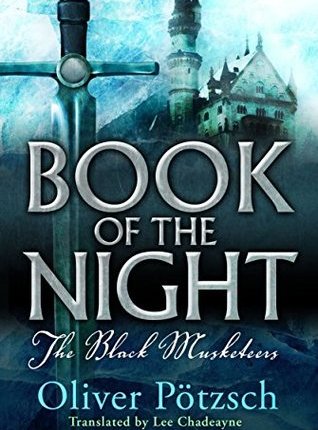
Book of the Night: the Black Musketeers by Oliver Pötzsch, translated by Lee Chadeayne

Book of the Night: the Black Musketeers by Oliver Pötzsch, translated by Lee Chadeayne

“Book of the Night” tells the story of Lukas Lohenfels, whose family is driven apart by an evil monk, intent upon finding a relic of power.

Along the path to revenge and redemption, Lukas makes some friends, some enemies, and discovers that magic may be more real than he ever imagined.

This is the 1600’s Germany, a land of princes and shifting alliances. A war has been going on for a very long time.
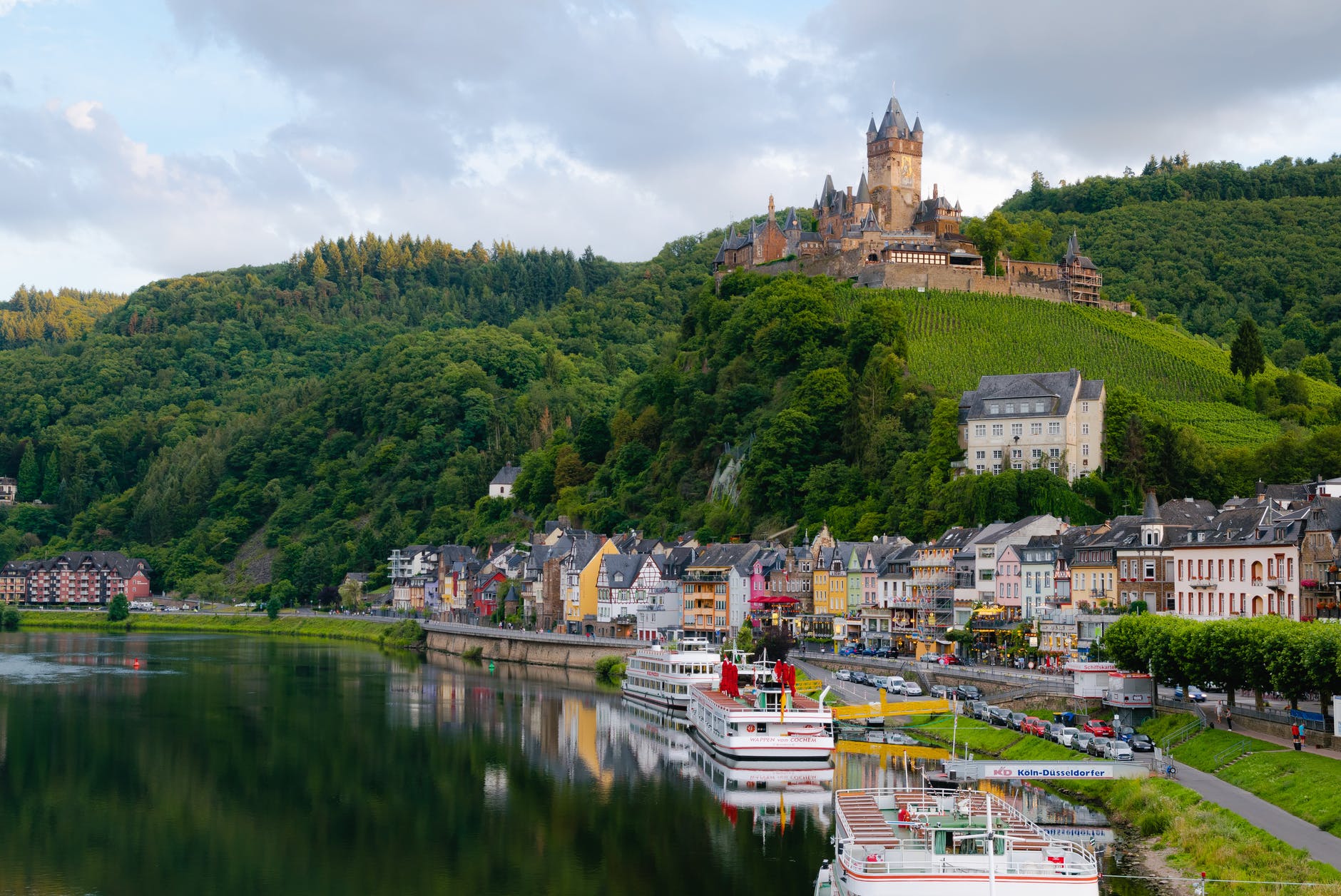
Photo by Kai Pilger on Pexels.com

Who are the Black Musketeers of the title?: “The Black Musketeers were the best fighters in the Reich,” he began, “trained in the use of all sorts of weapons and fear by everyone. They served as bodyguards to the Imperial General Wallenstein … We fought and shot like the devil, with swords, pikes, daggers, muskets, and pistols, and drove the Danes and their allies back across the Elbe River.” loc 129, ebook.

Lukas is forced to grow up quickly, not only because of what happens to his family, but also because of the unending war: “Lukas thought of the dreadful stories he’d heard about the war. Last year in Magedeburg, twenty thousand citizens had been slaughtered by mercenaries, who then completely destroyed the city.

Similar things had happened in other parts of the Reich. Whenever the troops passed by, no matter which side they were on, they left behind death, destruction, hunger, and disease. When he was young, Lukas had always imagined war as something heroic. … but for some time now, he had understood that war was not an adventure, but left horror and misery in its wake.” loc 1112, ebook.

Photo by Egor Kamelev on Pexels.com

Author Oliver Pötzsch is a master storyteller. His story flows smoothly and well.

I particularly enjoyed this homage to the classic, The Three Musketeers by Alexandre Dumas:

“If you have something to tell me or the others,” Gionvanni said softly, in order not to waken the other sleeping boys, “please don’t hesitate. We’re always here for you, do you understand?” He smiled. “One for all and all for one. I heard those words somewhere before, and they apply to us as well.” loc 1148, ebook.

I liked how Lukas and his friends were never entirely certain about the existence of magic until it entered their lives in a very real way: “Nonsense,” Paulus muttered. “Magic is humbug! I only believe things I can see and fight with my sword.” “It’s said there are certain vapors and gases that make people sick and can even cause the plague,” Giovanni replied matter-of-factly. “Can you see them, Paulus?

No. But still they’re there, invisible, all around us. Perhaps there’s lots more out there that we simpleminded little men can’t even imagine.” loc 1428, ebook.
Photo by Simon Berger on Pexels.com

When I saw the name, Oliver Pötzsch, and snapped up this book from NetGalley, not realizing that Book of the Night is intended for a young adult audience.

As I wrote earlier, it is very well-written and I had a lot of fun reading it. That being said, the Book of the Night isn’t very sophisticated nor are there any true surprises within its pages.

Book trailer for ‘Book of the Night’ in German.

However, it is a perfect pick for anyone in the 12 to 16 age group, or anyone who enjoys an adventure with some magical undertones.

If you’re looking for some more magical/coming-of-age young adult read-alikes try: Seraphina by Rachel Hartman, Archivist Wasp by Nicole Kornher-Stace, and Jackaby by William Ritter.

Thank you to NetGalley and Amazon Crossing Publishing for a free digital copy of this book!  And, thank you for reading.

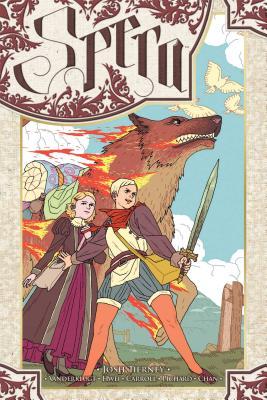
Spera, Volume 1 by Josh Tierney, Illustrated by Kyla Vanderklugt, Hwei Lin Lim, Emily Carroll, Olivier Pichard, Afu Chan, Rebecca Taylor

Spera, Volume 1 by Josh Tierney, Illustrated by Kyla Vanderklugt, Hwei Lin Lim, Emily Carroll, Olivier Pichard, Afu Chan, Rebecca Taylor

Spera is the story of two princesses, one who likes to sword fight and explore and another who likes to read and stay inside. One day, the tomboy princess, whose name is Pira, turns up in Lono’s (the reader) kingdom and says that her father the king is dead. They have to get away now to save Lono’s life. Where will two young princesses go to hide? A magical land called Spera. And so, the adventure begins.

I think that Spera tried to tell an engaging fairy tale with built in gender role options to educate impressionable young girls about who and what they can choose to be, but it didn’t quite work. Graphic novels need more than an interesting characterization idea- to engage reluctant readers, they need to tell a great story. Spera never gets there. The underlying message is sound- let children be who they are. Don’t point girls towards a book or boys towards a sword just because that’s their gender. But frankly, that’s it. The rest of the story, minus a run in with a creepy child, is kind of a non-starter.

Multiple authors contributed to this book so that’s a plus in my mind. Every chapter the reader gets a different artistic interpretation of Pira, Lono, and the fire spirit, Yonder. I gave Spera an extra star on Goodreads just for the artwork. As an adult, I found the variety enjoyable but I could see it being confusing for younger readers. They may not understand why the characters look so different every couple of pages.

If I was asked for a graphic novel recommendation for young girls that has fantasy elements, I’d skip Spera and point readers towards Princeless #1 by Jeremy Whitley.

Thanks for reading!

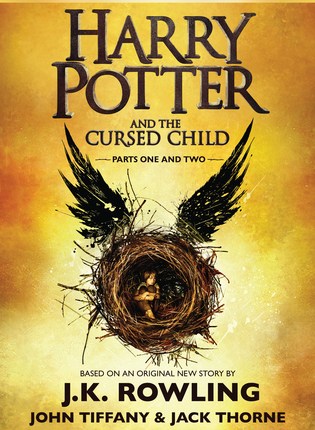
Harry Potter and the Cursed Child by J.K. Rowling, John Tiffany, Jack Thorne

Harry Potter and the Cursed Child by J.K. Rowling, John Tiffany, Jack Thorne

There are spoilers further on in this review.  Please, dear readers, do not read this if you haven’t had a chance to read the book yet.  Thank you 🙂

I had a disagreement with my husband about this book. He’s of the opinion that J.K. Rowling said she wasn’t going to write anymore Harry Potter stuff and that she should just let the seven books remain as they are- like a magnum opus. He was irritated that, with the film coming out in November, and this play being performed, and that new set of Pottermore stories that are being published, it seems like Rowling is just out for more money.

I, on the other hand, just kept saying, “But, it’s Harry Potter!” “But, it’s her creation and she should do whatever the heck she wants with it!” “But, it’s Harry Potter!” Neither of us convinced the other, so I just gave up trying to talk him into reading it and read it myself. I read it through in one sitting and cried and just adored it.

It’s funny- I’d never read a play before and this year I’ve read two, Hamilton: The Revolution and now this. I thought that it’d be annoying with the character listings and stage directions, but, as you read, all of that melts away and you’re just left enjoying the story.

And what a story it is! ***If you have not read it, do not read past this point. I have to talk about things that may ruin your enjoyment of the story and you do not want that. Here’s your warning. You’ve been warned. Seriously. Do yourself a favor and stop now!!!***

Ok. Who else thought that Ron was written like a complete moron in this? I mean, I know he wasn’t the brightest crayon in the box, but come on! He’s bumbling around, constantly eating… at least in the other books, he had moments of brilliance. I was completely let down by the way his character was developed. But, that is really my only complaint in the whole thing.

Hermione continues to be awesome in all the timelines- as it should be. She was always my favorite. I don’t know if it is because she’s a girl, or reads a lot, or both those things, or what. Minister of Magic? Of course! We all knew that she was going straight to the top.

Now Harry… he had Ginny have an interesting relationship. I thought that there’d be more affection and less judgement between the two of them, but maybe that was just me reading between the lines. Also, who else was relieved that Harry finally had a moment to confront Dumbledore and say, totally paraphrasing, “What the heck! I was a kid and you knew all of these terrible things were going to happen, that I’d probably have to die, and you didn’t say a thing! That was not your best moment.” I think we’ve all thought that.

So… FINALLY! It was quite a release. And then, that moment, when he’s there for the death of his parents as an adult- totally understanding what was going down but unable to change it because it would ruin the timeline forever? Oh my gosh, you guys. I don’t cry when I read, but this one had me sobbing. It was so poignant and heartbreaking…

Also, in the alternate timeline when Snape was still alive… aaaaaah! Loved it.

Let me put some of my favorite quotes in here and end this review. I could gush for pages if you let me.

GINNY: “People always look when you three are together. And apart. People always look at you.” pg 14, ebook. Can you imagine having that kind of notoriety? I guess a real world equivalent would be if you were a Kardashian or something… ugh.

DRACO: “I don’t care what you did or who you saved, you are a constant curse on my family, Harry Potter.” pg 58, ebook. Who else missed Draco? Raise your hands, friends…

SCORPIUS: “I, uh, I opened a book. Something which has- in all my years on this planet- never been a particularly dangerous activity. … DELPHI: “She’s weaponized it. She’s weaponized her library.” pg 63, ebook. Good old, Hermione. Fighting back with books.

I’ll leave you with the wisdom of Dumbledore: “Harry, there is never a perfect answer in this messy, emotional world. Perfection is beyond the reach of humankind, beyond the reach of magic. In every shining moment of happiness is that drop of poison: the knowledge that pain will come again. Be honest to those you love, show your pain. To suffer is as human as to breathe. … Those that we love never truly leave us, Harry. There are things that death cannot touch. Paint.. and memory.. and love.” pg 185 & 186 ebook.

Now to see the play performed! If you loved the original series, you will probably get a huge kick out of this. Recommended for ages 10+ or younger, if they can handle some intense magical sequences.

Thank you for reading!

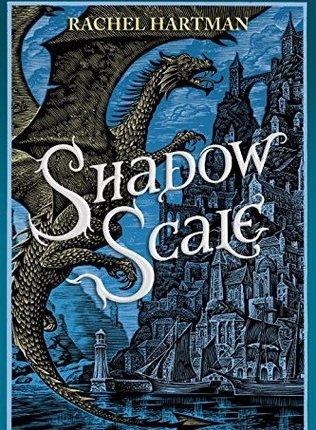
Shadow Scale by Rachel Hartman

Shadow Scale by Rachel Hartman

This is the second book in the Seraphina series. Seraphina is a half dragon/half human musician who, in the last book, was trying to hide her identity from those around her because, in this world where dragons are real, her existence was considered an abomination by religious authorities. How would a human and a dragon come together to make such a child, you ask? Dragons can take human form when they choose to, the trouble is that, they’re not very human-like in their actions and behavior, even when they do. Dragons consider emotions to be beneath logic, so, to put it in Star Trek terms, Hartman wrote them like Vulcans.

Seraphina, for a young adult novel, was rather complex. Not only was Seraphina dealing with her species identity, there’s also religious conflicts, internal/emotional conflicts, a meditation based “magic” system, a burgeoning war between the humans and dragons, factions on both sides who are opposed to the majority, dragon culture and hierarchy questions, tricky cross species friendships, the obligatory romance that every young adult book seems it MUST have and, in Shadow Scale, the added complication of Seraphina trying to find other half dragons like herself. It’s mind-boggling really when you write it all down and try to sort it out. I enjoyed trying to keep it all straight but I can see how Seraphina might not be a good fit for reluctant readers. There is a long list of characters at the end so that if you get confused, you can look each one up. If that kind of thing makes you crazy, you may want to pass on this one.

Seraphina has really come into her own in this story. Hartman certainly doesn’t skimp on the characterizations:“These scales, my visible emblem of shame… which I had hidden, suppressed, and even once tried to pry off with a knife- how was i now able to laugh about them with strangers? Something had changed in me. I was such a long way from where I had started.”pg 436, ebook.

My favorite parts of this book were anything to do with dragons! :“Dragons lay one egg at a time, and we grow slowly. Each death is significant, and so we settle our differences with litigation, or with an individual combat at most. It has never been our way to fight on this scale; if the war continues, our whole species loses.” pg 38, ebook.

Seraphina has a dream- to bring all the half-dragons like herself together to create a family, of sorts: “I am on a mission to find all our kind. Goredd requires our assistance with the dragon civil war, but once that’s over, I hope we might form a community of half-dragons, supporting and valuing each other.” Dame Okra rolled her eyes so hard I feared she’d give herself an aneurysm.” pg 112, ebook.

The intolerance taught by the religion in Seraphina’s world was terrifying, perhaps because it sounded so real: “I was no great hand at scripture- I avoided most of it- but I knew every line written about my kind, thanks to the pamphlet Orma had made me. “Half human, all malevolence” was one of Abaster’s best. Or: “If a woman hath lain with the beast, beat her with a mallet until she miscarries or dies. Let it be both, lest her horrifying issue live to claw its way out, or the woman live to conceive evil again.” pg 287, ebook. One of the main messages of Seraphina is tolerance for different cultures- that everyone has something positive to contribute in their own way.

As much as I gripe about the romance that always crops up in the young adult books, at least this one is well written:“However strenuously the world pulls us apart, however long the absence, we are not changed for being dashed upon the rocks. I knew you then, I know you now, I shall know you again when you come home.” pg 491, ebook. Awww, right?

This is a well written fantasy about dragons- fire breathing, scaled, roaring dragons! There’s nothing in here that parents should find objectionable for their teens to read and the messages that it teaches are worth while and should be repeated. Some read alikes: Daggerspell by Katharine Kerr (first book in a long, adult series, but, eventually, there’s dragons!) or The Last Dragonslayer by Jasper Fforde (appropriate for young adults).

Thanks for reading!

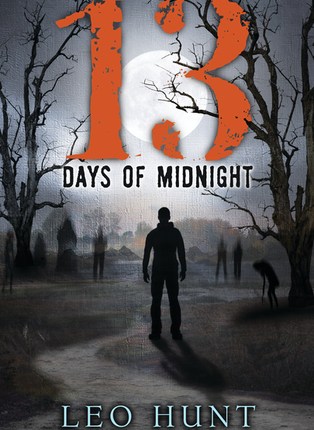
13 Days of Midnight by Leo Hunt

13 Days of Midnight by Leo Hunt

13 Days of Midnight is an enjoyable thrill ride through the world of Luke Manchett, a boy who is about to become a necromancer even though he didn’t know magic exists. His father dies suddenly and leaves him a “Host” which is a group of souls bound to serve and assist him.

The world of the new necromancer is fraught with peril and the souls that his father trapped do not respect him nor do they have his best wishes at heart.  Will Luke survive long enough to discover his own power?

Photo by luizclas on Pexels.com

13 Days of Midnight is classified as a young adult novel and it has enough teen angst and non-graphic violence for that to be true, but I enjoyed it on its own merits, which is something that not all young adult books have going for them.

My favorite part of Hunt’s book is that the reader gets to discover the world and its magical rules along with Luke. You don’t know what the spirits are capable of or what the necromancer’s spell book is going to reveal- it’s exciting! I kept coming back to the story because I just had to know what was going to happen next.

The only issue that I had with 13 Days of Midnight was the premise that Luke’s father didn’t teach his son the magical methods that he knew to protect Luke from what went down after his father’s death. The story cleared up that question for me towards the very end, but I spent most of the book not buying into it. There’s something primal in the parent/child bond that would never allow such a thing to happen. At least, there is for me.

Photo by Juan Pablo Serrano Arenas on Pexels.com

If you enjoyed this book, I’d recommend Shutter by Courtney Alameda (YA horror) or The Engelsfors Trilogy by Mats Strandberg (group of teens discover that they have magical powers and have to save the world).

Thank you to the Goodreads First Reads program for sending me a free copy of this book for review purposes.  And, thank you for reading!

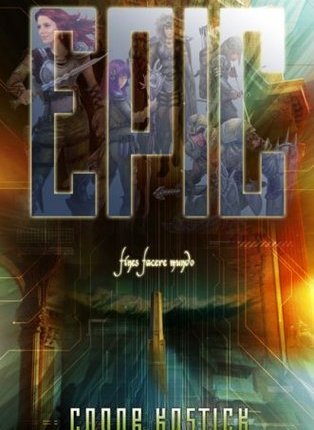
Epic by Conor Kostick

Epic by Conor Kostick

Perfect for fans of Ready Player One or anyone who has ever enjoyed playing an MMORPG. Erik, a young boy in a futuristic society, tires of scrabbling for his day-to-day existence in real life and in a virtual world, where all wealth and legal issues are decided by combat in a game called Epic. Almost everyone in Erik’s society kills kobalds and other low level monsters every day, to gather pennies to improve their online characters and, therefore, their society. After dying, yet again, and crushing his family’s hopes for his advancement in Epic, Erik creates a ridiculously attractive female character and puts all of his points into beauty, a skill that no one else ever considers because it is a useless stat from a fighter’s standpoint. What happens next is an exciting adventure through virtual worlds with magic, monsters, swords, and sorcery… who will triumph? Erik and his friends or the all-powerful Central Allocations team or the game, itself?

Erik’s creation of Cindella (his avatar): “Serious gamers, and the whole world consisted of serious gamers, never wasted a point on beauty that could be spent on more practical attributes, or combat skills, craft skills, weapons, magic items and spells. As a result, Epic’s population of players consisted entirely of dull, gray-looking humanoids. His friends were in for a shock; it would be impossible to explain his choices to them, as there was no rational argument in favor of throwing away every practical advantage in favor of beauty.” pg 15

The power of beauty: “While they made their way through the flapping canvas and rope of the market stalls, Bjorn noticed something unusual. The NPCs were not stationary; their heads were turning towards the two players. “Erik, look at the merchants.” “Hmmm. That’s odd.” Erik’s character made the actions that arose from the wave+smile command. A nearby seller of herbs smiled and waved back. “You try.” Bjorn had his big warrior wave. Nothing. “They like me!” pg 27

Librarians play a huge part in this story, which of course I LOVED: “Son, your story of Cindella and the pirate treasure is exciting. But you need to obtain more information.” “I know.” “Hope has a library. Where all the information ever learned about Epic has been stored. It is our right to be able to consult that information. So we are going to pay the librarian a visit.” pg 36

The villain in this book is just awful: “… the illicit thrill of being a player-killer was something that could not be understood with logic. Nor could logic explain the pattern of his killings. Curiously it was not the stronger looking players that attracted his attention- and if there was any justification for the deaths of players it was to eliminate possible threats to the Central Allocations team. No, it was the slightly heartrending players, with their one weapon and tiny pieces of armor, which drew his attention. There was something bewitchingly naive and tender about them, spending their spare time killing kobolds and orcs for pennies, saving assiduously and slowly. And so he rode them down, bringing their struggle up the ladder of Epic to an abrupt end.” pg 60 Haters gonna hate.

Doing the impossible… dragon slaying! : “I agree with Bjorn,” Sigrid interjected. “Farmers’ children just don’t kill dragons. Nobody kills dragons these days. But if they did, it would be the people in Mikelgard, with all their magic and expensive gear.” “But nobody even thinks about fighting dragons anymore.” Injeborg spoke up. Erik had known that he could count on her. “Only our Erik. That’s why he has seen something that they have missed.” She turned to her brother, “Come on, Bjorn. Let’s try it.” “No, it’s hopeless.” Injeborg stamped her foot in frustration. “You are always waiting for something to happen to you. But that’s not how life is.” pg 85

Big dreams: “Tell me,” said Injeborg. “Everyone, what is it that you would like from life?” She turned to look at Sigrid. “I would like to be allocated a small farm, somewhere near here.” “Bjorn?” “I would like the same.” “B.E.?” Slightly embarrassed, B.E. laughed, and then said, “I would like to be a successful Epic player, like Svein Redbeard.” “Erik?” “I would like nothing better than to be a librarian.” pg 89 🙂

A new way to play the game: “Wouldn’t it be wonderful if the game didn’t matter, other than to play it? We could explore snowy mountains, spectacular caverns, and remote desert civilizations. To journey just for the pleasure of the adventures would be something…” She paused. “Only now do I understand why this game was invented.” pg 192 A good metaphor for life, I think.

Thanks for reading!

Railsea by China Miéville

Railsea by China Miéville

“This is the story of a bloodstained boy.” That’s the first line of this strange and fantastical tale of giant creatures that “swim” in the earth’s soil and the brave and flawed “molers” who chase them for profit and life purpose. Miéville has created a dystopian world covered in railway ties with skies poisoned by chemicals and filled with monstrous, alien creatures who feast on those who get too close. But, there may just be something beyond the rails, if the characters in this story are determined and lucky enough to see their way through to the end of the world… Though based off of the tale of Moby Dick, Railsea is an engaging adventure and coming of age story that reads like nothing else I’ve ever experienced. Miéville has blended together steampunk, dytopian, and fantasy elements to create something completely different.

Sham is a boy on the cusp of manhood who can’t quite figure out what he wants to do with his adulthood: “Sham felt sure there was something he fervently wanted to do & to which he was excellently suited. Which made the more frustrating that he could not say what it was. Too vague about his interests for further study; too cautious in company, perhaps a little bruised by less-than-stellar school days, to thrive in sales or service; too young & sluggish to excel at heavy work: Sham’s tryings-out of various candidate activities left him het up.” pg 36, ebook. Anyone who has ever been lost about what path to follow in life will be able to empathize with Sham.

Miéville’s story, like Moby Dick has layers of meaning built into it: “Edging such places is the railseaside, called the littoral zone. Those are the shorelands. Port towns, from where transport, freight & hunting trains set out. Where lighthouses light ways past rubbish reefs breaking earth. “Give me the inland or give me the open rails,” say both the railsailor & the landlubber, “only spare me the littoral-minded.” pg 51 ebook. Clever, no? A warning, if you don’t enjoy reads where the author makes up words to tell the story, you may want to skip Railsea. There’s a bunch of creative adjectives and nouns mixed up in this one.

The religions of this world were a fascinating too. I wish Miéville had explored them more: “He muttered in his head to That Apt Ohm, the great rotund boss-god, one of the few deities worshipped across the railsea, whatever the peculiarities of local pantheons. Bollons was ecumenical, granted church-licences to any deities whose worshippers could pay the fees. But the disrespectful worship of That Apt Ohm was taken more seriously there, pursued with more verve, than at most stops on the railsea. Sham had no idea quite what, if anything, he believed, but there seemed little harm in a quick silent word with one of the few gods whose name he remembered.” pg 100, ebook.

Part of the homage to Moby Dick, finding a captain’s “philosophy”: “How many of these philosophies were out there? Not every captain of the Stereggeye Lands had one, but a fair proportion grew into a close antipathy-cum-connection with one particular animal, which they came to realise or decide-to decidalise-embodied meanings, potentialities, ways of looking at the world. At a certain point, & it was hard to be exact but you knew it when you saw it, the usual cunning thinking about professional prey switched onto a new rail & became something else- a faithfulness to an animal that was now a world-view.” pg 130 ebook. What’s your white mole?

I enjoyed Railsea but I can see how this writer might not be for everyone. He uses fragmented sentences and ampersands (&) to move the story along. The chapters are incredibly short which also kept the pace rolling but it could also be viewed as making the novel choppy. Sometimes, Miéville breaks through the fourth wall and addresses the reader directly. I thought that device was charming, conjuring up images in my mind of storytellers sitting in front of the fire or at a pub. But, again, this may not work for everyone.

Some read-alikes for Railsea: Chaos Walking series by Patrick Ness or Under the Empyrean Sky by Chuck Wendig.  Thanks for reading!

Princeless, Volume 4: Be Yourself by Jeremy Whitley

Princeless, Volume 4: Be Yourself by Jeremy Whitley

Dear readers, there are some spoilers in this review, but they’re necessary for a thorough discussion of the comic.  Please, if you haven’t read this one yet, go pick it up from your local library and then come back to this review.  Thank you 🙂

The Princeless series continues to deliver strong female characters, beautiful (child appropriate) artwork, and storylines with meaning. Each time Adrienne and Bedelia venture out to rescue one of Adrienne’s sisters, a facet of relationships is dissected and examined. This volume dealt with abusive relationships and gender roles in government.

Now, it’s not that cut and dry on the surface- the story itself is really fun and engaging. Adrienne and Bedelia have to survive a cannibalistic tribe of goblins in a monster infested swamp in order to reach Angoisse’s tower. On the way, they befriend unlikely allies and encounter a plant-like terror.

While this is going on, Adrienne’s brother, Devin, refuses to embrace traditional gender roles and activities, which continues to infuriate his tyrannical father. Their relationship illustrates the eternal struggle between parent and child. Parents think they know better and push their child in the direction they believe they should go, while children want to follow their natural inclinations. In the push-pull dynamic, somehow everything works out fine, but with more bad feelings on either side than there need to be.

The abusive relationship portion is tactfully presented in the interactions between Angoisse and Raphael. Sometimes people act a certain way because they want something out of you, other than your company. Kids get it. But in an era of Twilight idealization, I think the presentation of a “vampire” who acts out of self-interest rather than undying love is an important topic to discuss.

Teen relationships are just as thorny and prone to abuse as adult relationships and, because they are some of the first experiences that teens have, they have the potential to color the rest of that person’s lifetime and set the stage for the relationships to come.

Angoisse is a victim of Raphael but also her own beliefs. She’s always thought that she needed a man to complete her and she was going to do whatever it took to keep that relationship intact, even to the point of giving up her humanity or betraying her own family.

It didn’t take a very smart predator to see that she could be manipulated through her feelings. Sadly, such people actually exist. Thank you, Princeless for opening a door to the discussion of how to remain true to yourself in relationships and a powerful example of how to leave the ones that have soured.

The story is not too complex and adult readers may find it rather simplistic (unless you dig deeper into the underlying meaning), but it’s perfect for the 8 to 12 year olds. This comic will appeal to reluctant readers of either gender. I highly recommend it.

Thank you for reading!

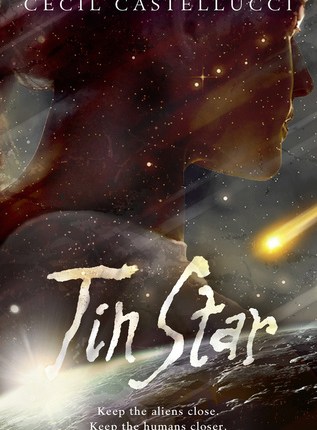
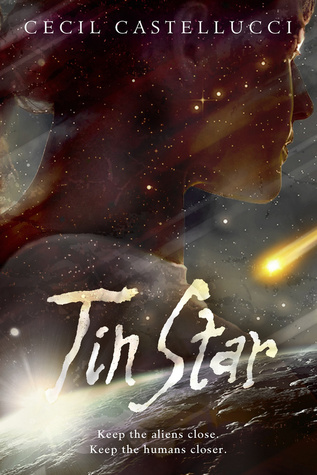
Tin Star by Cecil Castellucci

Tin Star by Cecil Castellucci

tinstarTin Star is the story of Tula Bane, a teenager who joined a space colonizing cult from Earth. She is abandoned on a way station near the edge of the known universe on the way to her new home.

How will Tula Bane survive among aliens who think human beings are the worst? Will she ever be able to go home to Earth or the colony’s planet? How will she manage to put bread on the table?

I love a good space opera and I thought that I would enjoy Tin Star more than I did.

The promise of books set in space, in my opinion, is the opportunity for unique interstellar exploration and worlds created entirely from the author’s imagination. Because of Tula’s unique plight- being stuck in what is essentially a space gas station- the author left herself very little room to write a creative story.

Mainly, Tin Star deals with character development and social struggles, not adventuring in new places.

The villain of the tale was charismatic and creepy. Take this description: “He had his hand on my shoulder in a way that he had a million times before. Only before it was comforting, encouraging, affectionate. Now it was menacing. He was looking at me and his face was smiling. To anyone looking from afar, he seemed to be pleased with me, but it was just a mask. His attitude shifted from concerned leader to unknowable monster.” pg 4

Tula manages to befriend a shady, insect-like alien named Heckleck. He’s my favorite character.

In this passage, Heckleck explains the problems Tula will face in trying to leave the station: “I know about you,” Heckleck said. “Everyone does. And you will never get off this station. You are nobody. And worse, you’re a Human. Even if you did not get on a ship that would take one of your kind, you’d have nowhere to go but to roam like the others of your kind do.” pg 35.

Keeping it real: with Heckleck.

I thought Cecil Castellucci could have done more with the cultural differences between Tula and the others on the station.

One of the most interesting exchanges in the book was between Tula and Tournour, the head of the outpost. She’s trying to figure out how old he is and, because they’re from different planets/species, it’s a surreal conversation. More of that would have been nice.

But Castellucci wrote cultural and language barriers out of the story by introducing nanites into Tula’s bloodstream to translate alien languages for her.

Something that Castellucci did well was writing profound silences between characters into her story. For much of this story, Tula finds herself standing around with Heckleck and Tournour and having nothing to say. But, somehow, it works.

I liked how Castellucci wrote the thoughts spinning through Tula’s mind at these moments. It reminded me of myself when I can’t think of anything to say: “It was a silent agreement between us that if we spoke too much then we would have to talk about the practical things. … If we ever spoke of the things that truly pressed up against us, our very real worries, our seemingly impossibly plans for escape, our divergent hopes for the future, our bubble would blow apart.” pg 184

This book in three lines: “In the end, good must win over evil. The trouble is trying to figure out which is which. Sometimes they look so much alike.” pg 204

Read this book if you enjoy light, young adult drama in space. If you’re looking for a meaty, space adventure, you’ll need to find another title.

Some read-alikes are: The Knife of Never Letting Go (teen trying to survive on an alien planet) or Gated (teen trying to leave a cult).

Thank you to Roaring Brook Press for sending an advance reader copy of this book. And, thank you for reading!