The 7½ Deaths of Evelyn Hardcastle by Stuart Turton

The 7½ Deaths of Evelyn Hardcastle by Stuart Turton

A science fiction twist on the mystery genre — each morning a man, who can’t even remember his own name, wakes up in a different body at a party in the country. Each night, the daughter of the hosts dies. It is his job to solve the mystery to break the cycle. But where to begin?

“My dear man, what on earth happened to you?” he asks, concern crumpling his brow. “Last I saw —” … “We must fetch the police,” I said, clutching his forearm. pg 7

Photo by Skylar Kang on Pexels.com

As the man lives the same day again and again, he discovers that he is not the only one trying to solve this mystery. And none of the people in the house are who they appear to be.

“A party?” she says, shaking her head. “Oh, my dear man, you really have no idea what’s happening here, do you?” pg 48

Any readers out there watch the television show, Quantum Leap, in the 80’s and 90’s? (It may be on Netflix now too, I don’t know.) I devoured that show every time it was on.

The television show is about a doctor named Sam Beckett who enters a time travel/quantum physics experiment and it goes terribly wrong. He finds himself stuck in the body of other people throughout history. He has to solve a mystery or right a wrong in each life and then he “leaps” into somebody else.

From the introduction to Quantum Leap“And so Dr. Beckett finds himself leaping from life to life, striving to put right what once went wrong and hoping each time that his next leap will be the leap home.”

This story is quite similar to a mystery version of that show.

“Somebody’s going to be murdered at the ball tonight. It won’t appear to be a murder, and so the murderer won’t be caught. Rectify that injustice and I’ll show you the way out.” pg 68

Photo by Pixabay on Pexels.com

I enjoyed it immensely. My only complaint is that the introduction is completely baffling until the author begins to drop clues about what’s going on. Other than that, prepare yourself for a twisting, complex ride through the same day, over and over again.

“Somebody wants me dead.” It feels strange to say it out loud, as though I’m calling fate down upon myself, but if I’m to survive until this evening, I’ll need to face down this fear.” pg 34

It doesn’t sound like very much fun, but similar to the film Groundhog Day, the reader soon discovers that much more goes on in one day than can be entirely lived through one viewpoint or life.

This book helped me ponder how complex life actually is. Imagine everything you’re missing by living each day in just one body.

Photo by Josh Sorenson on Pexels.com

Highly recommended for science fiction and mystery fans.

Thanks for reading!

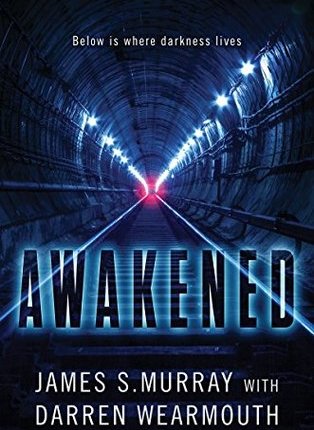
Awakened (Awakened #1) by James S. Murray, Darren Wearmouth

Awakened (Awakened #1) by James S. Murray, Darren Wearmouth

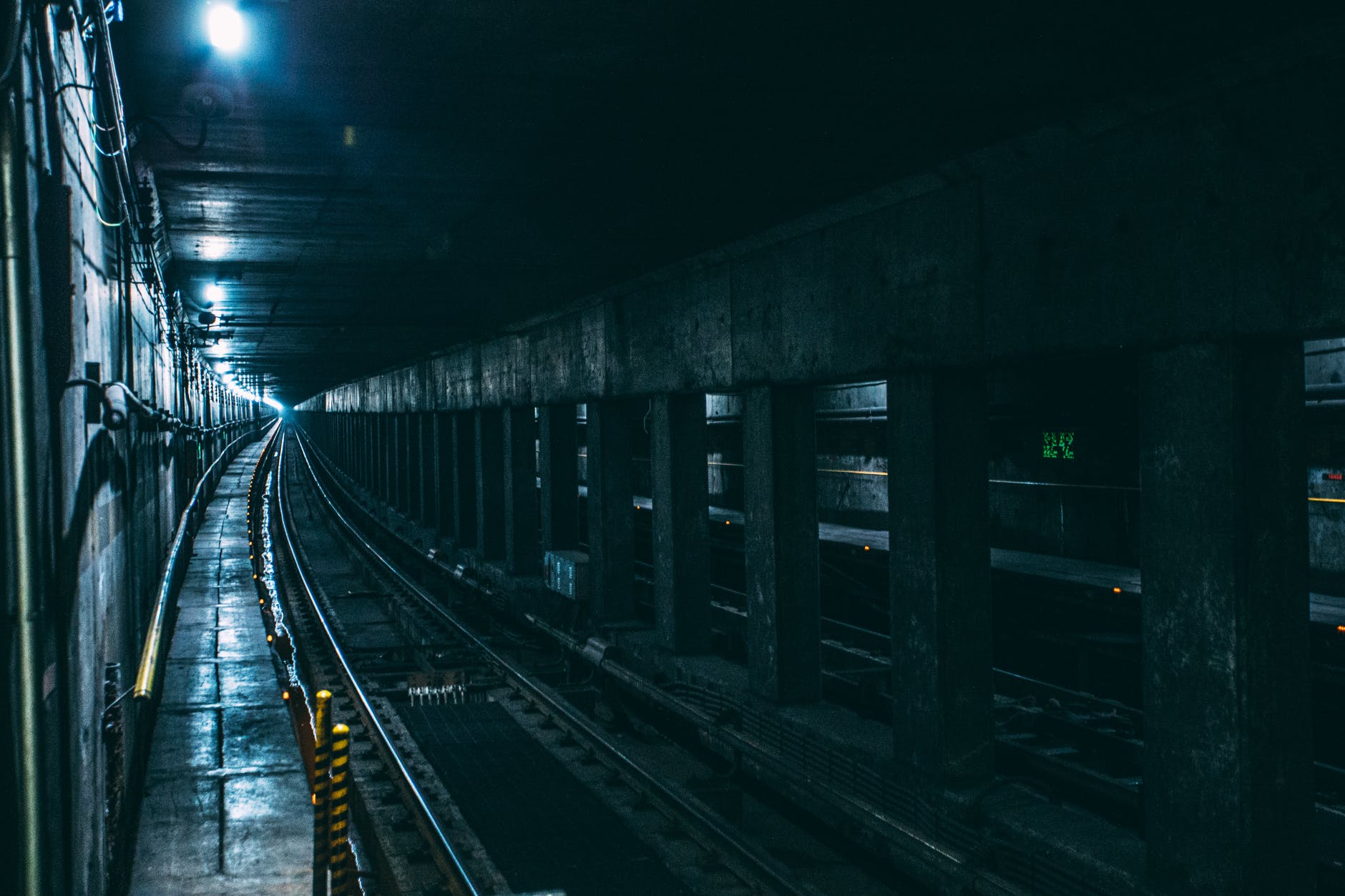
A new subway line in New York City is being unveiled with fanfare, press coverage and even a visit from the President of the United States. When something goes terribly wrong, it becomes clear that an unspeakable evil has been released from the depths.

And they all said the devil didn’t actually exist…

Photo by Anthony Macajone on Pexels.com

Plodding dialogue and clumsy character development clog what otherwise would have been an action-packed science fiction read. The set up was so classic. The line, “the dwarves delved too deep”, kept running through my head.

“The workers shouted and pointed, but the noise of splitting granite drowned out their words. The ground beneath Grady’s feet disintegrated. He lunged for the cable, clutched it in a white-knuckled grip, and dangled over the newly formed black abyss.”pgs 8-9, ebook.

And once the evil emerges, I thought everyone took far too long to figure out what the heck was going on. For goodness sake, the President was right there. I mean, maybe in the face of unexplained phenomena, response times would be slowed down. But I had a hard time believing the incompetence.

“The majority headed to the food court while shooting nervous glances toward the train. Cops, now free from the burden of chaos, helped the injured to their feet and escorted them to triage. The five dead — one from the stampede, another shredded by the cafe window, and three at the hands of the Secret Service — were placed in a line and had jackets draped over their faces.” pg 18, ebook.

Photo by Kaique Rocha on Pexels.com

On the other hand, I did enjoy some of the tense moments. I liked the way journalists were portrayed, because of course they’d be there. Unless all newspapers go under… which, let me be clear, I don’t think anybody wants. But gosh, that’d make a good horror story, wouldn’t it.

“We’re sealing the second car of the train and taking refuge inside.” “Are you mad?” the Washington Post journalist called out. “There’s not a chance in hell I’m going near that subway train.” pg 37

If you take this story for what it is, like a summer blockbuster of a book rather than a serious work of science fiction, it’s fun enough. There’s thrills, chills and moments of terror.

“He had never subscribed to conspiracy theories or the far-fetched stories about monsters, but he couldn’t deny what he just saw. It hardly seemed believable. … This wasn’t terrorism. It was pure terror.” pg 52

Photo by Lucas Pezeta on Pexels.com

Recommended for readers who are looking for a mildly entertaining book to pass the dark days of winter or the hot days of summer by a pool. This is like a “comfort food” option for horror and science fiction fans.

Thanks for reading!

The God Hunter (Field Ops #1) by Tim Lees

The God Hunter (Field Ops #1) by Tim Lees

An interesting science fiction novel about a company that captures gods and transforms their energy into a commodity.

“The official view is, all we’re dragging up are imprints. Worship at a certain site for long enough, you charge it up. The power gets compressed, like coal.” pg 11, ebook.

Photo by Adrien Olichon on Pexels.com

When something goes wrong, as one would expect it to, the results are pretty bad. Chris Copeland is called in to clean it up. But there may be no stopping what happens next…

This book was like the film Ghostbusters, except instead of containing the ghosts like in the movie, they’re transmuting them somehow. Well, and the film has ghosts instead of gods. But, you see the similarities.

It’s an interesting idea. Everyone is looking to develop new, clean and renewable energy. What if we could mine that from emotions or other planes of existence? Would such a thing be possible? And what would be the costs?

“I don’t believe in premonitions. You only see them looking back, once the mind’s had the chance to make up shapes and patterns, and give form to random data. And yet now, in retrospect, it seems those days were full of omens, all trying to tell me something, circling me like softly-whispered threats.” pg 28

Photo by Alem Su00e1nchez on Pexels.com

Chris is an interesting character. He embodies the “over-worked into absolute nonchalance” type. Chris and his coworkers are literally capturing gods and he’s like “so what?”. I imagine you could get used to anything after awhile, but his attitude was amusing to me.

Especially when you put him next to professional detectives later in the book. They have the exact same attitude except about criminals rather than spirit energy. It makes for a fascinating juxtaposition.

“It’s manna,” Martin Klein announced, matter-of-fact. “The stuff that fed the Israelites.” “Wrong desert,” I said. “You’d have to be a thousand miles east for that.” “Well.” He shrugged. “It gets around.” pg 74

Like any business that can generate enormous profits or be controlled by the government, the god-into-energy racket has attracted some unsavory and cutthroat characters. But the stakes are higher than simple wealth or power. A misstep could mean the end of the world.

Photo by Pixabay on Pexels.com

I wanted this book to be more mystical, with more conspiracies, and more romance. I enjoyed the premise and the questions the story raised about people being people, no matter their level of technology. I also liked the character of Anna Ganz, the strong female detective.

I did not like how the author Tim Lees gave us very little context. I also didn’t like how he didn’t develop the characters much beyond the main two.

Recommended for science fiction readers who like their stories thick with questions and a bit thin on the answers.

Thanks for reading!

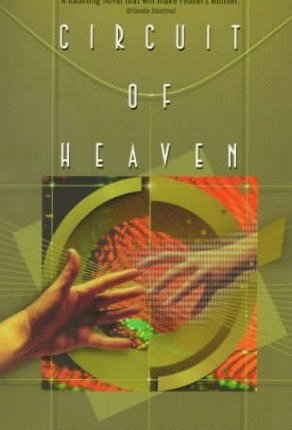
Circuit of Heaven by Dennis Danvers

Circuit of Heaven by Dennis Danvers

“Is not God in the height of heaven? And behold the height of the stars, how high they are. And thou sayest, How doth God know? Can he judge through the dark cloud? Thick clouds are a covering to him, that he seeth not; and he walketh in the circuit of heaven.”pg 14

Photo by Burst on Pexels.com

Humanity has created a computer program that can contain a person’s soul within its code. The programmers have made a new world — one without disease, violence or hunger, where those who leave their bodies behind and enter it, can live forever.

Prior to this breakthrough, programmers learned how to implant portions of people’s personalities into biological bodies, to work as laborers and earn money for the ultimate project of building the new paradise. They called these creations, “constructs”.

Not everyone, including some leftover constructs, have chosen to take advantage of this “heaven” and entered the program. Religious fundamentalists and those who have other objections to entering have remained behind. However, society has broken down without the leaders, who entered the program along with billions of other souls. Food is hard to come by and wild packs of dogs roam the streets.

Nemo, for reasons he can’t totally explain even to himself, has chosen not to enter the program (commonly called ‘the Bin’) to be with his parents. But on a recent visit, he meets a beautiful woman and his life will never be the same.

Photo by Pixabay on Pexels.com

Justine is a recent arrival to the Bin. But her memories are confused and she can’t remember where she has been for the past few weeks. Is it a programming error or indicative of a bigger problem with the Bin itself?

There were scare stories about people going into the Bin and breaking up like a virtual in a thunderstorm, that there were flaws in the crystalline structure of the Bin, and you could find yourself in nightmarish worlds that made no sense, completely alone.” pgs 12-13

I enjoyed the science fiction portions of this story and contemplating the power that humanity could one day potentially wield over life and death. With computers advancing the way they are, it’s not too hard to imagine that someone someday will figure out how to code a personality or soul. And that raises a whole host of other questions, doesn’t it.

What about the psychological effects of everything you could ever want being available at the touch of a button? What does it mean when a mother can program herself to look younger than her children? And what about children in a world without death? Should babies be uploaded immediately into the Bin or programmed from pure code without ever having existed in the real world?

Photo by Lisa Fotios on Pexels.com

The dilemmas go on and on. Beyond considering the hypothetical moral questions, I had a few problems with this book.

The characterizations were weak. A few of the major plot twists were clear well before they happened. But there was one, a big one, that I didn’t expect and it was pretty messed up. Then, the characters just seemed to get over it and move on. They had a few conversations and that was that. To be honest, it took me awhile longer. (No spoilers, but if you read this one, I’m certain you’ll know exactly what I’m talking about.)

Then the ending, when it came, was too rushed, which was rather a shame. So, that’s why I gave this a middling review. The premise was fantastic. Then it devolved into a so-so science fiction.

Thanks for reading!

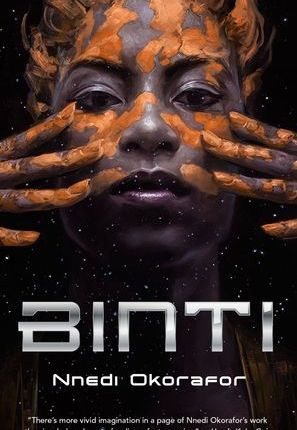
Binti by Nnedi Okorafor

Binti by Nnedi Okorafor

Binti Ekeopara Zuzu Dambu Kaipka of Namib is from a small tribe on Earth. They have the ability to use mathematics to create instruments called astrolabes that can read and interact with the energy of the universe. These astrolabes can be used for purposes ranging from a simple “phone call” to interpreting a person’s future.

Even among her people, Binti is extremely talented in this art. She is a mathematical genius who contemplates complex equations to enter a flow state. She is also the first from her tribe to be accepted at Oomza University.

I was the only Himba on the ship, out of nearly five hundred passengers. My tribe is obsessed with innovation and technology, but it is small and private, and, as I said, we don’t like to leave Earth. We prefer to explore the universe by traveling inward, as opposed to outward. pg 21

Photo by Mario Cuadros on Pexels.com

Can she leave everything and everyone she’s ever known or loved to go to the university?

Binti is a science fiction novella with an extraordinarily unique premise and world. But I felt it was complex enough that it would have been more enjoyable as a full length novel. I wanted to know more: about the Meduse, the astrolabes, the meditative “treeing” or mathematical contemplation.

“My people are the creators and builders of astrolabes,” I said. “We use math to create the currents within them. The best of us have the gift to bring harmony so delicious that we can make atoms caress each other like lovers.” pg 62

Photo by RF._.studio on Pexels.com

Perhaps that’s not fair of me, to expect more out of a novella rather than appreciate it for what it is. I mean, Binti is a Hugo and Nebula award winner. There is something almost magical about it. I could see this becoming an extraordinary science fiction series of books or even a television show.

Highly recommended for readers who appreciate science fiction short stories, which (apparently) isn’t my thing.

Thanks for reading!

Spoonbenders by Daryl Gregory

Spoonbenders by Daryl Gregory

A con-man and a highly talented psychic fall in love and have children with extraordinary talents. But this doesn’t automatically give them an extraordinary life. They struggle to hold down jobs and support each other, while mourning the loss of one of their members and a career in showmanship.

One night, years before this story takes place, the Telemachus family was on a late night show, introducing themselves to the world. But a skeptic proved a portion of their act to be fake and the family’s bookings all fell through. One of the members of the family, Frankie, blames the skeptic for the mediocre life they are living now… and worse.

Photo by Cleyton Ewerton on Pexels.com

“Archibald was a necessary evil,” Grandpa Teddy said. “He was the voice of the skeptic. If your mother had shown him up, the audience would have loved us for it. We could have gone to the stratosphere with that act.” “He was evil,” Frankie said. … “He killed Grandma Mo…” pg 19, ebook.

Though the head of the family, Grandpa Teddy, doesn’t have any legitimate powers to speak of (except a talent for manipulating cards), his children have a veritable cornucopia of abilities. Frankie can move metal objects with his mind, when he’s not under stress. Irene can tell if someone is telling her a lie. And the youngest, Buddy, can see the future so clearly that he calls his perceptions “memories”.

And their children have different powers too.

“That they were psychic was another Telemachus Family Fact, in the same category as being half Greek and half Irish, Cubs fans and White Sox haters, and Catholic.” pg 27, ebook.

Photo by Mikhail Nilov on Pexels.com

The strength of this story is in the characters themselves. You really enjoy learning who these people are and seeing how they prevent themselves from being great. It’s also just a fun story about a large, semi-dysfunctional family. As someone from a large family myself, I felt right at home in this world (minus the extraordinary powers and most of the dysfunction).

One of my favorite characters, though he was a bit of a rogue, was Grandpa Teddy. He’s trying to keep his herd-of-cats family all pointed in the same direction while not having the advantage of extraordinary abilities beyond his own quick mind.

“The problem with getting old was that each day had to compete with the thousands of others gone by. How wonderful would a day have to be to win such a beauty contest? To even make it into the finals?” pg 196

I also liked Irene, the daughter who could tell if you were lying to her. I never considered how much the small untruths we tell each other grease the wheels of relationships and civil discourse.

Photo by Magda Ehlers on Pexels.com

This might be a good pick for a book club read. There are plenty of issues to discuss and powerful moments to dissect.

I may have enjoyed this book more if it had been primarily about the family’s abilities rather than real life drama. But I’m into superhero stories and epic fantasy. For readers who like to think about the impossible but not read a story where that sort of thing is the norm, this book may fit the bill.

Thanks for reading!

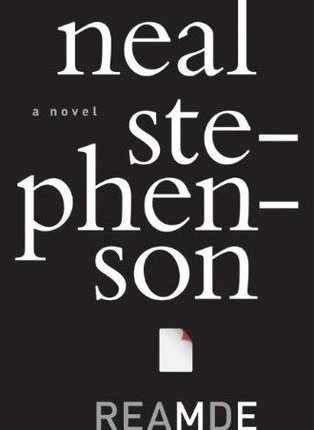
Reamde by Neal Stephenson

Reamde by Neal Stephenson

A former drug smuggler turned (mostly) straight-laced business man owns a multi-million dollar computer game, a refugee from Eritrea, a Hungarian computer hacker, a computer engineer, a further cast of international characters and the Russian mob all feature largely in Reamde. It is a science fiction novel by Neal Stephenson, but more than that.

This book will teach you about how flight paths are planned, how to properly check the safety on a firearm, and how the best laid plans of mice and men oft go astray.

“Thanks for coming all the way out from Vancouver,” Peter said. They had not introduced themselves, or shaken hands, just sized each other up and confirmed with nods that they were who they were.” pg 108, ebook.

Photo by Brayden Law on Pexels.com

Stephenson gives almost every character a full-fleshed out backstory and motivations. Sometimes he allows you into their mind to experience each nagging insecurity or existential crisis they may have.

He’s big into writing about body language, setting, and giving readers context on cultures or situations that she may not understand.

For example, the addictive quality of gaming for the non-gaming crowd: “She’d been awake for twenty-four hours. There was something deeply wrong about the situation, and the only thing that had kept her from simply running out the door of the building and flagging down the first car she saw and asking them to call 911 was the addictive quality of the game itself, her own ability to pull herself out of the make-believe narrative that she and Wallace had found themselves in.” pg 150, ebook.

Or making plans. Stephenson also enjoys writing about his characters concocting plans: “It is a classic Dilbert situation where the technical objectives are being set by management who are technically clueless and driven by these, I don’t know, inscrutable motives.” “Then we just need to scrutinize them harder. Do what those guys in the high-tech companies do.” “Which is what?” “Set expectations. Look busy. File progress reports.” pg 198, ebook.

Photo by Ekrulila on Pexels.com

And it is a long read. My ebook clocked in around 1420 pages. So, definitely not for the impatient reader. I found myself wanting more to happen and less agonizing by the characters.

That being said, if you invest the time in it, the last dozen or so chapters of Reamde are incredibly satisfying. You know the characters, you’ve been with them through all sorts of insane situations, and when Stephenson starts bringing them all together in the most unlikely and unexpected ways… it is very good.

But you have to make it that far first.

I’m not explaining this book and its attributes very well, but it may be one of those books you just have to experience for yourself. I picked it up on the recommendation of a friend and was not disappointed.

Photo by Thought Catalog on Pexels.com

But I don’t think I’m going to immediately go running for the next Stephenson epic. Or maybe I will…

If you’re into epic-length science fiction, you may want to check out The Abominable by Dan Simmons

Thanks for reading!

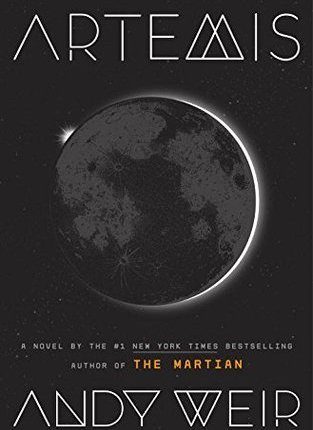
Artemis by Andy Weir

Artemis by Andy Weir

Jazz lives on Artemis, the first city on the moon. She delivers packages to eek out a living as well as other, more shady, methods of income.

“I live in Artemis, the first (and so far, only) city on the moon. It’s made of five huge spheres called “bubbles.” They’re half underground, so Artemis looks exactly like old sci-fi books said a moon city should look: a bunch of domes.” pg 5

Photo by Alex Andrews on Pexels.com

One day, one of the richest men on the moon makes her an offer far too lucrative for her to refuse… all she has to do is something very dangerous and illegal. No problem, right?

“I’m sorry, but this isn’t my thing,” I said. “You’ll have to find someone else.” “I’ll give you a million slugs.” “Deal.” pg 46.

Andy Weir’s follow-up to The Martian was disappointing to me.

Unlike his first book, the science is watered down. It’s not as educational and quirky. In my mind, the exceptional science was what separated The Martian from other science fiction offerings.

The characterizations are one dimensional, like The Martian, but it was less of a problem in the first book. In that one, you were mainly dealing with one person, alone.

In Artemis, Weir tries to build a city of characters and I didn’t buy into it.

Photo by murat esibatir on Pexels.com

The main character, a female narrator, is particularly problematic. She just didn’t sound like a woman to me.

“I landed like a sack of sh*t. But I landed on the other side of the alcove and didn’t break anything. … Whatever. A clumsy, awkward success is still a success.” pg 124.

But beyond those small problems, Artemis is still enjoyable.

Weir put a huge amount of thought into how an economy on the moon would work. It is the most realistic I’ve ever read.

He also nails the human condition, the drive for novelty and tourism.

Weir describes the trouble with travel: Even when it’s a once-in-a-lifetime vacation. You leak money like a sieve. You’re jet-lagged. You’re exhausted all the time. You’re homesick even though you’re on vacation.” pg 152.

Photo by SevenStorm JUHASZIMRUS on Pexels.com

Word.

Members of my book club voiced the opinion that Weir wrote this book as if he was prepping it for the screen. I agree.

If you’re going to read one Weir book, go with The Martian. Borrow this one from the library.

Thanks for reading!

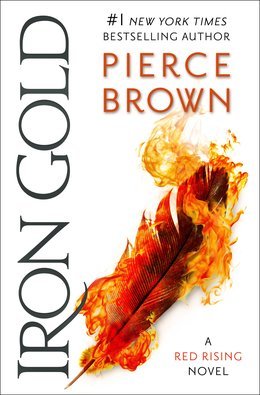
Iron Gold (Red Rising Saga #4) by Pierce Brown

Iron Gold (Red Rising Saga #4) by Pierce Brown

Darrow led an uprising and smashed the hierarchy that had held the worlds in its thrall. Now, ten years later, he is discovering the difficulties of maintaining rule and stamping out the last of the old regime.

More than anything else, Darrow is sick of war. Yet, unrest dogs his every step.

“I remember when you told me I was a good man who’d have to do bad things,” I say. “Your stomach go soft? Or have you spent so much time with politicians that you’ve forgotten what the enemy looks like?” pg 21.

Photo by Plato Terentev on Pexels.com

The government Darrow and his allies have crafted out of the former rebellion is divided in how to proceed. The enemy is entrenched on the planets nearest the sun… and also the planets furthest from it.

“Like you, I wish for nothing more than peace. I wish for a world where the machine of war does not swallow our young. … Our enemies have held dominion over us for too long. First as slaves, then adversaries. And what stability, what harmony can we bring to the worlds we have freed while they continue to define us?” pg 89.

Pierce Brown has crafted a satisfying return to his dystopian world with characters readers loved from his first three books.

We also get to meet a few new ones like a wily thief who gets in over his head and a kind, young Red who discovers The Reaper’s new world isn’t anything like it was portrayed on the holos.

Photo by Marek Piwnicki on Pexels.com

There’s sweeping speeches and heart-pounding battle scenes. Brown’s newest book is incredibly entertaining.

I have two regrets though.

The first is I read the other books so long ago, I forgot many of the small details. If I had it to do over again, I’d re-read the first trilogy before hopping into this one.

“It is our duty to embrace the scars our choices give us, to embrace and remember our mistakes, else we live believing our own myth.”pg 316.

Photo by Rachel Claire on Pexels.com

The second is Brown hasn’t written his next book yet and he ends on, what seems to be for him, a signature cliffhanger.

I refused to read the first three books until the trilogy was complete because I really don’t like waiting for the next entry in a series.

“The key to learning, to power, to having the final say in everything, is observation. By all means, be a storm inside, but save your movement and wind till you know your purpose.” pg 355.

It’s a nod to Brown’s genius that I purchased this new title from the book store. I’m a library patron through and through, but this is one that is worth owning.

Here’s hoping Brown writes really fast.

Highly recommended for science fiction and dystopian fans. Start with Red Rising.

Thanks for reading!