The History Major by Michael Phillip Cash

The History Major by Michael Phillip Cash

Something strange happened last night, but Amanda can’t remember what it was. She’s terribly hung over and she knows that she fought with her boyfriend, but that doesn’t explain why her roommate isn’t the person she remembers or why she can’t see out the window. Why does she feel like something is watching her and why does the university campus not look like it did yesterday? And, so starts The History Major.

Discovering what is going on is part of the fun of this short story, so I’d suggest stopping here if you have any intention of reading this yourself. Thank you to NetGalley for a free copy of this short story for review purposes.  ***Please do not read beyond this point to avoid spoilers!!  Warning… Warning!!***

For those that either have read it or are not going to read it… let’s discuss!

So, I feel as if this story, like life some would say, is all about consciousness. How aware are you of your internal worlds? Does our history define us or do we decide what has meaning? Is there such thing as the collective unconscious? And, the biggest question of all, what happens to consciousness after death?

The author begins with Amanda feeling paranoid and it sets the stage for the whole thing: “Her skin prickled again; she felt the sensation of being watched. Amanda turned around and walked backward, looking across the vast estate for the intrusive eyes. The wind ruffled the leaves. Amanda paused, searching for the discordant thing that pulled at her, but there was nothing out of place. She searched but couldn’t find the cause of her uneasiness.” loc 206, ebook. There’s a general feeling of creepiness that never goes away. I didn’t really like that part of The History Major but readers of horror might really love it. Self discovery and self knowledge shouldn’t be scary. The various dream books that I’ve read say that the way to end nightmares is to stop running and face the monster. I feel like Amanda spends far too much time running, but then, I suppose, it wouldn’t make a very good story if she didn’t, would it? Amanda discovers monster, faces monster, and is ok after all.

Amanda is a sympathetic character. I think we’ve all been there: the day after having one too many and waking up to an “uh oh” feeling. She, fairly bravely, faces the first day of college even though she knows something is not right. She even takes her messed up schedule to the secretaries and tries to get them to change her classes. But, I didn’t like how reliant she is on her boyfriend. Given her childhood history (warning, if you are triggered by childhood molestation do not read this book), I can see how she turned out that way, but I wanted her to take the reigns of her life and go for it- not fret about if walking down the sidewalk with another man will make her boyfriend jealous.

I also did not like Death being personified as a monster or the fate of Nick. I don’t believe that Death is evil or comes at us with choking hands. I prefer to view it as a doorway to another reality. As for the “hell” vision for Nick, I think that hell is a state of mind and something that we create on earth, but, this is just my opinion.

“People are trapped in history, and history is trapped in them.” Loc 611, ebook. I thought that The History Major did a good job of using historical figures to help Amanda remember her present circumstances, but I thought that the “history” itself was given too much credit. For example, Amanda could have been watching the tv and been triggered into remembering her past by what came on the screen. Or, she could have taken an art class and been triggered by the works of art in the classroom… there are many topics that could have led to her epiphany.

So, that was my beef with this book: the frightening aspect of searching the subconscious mind, the co-dependent heroine, the nasty personification of Death and the hellish afterlife, and the reliance on historical figures who, when you consider it more closely, have very little to do with what actually happened to Amanda. But, even saying all those things, I read this short story in one sitting and was really interested to see where the author was taking it. Pick up The History Major if you’re interested in a short, metaphysical read. If you’re looking for more in-depth books about any of the history that appears in this story try: Blood & Beauty: the Borgias by Sarah Dunant or Joan of Arc: a History by Helen Castor.

Thanks for reading!
The Guild by Felicia Day

The Guild by Felicia Day

The Guild is a graphic novel prequel for the internet series of the same name.  I think it is a must-read for fans of Day’s show and gamers who haven’t seen the show may enjoy it too. Other readers may want to give this a pass as it deals almost exclusively with gaming or RL relationships through gaming.

As much as I enjoyed this book, I felt like Day missed a golden opportunity to present the show in a completely different way. Day could have written this as characters in “The Game” with only brief moments of RL intruding into it. It would have flipped the show on its head and, in graphic novel form, she wouldn’t have faced any production limitations. Can you imagine it? I absolutely could. Maybe that’s what she did in the next book? Here’s hoping.

The glimpses that we had of the backstories of the Guild’s characters was awesome and I couldn’t get enough of “The Game” itself. Pretty much any scene where they were in the digital world was amazing. I also loved how their avatars had their real life faces.

The “one camera confessional” scenes worked so well in show, but didn’t translate as fluidly in the book. I think the reason why it works in real life is the expressiveness of Day’s face as she talks her way through her problems. The panels in the book didn’t have that aliveness and sort of fell flat.

But, that small gripe aside, I really enjoyed this one and highly recommend it. Some other graphic novels that readers may enjoy: Nimona by Noelle Stevenson (fantasy world), Fray by Joss Whedon (fantasy world), or The Order of the Stick series by Rich Burlew (for board gamers and fans of DnD).

Thanks for reading!

Railsea by China Miéville

Railsea by China Miéville

“This is the story of a bloodstained boy.” That’s the first line of this strange and fantastical tale of giant creatures that “swim” in the earth’s soil and the brave and flawed “molers” who chase them for profit and life purpose. Miéville has created a dystopian world covered in railway ties with skies poisoned by chemicals and filled with monstrous, alien creatures who feast on those who get too close. But, there may just be something beyond the rails, if the characters in this story are determined and lucky enough to see their way through to the end of the world… Though based off of the tale of Moby Dick, Railsea is an engaging adventure and coming of age story that reads like nothing else I’ve ever experienced. Miéville has blended together steampunk, dytopian, and fantasy elements to create something completely different.

Sham is a boy on the cusp of manhood who can’t quite figure out what he wants to do with his adulthood: “Sham felt sure there was something he fervently wanted to do & to which he was excellently suited. Which made the more frustrating that he could not say what it was. Too vague about his interests for further study; too cautious in company, perhaps a little bruised by less-than-stellar school days, to thrive in sales or service; too young & sluggish to excel at heavy work: Sham’s tryings-out of various candidate activities left him het up.” pg 36, ebook. Anyone who has ever been lost about what path to follow in life will be able to empathize with Sham.

Miéville’s story, like Moby Dick has layers of meaning built into it: “Edging such places is the railseaside, called the littoral zone. Those are the shorelands. Port towns, from where transport, freight & hunting trains set out. Where lighthouses light ways past rubbish reefs breaking earth. “Give me the inland or give me the open rails,” say both the railsailor & the landlubber, “only spare me the littoral-minded.” pg 51 ebook. Clever, no? A warning, if you don’t enjoy reads where the author makes up words to tell the story, you may want to skip Railsea. There’s a bunch of creative adjectives and nouns mixed up in this one.

The religions of this world were a fascinating too. I wish Miéville had explored them more: “He muttered in his head to That Apt Ohm, the great rotund boss-god, one of the few deities worshipped across the railsea, whatever the peculiarities of local pantheons. Bollons was ecumenical, granted church-licences to any deities whose worshippers could pay the fees. But the disrespectful worship of That Apt Ohm was taken more seriously there, pursued with more verve, than at most stops on the railsea. Sham had no idea quite what, if anything, he believed, but there seemed little harm in a quick silent word with one of the few gods whose name he remembered.” pg 100, ebook.

Part of the homage to Moby Dick, finding a captain’s “philosophy”: “How many of these philosophies were out there? Not every captain of the Stereggeye Lands had one, but a fair proportion grew into a close antipathy-cum-connection with one particular animal, which they came to realise or decide-to decidalise-embodied meanings, potentialities, ways of looking at the world. At a certain point, & it was hard to be exact but you knew it when you saw it, the usual cunning thinking about professional prey switched onto a new rail & became something else- a faithfulness to an animal that was now a world-view.” pg 130 ebook. What’s your white mole?

I enjoyed Railsea but I can see how this writer might not be for everyone. He uses fragmented sentences and ampersands (&) to move the story along. The chapters are incredibly short which also kept the pace rolling but it could also be viewed as making the novel choppy. Sometimes, Miéville breaks through the fourth wall and addresses the reader directly. I thought that device was charming, conjuring up images in my mind of storytellers sitting in front of the fire or at a pub. But, again, this may not work for everyone.

Some read-alikes for Railsea: Chaos Walking series by Patrick Ness or Under the Empyrean Sky by Chuck Wendig.  Thanks for reading!

Princeless, Volume 4: Be Yourself by Jeremy Whitley

Princeless, Volume 4: Be Yourself by Jeremy Whitley

Dear readers, there are some spoilers in this review, but they’re necessary for a thorough discussion of the comic.  Please, if you haven’t read this one yet, go pick it up from your local library and then come back to this review.  Thank you 🙂

The Princeless series continues to deliver strong female characters, beautiful (child appropriate) artwork, and storylines with meaning. Each time Adrienne and Bedelia venture out to rescue one of Adrienne’s sisters, a facet of relationships is dissected and examined. This volume dealt with abusive relationships and gender roles in government.

Now, it’s not that cut and dry on the surface- the story itself is really fun and engaging. Adrienne and Bedelia have to survive a cannibalistic tribe of goblins in a monster infested swamp in order to reach Angoisse’s tower. On the way, they befriend unlikely allies and encounter a plant-like terror.

While this is going on, Adrienne’s brother, Devin, refuses to embrace traditional gender roles and activities, which continues to infuriate his tyrannical father. Their relationship illustrates the eternal struggle between parent and child. Parents think they know better and push their child in the direction they believe they should go, while children want to follow their natural inclinations. In the push-pull dynamic, somehow everything works out fine, but with more bad feelings on either side than there need to be.

The abusive relationship portion is tactfully presented in the interactions between Angoisse and Raphael. Sometimes people act a certain way because they want something out of you, other than your company. Kids get it. But in an era of Twilight idealization, I think the presentation of a “vampire” who acts out of self-interest rather than undying love is an important topic to discuss.

Teen relationships are just as thorny and prone to abuse as adult relationships and, because they are some of the first experiences that teens have, they have the potential to color the rest of that person’s lifetime and set the stage for the relationships to come.

Angoisse is a victim of Raphael but also her own beliefs. She’s always thought that she needed a man to complete her and she was going to do whatever it took to keep that relationship intact, even to the point of giving up her humanity or betraying her own family.

It didn’t take a very smart predator to see that she could be manipulated through her feelings. Sadly, such people actually exist. Thank you, Princeless for opening a door to the discussion of how to remain true to yourself in relationships and a powerful example of how to leave the ones that have soured.

The story is not too complex and adult readers may find it rather simplistic (unless you dig deeper into the underlying meaning), but it’s perfect for the 8 to 12 year olds. This comic will appeal to reluctant readers of either gender. I highly recommend it.

Thank you for reading!

Miss Jane by Brad Watson

Miss Jane by Brad Watson

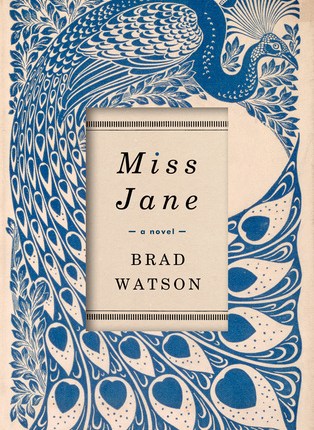
Confession time: I picked this one up because of the cover. I do that sometimes. Who could resist that peacock? It’s an exciting method of book selection because I read novels I would have never considered otherwise and occasionally discover a gem. Miss Jane is, fortunately, one of those gems.

Miss Jane is about Jane Chisolm- an extraordinary girl born in the deep South in the early 19th century with a physical deformity so extreme that she can never have children or even control her bowels. Though Jane struggles with her handicap, it doesn’t define her and she manages to have a beautiful and meaningful life in an otherwise hardscrabble, country existence. Jane’s father is an alcoholic, brewing his own stuff during prohibition, and her mother is deeply unhappy with their relationship, her life, and the world. Jane’s sister, Grace, just wants out of her childhood home and will do anything to achieve that goal. Jane’s doctor, Dr. Thompson, delivers Jane into the world and then spends the rest of his life trying to help her improve the quality of her existence and to also educate the medical community about her condition (there was very little information on it at the time). Miss Jane is based on one of Brad Watson’s actual relatives and I found it to be a fascinating study of not only the South at the turn of the century, but also how poor farming communities handled day-to-day drudgery, poor prospects, and major differences of mind and body.

The farm and nature portions of the story read a lot like a southern, more adult version of Laura Ingalls Wilder’s books, which I’ve always loved, so I guess it’s no huge surprise that I enjoyed this as well. I also loved the way that he wrote about dogs on the farm. Here’s Mr. Chisolm and his hound:“You got the face of bored sadness,” he said to the dog. The dog didn’t take umbrage. Came over beside his left foot and plopped down with a heavy sigh as if he were the one going through all the trouble on this evening.” pg 16 ebook. The peacock from the cover makes an appearance in the story as well, but that has a lot to do with Jane’s condition and I’ll let Watson tell you that detail in his own, lovely way.

Here’s Dr. Thompson, trying to understand the attitudes of the country folk he treats: “Sometimes he was astonished how often he forgot people’s cruel ignorance, people who’d never been anywhere but the little hamlets where they were born, raised, and would die. Not that he hadn’t known plenty of so-called sophisticated people with the same attitude.” pg 39 ebook. Dr. Thompson is a complicated character. He’s highly educated and open minded, but prone to indulging in vices like Mr. Chisolm’s homemade alcohol and prostitutes. Dr. Thompson sees the worst of those he treats- the abuse and neglect- but also their sacrifices and loves. At first, it seems that he only cares for Jane as a medical oddity, but as the story progresses, he comes to love her as a father figure.

In some ways, the isolated world that Jane grew up in was perfect for her. Take the description of her grade school: “It was a small school that took the community children all the way from first grade to high school graduation, and there were not many enrolled, so the environment was relatively intimate, like some great, overgrown family, in a way. The children seemed to know and understand one another like siblings, whether lovingly, or with hostility, or with the purposeful ignoring of this one or that.” pg 58 ebook. That’s the positive and negative of growing up in a small town- that everyone knows everyone else’s business.

Jane’s struggle to fit in is written very beautifully by Watson: “She’d never put a word to the sadness she could sometimes feel, especially in the last couple of years, that would linger at the edge of her thoughts like the invisible ghost of someone she thought she recognized but didn’t know who it was, some kind of familiar she couldn’t quite grasp.” pg 127 ebook

Or this: “She stayed so busy and tired that it seemed like time didn’t matter anymore. Didn’t so much pass as disappear, like memories neglected and forgotten. Years can slip away in such a manner, in such a life.” pg 156 ebook.

A read-alike for Miss Jane: Bull Mountain by Brian Panowich, a story about a family in the deep south but much more violent and with drugs.

Thanks for reading!

Tin Star by Cecil Castellucci

Tin Star by Cecil Castellucci

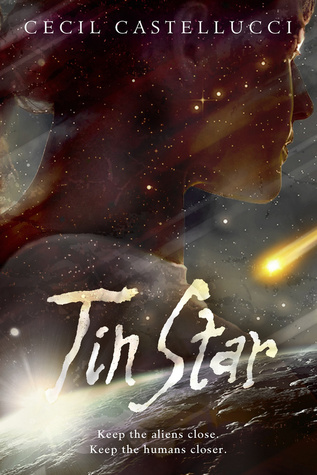
tinstarTin Star is the story of Tula Bane, a teenager who joined a space colonizing cult from Earth. She is abandoned on a way station near the edge of the known universe on the way to her new home.

How will Tula Bane survive among aliens who think human beings are the worst? Will she ever be able to go home to Earth or the colony’s planet? How will she manage to put bread on the table?

I love a good space opera and I thought that I would enjoy Tin Star more than I did.

The promise of books set in space, in my opinion, is the opportunity for unique interstellar exploration and worlds created entirely from the author’s imagination. Because of Tula’s unique plight- being stuck in what is essentially a space gas station- the author left herself very little room to write a creative story.

Mainly, Tin Star deals with character development and social struggles, not adventuring in new places.

The villain of the tale was charismatic and creepy. Take this description: “He had his hand on my shoulder in a way that he had a million times before. Only before it was comforting, encouraging, affectionate. Now it was menacing. He was looking at me and his face was smiling. To anyone looking from afar, he seemed to be pleased with me, but it was just a mask. His attitude shifted from concerned leader to unknowable monster.” pg 4

Tula manages to befriend a shady, insect-like alien named Heckleck. He’s my favorite character.

In this passage, Heckleck explains the problems Tula will face in trying to leave the station: “I know about you,” Heckleck said. “Everyone does. And you will never get off this station. You are nobody. And worse, you’re a Human. Even if you did not get on a ship that would take one of your kind, you’d have nowhere to go but to roam like the others of your kind do.” pg 35.

Keeping it real: with Heckleck.

I thought Cecil Castellucci could have done more with the cultural differences between Tula and the others on the station.

One of the most interesting exchanges in the book was between Tula and Tournour, the head of the outpost. She’s trying to figure out how old he is and, because they’re from different planets/species, it’s a surreal conversation. More of that would have been nice.

But Castellucci wrote cultural and language barriers out of the story by introducing nanites into Tula’s bloodstream to translate alien languages for her.

Something that Castellucci did well was writing profound silences between characters into her story. For much of this story, Tula finds herself standing around with Heckleck and Tournour and having nothing to say. But, somehow, it works.

I liked how Castellucci wrote the thoughts spinning through Tula’s mind at these moments. It reminded me of myself when I can’t think of anything to say: “It was a silent agreement between us that if we spoke too much then we would have to talk about the practical things. … If we ever spoke of the things that truly pressed up against us, our very real worries, our seemingly impossibly plans for escape, our divergent hopes for the future, our bubble would blow apart.” pg 184

This book in three lines: “In the end, good must win over evil. The trouble is trying to figure out which is which. Sometimes they look so much alike.” pg 204

Read this book if you enjoy light, young adult drama in space. If you’re looking for a meaty, space adventure, you’ll need to find another title.

Some read-alikes are: The Knife of Never Letting Go (teen trying to survive on an alien planet) or Gated (teen trying to leave a cult).

Thank you to Roaring Brook Press for sending an advance reader copy of this book. And, thank you for reading!

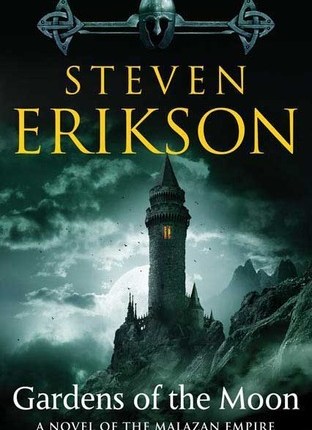
Gardens of the Moon by Steven Erikson

Gardens of the Moon by Steven Erikson

Second read-through August 2021: I have a few thoughts to add on my second read-through of Gardens of the Moon. Unlike my first foray into Malazan, I came out of this reading with a better appreciation of the female characters of the story.

Instead of being focused on what the characters were not, I looked at what the characters were. Powerful leaders, most of them, who imposed their will on the world around them through violence. It is an unexpected role for women, but still feels somewhat one dimensional. I wish some of the characters were more fleshed out, but I have the feeling that this development will happen before the end of the series.

Also, this go-round, I had a better grasp on the complexities of Gardens of the Moon and was prepared to be dropped into the middle of the action. Steven Erikson doesn’t hold the reader’s hand. He pushes her through the door into another world. Some readers hate/love this strategy. I fall mainly on the side of hate, but if it’s a good story, I’ll put up with it.

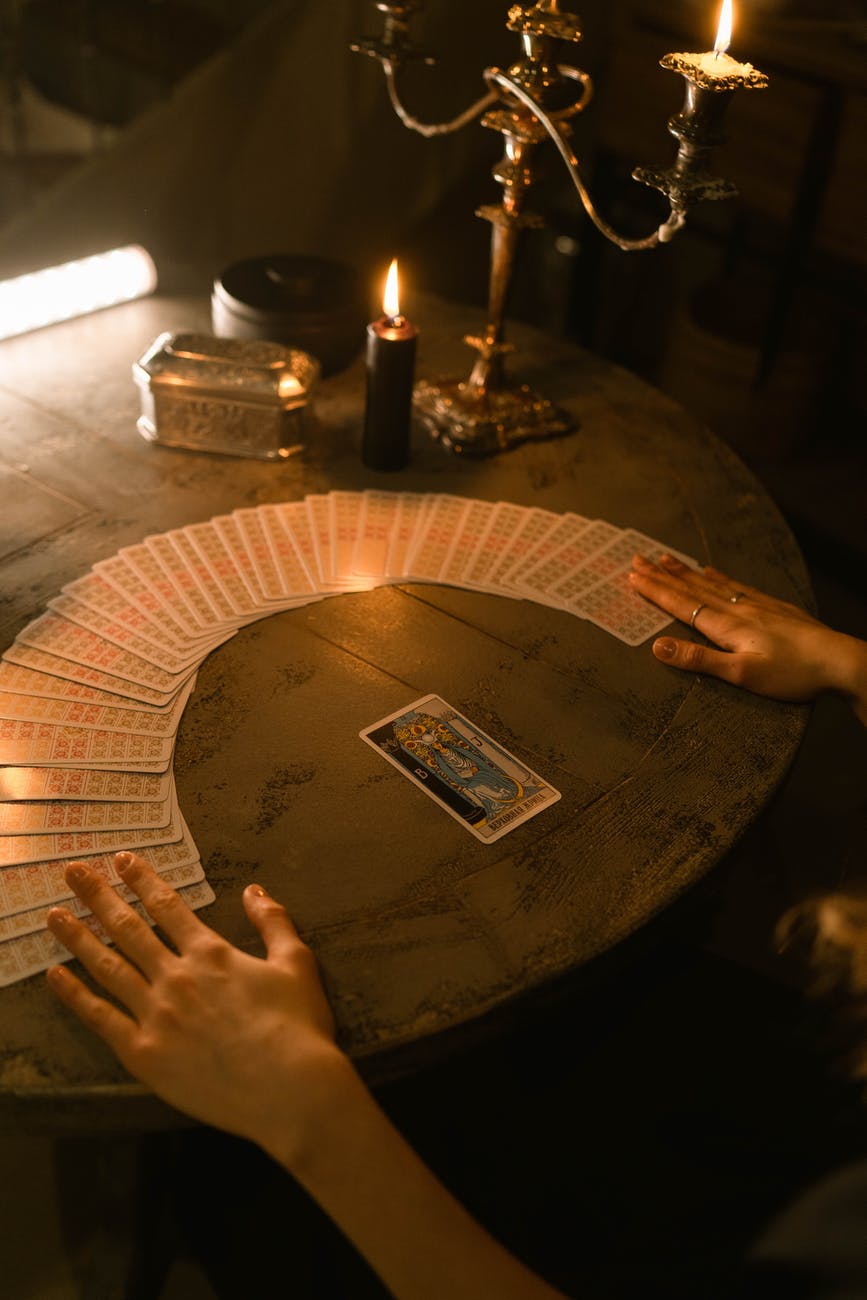
My favorite part is still the new tarot card deck that Erikson created.

Unlike last time, I’m going to keep pushing forward with this series. On to the next book!

Photo by ArtHouse Studio on Pexels.com

Review from first read-through June 2016: Gardens of the Moon is an extraordinarily complex fantasy. The over-arching story: the Malazan Empire (a militaristic conglomeration of nations) is invading everywhere and trashing cities as it goes. The Empress of Malazan, her High Fist Dujek (like a top general), Adjunct Lorn (a magic-hating fixer), Whiskeyjack and the Bridgeburners (like the A-team for Malazan, they go in and cause chaos before the main army arrives), Tattersail (a Malazan mage), Ganoes Paran (a soldier), and more are on the side of the Empire.

There’s about a dozen other main characters that I won’t list here for brevity’s sake.

One of the many heroes of this tale is Paran. The story begins with Paran as a child, gazing down from the walls of his city, towards destruction being wreaked by Malazan mages. He dreams of being a warrior and tells this dream to the aged soldier with him.

Their conversation: “Every decision you make can change the world. The best life is the one the gods don’t notice. You want to live free, boy, live quietly.” “I want to be a soldier. A hero.” “You’ll grow out of it.” pg 5

Photo by Mikhail Nilov on Pexels.com

And so the story begins. Paran gets his desire, of course, but so much more than he bargained for… kind of like the reader who picks up this book.

At first, I thought that the story was going to go like The Game of Thrones. We were going to have a bunch of different characters all fighting for the same thing. I was so wrong. The only similarities between the two tales are that 1. they’re fantasies, 2. they have a bunch of characters, and 3. there is a power struggle, but otherwise, they’re very different.

Gardens of the Moon contains direct interventions between gods and humanity as well as magical creatures from the past and other realms of existence.

As for the magic system, the magically-inclined in this story take their power from different dimensions called “warrens“. There are half a dozen different ones, with further warrens hinted at as the story progresses.

Photo by Filipe Delgado on Pexels.com

Taken as a whole- it is a many layered cake of fantasy awesomeness. I was overwhelmed by it all at times.

Perhaps because of the sheer scope of the story, the characterizations suffered. The author could only build so much detail into each person.

For example, Erikson tried to make Paran more than just a simple hero, but it didn’t always work: “When he thought of himself, of that young noble-born man with the overblown faith in honesty and integrity, the vision that came to him now was of something cold, hard, and dark. It hid in the deepest shadows of his mind, and it watched. No contemplation, no judgment, just icy, clinical observation.” pg 110

I was unimpressed with the role of the females in this story. With as many characters that we had, I thought we’d have at least one or two amazing, strong, female heroes. I know that fantasies are not known for their gender equality but in a world with magic, gods, and other surprising things, I would count a strong female character as one of the greatest miracles of all.

Erikson’s world building was so complete that he even created a new set of Tarot cards, just for his world. It’s one of my favorite parts of the story.

Photo by Anastasia Shuraeva on Pexels.com

Here’s a passage that I really liked: “Those whom the gods choose, ’tis said, they first separate from other mortals- by treachery, by stripping from you your spirit’s lifeblood. The gods will take all your loved ones, one by one, to their death. And, as you harden, as you become what they seek, the gods smile and nod. Each company you shun brings you closer to them. ‘Tis the shaping of a tool, son, the prod and pull, and the final succour they offer you is to end your loneliness- the very isolation they helped you create.” Never get noticed, boy. pg 510 Bleak, but beautiful.

Or this part, the explanation of the story’s title, which is so brief, if you blink, you’ll miss it: (On the moon) The Lord of the Deep waters living there is named Grallin. He tends vast, beautiful underwater gardens. Grallin will come down to us, one day, to our world. And he’ll gather his chosen and take them to his world. And we’ll live in those gardens, warmed by the deep fires, and our children will swim like dolphins, and we’ll be happy since there won’t be anymore wars, and no empires, and no swords and shields.” pg 531-532

That’s the dream of all of the characters in this story- to live in peace. But, because of the Malazan Empire, they can’t.

Recommended for true fans of fantasy. There’s so much to sink your teeth into that, unless you really love the genre, you’ll probably just put it aside for simpler fare.

Thanks for reading!

Sleeping Giants by Sylvain Neuvel

Sleeping Giants by Sylvain Neuvel

In Sleeping Giants, a large, metal object shaped like a gigantic hand is found in South Dakota. It glows with its own light and scientists have no idea what it is made of or what it can do. And so, the mystery and adventure begins.

Photo by Mayur Rawte on Pexels.com

I enjoyed the story a lot but not how it was written. Neuvel tells Sleeping Giants through a series of “case files” or question and answer sessions between the main characters and a mysterious, all-powerful figure who is manipulating the scenario from behind the scenes.

This method of storytelling seemed especially ridiculous during some of the action scenes, when Neuvel had the characters talking to each other on the phone, describing what was happening to them as it occurred.

But, otherwise, the Q & A setup gave readers a behind-the-scenes look at what was going on in the character’s minds and allowed for a lot of personality development.

I wish that Neuvel had switched back and forth between traditional storytelling and the “case file” thing, so that he could both tell the story and have the in-depth character portions. Maybe he could do something like that in the next book.

I was nervous that Sleeping Giants was going to be more science fiction than fantasy, but it wasn’t. There are only a few mind-boggling moments when the scientists are trying to figure out mathematics with a base of 8 rather than a base of 10.

Mostly, The Sleeping Giants asks the questions: what would happen to humanity if something very strange and not of our civilization was discovered on earth? What would that mean for world politics? And how, on an individual level, would everyone involved handle it?

Photo by Pixabay on Pexels.com

Kara Resnik, a pilot, was my favorite character in this story. She’s impulsive, passionate, and honest.

In this passage, she’s talking about the possibility of leaving the project before it’s completed: What would I do anyway? Go about my business as if nothing ever happened? I couldn’t even talk about it to anyone. This is gonna sound incredibly selfish, but I’d get bored to death unless someone started World War III or something.” pg 54

The moral dilemma for the scientists involved in the project is interesting.

In this passage, lead scientist Rose Franklin talks about the fact that the technology discovered could be used for good or ill, depending on who controls it and how that makes her complicit in their actions, because she’s the one figuring out how it works: “What I’ve been trying so hard to deny is that I’m loving every minute of it. … I’m a scientist, and this is what I breathe for. If I had learn to live with that, I might be able to sleep again.” pg 167

Photo by Pixabay on Pexels.com

If you enjoyed Sleeping Giants, you may want to pick up The Many Selves of Katherine North by Emma Geen (in which, advanced technology raises moral questions) or The Interminables by Paige Orwen (in a dystopian world, humanity tries to save itself from inter-dimensional creatures, but maybe some solutions aren’t worth the cost).

Big thanks to the Goodreads First Reads Program for a free copy of this book. And, thank you for reading!

Conjured by Sarah Beth Durst

Conjured by Sarah Beth Durst

Eve can’t remember who she is or where she’s from, but there are government agents with her, protecting her. They say that her mind holds the key to solving the case(s) of a serial killer, but she can’t even remember her own parents. How is she going to help save others when she can’t even recall what happened last week? And, why is she able to make birds fly out of wallpaper? That’s not normal… is it?

Conjured is a fluffy, young adult fantasy that tip-toes around the horror genre but, mainly, remains safely in the real world of amnesia and teenage angst. This book suffers from a glacial pacing but the mystery part of the story really took me by surprise. As I mentioned, the horror elements in this story are minimal but there are some brief and not terribly graphic descriptions of blood, mental anguish, bondage, imprisonment, physical violence, and creepy circus folk.

My favorite parts of this book happened during Eve’s blackout moments or visions. They read like scary fairy tales: “It always begins with ‘once upon a time,’ my dear. That is how it is, even if ‘once upon a time’ is now.” Gnarled hands separate the strands of my hair and wind them around knuckles. “A witch…for of course there was a witch. There always is, isn’t there? She had stars in her eyes and dust in her hair. She heard the sounds of the forest when she moved and the ocean when she spoke.” pg 14 ebook. The visions set the tone of this story. They’re like nightmares for Eve- profoundly disturbing, but not real. Or are they?

I loved that Eve took a job as a library assistant. The craziest things happen at the library but it was also a place of safety for her when she couldn’t remember anything else: “Libraries… they’re the places with stories,” Eve said. Closing her eyes, she tried to summon up a memory of a library. Shelves of books. Sunlight falling across a table. She saw spiral stairs. It could have been a real place, or Malcolm could have shown her a picture at some point. It felt like a real place.”pg 17, ebook

The extraordinarily slow unfolding of Eve’s background was frustrating:“You can’t do any magic here. There is no magic in this world- that’s why this place is safe for you.” She held her face still. Another hint about her past. He had told her so much in those few sentences, more than he’d ever told her before. There is no magic in this world, she thought. I’m from another world? pg 21, ebook. I don’t know… you tell me!

The teenage love story in Conjured is cute and very John Green-esque:“Because when I’m with you, I feel whole,” he said. “Because with you, life doesn’t feel brutish and short. It feels beautiful… and short.” pg 176 ebook.

So, if you can tolerate an extremely slow reveal, pick up Conjured. Some read-alikes: The Night Circus by Erin Morgenstern (circus themes, slow story) or Archivist Wasp by Nicole Kornher-Stace (a girl is asked by a ghost to help him find someone he’s lost).

Thanks for reading!