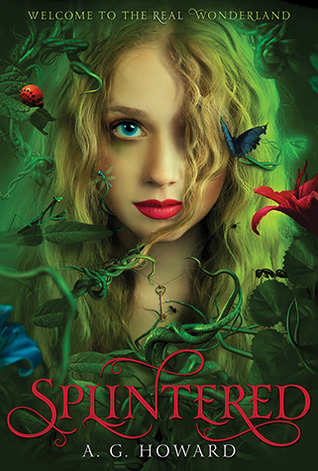
 Alyssa is a descendant of Alice Liddell- the Alice who inspired Carroll to write his tale of white rabbits and fantastical creatures. But, Alyssa has a family secret: the women of her bloodline go insane when they come of age.
She tries to look on the positive side of this: At least one good thing has come out of my inherited insanity. Without the delusions, I might never have found my artistic medium.” pg 10, ebook.
Alyssa is in love with Jeb, a dark and brooding young man with a penchant for grunge clothing and a lip piercing (that she talks about all the time). But, he is dating the most popular girl in Alyssa’s high school class, Taelor (of course).
Things get really exciting when Alyssa starts to hear voices coming from the bugs and plants.
After a brief introduction where the reader learns that Jeb is freakishly controlling and Alyssa’s mother is in an insane asylum, she falls through a mirror and after some trials, finds her way into Wonderland.
I thought this could have been a potentially interesting re-telling of the classic Alice in Wonderland story, but Splintered‘s uniqueness is stifled under a bunch of teen angst and a love triangle.
Granted, I’m not the target audience for this book, but I’d been on a roll lately with awesome fairy tale re-tellings and I thought I’d give it a shot. Oh well.
I actually enjoyed A.G. Howard’s interpretation of Wonderland itself. The characters were familiar but twisted slightly.
Here’s a passage from the tea party- my favorite part: “Now we need to get back to our world. Like yesterday.” “Yesterday, you say?” the hatmaker warbles in his bouncing timbre. “Yesterday is doable.” Guffawing, the hare slaps a knee and adds, “Although two yesterdays would be impossible.” The Door Mouse snickers, slipping back into his uniform. “No, no! You can retrogress as many yesterdays as you please. Simply walk backward the rest of your life.” pg 187, ebook.
See? Howard nailed the classic characterizations, but Carroll’s original creations were far superior to Alyssa, Jeb, and Morpheus, who were her main contributions to the story.
Disregard my opinions on this book if you simply must read any and all fairy tale re-tellings because, at the very least, it is that.
Just be aware what you’re picking up- a young adult romance/coming of age- and if that’s what you’re in the mood for, you may really enjoy it.
I find that my expectations shape my opinion of a book almost as much as the text itself. For example, I think if I had been warned that Alice in Zombieland had really very little to do with the Wonderland story, I may not have disliked it as much as I did.
Splintered actually has a lot of the original Wonderland in it and, if I had to choose between Alice in Zombieland or Splintered, I’d pick this in a heartbeat.
Some highly recommended horror/fairy tale re-tellings (for adults): Alice or All Darling Children.
Thanks for reading!

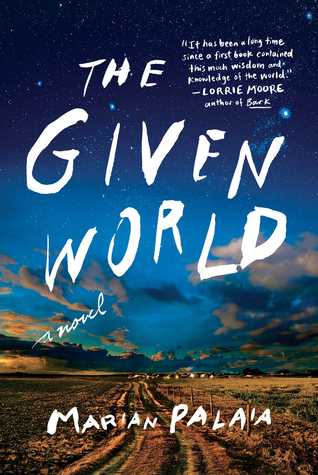 The Given World gave me a headache. Why is it that when “serious” fiction “examines” life that it only focuses on the bad stuff?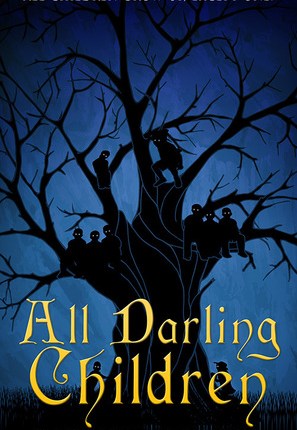

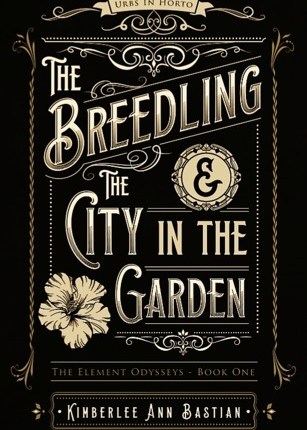
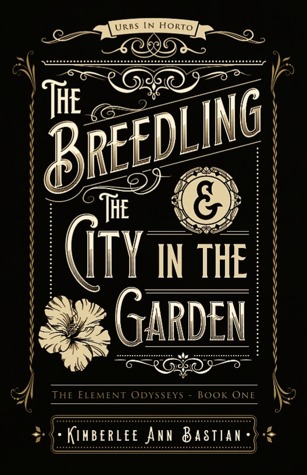 Bartholomew is a Breedling- an immortal spirit that guides the souls of the mortal dead to their eternal homes. He is tasked by his masters, the Fates, to find the Creators of the world, who have gone missing. Bartholomew finds the ones he’s seeking, but then refuses to reveal their location and as punishment, he is sealed in a prison until he changes his mind or the end of time, whichever comes first. But, magically, Bartholomew escapes and finds himself in 19th century Chicago in the company of two boys who are named Charlie and Jimmy. Bartholomew must find a certain mortal to bind his spirit to this world or he will end up back in his timeless prison. He also must complete his original quest- to find the Eden Wanderer. But, he must accomplish all of this without the mortals knowing who he really is or what he is really seeking. Will he succeed?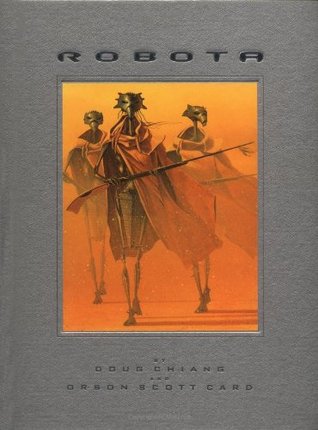
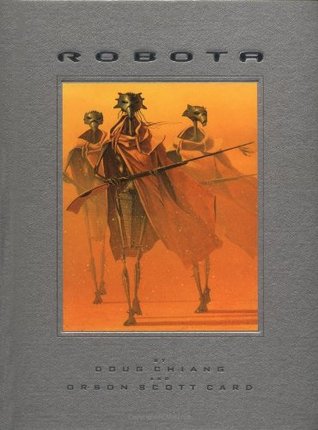 Robota, like





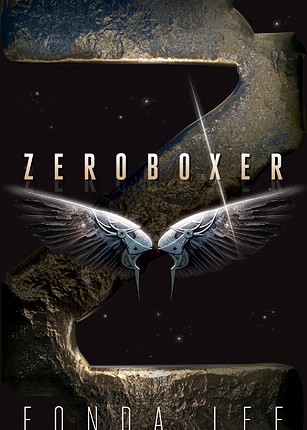
 At first, I thought that Zeroboxer was just Rocky in space, but as the story developed, I realized that it was more than that. Zeroboxer is also an examination of genetic ethics and, like most science fiction, poses some serious ‘what if’s. What if humanity begins to settle the universe- will they divide themselves into different races depending upon their planet of origins? What if the settlers develop their own system of government- how will humankind negotiate the potentially choppy waters of intergalactic politics? What if humanity could use gene therapy not just to eliminate disease but also to create a sort of super human? Fonda Lee has imagined a future filled with flawed but well-meaning people that feels very similar to our own and is, perhaps, not as far into the future as one may imagine.
 The Help Desk Book Blog