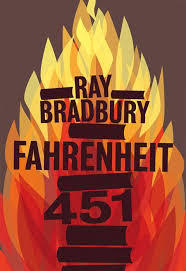
Fahrenheit 451 by Ray Bradbury

fahrenheit451In a not too distant future, owning books is against the law. Firemen burn property instead of protect it and everyone is dialed in to their televisions, subsisting on a steady stream of sensational media stories and vapid entertainment to numb their quickly congealing brains. The nation is always at war, but you would never guess it from the populace’s empty conversations and emptier dreams. Guy Montag longs for something different, but what exactly, he can’t even say, until he meets a girl who wanders outside for fun and sees faces in the moon. He becomes convinced that what society has labeled as wrong and anti-social is more real than anything he’s experienced in a long time. However, these are dangerous thoughts. And, being a fireman, Guy knows, more than anyone, the price that is demanded of people who dare to think, read, and entertain original thoughts.

Fahrenheit 451 was shocking to me. Ray Bradbury predicted internet/social media addiction long before such things existed. He also called society’s horrifically shortened attention spans. Where once, we would have read through a novel or a long article, now we spend less than thirty seconds absorbing information before scrolling onwards to the next thing, then the next, and the next. (Goodreads friends excepted from the majority, of course.)

I listened to the audiobook version where Tim Robbins performed the narration. It was brilliant. He is a natural fit for this material and I highly recommend it.

The only annoying thing about listening to the audiobook is Bradbury’s use of repetition to build the tension and pound his ideas home. You’ll particularly notice it when the war planes fly overhead or when Guy gets into a big fight with his wife and she won’t turn off the television. It’s headache inducing but Bradbury certainly knows how to make a point.

This is one of those classics that I never got the chance to read in school, but I wish I had. I would have enjoyed this much more than Hard Times, which I managed to yawn my way through. Recommended for those who are disturbed by the shallowness of modern life and long for real connections with the people and world around them. The lessons that Bradbury teaches are still very applicable today and, as I said, shocking in their implications.

Thanks for reading.
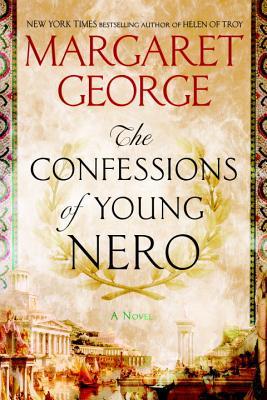
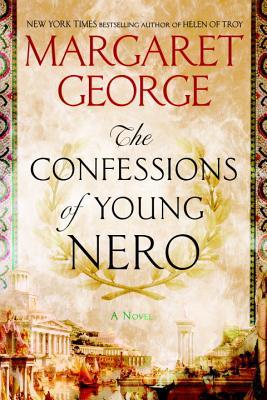
The Confessions of Young Nero (Nero #1) by Margaret George

The Confessions of Young Nero (Nero #1)  by Margaret George

margaretgeorge**Warning: minor spoilers ahead unless you’re familiar with Roman history.**

Margaret George has done it again and produced yet another triumph of historical fiction. This one follows the much maligned Nero from his humble beginnings in a lower branch of the imperial family tree to the prize itself, Roman emperor. Then, it ends on an epic cliff hanger, but I forgive her because it is so awesome. If you can’t handle that kind of wait, you may want to hold off on reading this until the next installment is out.

All I knew about Nero (before this book) was that he “fiddled while Rome burned.” George combines the research of a scientist with the storytelling ability of a master writer to bring this man’s story to life. I have to admit- I actually felt sorry for the guy. Yes, despite the orgies, outlandish expenditures, palatial living, and god-like status, poor Nero, like all of us, just wanted to be loved. At least, so says Margaret George.

“It was hard to keep the family… straight. There was so much intermarrying that everyone seemed related to everyone else.” loc 219. Like British aristocracy, the upper echelons of Roman society were actually quite small and so everyone actually knew each other very well. Their children married, they frequently divorced and remarried each other, and excuses were made for the very close marriages. Nero’s mother, for instance, marries her uncle.  Abhorrent to modern eyes, perhaps, but like royalty from many different ages, somehow the rules were bent and it was allowed.

From his very earliest days, Nero watches others scheme, poison, and claw their way towards power. It really messes him up. “It was my first, and most brutal, lesson in what lengths to which evil people will go, and for what flimsy reasons. I have never forgotten it, nor let down my guard since. Let them call me cruel. Better that than dead.” loc 544, ebook. Just to put it into perspective, Nero’s uncle, the Emperor Caligula, once declared war on the god, Poseidon, and had his soldiers run into the ocean and stab the waves with their swords- totally bonkers. George suggests throughout the story that Nero is not only trying to outshine his relatives because of natural ambition, but also because he believes there is a curse in his blood. With an extended family like that, I can see his point.

George also does a good job bringing Rome and her curious attitudes about everyone not Roman to life. Nero is fond of the Greeks- their music, poetry, and athleticism. But, to the Romans, that sort of cultural appreciation is unmanly and unnatural. I think it was just an extension of the very human attitude of “us vs them” but Romans took it very badly when Nero wanted to perform music in public (gasp), wear a tunic rather than a toga (double gasp), and race a chariot in the Coliseum (passes out on the floor). These things were not done but Nero insisted on doing them. Compared to the things that celebrities get away with today, those behavioral peculiarities seem so tame.

“I learned to live with the knowledge I had; people can get used to anything, even horror, and it begins to feel normal. And the thought that I had inherited the blood of murderers seemed less threatening than that my mother… might kill me. Thus we make peace with ourselves and our weaknesses, for there is always someone worse to focus on.” loc 1732, ebook. Poor, poor Nero. Can you imagine being afraid that you’d die at the hand of your mother? It really makes one feel like her anxieties are rather trivial. Stressed about a dirty house? Yeah, Nero’s mom might kill him today or tomorrow or the next time he’s not paying attention. Get over it!

Highly recommended for fans of historical fiction, ancient Rome, or people who want to get lost in a story. Margaret George is amazing. I own four of her books and, when this is published, I just may have to pick it up too. Coming from a (former) librarian, this is really one of the highest compliments I can give to an author. Do yourself a favor, if you like this genre and haven’t tried her yet, pick up Margaret George.

Thank you to NetGalley and Berkley Publishing for a free advance reader copy of this book.

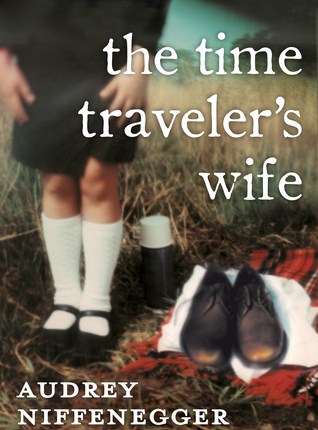
The Time Traveler’s Wife by Audrey Niffenegger

The Time Traveler’s Wife by Audrey Niffenegger

This was the description from Goodreads:

“Audrey Niffenegger’s dazzling debut is the story of Clare, a beautiful, strong-minded art student, and Henry, an adventuresome librarian, who have known each other since Clare was six and Henry was thirty-six, and were married when Clare was twenty-three and Henry thirty-one. Impossible but true, because Henry is one of the first people diagnosed with Chrono-Displacement Disorder: his genetic clock randomly resets and he finds himself misplaced in time, pulled to moments of emotional gravity from his life, past and future.”

Goodreads
Photo by Aphiwat chuangchoem on Pexels.com

Unpopular opinion time: I found the story to be quite different from that and have to say a big no thank you to The Time Traveler’s Wife.

To the legions of fans of this book, I’d like to know what you enjoyed about it. What did I miss? I see that it’s won a pile of awards and I just don’t get it.

I thought I was in for a sweet romance but all I got was a time traveler who cheated at the lottery, beat people up for clothes, and engaged in sexual hijinks with time traveling versions of himself.

I was completely creeped out by the fact that Henry is Clare’s best friend from the time that she was 6. She was groomed from that young age to be his wife, no matter that it wasn’t consummated until later. How awful is that.

Photo by David Bartus on Pexels.com

When she is essentially date raped, she doesn’t go to the police, Clare goes to Henry who engages in some vigilante justice. It was horrible what happened to her, but she should have reported it to the authorities.

The yuck factor from a bunch of places absolutely ruined the book for me not to mention that fact that Clare never really had a childhood or life at all without Henry in it. That’s not romantic, it’s sad.

Anyway, my apologies if you loved it. Like I said, I am willing to consider other opinions on this book, I just really can’t recommend it.

Thanks for reading.

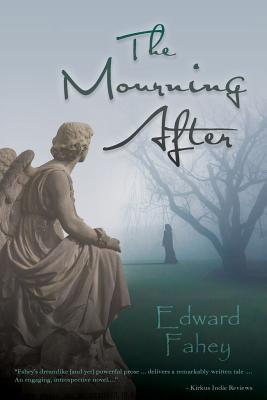
The Mourning After by Edward Fahey

The Mourning After by Edward Fahey

mourningafterA New Age romance that takes place in the modern era. This is a story about reincarnation, missed chances, and the eternalness of love.
The Mourning After is very dark- so much so that at first I wasn’t sure that I was going to make it through the book. I eventually did, but I was depressed the rest of the day after I finished it. Reader, you have been warned. This book reminded me of Wuthering Heights in that the main characters just can’t seem to get their act together, romantically, but with some metaphysical twists like reincarnation thrown into the plot.

Take this bit, when Denis is about to have a psychotic break/break through to remembering his past lives: “Waters; I…” I looked up. The world was filled with his eyes. So dark, so piercing; and yet so tender. He was only trying to help. “You’re right, Buddy, I’m sorry. It’s just, my brain’s fried and I can’t do this tonight. I should, and I’d like to, but I can’t. I’m so awfully tired.” “Which is exactly when a spirit can break through.” pg 66  The scene builds from there. It’s very intense but true to how, at least how I’ve experienced, those types of things go in real life.

I also liked this part- where the main character is practicing channeled writing: “I began writing bits and pieces of a fictional story around Emma and Squire… Then something else kicked in that seemed joyful and sure of itself. I wrote faster and faster, scribbling down notes, piling them up in boxes, binders, and pocket scraps… Ideas and images kept popping out of nowhere; I had to get them down before they vanished for another hundred years. Or maybe forever.” pg 100

Very accurate and lovely. That is definitely one of Fahey’s strengths- a descriptive narrative. One last part that I thought was beautiful: “I still remember things M told me when we were small… Like the time she said, “Adults don’t know some things kids know. They don’t remember, I guess. They don’t listen inside each other anymore. Maybe they’ve just forgotten how; they’re just too busy doing big people stuff; I don’t know.” pg 115

Childhood is like that, yes?

If you enjoyed The Mourning After, I’d suggest reading Angels on Overtime by Ann Crawford. It is also a romance with metaphysical/New Age overtones, but its overall feel is a lot more playful than this read. I received a free copy of this book through the GoodReads First Reads program. Thanks for reading!

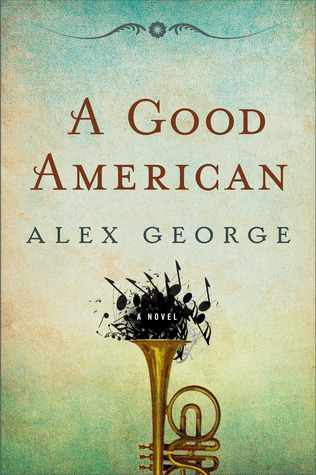
A Good American by Alex George

A Good American by Alex George

a-good-americanWell, that was different. A Good American is, at its heart, a story about a family who immigrates to America before World War I and how successive generations handle life, love, and what comes after. It strongly reminded me of the film, Fried Green Tomatoes, because of the family drama and some of the subject matter. This is an epic tale. Parts of it, I loved. Other parts… I could have lived my life without reading.
I loved Frederick’s attitude towards his new country. It’s exactly what I imagine my great-great grandfather was like when he came over from Poland. “…Frederick loved America. He loved its big open spaces, the sunsets that drenched the evening sky in blistering color. He loved the warmth of the people. Above all, he loved smell of promise that hung in the air. Europe, he could see now, was slowly suffocating under the weight of its own history. In America the future was the only thing that mattered.” pg 57. Frederick throws himself into the American Dream- earning money and providing for his family to the detriment of his relationship with his wife, Jette.

I also loved the parts about music. In this portion, Joseph, Frederick’s son, is taking voice lessons from a rather conservative side character named Frau Bloomberg: “…Bloomberg did not approve of most of opera’s greatest female characters, who were (in her opinion) either hysterical hotheads or dissolute fornicators. She was determined to protect Joseph from all that depravity. Whenever he asked the meaning of a particular foreign word, Frau Bloomberg said the first thing that came into her head. As a result, when Joseph wistfully sang about the imminent return of a long-lost lover from overseas, he believed that he was telling a touching story about penguins.” pg 70

We don’t really get to meet the narrator of the story until much later in the book and, I think, that’s where the story line became unfocused. A couple chapters deal mostly with young men’s coming-of-age and burgeoning sexuality, so there’s a lot about masturbation. Everyone does it, I get that, but really, did it have to be such a theme? As I read it, I was wondering what some of the more elderly members of my book club are going to say about it.

In my mind, the first part of the book was the strongest- the origin story of Jette and Frederick. “My grandmother’s life had been one long opera. There had been drama, heroes, villains, improbable plot twists, all that. But most of all there had been love, great big waves of it, crashing ceaselessly against the rocks of life, bearing us all back to grace.” pg 329. There is a sweetness to their story that the rest of the book is missing.

It may be that this story simply goes on too long, but the author was clearly caught up in his own tale. “Telling stories was still a means of escape. And so I put a fresh sheet of paper into the machine, ready to flee once again. This time I no longer thought about getting published, but just wrote for my own amusement. The journey, not the destination, became the thing, and I rediscovered the simple satisfaction of seeing my ideas materialize before me, sentence after sentence.” pg 344 Even though he was speaking through his character, I’m convinced that that bit right there was all Alex George- a manifesto of sorts, written right into the story.

A Good American is also about race, religion, brotherhood, honesty, marriage, fidelity and more. Plenty for a book club to take part and chew over. Recommended for folks who like their historical fiction long and meandering with, sometimes shocking, turns in the road. Thanks for reading!

Storm Front (The Dresden Files, #1) by Jim Butcher

Storm Front (The Dresden Files, #1)  by Jim Butcher

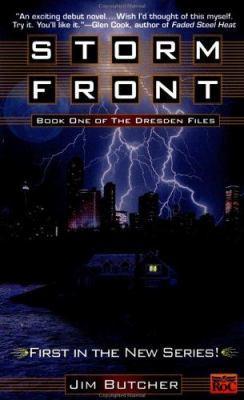
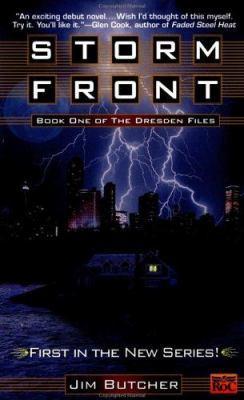
stormfrontUrban fantasy about a modern day wizard who acts as a consultant for the Chicago police. Candy in book form but I enjoyed it. The narrator for the audio book managed to sound world weary and dour the entire time, which was actually rather impressive.
My favorite part is when Bob, the spirit of intellect that Harry keeps around as a sort of wizard computer/database, advised using tequila as the base for a love potion. Harry argues for the more traditional champagne but Bob shuts him down, saying something to the effect that tequila is more Harry’s style and he would know because he’d been alive and courting women since before Harry was a twinkle in his great grandmother’s eye. It’s a great scene. If you read or listen to this one, watch for it.

The mystery itself isn’t all that mysterious, but the fantasy portions of the story are excellent. We get to meet a fairy, who acts very much like I imagine one would, demons, a wizard guardian, vampires, and more. Through it all, there’s Harry, trying to keep a roof over his head and bread on his table, while everything mechanical falls to pieces around him because of his magic. Like I said, a lot of fun.

Recommended for fans of Kevin Hearne’s Iron Druid chronicles (starts with Hounded) or Stacia Kane’s Downside Ghosts (starts with Unholy Ghosts). Thanks for reading!

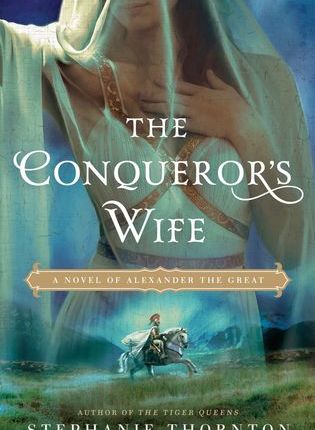
The Conqueror’s Wife: A Novel of Alexander the Great by Stephanie Thornton

The Conqueror’s Wife: A Novel of Alexander the Great by Stephanie Thornton

theconquerorswifeA historical fiction about Alexander the Great from the viewpoint of the women in his life.
I have mixed feelings about this one. I read it, well devoured it really, in just a few sittings. It falls right into the type of historical fiction that I love: pre-1700’s time period about mythological/royal persons. The Conqueror’s Wife is very readable.

The thing is, and the author wrote this too in her afterword, Alexander’s personal life, outside of his military conquests, generals, and favorite horse, is so shadowy that Thornton could have written this book really however she wanted. I loved that she focused on the females in Alexander’s life because, of all of the people from that time period, they received the least attention from historians. However, I feel that she did some of them, Roxana and Olympias in particular, a great disservice in her interpretation.

Remember, women had no rights at this time. Marriage was either a matter of wealth or position. Love didn’t enter the equation until the medieval troubadour tales of the 1200’s.

After his many, many successes on the battlefield, somewhere very far from home, Alexander takes a wife from among the ‘barbarians’ that he and his friends were working very hard to conquer. All that we know about this woman (Roxana) was written down or remembered by the very people who killed her after Alexander’s untimely demise. Why earth would he have married a woman with no connections or a ‘whore’? He wouldn’t have.

Let’s just take the facts: Alexander dies and then most of his wives are dead soon thereafter. From that, I would say that Roxana is one of the least likely people to have committed either of those crimes because all of her power stemmed from Alexander. I suspect strongly that Alexander’s Companions, the ones who were left after years of campaigning had taken its toll, were the culprits. How easy would it have been for them to spread the rumors about Olympias and Roxana as Dionysian witches and whores to explain to posterity why they were slaughtered. Alexander’s generals had the most to gain, an entire empire, by discrediting these women.

And, if Olympias was the master manipulator that she is portrayed as in this, then why wasn’t she able to protect herself or her grandson after Alexander’s death? I think it is because she had neither the resources nor the ability to do so, which means, that she wasn’t what history recorded her to be at all. She was a victim of the fallout after her son’s death just like Alexander’s wives.

Anyway, if I had been Thornton and written this book, I would have made each and every female character a hero. History is recorded by the victors and the powerful. The women deserved, if not a happy, then at least an honorable ending.

If you enjoyed this book, you may want to read The Red Tent by Anita Diamant or anything by Kate Quinn or Margaret George.

I received this book through the Good Reads First Reads program. Thanks for reading!

Under the Empyrean Sky (The Heartland Trilogy #1) by Chuck Wendig

Under the Empyrean Sky (The Heartland Trilogy #1) by Chuck Wendig

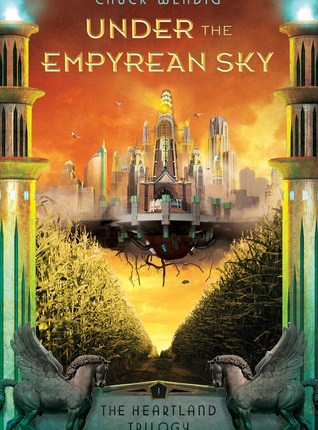
undertheempUnder the Empyrean Sky is the story of Cael and his friends, Rigo and Lane. They live in the Heartland, an agrarian world of genetically modified corn where no other crops thrive because of the aggressiveness of the new crop. There is little to no opportunity for education or work because the Empyreans, a separate section of their society that cruises overhead on their giant, flying machines, controls every aspect of their life from the food that they eat to who they can marry. Cael is the head of a scavenger crew who, in the course of their work day, stumbles across a forbidden garden and their lives change course forever.
This story was exciting. From the first scene of a race between scavenger crews for a malfunctioning piece of farm equipment to the end with an inevitable clash with the Empyrean, the story unfolds at a breakneck pace. If Cael isn’t dodging the local Overseers, he’s sneaking into quarantined cities or trying to harvest illicit vegetables. I loved how this novel was nearly constant action.

The dystopian world that Wendig creates feels scary and out of control. The plants, that the Heartlanders are forced to cultivate, attack them. The Empyreans, who aren’t properly introduced in this novel but I assume that they will be in future books, are outlandishly rich, extremely powerful through their advanced technology, and completely removed from the reality on the ground. The local authorities take advantage of the power of their position to line their own pockets at the expense of their neighbors. The reader feels Cael’s fury at his inability to control his life and the unfairness of the situation into which he was born.

It’s a small thing, but I didn’t like how the first half of the book was told nearly exclusively from Cael’s point of view and then towards the second half, the viewpoint began to bounce around between Cael and his friends. I think I would have enjoyed the story more if the narrator had remained the same throughout or had switched around from the beginning.

Another small complaint about the story is that the Empyrean lottery to join the ruling class on their air ships felt a lot like The Hunger Games or The Giver but with the outcome being presumably positive instead of a death match. Maybe it’s time for YA dystopian literature to move away from the lottery scenario.

That being said, fans of The Hunger Games or other survival/dystopian stories may really enjoy Under the Empyrean Sky. It’s fast-paced and surprising in its twists and turns. I sincerely hope that Cael’s story turns out well, but with the enormous odds stacked against him, it seems almost impossible that it could. I guess I’ll have to read the next book and find out.

I received this book as part of the Goodreads First Reads giveaway program.

Thanks for reading!

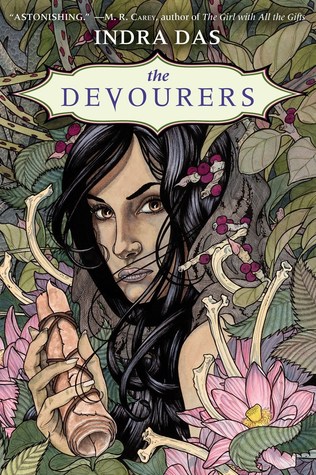
The Devourers by Indra Das

The Devourers by Indra Das

devourersA wholly original shape-shifter tale that also delves into identity, gender roles, and love. Alok is a college professor who is approached one night by a person who claims to be more than a man. Alok doesn’t believe the stranger until an unbelievable vision, caused by the man’s hypnotic words, appears in Alok’s mind. Suddenly, the stranger’s claims that he’s a werewolf don’t seem so far fetched. The stranger, who won’t reveal his name, has a job for Alok, the transcription of an ancient narrative that was written by a shape-shifter, a creature of magic and blood that consumes humans like prey. Through his work on the story, Alok comes to know the stranger and a world that is beyond anything he ever dreamed.

If rape, gore, or graphic sex bother you- you may want to pass on The Devourers as it contains much of all of those things. The heart of the story, about what makes a man, a man and a monster, a monster, are worth the read, but I can see how this book may not be for everyone. “Listen,” he repeats. He is not looking at me. “I am going to tell you a story, and it is true.” pg 8. Personally, I thought that The Devourers was magical, but repetitive. I understand why the author took us in loops and it did lend a beautiful symmetry to the work, but I thought, in a couple different places, that yet another gory kill or another description of blood or urine running down someone’s leg wasn’t needed. “And here where we stand, long before India, before its empires and kingdoms, there were human tribes who identified with dogs and wolves, with wild animals. And there were, and still are, tribes who are not human, who identify with humans in similar ways. Who take the shape of humans, just as humans took the shape of animals by wearing skins.” pg 16.

Indra Das’ vision of shape-shifters as different from each other as people from different cultures was fascinating. By presenting his magical creatures in the manner that they were remembered by the humans they fed upon, he fit the mythologies of a myriad of different countries into one story and it was a perfect fit- the shape-shifters in deserts became the djinn, the ones from Europe were werewolves or vampires, the ones in India were tigers or demons. “To me, to my kind. You are prey. … Something to kill, and sustain us.” “You are cannibals then.” “No, we do not eat our own kind. We eat you, little Cyrah. You keep forgetting-we are not human.” We are the devouring, not the creative.” pg 126

It was in the “devouring, not the creative” mindset of the shape-shifters that Indra explores the traditional roles and balance of power between men and women: “Women create. Men inflict violence on you, envious and fearful, desperate to share in that ability. And it is this hateful battle that keeps your kind extant. You have taught me that your race’s love is just a beautifully woven veil, to make pretty shadows out of a brutal war.” pg 213. One of the main points of this story is that this particular view is not true, but you can see how a creature that only continues to exist through constant violence, could interpret the relationship between the sexes like that. Love and hate are opposite sides to the same coin after all. “I’ve never loved a man in my life, but I’m not fool enough to think that there are no men and women in this world who truly love each other, and love their children together, and did not conceive them through violence and pain.” pg 225.

I haven’t begun to plumb the depths of what The Devourers is about, but I don’t want to ruin this complex fantasy for anyone who’s interested in experiencing it for him or herself. Recommended for readers who like their fantasies to have an adult edge and a grittiness to them. Some similar reads: In the Night Garden, The Last Werewolf, or Hyde.

Thanks for reading.