A Triple Knot by Emma Campion

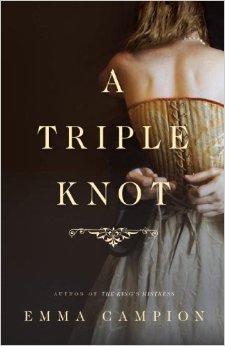
A Triple Knot by Emma Campion
a triple knot

I love historical fiction about the English monarchy and court. This time period, the 1300’s, is one that I wasn’t very familiar with, which was fine with me. I’m always up for learning something new while being entertained. Warning: there are some spoilers ahead if you aren’t familiar with English history.

This story centers around Joan of Kent. Joan’s father was executed by her grandmother’s lover when she was very young. She also didn’t trust her own family to provide for her or believe that they had her best interests at heart. After reading about the actions of some of her clan, I can’t really blame her for that.

Joan seemed ridiculously naive when she married, clandestinely, at the age of twelve for love. Then, when her family insisted on a more advantageous match, she was heart broken.

I was surprised at first about her behavior and reaction but then I imagined that the lack of training, guidance or protection that she received during her childhood was probably the reason that she believed she could marry whomever she wished. Royalty didn’t enjoy the freedom of marrying for love. Poor Joan.

The historical figures described in this tale, such as Edward III and his son, The Black Prince, were larger than life with tempers to match. I loved the descriptions of the clothing, the feasts, the dancing, building maintenance and other minutiae of daily life.

I didn’t love other aspects of this story. I felt like this book was too long and the second half was incredibly rushed. I think the author should have created a trilogy.

She could have ended book one at the decision of the Pope about Joan’s marriage status. (I won’t ruin that one for you.) Then, a second book could have followed about the birth of her first four children and family life. A third book could have chronicled her next marriage and what followed.

In this book, five years passed in approximately a page and a half, sometimes less. There could have been so much more to the story and I would have loved to have read it.

Fans of Philippa Gregory’s brand of historical fiction will probably eat this up with a spoon. Prepare yourself for some rushed passages though.

I received a free copy of this book through Goodreads First Reads. Thanks for reading!

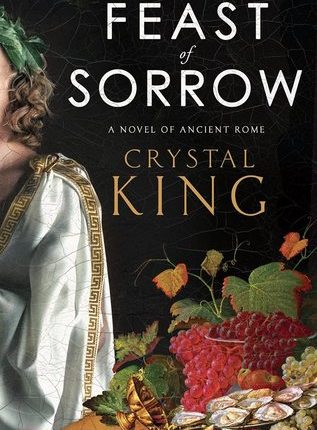
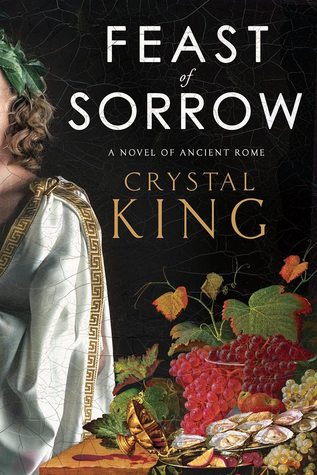
Feast of Sorrow: A Novel of Ancient Rome by Crystal King

Feast of Sorrow: A Novel of Ancient Rome  by Crystal King
feastofsorrow

A Feast of Sorrow captures the beauty, opulence and madness of Rome during the reign of the Caesars. The story is told from the point of view of a slave in the household of Apicius. But, not just any slave. Thrasius is a cook, a coquus, the head of Apicius’ kitchen. He makes some of the finest delicacies known and invents new ones.

Apicius is wealthy beyond reason. He has the ability to purchase Thrasius the finest ingredients and the rarest spices. Apicius’ dream is to become Caesar’s gastronomic adviser. But that position isn’t acquired by wealth alone. Political currency and power is the only way forward.

And the stage is set. Feast of Sorrow has heroes, villains and, of course, food. What a strange and weird feast it is. Honeyed dormice, flamingo tongues, and more- only the best for Apicius and his clients.

Thrasius begins writing a book to preserve his master’s recipes for all time. “I added your trick about using eggs to help make cloudy wind clear, instructions on how to preserve oysters, and even Fannia’s recipe for how to make wormwood liquor. I thought about how many cooks don’t have the right information or knowledge.” loc 1592. Interestingly enough, after the tale, Crystal King talks about how Apicius’ recipes are some of the oldest surviving examples of ancient cuisine.

“Stuff the dormice with pork forcemeat and also with all the flesh from all the parts of the dormouse, pounded with pepper, pine nuts, silphium, and liquamen. Sew them up and arrange them on a tile and put them into the oven or cook them, stuffed, in a covered pot.” -On Cookery, Apicius. Loc 4466, ebook. Mmmmmm.

King fills these pages not just with food, but also, to modern eyes, the strange and sometimes cruel practices of the Roman people. Did you know that Roman diners used to wipe their hands clean in the hair of their slaves? Did you know that Romans had special priests who read the flight of birds to determine if an event was going to be successful or not? Did you know that patricians, the nobility of Rome, were judged not only for their appearance and natural abilities but also how well they could throw a dinner party?

I enjoyed this book not only for the way that King told the story of the nameless people who made Apicius’ name known for all time but also for the twists and turns it contains. Feast of Sorrow will shock you, entertain you and, maybe, make you want to try a dormouse.

Thank you to NetGalley and Touchstone Publishing for a free digital advance reader copy of this book. Note: the brief quotations that I pulled from my copy may change in the final published version. Thanks for reading!

Wolf Hall (Thomas Cromwell Trilogy #1) by Hilary Mantel

Wolf Hall (Thomas Cromwell Trilogy #1) by Hilary Mantel
wolfhall

Wolf Hall is a historical fiction reader’s feast. Henry the VIII’s story, though it has been told, is re-examined through the eyes of Thomas Cromwell, one of his counselors. Who knew that a professional paper-pusher and merchant could be so fascinating?

Cromwell’s history made it unlikely that he would ever climb to such heights among the powerful. Born the son of an alcoholic blacksmith, Cromwell’s cleverness is his only advantage.

Then, through a relative, Cromwell is taken into Cardinal Wolsey’s household. Wolsey recognizes the diamond in the rough and Cromwell becomes his right-hand man. It is a life-or-death dance that Cromwell and Wolsey play with King Henry, as the king demands a new wife. (the Cardinal speaks) “Tell me why you are scowling in that way.” (Cromwell) “The people up there say they are going to kill me.” “Really?” the cardinal says. He face says, I am astonished and disappointed. “And will they kill you? Or what do you think?” pg 31, ebook.

Meanwhile, those around the king never let Cromwell forget his humble beginnings for a moment. The duke of Norfolk scowls. He paces; he rattles a little; at last he bursts out, “Damn it all, Cromwell, why are you such a … person? It isn’t as if you could afford to be.” Thomas waits, smiling. He knows what the duke means. He is a person, he is a presence. He knows how to edge blackly into a room so that you don’t see him; but perhaps those days are over.” pg 154, ebook.

The fact that Cromwell survives Wolsey’s disgrace is a miracle. As he builds his connections and power, the reader can only gape in amazement. “Chapuys greet him without a smile. “Well, you have succeeded where the cardinal failed, Henry has what he wants at last. I say to my master, who is capable of looking at these things impartially, it is a pity from Henry’s point of view that he did not take up Cromwell years ago. His affairs would have gone on much better.” pg 415.

The BBC made a fantastic book-to-screen version of this story. Many of my favorite moments from the book were taken exactly from these pages. I highly recommend it too.

My only complaint about this novel is that the style is ambiguous. Instead of labeling who is speaking, Mantel often just says “he”.

The reader must stay on her toes to keep up with the machinations of the characters, because Mantel doesn’t bother to explain it or their reasoning. I expect, that in some ways, it is very much like how these historic figures lived their lives. Never quite knowing who to trust or how the wind was blowing.

Yes, now we know what happened, who went to the block and who didn’t, but this story nearly succeeds in making the reader forget the ending. Wolf Hall throws you right into confusion of Henry the VIII’s reign. And, it was a Wolf Hall indeed.

Thanks for reading!

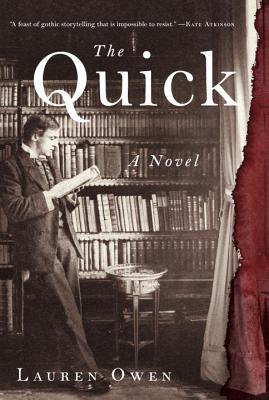
The Quick by Lauren Owen

The Quick by Lauren Owen

The Quick is a love-it or hate-it book. I fell into the “I loved this” camp. But, when I pushed it onto my mother and sisters, they didn’t like it. They all wondered why I had insisted that they read it and waxed poetic about its story. I was truly surprised.

At first, it reads like a classic English, historical fiction novel. Think along the lines of Dickens or Austen. And then… it changes very quickly into something else, something more like urban fantasy. I can’t say enough how masterful the first part of this novel is without giving too much away. It hooked me quickly and I was enthralled.

I loved how multiple genres collide in the story. I also adored the understated, “British” narrative style.

For a novel of over 500 pages, I went through this very quickly. It’s a wonderful book to lose hours reading in, what feels like, a few minutes. This would be a great book to carry on the subway or train. You’d be entertained for almost the entire trip.

I would have given The Quick five stars but the end bit dragged. Also, I disliked the way that the author developed a couple of the main characters. What can I say- I’m picky when it comes to handing out those five-star reviews.

I also think that book clubs will lose their minds over The Quick. As I mentioned before, there was disagreement within my own family if this was an enjoyable read or not. My mother thought that the writing style showed the author’s inexperience. I thought it was unique and captivating. We could have gone back and forth about it for hours, but who has time for that with all of the books that are waiting to be read.

I’d be interested to know your opinion on it.

As for me, I think this was an amazing debut novel. I look forward to more from Lauren Owen in, hopefully, the near-future.

I received a free advance reader copy of this book through the Goodreads First Reads program. Thanks for reading!

1984 by George Orwell

1984 by George Orwell
1984

Spoiler warning at the end of this review. Please do not read the last paragraphs if you haven’t had the chance to read this classic dystopian.

In 1984 or thereabouts, Winston Smith is a hard-working member of the Party. There is only one Party and it rules with an iron fist. It is divided into divisions that specialize in different areas on the surface, but actually occupy themselves with maintaining power.

The country, an amalgamation of the countries we know now, is always at war with one or another of the two other world powers.

Winston works in a literary branch of the government. He is responsible for making changes to printed literature to make the past in-line with current party sentiment. “As soon as all the corrections which happened to be necessary in any particular number of the Times had been assembled and collated, that number would be reprinted, the original copy destroyed, and the corrected copy placed on the files in its stead.” pg 39.

In the course of his job, he notices things changing. For instance, he knows that at one time, they were at war with someone different than the enemy they fight now. “Nothing exists except an endless present in which the Party is always right. I know, of course, that the past is falsified, but it would never be possible for me to prove it, even when I did the falsification myself. After the thing is done, no evidence ever remains.” pg 155.

But this is not knowledge that he can share. The Party exerts control over everyone at all times through screens built into the wall of every home. You can see the state-sponsored programs like a regular television but they can look out through the screen and see you too.“The two aims of the Party are to conquer the whole surface of the earth and to extinguish once and for all the possibility of independent thought. There are therefore two great problems which the Party is concerned to solve. One is how to discover, against his will, what another human being is thinking, and the other is how to kill several hundred million people in a few seconds without giving warning beforehand.” pg 193.

The Thought Police drag away any trouble makers or those whose thoughts aren’t acceptable to the Party. That could be anyone. Winston knows that one day it will be him. But not just yet.

“There was of course no way of knowing whether you were being watched at any given moment. How often, or on what system, the Thought Police plugged in on any individual wire was guesswork. It was even conceivable that they watched everybody all the time. … You had to live- did live, from habit that became instinct- in the assumption that every sound you made was overheard, and, except in darkness, every movement scrutinized.” pg 3.

The absolute powerlessness of Winston’s situation is terrifying. And then, he falls in love with a girl named Julia who works in his building. “He wondered vaguely how many others like her there might be in the younger generation- people who had grown up in the world of the Revolution, knowing nothing else, accepting the Party as something unalterable, like the sky, not rebelling against its authority but simply evading it, as a rabbit dodges a dog.” pg 131.

This was the first time I ever read 1984. I was still convinced, until a few pages before the end, that it was going to have a happy ending. The rat-mask part had me doubting but then, I still considered the possibility that Winston was faking his conversation. But, after he spoke to Julia one last time, I finally abandoned that theory too.

He lived through his ordeal, but at what cost? He lost everything- even his ability to think. I found it to be incredibly bleak, but worth the time, if only for the warnings that it contains.

Thanks for reading!

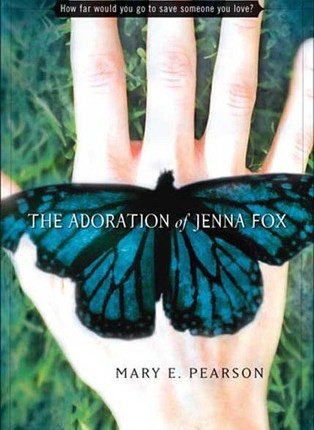
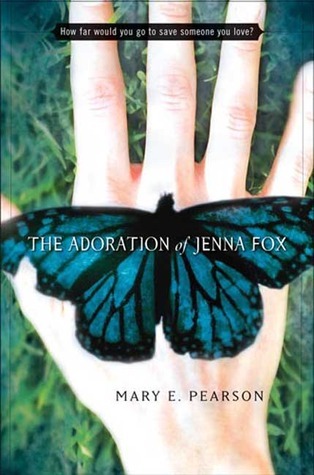
The Adoration of Jenna Fox (Jenna Fox Chronicles, #1) by Mary E. Pearson

The Adoration of Jenna Fox (Jenna Fox Chronicles, #1)  by Mary E. Pearson
jennafox

Warning: minor spoilers ahead if you are not familiar with the topic of this book.

The Adoration of Jenna Fox fits nicely into a science fiction/medical category that includes films like Gattaca or books like Starters. As medicine advances, ethical questions begin to develop about treatment, life and death and humanity needs to answer them. But, one thing that remains the same throughout all of these technical changes, is the power of the love that parents have for their child.

Even now, people sign do not resuscitate orders so that medicine won’t keep them in a vegetative state for indeterminate periods of time. The occurrence of near-death experiences has exploded since CPR and other life-saving techniques have developed.

Imagine sometime in the near future, when bio-implants can be used to stop or even reverse internal damage. What if we figure out how to turn the aging gene off? How then will we handle death with dignity? Or will we even be able to accept death at all?

I listened to an interview with the author in which she said that she wrote this book because her own teenager was diagnosed with cancer. She went through the terror and did whatever was necessary to save her child. Along the way, she ran into parents whose children were terminally ill but had no viable treatment options. Pearson realized how lucky she and her daughter were and it sparked her imagination.

It’s a worthy a question: how far would you go to save someone you love? I recommend this book to anyone who wants to consider the possible answer.

Thanks for reading!

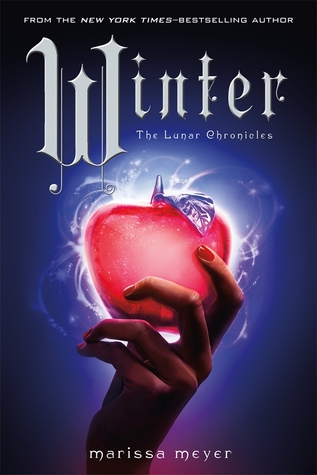
Winter (The Lunar Chronicles, #4) by Marissa Meyer

Winter (The Lunar Chronicles, #4) by Marissa Meyer

winterWarning: There are spoilers in this review. Please do not read further if you have not read this book.
Winter is the disappointing final installment of the promising Lunar Chronicles. Coming in at over 800 pages, I thought that this was going to be an epic conclusion. Sadly, I found it to be uninspired and far too repetitive.

Cress was my favorite of this series. In it, Meyer is at her best. Her fairy tale re-telling of Rapunzel was brilliant. She took the elements of the classic tale and gave it a science fiction twist. There’s adventure, danger and an inspiring heroine.

Winter reaches for that mix with the re-telling of Snow White, but it never makes it.

I started going through the stages of mourning with the ending of this series.

First, I was in denial. This couldn’t be the last of it. That’s not how the story ends… it can’t be!

Then, I was angry. These were characters I cared about. They deserved inventive and unique endings and not necessarily all perfectly happy ones wrapped in a bow. I know this isn’t a popular opinion but, sometimes there isn’t a happily ever after. Every single one of the protagonists ends up together. How predictable and trite.

On to bargaining. I thought that maybe if I waited to write my review, that I’d like it more. Perhaps time passing would blunt the edges of my disappointment. Perhaps I needed to accept that this book was written for the young adult audience and look at it from that point of view.

Then depression. So many readers loved this series, maybe my opinion was just wrong. Maybe I wouldn’t know what a good story was if it punched me in the face. Maybe I disliked this series just to be contrary to popular opinion.

Finally, acceptance. I did not like Winter. I didn’t like its emphasis on physical appearance and connecting that to internal characteristics. How many times did we have to hear how ugly Levana was under her glamour? And don’t we find out in this book that it wasn’t her fault? That she was physically abused and then taunted because of her appearance? So, yeah, let’s talk more about how repulsive she is.

I didn’t like how the worst thing that Meyer could think to write of her antagonists was “He/she was INSANE.” We get it.

I didn’t like how the characters would turn to each other and talk through obvious motivations. Do you think she/he did that/this because she knows we’re coming/going/trying to escape? Yeah, I do! Now stop talking and go face your destiny. We could have saved almost 200 pages if the characters would have acted instead of talked endlessly about acting.

And Iko’s happy ending was that she got a bunch of dresses and color-changing eyes? That was the final straw for me. She was my favorite character and she deserved an ending that matched her unflagging spirit, loyalty and optimism.

I listened to this entire series on audiobook. Was it worth the hours of my time? I guess that depends on what which book we’re talking about. If this series had ended on a book the quality of Cress, this would be a very different review.

My apologies if this is your favorite series. No book appeals to every reader. Winter just wasn’t for me.

Thanks for reading!

The Collector of Lost Things by Jeremy Page

The Collector of Lost Things by Jeremy Page

thecollectoroflostthingsWhen I picked up The Collector of Lost Things, I expected an adventure-filled historical fiction. The audiobook delivered a heavy-handed treatment of man vs. nature with some truly disturbing scenes of mass animal slaughter. Not for the faint of heart or stomach.
The story beyond these stomach churning scenes was nothing to write home about. I was very disappointed.

I found myself drawing parallels between The Collector of Lost Things and James Fenimore Cooper’s Leatherstocking Tales, particularly the book, The Pioneers.

In The Pioneers, Chapter 3 depicts settlers shooting a cloud of pigeons so vast that it nearly blocks out the sky. They fire repeatedly into the flock, killing far beyond what they’ll need or consume. The mindless slaughter is categorized as sport.

The hero of the story, Natty Bumppo, expresses disgust at the behavior. The reader understands the author’s point and the story moves on.

In this book, not only is there an homage to the pigeon scene, but the reader has to endure the repeated abuse of whales, walruses (walrii?), seals, and the possible extinction of an entire species of bird. I felt like the point wasn’t just driven home- it smashed me in the face.

My stomach was so turned by the slaughter that I couldn’t enjoy the book anymore. It was a shame because the prose used to describe the arctic scenery was some of the most expressive and beautiful that I have ever read. It puts you there, but then it drowns you in seas of blood.

If you enjoyed this book, you should read James Fenimore Cooper. The topic is the same, but the treatment in Cooper’s novels is far superior.

Thanks for reading!

The Drowning King (Fall of Egypt #2) by Emily Holleman

thedrowningkingA well-researched historical fiction written from the point of view of Arsinoe and Ptolemy, Cleopatra’s ill-starred siblings. I didn’t even know that Cleopatra had a sister. And, I only knew Cleopatra had a brother because of his infamous gaffe when he presented Caesar with Pompey’s head.

The Ptolemys were a storied dynasty. Descended from one of Alexander the Great’s generals, they had the charming tradition of marrying their siblings. This politically motivated inbreeding kept all of the power in the family. There’s a lot of weird brother/sister vibes in this book, but it’s historically accurate. If that kind of thing freaks you out, you’d be better off avoiding this read.

The Drowning King takes advantage of these unknown characters to spin the history in a different way. I can’t say that I was a fan of all of the changes.

Holleman depicts Cleopatra as a manipulative hysteric who sat idly by while her libraries burned because she trusted that Caesar’s men would protect them. Blinded by love, perhaps? I couldn’t swallow that interpretation.

But, the Roman attitude towards women is portrayed accurately: “The soldiers distrusted her sister for what she was: an Eastern woman with an eye for rule. Hadn’t they already deposed one of those? In Rome, Cleopatra had told her once, slack-jawed with shock, women are chattel, no more and often less. Or as Arsinoe had heard more than one centurion sneer after Berenice’s death, In Rome, women know their place.” loc 96, ebook. How extraordinary then that Cleopatra managed to rise to the heights that she ultimately obtained. I suppose that also helps explain her extraordinary fall.

I liked how Holleman incorporates the size and diversity of Egypt in her tale: “Alexandria was full of Upper Landers, but they bore no more relation to these creatures than a tomcat did to a lion. The men who busied themselves along the palace courtyards wore tunics and mantles and bantered in flawless Greek. … But here men of the same blood looked different, foreign to her eyes, ghosts of some forgotten land. She doubted whether they could even speak her tongue, and she wondered how so many members of her family had ruled without bothering to learn theirs.” loc 871. That’s because the descendants of Alexander’s general spoke Greek and the common people spoke Egyptian. It reminds me of how the nobility in England spoke French while everybody else spoke English.

I also enjoyed the conversation between Ptolemy’s counselors and the young ruler about whether or not they should kill Pompey: “Pompey was once wed to Caesar’s beloved daughter, Julia. And if you kill him, you’ll be slaying Caesar’s former son-in-law.” loc 2472. Beyond the fact that Pompey was Caesar’s son-in-law, he was still a Roman. Ptolemy was not. Romans divided the world into two groups- those that were Roman and those that were not. The counselors didn’t understand that, advised the boy poorly and sowed the seeds for his destruction from that very first meeting with Caesar.

I felt badly for Ptolemy. He was surrounded by either incompetent or power hungry people. There were none who loved him for just who he was rather than what he could bring them. “Nothing he’d done- nothing he’d ever done- had made a dent. With one nauseating exception: the murder of Pompey. And for all he knew, that would be his sole legacy: the ignoble assassination of his father’s alley. Dark thoughts consumed him too frequently now; he had to stay strong and drive them from his mind.” loc 4532, ebook. “The drowning king,” indeed.

I enjoyed this book, I did, but it was no Margaret George’s The Memoirs of Cleopatra. I found myself comparing the two in my mind and this one came up wanting. Unfair, perhaps, but there it is.

Thank you to NetGalley and Little, Brown and Company publishing for a free digital copy of this book.

And thank you for reading!