The Lady Who Plucked Red Flowers Beneath the Queen’s Window by Rachel Swirsky

The Lady Who Plucked Red Flowers Beneath the Queen’s Window by Rachel Swirsky

The Lady Who Plucked Red Flowers Beneath the Queen’s Windowis a fantasy short story about how much one’s world view is shaped by culture, the time period in which one lives, and love.

The main character, Naeva, is a powerful magician. She serves the queen of a matriarchal society to the best of her capability.

Naeva’s love for the queen is used to trap her soul, so she can be summoned from beyond the grave to serve forever.

Photo by Maria Orlova on Pexels.com

“The Queen needs you, Naeva. Don’t you love her?” Love: the word caught me like a thread on a bramble. Oh, yes. I loved the queen. My will weakened, and I tumbled out of my body. Cold crystal drew me in like a great mouth, inhaling.

This binding is problematic, because the queen doesn’t live forever.

I was captivated by this story. It surprised me because short stories aren’t usually my thing.

During a bout of insomnia one night, I read The Lady Who Plucked Red Flowers in one sitting.

You can read it too, if you’d like. It is available in its entirety online: https://subterraneanpress.com/magazin…

There are subtleties in the story about feminine and masculine power, but also mankind’s penchant for judging current culture as superior to all others that have ever or will ever exist.
Photo by Teddy Yang on Pexels.com

“It was becoming increasingly clear that this woman viewed me as a relic. Indignation simmered; I was not an urn, half-buried in the desert. Yet, in a way, I was.”

Naeva suffers not only because she’s trapped and cannot die, but also because her matriarchal culture is left behind in the depths of time.

“I had never before been aware of the time that I spent under the earth, but as the years between summons stretched, I began to feel vague sensations: swatches of grey and white along with muted, indefinable pain.”

Photo by Aistu0117 Sveikataitu0117 on Pexels.com

She changes, but reluctantly and slowly. And love has as large a role in shaping her development as it did in her entrapment.

It is a wonderful fairy tale. I highly recommend it for sleepless nights or a boring lunch hour.

Thanks for reading!

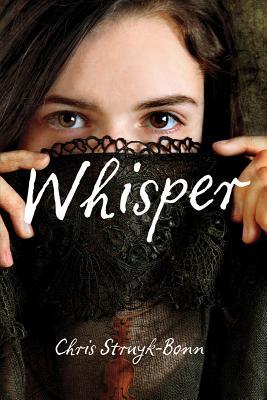
Whisper by Chris Struyk-Bonn

Whisper by Chris Struyk-Bonn

Whisper has a cleft palate. In this young adult dystopian tale, she and other deformed children are cast out of society because of their abnormalities.

This story is about how she survives and holds her new family, made up of other rejected children, together despite obstacles at every turn.

Whisper was a far darker story than I expected.

Photo by luiisrtz on Pexels.com

Terrible things kept happening to Whisper and I kept telling myself that it would turn around soon. And it didn’t.

If she wasn’t running from someone who was trying to harm her, she was freezing or starving. She’d get a modicum of security and then lose it.

I was really cheering for Whisper to embrace her special abilities, but she never seems to manage it.

Honestly, I was disappointed by the heroine’s decisions at multiple times in this story.

As one of the children tells Whisper: “You will never go far in this world if you don’t know how to rescue yourself.” And, in my opinion, she never did what was best for her own survival.

The author describes the setting as “near future” but if she had taken out the cars, refrigerators, and indoor plumbing, it could just as easily have been the recent past.

Photo by Stefan Stefancik on Pexels.com

It wasn’t too long ago that superstitious people believed birth defects marked someone who would ruin the crops, bring bad luck, or comets shooting across the sky spelled misfortune. In fact, in some parts of the world, this type of thinking still reigns.

I think it’s human nature to try to explain the unexplained and to condemn others for their differences, the physical differences being the easiest to pick out. That doesn’t make it right.

My main complaint about this read was the repetitiousness. After short bursts of frantic activity, Whisper’s life would settle into a routine that was really uninteresting.

If I had to read about her messing up the homemade bread one more time, I was going to put the book down.

Photo by Geraud pfeiffer on Pexels.com

Maybe the author was trying to get the reader invested in the process, but I simply wanted the story to move on. I was already interested in Whisper- I was just over the baking and cleaning.

The same feeling hit me during the multiple music lessons and the days spent playing violin on the streets for change. I guess I prefer my dystopian novels with more explosive action and less daily slogging.

Fans of How I Live Now or Gated may enjoy the pacing and story line of Whisper. As for me, I’m headed back to more action-oriented dystopian reads.

I received a free copy of this book through Goodreads First Reads. Thanks for reading!

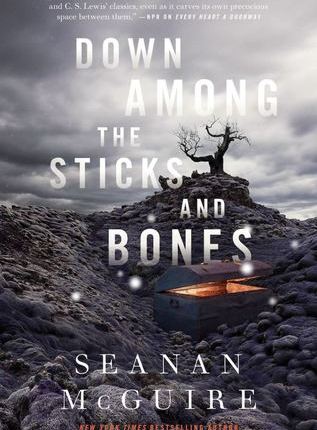
Down Among the Sticks and Bones (Wayward Children, #2) by Seanan McGuire

Down Among the Sticks and Bones (Wayward Children, #2) by Seanan McGuire

Down Among the Sticks and Bones is the back story of the twins, Jack and Jill, and the dark world they wandered through.

It takes place before the events of the first book in the series, Every Heart A Doorway.

The reader learns why the twins are so different and how their strange and disturbing other world opened its door to them in the first place.

The majority of the problem was Jack and Jill’s parents. They had children for reasons other than love.

The father wanted to children to move up in his career. The mother wanted to improve her status with her group of female friends: “A person may look at someone else’s child and see only the surface, the shiny shoes or the perfect curls. They do not see the tears and the tantrums, the late nights, the sleepless hours, the worry. They do not even see the love, not really.” pg 13.

Photo by RODNAE Productions on Pexels.com

So, instead of loving Jack and Jill for themselves, their parents instead seek to mold them into a perfect of ideal of what they thought their children should be.

The one bright spot in the twin’s childhood is their grandmother, Louise Wolcott. Chester and Serena, Jack and Jill’s parents, call her in desperation after the birth of the children because they have no idea what they’re doing or how to balance their careers while raising children.

Louise steps in without complaint. She is quite easily my favorite character in the book: “There’s nothing tiring about caring for children you love like your own,” said Louise… pg 34.

Despite Grandmother Louise’s best efforts, Jack and Jill end up fairly emotionally stunted from their parents’ dysfunction. The twin’s discovery of another world leads to some hard lessons about love, belonging and consequences.

“The Moors were beautiful in their own way, and if their beauty was the quiet sort that required time and introspection to be seen, well, there was nothing wrong with that. The best beauty was the sort that took some seeking.” pg 171.

Photo by Lachlan Ross on Pexels.com

I enjoyed this story. But, I think it should have been combined with Every Heart A Doorway.

I felt like so much of the plot of this book was given away in the first, by what happens. It would have been more enjoyable to learn about Jack and Jill’s Moors in flashbacks rather than a separate story.

That being said, it is a good enough young adult tale for what it is. The fairy tale quality to it is undeniable.

Recommended for readers who like a dark undercurrent of emotion, coming-of-age and self knowledge in their fairy tales. If you liked this book, you may also enjoy A Monster Calls.

One may be better served reading this book before Every Heart A Doorway. I think, if I had read this first, I may have enjoyed it more.

Thanks for reading!

Where the Rock Splits the Sky by Philip Webb

Where the Rock Splits the Sky by Philip Webb

Where the Rock Splits the Sky is the story of Megan, a girl who has lost both her father and mother and who lives on the edge of a strange, haunted area called “The Zone.” In this part of the world, people are driven mad by unknown forces and the world doesn’t follow the normal rules of physics.

The Earth itself has stopped spinning because it was invaded by an alien species that the surviving humans call “Visitors.” One day, Megan is told that her father is still alive and that he is in the Zone.

Photo by Pixabay on Pexels.com

She has no choice but to go find him. And the adventure begins.

This story was a surreal, heart-pounding adventure from start to finish.

I loved the dystopian aspect of it- the aliens are truly terrifying because the reader isn’t sure what they can or can’t do. It’s not even clear from the start who is or isn’t an alien.

The guessing game makes for some exciting tension. That same unknown quality is extended to the “Zone” itself so that the story at any moment could pass from normal to totally bonkers.

Photo by Darius Krause on Pexels.com

That uncertainty makes this a great read, in my mind.

I did have some complaints- I wanted more to happen during the final, climatic scene. It felt like after such a great build up that things ended too quickly and neatly. But I suppose one can’t have it all.

Also, this book required a great deal of suspension of belief. I mean, for goodness sake, the world has stopped spinning. That’s some fairly serious physics law breaking. And that is assumed from the start.

Photo by Harry Cooke on Pexels.com

This novel reminded me of The Gunslinger in that both have western themes and some horror elements to it. This is definitely a more young adult version while Stephen King’s novel was written for adults. It’s also a lot shorter

With those caveats in mind, fans of that series may enjoy this one. Also, anyone who likes to read young adult, dystopian books might enjoy Where the Rock Splits the Sky. It’s an interesting addition to the genre.

I received a free copy of this book through Goodreads First Reads.

Thanks for reading!

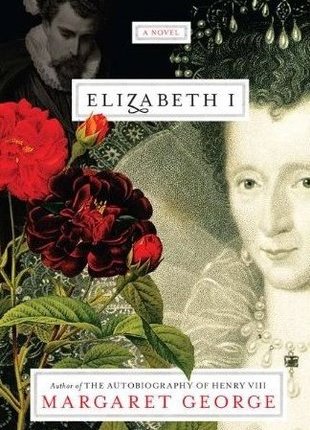
Elizabeth I by Margaret George

Elizabeth I by Margaret George

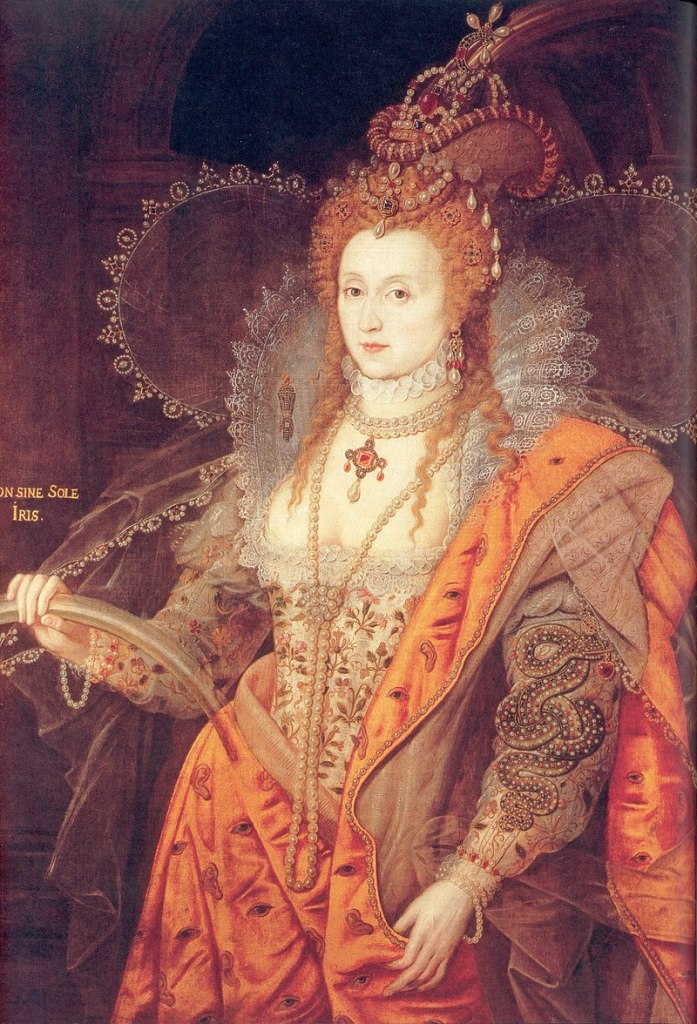
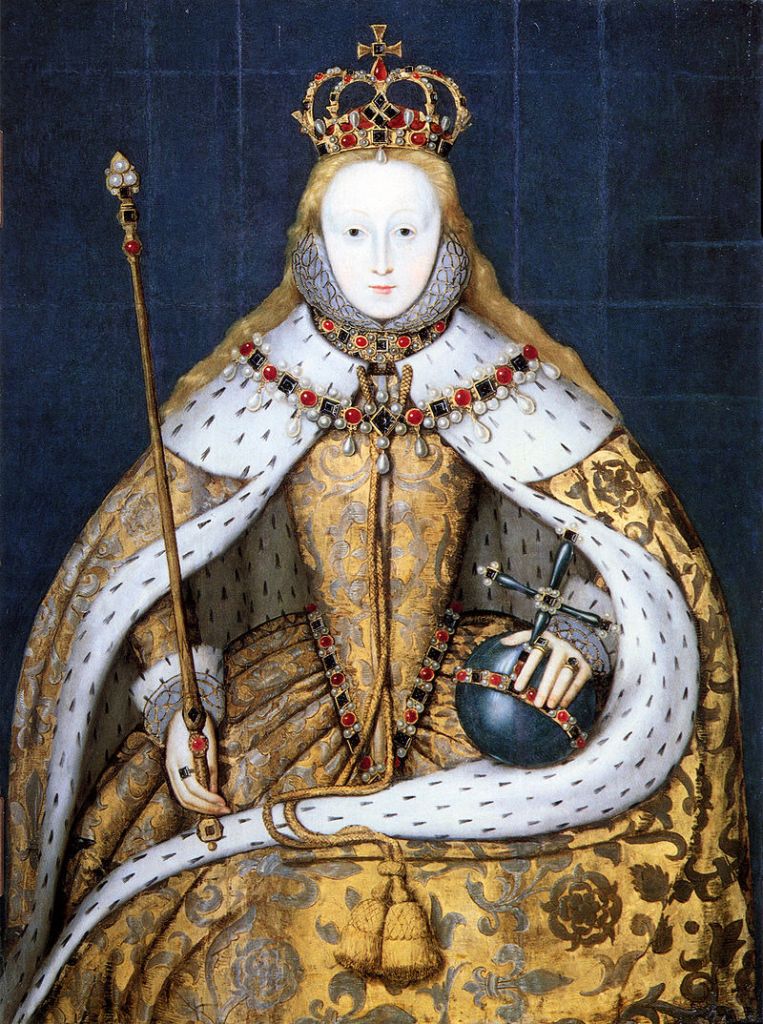
Margaret George writes about Queen Elizabeth I of England and the last years of her reign.

I think most people are aware that Elizabeth’s father was Henry VIII and the tumultuous going’s on that preceded and then ushered in her reign. But fewer are aware of what happened during the later years of her life.

The last years were still exciting and dangerous, filled with invading Spanish armadas (more than one) and power hungry lords. That’s what this book is all about.

I confess: I am a major fan of both Elizabeth I and Margaret George.

“I know I have the body but of a weak and feeble women, but I have the heart and stomach of a king and of a king of England, too- and think it foul scorn that Parma or any prince of Europe should dare to invade the borders of my realm.” pg 41.

A few years ago, I had the privilege of visiting Westminster Abbey and seeing the tomb of Elizabeth I. The crowds were such that I couldn’t linger by the effigy but was forced into constant motion, rushed past.

I burst into tears as I exited the area of the church that contained her tomb and I was completely overcome with emotion. My husband led me through the throng again, just so I could spend a moment more near one of my favorite historical figures.

What do I love about Elizabeth I? Let me count the ways!

First of all, she insisted that she was a ruler in her own right, not because she was married to a royal. Elizabeth used the game of courtship to increase her power. That’s hard core.

“Francois had been my last, and in many ways my only, serious marriage possibility. I had been wooed by twenty-five foreign suitors over the years. I never intended to marry any of them, but it was my best tool of diplomacy.” pg 72.

Second, she smart with her power rather than greedy. She navigated a world in which she had few allies because of her religion. And she never accepted defeat. “For my own part, I swear that my heart has never known what fear is. In ambition of glory I never sought to enlarge the territories of my land. If I have used my forces to keep the enemy from you, I have thereby done it for your safety, and to keep dangers at bay.” pg 145.

She was well-learned, charismatic and always knew what to say in public situations.

“It is not possible to see a woman of so fine and vigorous a disposition both in mind and in body. One cay say nothing to her on which she will not make an apt comment. She is a great princess who knows everything.” pg 363.

And finally, she was honest and true to the end of her life to the responsibility of leading her country. Elizabeth I loved her people.

“There will never queen sit in my seat with more zeal to my country, care to my subjects, and that will sooner with willingness venture her life for your good and safety, than myself. … And though you have had and may have many princes more mighty and wise sitting in this seat, yet you never had or shall have any that will love you better.” pg 608.

Photo by Pixabay on Pexels.com

My quibble with this book was not with the research or the story, which were both fine in my opinion. It was the fact that George split the narrative- most of the chapters are told from Elizabeth’s point of view, but some are from Lettice’s point of view, the mother of Robert Devereux.

I understand Lettice’s narrative was used to explain Devereux’s motivations and unexplained behavior, but I felt as if it slowed the story down. Coming in at 662 pages, this was a book that needed to stay at a fast clip. I didn’t feel as if it achieved that.

That being said, George provides an amazing escape from the world and unparalleled historical fiction, with this story.

The weekend I started this book, my mother had an unexpected heart attack and nearly died. She was in good health and relatively young. It was quite a shock.

Some people spend hours worrying, others in conversation or watching TV to wile away stressful hours.

Photo by Photography Maghradze PH on Pexels.com

I picked up Elizabeth I by Margaret George and transported myself to Elizabethan England. There was worry, danger, intrigue… and when I needed to put down the book and attend to family concerns, I could. By the time the weekend was over, I had completed this book and my mother was discharged from the hospital.

It looks as if she will make a full recovery. And I learned quite a bit more about Elizabeth I.

If you are looking for distraction from every day life, this epic tale could fit the bill. Recommended for historical fiction lovers, of course, but also for anyone who desperately needs a way to pass the time.

Thank you, Margaret George, for providing that for me, just when I needed it most.

Thanks for reading!

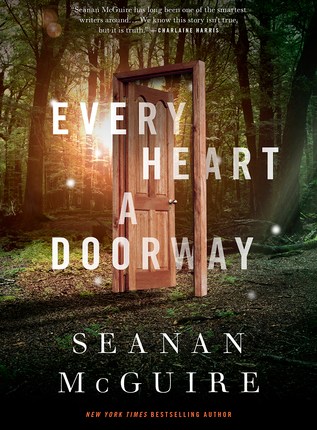
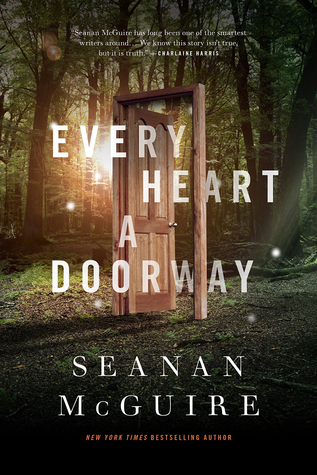
Every Heart a Doorway (Wayward Children #1) by Seanan McGuire

Every Heart a Doorway (Wayward Children #1) by Seanan McGuire

everyheartWhat if children actually fell into other worlds, like Alice in Wonderland or the Pevensies into Narnia, far more often than anyone realized? What if those worlds were superior in every way to the normal, mundane world- not in that they were in heaven, but the child felt finally at home?

And what if those worlds cast the children out, to live in the “real world” again? It might not be a pretty picture.

That is why Eleanor West started a home for children who went away, came back and didn’t belong anymore. All of those reasons, but also, because she went away once too.

“Eleanor West spent her days giving them what she had never had, and hoped that someday, it would be enough to pay her passage back to the place where she belonged.” pg 13.

I loved the basic premise of this story. All of the worlds the children went to were so different, but the fact that the worlds were “other,” tied them altogether.

“‘Real’ is a four-letter world, and I’ll thank you to use it as little as possible while you live under my roof.” pg 20

This story has the drama of a bunch of misfit children all trying to get along, but also the mystery of these other worlds. There’s also a deeper mystery that develops when one of the children seems determined to find a way home- at any cost.

“You will not all find your doors again. Some doors really do appear only once, the consequence of some strange convergence that we can’t predict or re-create. They’re drawn by need and by sympathy. Not the emotion- the resonance of one thing to another. There’s a reason you were all pulled into the worlds that suited you so well.” pg 97

I was concerned when I started this book that it would be too much like Miss Peregrine’s Home for Peculiar Children. That was a needless concern.

They are similar in that both contain orphanages for extraordinary children and fantasy has a large part in the story. But that was where I felt the similarities ended.

I also found myself wishing that Every Heart a Doorway was written for adults rather than young adults. This was a fairytale that could have used some darker twists to it.

Seanan McGuire didn’t make this story all rainbows and gumdrops, but I would have liked it to be edgier.

I loved the “longing to belong” feeling McGuire wove into the book. It seems to me to be a quintessential teenage feeling, but I suppose everyone wants to feel completely at home- whatever that might mean.

For some people, that longing is attached to a place, another person, or to the drug addict, it’s the next hit. Other people crave a moment in time, or a particular period in their life.

I would say, on second consideration, “longing to belong” is perhaps the human condition itself.

Recommended for fans of Miss Peregrine’s Home for Peculiar Children. If you’re looking for a darker, more adult fairytale, I’d recommend The Magicians by Lev Grossman.

Thanks for reading!

The Book of Speculation by Erika Swyler

The Book of Speculation by Erika Swyler

Simon works in the reference section at a struggling library in Maine, whose biggest draw is a whaling archive. He’s hard up for money and his historic home on the coast is in such disrepair that it’s about to fall into the ocean.

One day, Simon receives a very old book in the mail. Strangely, it has some of his family member’s names in it.

Photo by Suzy Hazelwood on Pexels.com

The text describes a circus, a boy who can’t speak, and a girl who can hold her breath so long that they call her a mermaid.

But, what does this have to do with his family? And why do so many of the people in the book die on the same day?

In addition to the mystery, The Book of Speculation includes one or two love stories: “Redheaded and pretty, Alice has her father’s smile and a way with kids. She’s better with people than I am, which is why she handles programming and I’m in reference.”pg 9, ebook.

Photo by Maycon Marmo on Pexels.com

I did not like how the reference section was stereotypically depicted as the “bad with people” part of the library. I have a soft spot in my heart for those reference types, having been one myself in my previous job. 🙂

Also, for being a librarian, Simon doesn’t act very librarian-y.

Take this part when he receives the mysterious book: “The box contains a good-sized book, carefully wrapped. .. A small shock runs through me. It’s very old, not a book to be handled with naked fingers, but seeing as it’s already ruined, I give in to the quiet thrill of touching something with history.” pg 15.

Photo by cottonbro on Pexels.com

No self-respecting archivist would do that. “Already ruined” so who cares? I don’t think so.

The fantasy/magic portions of this book are subtle and written so that one could almost believe that it was real.

Take Amos’ (one of the characters from the old book) ability to disappear: “People may live for a century without discovering the secret of vanishing. The boy found it because he was free to listen to the ground humming, the subtle moving of soil, and the breathing of water- a whisper barely discernible over the sound of a heartbeat. Water was the key.” pg 18 ebook.

Photo by Jess Vide on Pexels.com

The history recorded in the old book is revealed to the reader through a series of flashbacks. That bothered some of my friends on Goodreads but the circus folk stories are my favorite parts of this book.

The characterizations are ok, nothing extraordinary.

My favorite minor character, Benno, could have used more fleshing out: “After a time Benno climbed down from the wagon. “You are my friend and you are kind,” he said quietly. “More than is good. I was taught to watch for gentle souls, as they’ve not the wit to look after themselves.” pg 124, ebook.

Some similar reads (perhaps a bit more magical than this): The Golem and the JinniMagonia or The Mermaid’s Sister.

Thanks for reading!

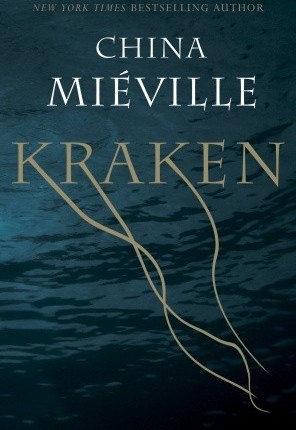
Kraken by China Miéville

Kraken by China Miéville

A book review of Kraken by China Miéville.

Kraken is a complex urban fantasy about a missing squid, an astonishing large cast of characters and the end of the world – in no particular order.

Photo by Anni Roenkae on Pexels.com

China Miéville is an incredibly imaginative author. In this story, he has created a half dozen separate religions with their own gods and customs. (Hundreds more are hinted at.) Not content with that, he also created magic of all kinds, a strike by familiars, protective London-based angels and a supernatural police force.

And that’s just the tip of the storytelling iceberg.

I would put forth the argument that he is one of the most inventive authors I’ve ever read.

That being said, I wanted more story and less world building.

Miéville has a cadence to his storytelling. Just when I thought the next important point in the plot would be revealed, he’d unveil a new character. It started to become annoying rather than astonishing.

Photo by Yura Forrat on Pexels.com

The pace of Kraken is slow, so slow. But, for readers who enjoy a complex setup and completely unexpected reveal, this may be the read for you.

Personally, I like my stories to move at a faster clip.

There’s also a good bit of coarse language in Kraken. I’m not the most sensitive person in the world, but it did grate my ears at times. Consider yourself warned.

My absolute favorite character, out of the legions to choose from, is Wati. It’s not just for his unique premise either, which is incredibly inventive. (Another tip of the hat to Miéville.)

Photo by Allan Mas on Pexels.com

Wati has so much heart. He fearlessly goes where others can’t or won’t, putting himself in danger for his friends.

And Miéville certainly takes the time to build his characters. That is his absolute strength – world and character building.

Recommended for readers who enjoy complexity and stunningly fantastical worlds, and who have the patience to thoroughly savor all of it.

Thanks for reading!

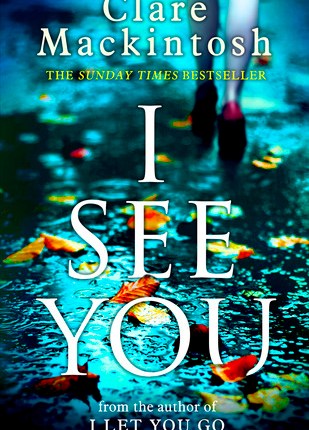
I See You by Clare Mackintosh

I See You by Clare Mackintosh

I See You is a tense thriller with fairly good execution that stumbles on its ending.

It takes place in London. The scary parts mainly take place on the public transport system.

“…I don’t know how you do this every day.” “You get used to it,” I say, although you don’t so much get used to it as simply put up with it. Standing up on a cramped, malodorous train is part and parcel of working in London.” pg 42.

Photo by Jean-Paul Wright from Pexels

Zoe Walker sees her photo, or what she believes is her photo, in the papers on her way to work. It’s weird and scary because she didn’t submit her photo to the press.

“Routine is comforting to you. It’s familiar, reassuring. Routine makes you feel safe. Routine will kill you.” pg 51.

Kelly is a member of the police. She has secrets in her past and reasons to prove herself.

“Kelly thought of all the crime prevention initiatives she’d seen rolled out over her nine years in the job. Poster campaigns, leaflet drops, attack alarms, education programs… Yet it was far simpler than that; they just had to listen to victims. Believe them.” pg 83.

Photo by sum+it from Pexels

When Zoe comes to Kelly with her concerns and her photo in the paper, she sounds crazy. But she finds a sympathetic ear with Kelly.

Can they figure out what is going on before its too late?

I read this title for book club. And even though I was disappointed in the ending, this story scared me. It also scared some members of the club.

I was frightened partly because I don’t usually read this type of book. But, it also felt so real to me.

Photo by Lennart Wittstock from Pexels

We are creatures of habit, after all. It certainly made me consider taking a different route to work. You never know who could be watching…

Recommended for brave readers who don’t shy away from unsatisfying endings. Thanks for reading!