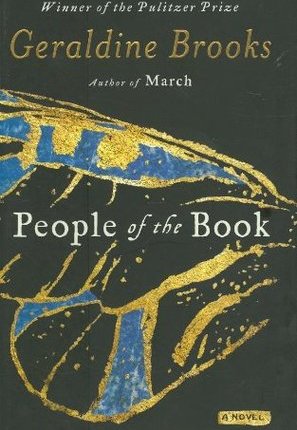
I think the problem is fairly simple- never connected with the main character. I loved Anna from Year of Wonders. I couldn’t stand Hanna.
The small details of her work that she found so absorbing, I didn’t enjoy.
I didn’t like how she treated people sometimes. I thought she seemed rather arrogant.
I also didn’t like how the timelines bounced around from character to character. I was listening to People of the Book as an audiobook. Without being able to look back and check, I found myself getting confused when I stopped in the middle of a passage and picked it up again after a work day.
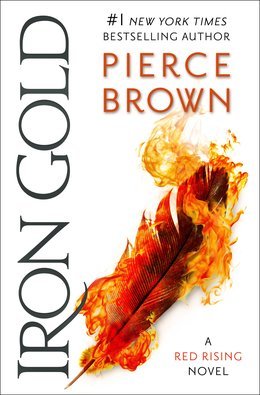
Darrow led an uprising and smashed the hierarchy that had held the worlds in its thrall. Now, ten years later, he is discovering the difficulties of maintaining rule and stamping out the last of the old regime.
More than anything else, Darrow is sick of war. Yet, unrest dogs his every step.
“I remember when you told me I was a good man who’d have to do bad things,” I say. “Your stomach go soft? Or have you spent so much time with politicians that you’ve forgotten what the enemy looks like?” pg 21.
The government Darrow and his allies have crafted out of the former rebellion is divided in how to proceed. The enemy is entrenched on the planets nearest the sun… and also the planets furthest from it.
“Like you, I wish for nothing more than peace. I wish for a world where the machine of war does not swallow our young. … Our enemies have held dominion over us for too long. First as slaves, then adversaries. And what stability, what harmony can we bring to the worlds we have freed while they continue to define us?” pg 89.
Pierce Brown has crafted a satisfying return to his dystopian world with characters readers loved from his first three books.
We also get to meet a few new ones like a wily thief who gets in over his head and a kind, young Red who discovers The Reaper’s new world isn’t anything like it was portrayed on the holos.
There’s sweeping speeches and heart-pounding battle scenes. Brown’s newest book is incredibly entertaining.
I have two regrets though.
The first is I read the other books so long ago, I forgot many of the small details. If I had it to do over again, I’d re-read the first trilogy before hopping into this one.
“It is our duty to embrace the scars our choices give us, to embrace and remember our mistakes, else we live believing our own myth.”pg 316.
The second is Brown hasn’t written his next book yet and he ends on, what seems to be for him, a signature cliffhanger.
I refused to read the first three books until the trilogy was complete because I really don’t like waiting for the next entry in a series.
“The key to learning, to power, to having the final say in everything, is observation. By all means, be a storm inside, but save your movement and wind till you know your purpose.” pg 355.
It’s a nod to Brown’s genius that I purchased this new title from the book store. I’m a library patron through and through, but this is one that is worth owning.
Here’s hoping Brown writes really fast.
Highly recommended for science fiction and dystopian fans. Start with Red Rising.
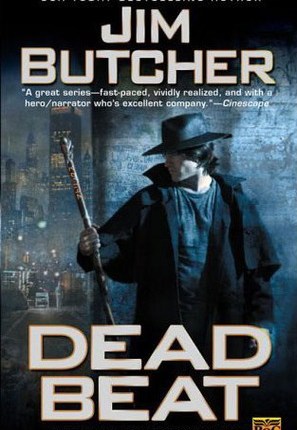
This entry in The Dresden Files has wizard Harry Dresden fighting necromancers to protect his friends and contemplating his own mortality. We also get to hang out with a few side characters and see a fascinating new side of Bob, who just happens to be one of my favorite characters in the whole series.
“Because that Kemmler was a certifiable nightmare,” Bob said. … That got my attention. Bob the skull was an air spirit, a being that existed in a world of knowledge without morality. He was fairly fuzzy on the whole good-evil conflict…” pg 39, ebook.
There’s some ridiculousness and danger to the story, but mainly Harry-angst and the perpetual struggle against darkness.
“And despite every religious faith, the testimony of near-death eyewitnesses, and the imaginations of storytellers throughout history, death remains the ultimate mystery. No one truly, definitely knows what happens after.” pg 30, ebook.
And a few old enemies, of course: “She laughed harder, and the sound of it spooked the hell out of me. … There was no warmth in it, no humanity, no kindness, no joy. It was like Mavra herself…”pg 33, ebook.
Harry is still dealing with his disabled hand, which he burnt the heck out of in the last book. “I had a responsibility to keep that destructive strength in check; to use it to help people, to protect them. It didn’t matter that I still felt terrified. It didn’t matter that my hand was screaming with pain.” pg 65, ebook.
Also, some of Harry’s previous decisions about vampires and the Wizard Counsel have some serious consequences. But, anybody who’s been reading this series for awhile, knew that that was only a matter of time.
And there’s the small matter of a certain silver coin that Harry picked up a few books ago and buried under the concrete in his lab. But whatever is in the coin can’t get out of the circle he put it in… right?
“I just keep getting more wounded and tired. … I’m not some kind of superhero. I’m just me. And I didn’t want any of this.” pg 131, ebook.
If you haven’t read this series, I highly recommend you start with the first book. The stories build on each other and become quite satisfying, in my opinion.
The ending of this one contains some ridiculousness that I was not prepared for, but after some thought about the series, I’ve decided that it doesn’t matter.
There is very little Jim Butcher could write in here that I wouldn’t like. Somewhere along the line, I’ve become quite a fan of The Dresden Files.
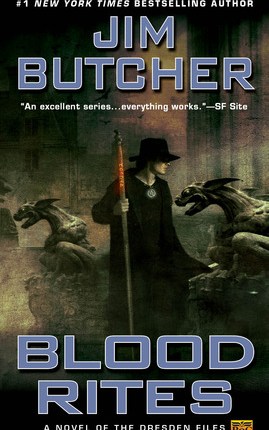
In this entry in The Dresden Files, the vampire Thomas asks Harry to help his friend, an adult film maker. People keep dying on set and Thomas thinks its magic-related.
Part-mystery, part-comedy and 100 percent wizard, I think Blood Rites is one of the best in the series so far.
“I was agreeing to help him and taking a job, just as though Thomas were any other client. It probably wasn’t the smartest thing I’d ever done. It had the potential to lead to lethally unhealthy decisions.” pg 17
As usual, Harry can’t seem to get his life together long enough to get anything done. He runs from crisis to crisis. But, he’s become self-aware enough to realize what he’s doing.
“My worry and tension slowly grew, and as they did I took a perverse comfort in the familiar emotions. It actually felt good to feel my survival instincts put me on guard against premature mortality. Hell’s bells. Is that insane or what?” pg 93
We learn a lot more about Harry’s personal life in this story.
“The hardest lesson a wizard has to learn is that even with so much power, there are some things you can’t control. No matter how much you want to.” pg 353.
A historical fiction novel about one of the most politically savvy families of all time.
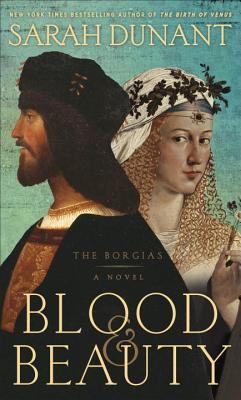
Oh, the Borgias. What an extraordinary family and what a story.
Painting by John Collier, “A glass of wine with Caesar Borgia”
Just when you think that things couldn’t become more scandalous, they do.
A Pope with a family? Check. Forbidden attraction between siblings? Check. Poisonings and intrigue and, dare I say, murder?
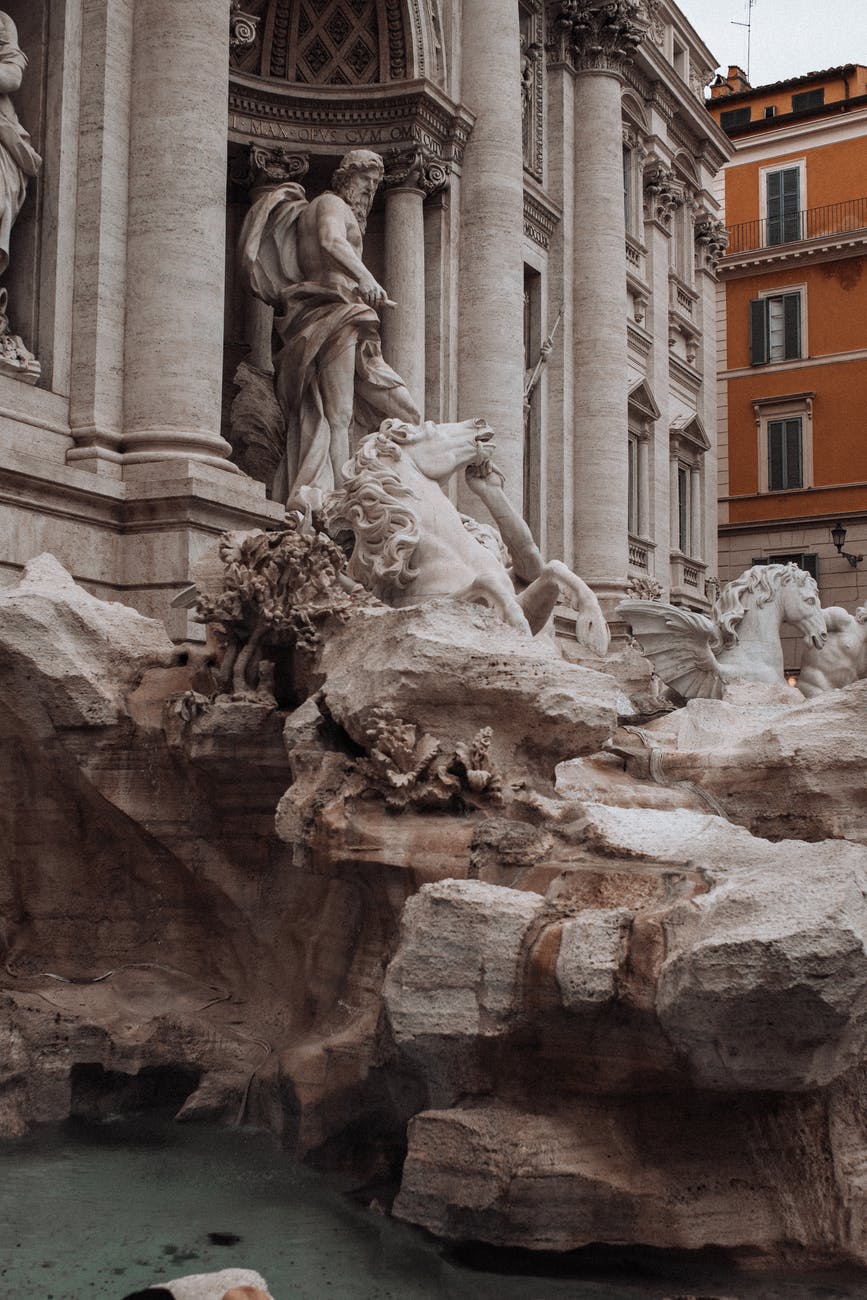
The attraction of this story is not just the crazy Borgias, it’s also Rome itself.
All roads lead to it, the center of power in Europe for centuries. One never really “rules” Rome, you just ride your wave of popularity until it crashes.
This city was the perfect backdrop to showcase the political acumen of Alexander VI, Cesare Borgias, and, eventually, Lucrezia Borgias.
Blood & Beauty contains political as well as personal drama, the shifting alliances of kings, queens, and city-states, and some very unique family dynamics.
Sarah Dunant ranks among my favorite historical fiction authors. Her stories are well-researched and never dull.
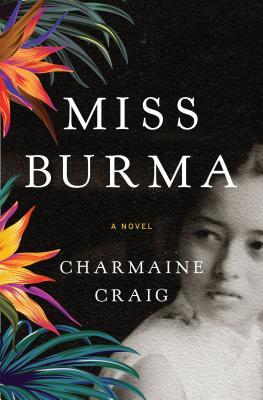
First of all, the introductory portion doesn’t make sense until the last half of the book. The pacing is glacially slow. A few of our club members couldn’t make it through the first couple of chapters.
Secondly, the constant warring and torture of innocents by the conquering forces is really difficult to read.
“We welcomed them because we’d been persecuted by the Burmans for centuries, we’d been their slaves – our villages perpetually attacked, our people perpetually preyed upon, stripped of everything from our clothing to our lives.” pg 37.
It is an important history, certainly, but the darkness of it made me feel sick.
A third problem club members had with Miss Burma is it feels disjointed.
At first, readers thought Khin and Benny were the focus of the book. But then, the point of view drifted around to Louisa, their beautiful daughter, and her story took over.
We must find a way to rejoice in our circumstances. We must find a way to do more than endure.” pg 145
Basically, the Karen are an ethnic minority in Burma, now Myanmar. For centuries, the Karen have been enslaved by the Burmese. The underlying story is about how the Karen tried to unite against the ruling government to create a federation.
“Our modesty that runs so deep it is almost self-annihilating. But now.. our relative invisibility strikes me as very sad. … If you stand for a moment behind their eyes- behind the eyes of anyone for whom modesty is not an ultimate virtue- we appear to value our lives less than they do.” pg 168
Against this background, the family of Khin and Benny tries to survive and do what they believe is right.
This story is full of flawed characters and whole passages where most of the action takes place in people’s minds.
There is fairly graphic torture, rape and violence. If any of those are triggers for you, beware.
Recommended for patient readers and those who can handle a very dark history. The book club certainly learned a lot about Burma from this book. And bullets still fly in Myanmar today.
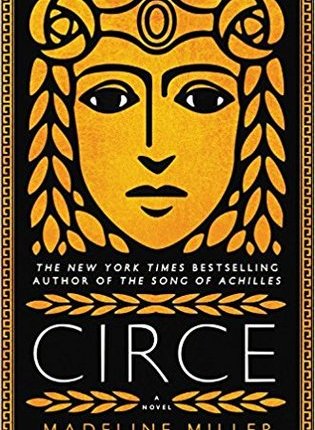
Circe is an epic fantasy that reads like a historical fiction novel, based on the Greek mythology of the witch of Aiaia, the daugher of a Titan- Circe.
I minored in the classics at university and one of my favorite classes was mythology. I love taking apart stories that mirror humanity’s foibles and try to explain the origin of some of life’s harder truths.
In the war between the Titans and the Olympians, a creation story that could be interpreted to mean the ascension of modern culture over more ancient superstitions, the Olympians triumph. But the Titans are not wiped off the face of the earth.
“Beneath the smooth, familiar face of things is another that waits to tear the world in two.” loc 272, ebook.
Some of the Titans’ powerful and mysterious children play central roles in the great mythological stories. Circe is one of those.
“They called me nymph, assuming I would be like my mother and aunts and cousins. Least of the lesser goddesses, our powers were so modest they could scarcely ensure our eternities. We spoke to fish and nurtured flowers, coaxed drops from the clouds or salt from the waves.” loc 102, ebook.
She began her life in the halls of Helios, a Titanic deity who was a god of the sun, much like Apollo.
“At my father’s feet, the whole world was made of gold. The light came from everywhere at once, his yellow skin, his lambent eyes, the bronze flashing of his hair. His flesh was as hot as a brazier, and I pressed as close as he would let me, like a lizard to noonday rocks.” loc 158, ebook.
Compared to her great father and gorgeous, manipulative mother, Circe was nothing- one of the many faceless children of the greater gods, whose future was destined to be a wife and then mother to more godlings.
Circe’s future is not as simple as all that.
She, and her brothers and sister, have a unique power that no other gods possess. They have the ability to harness the plants and power of the earth, to create potions and salves with miraculous effects. They call it: pharmakeia.
Modern readers can recognize the roots of the word “pharmacy” in the name.
“Pharmakeia, such arts are called, for they deal in pharmaka, those herbs with the power to work changes upon the world, both those sprung from the blood of gods, as well as those which grow common upon the earth.” loc 909.
It is a power no one understands and, because of its mysteriousness, it makes even the gods afraid.
There is more to Circe’s story than pharmakeia. She also interacts with Hermes, Daedalus and Odysseus. She creates a god and a monster. She shakes the foundation of the oceans.
Highly recommended for those who enjoy mythology or historical fiction. It will transport you to a world where gods and goddesses walk the earth and humanity can do nothing but tremble in their shadows.
Thank you to NetGalley and Little, Brown and Company for an advance, digital copy of this book.
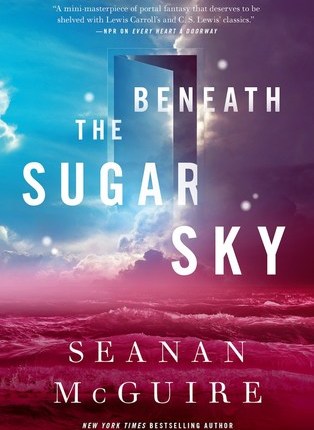
Beneath the Sugar Sky takes readers back to the world of Eleanor West’s Home for Wayward Children, but not to a moment in time before the events of the first book. It is a sequel rather than a prequel.
“They can be hard for their families to understand, those returned, used-up miracle children. They sound like liars to people who never had a doorway of their own.” pg 7, ebook.
And instead of just one world other than our own, readers get to experience a couple in Beneath the Sugar Sky.
The trouble begins when someone from a different world shows up in the everyday world and asks to see her mother. The thing is, her mother died in the real world some time ago.
The world that the girl comes from doesn’t pretend to follow time the normal way- it’s a nonsense world. Now, this visitor is disappearing and needs help from some of the residents of Eleanor West’s Home before she vanishes altogether.
“That makes no sense at all,” she said. “That means it may well work. Go, my darlings, and bring your lost and shattered sister home.” pg 29, ebook.
A new character in this book is Cora, a girl who went to a water world. She has an insightful way of viewing reality and seems able to see to the heart of people with little trouble: “They always had their shoes, their scissors, whatever talisman they wanted to have to hand when their doorways reappeared and they had to make the choice to stay or go.” pg 19, ebook.
Kade, Christopher and Nancy are in this book as well. “So many different doors, and yet here you are, all of you together, trying to accomplish the impossible.” pg 40, ebook.
I recommend reading Every Heart a Doorway before this book, to get the most enjoyment out of it. It’s perfect for young adults or readers who like fairy tales.
Warning: minor spoilers ahead if you don’t know the history of the Brontë family. Read with caution.
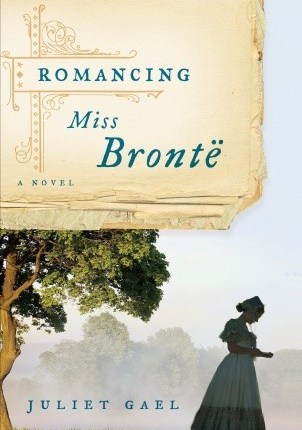
Romancing Miss Bronte is a disappointing historical fiction about Charlotte Brontë, her sisters Emily and Ann, and how they came from obscurity to write some of the most enduring fiction the West has known.
The first part of this story was the best. The reader gets a unique glimpse into the minds of the Brontës, what their lives were probably like and how unfortunate their brother’s existence turned out to be.
I loved hearing Juliet Gael’s vision of their character and personality quirks.
The second half of the book, focused primarily on Charlotte and her relationship with Arthur, was a drag.
Up until that point, the women were surprisingly self sufficient, considering the times in which they lived. Yes, they coddled their alcoholic and opium-addicted brother. Yes, they indulged the whims of their ailing father, but for the most part, they acted how they pleased.
Once Arthur enters her life, Charlotte centers every action around him. He tells her who she can write. He controls their social schedule.
The book enters a repetitive loop: Charlotte does something Arthur doesn’t like, he reprimands her, she writes her friend a letter about how annoying it is but she simply adores her husband so it’s ok… and repeat.
This was probably the reality of her situation but it sucked. I can’t imagine that I would have been happy living like that. I don’t believe she was either.
The cringe-inducing letters Gael describes in the story actually exist. I also think that if I was a sensitive and reclusive person like Charlotte Brontë, having my personal letters published after my death would be a nightmare situation.
Charlotte and her sisters were forced to live a sub-par existence because they were women.
Traditional roles for women left so little room for living. It’s astonishing that the Brontës were able to write anything at all, when you consider when they lived and the disadvantages to their station.



















 The Help Desk Book Blog