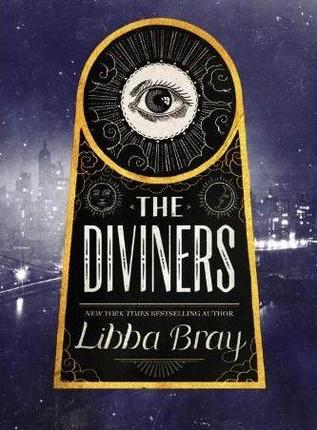
The Diviners (The Diviners, #1) by Libba Bray

The Diviners (The Diviners, #1) by Libba Bray

The Diviners is a surprisingly complex young adult novel about a returned evil, supernatural powers, secrets and mystery. It is set during the Prohibition Era in New York.

“A faint glow emanates from that dark, foul-smelling earthen tomb. Yes, something moves again in the shadows. A harbinger of much greater evil to come.” pg 10, ebook.
Photo by cottonbro on Pexels.com

Evie, the heroine of our tale, has the ability to read people, emotions and past events from objects. She is a diviner, a snappy dresser and one of the most delightful characters I’ve read about this year. And how!

After an unfortunate reading of an object from one of the most powerful families in her hometown, Evie is sent to be with her uncle Will in New York. He runs a museum of the occult and supernatural. Jericho, his ward, lives in the museum with Evie’s uncle. Jericho has a, you guessed it, secret past.

“Last but not least, here is the place where we spend most of our time: the library.” Jericho opened a set of mahogany pocket doors, and Evie let out a whistle. She’d never seen such a room. It was as if it had been transported here from some spooky fairy-tale castle.” pg 34, ebook.
Photo by Suzy Hazelwood on Pexels.com

Evie’s best friend, Mabel, has a major crush on Jericho. Evie attempts to play matchmaker, help her uncle’s museum succeed and help solve the occult-related murders that are occurring all over New York City.

Meanwhile, Memphis is a numbers runner for the top man in Harlem. He has a secret past as well and a nightmare that haunts him each night.

Theta, a showgirl for the Ziegfeld follies, is running away from her dark past and towards the bright lights of New York. Her roommate has, gasp, secrets too.

Photo by Bob Ward on Pexels.com

As the characters’ lives begin to intertwine, they race to stop a killer and, potentially, the end of the world.

Highly recommended for fans of young adult fantasy. The Diviners is a magical trip through the past and a world where ghosts and supernatural powers are real.

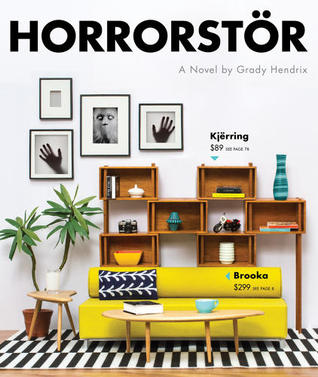
Horrorstör by Grady Hendrix

Horrorstör by Grady Hendrix

Amy has a cash-flow problem and a desire to transfer to a different Ikea-like furniture store. If she can just stay on the boss’ good side for a few more days, she’ll be out of here.

So she was on her best behavior while her transfer request made its way through the system. She arrived on time each day. She smiled at customers and didn’t blink at last-minute schedule changes. … She fought her natural tendency to talk back. And, most important, she steered clear of Basil, determined to stay off his radar.” pg 17, ebook.

Photo by Artem Beliaikin on Pexels.com

But the store has been under performing and, each morning, things are misplaced, wrecked or smeared with foul-smelling gunk. Someone has been in the store and Basil, the manager, is going to figure out what’s going on.

“I’ve asked you here because I need your help. I have an extra job for tonight. A side project. And I need you to keep quiet about it.”pg 27, ebook.

He’ll make sure Amy’s transfer papers go through if she stays overnight with Basil and a few of her co-workers. What could possibly go wrong?

Horrorstör is elevated from a typical horror novel because of its setting, which is really quite clever, and the way Grady Hendrix, the author, weaves the store manual into the narrative.

Photo by ATBO on Pexels.com

The haunting itself is spooky enough to give you chills, but doesn’t really cross the line into nightmare territory. At least, it didn’t for me.

“Churches are built where saints were martyred. A bridge requires a child in its foundations if it is to hold. All great works must begin with a sacrifice.” pg 96, ebook.

Amy is a strong female protagonist. She fights for what she wants, her coworkers and her sanity in this story. I liked how her character develops from entitled to vengeful.

Photo by Selim Can Iu015fu0131k on Pexels.com

Basil, Ruth Ann and Amy’s other coworkers are well-written too. As I read, I could imagine this cast of characters actually working at a store. There’s the tightly-strung manager with a heart of gold, the maternal push-over figure who may be tougher than she looks, and more.

Recommended for readers who enjoy some thrills and furniture-related chills. If you’re into Ikea, you may never look at your home furnishings the same way again.

Thanks for reading!

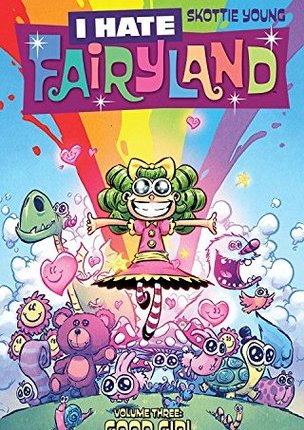
I Hate Fairyland, Vol. 3: Good Girl (I Hate Fairyland #3) by Skottie Young

I Hate Fairyland, Vol. 3: Good Girl (I Hate Fairyland #3) by Skottie Young

Skottie Young‘s gorgeously-drawn and cleverly-written comic series I Hate Fairyland continues in Volume 3: Good Girl.

Gertie is still desperately trying to get home and kill as many cute and fuzzy things as possible while she does so.

But first, she wants to meet her favorite marauding hero, Gwag, a hard-core barbarian at Dungeon Festexpocon!

Photo by Brett Sayles on Pexels.com

“This line is ridiculous. Why in the world would anyone want to spend all their time, energy, and money to attend Dungeon Festexpocon just to wait in lines the whole time?” “Says the girl about to stand in that line.”

Gert is so relatable. She’s the unfiltered impulses that run through your mind. Difference is, we quash those ideas and she lives them.

“Lesson one: the lifeblood of any good quest is alcohol!” True.

After some hijinks, Gert does some soul searching and decides she has to change her ways… again. You’d think that premise would get old after awhile, but Young manages to keep it fresh and his readers guessing.

Photo by Clam Lo on Pexels.com

As I mentioned earlier, the art continues to be a delight. No one does adorable, gore-covered critters and fantasy scenes quite like Young.

Added bonus, everybody’s favorite long-suffering guide through Fairyland, Larry, gets his own backstory in this book.

“Sorry, I must have dozed off. What were you talking about?” “I was talking about how terrible your life would be if you never met me.” “Yeah, you’re probably right.”

Highly recommended for graphic novel fans. Reminder, this series is for adults only. Don’t be fooled by the pastels. It can be crass, violent, gross, or a mix of all three of those things. It also has plenty of heart.

Thanks for reading!

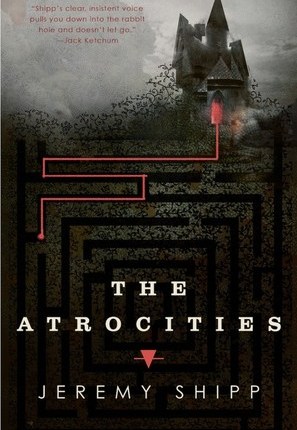
The Atrocities by Jeremy C. Shipp

The Atrocities by Jeremy C. Shipp

“You see, Ms. Valdez, we require a governess with very specific qualifications. And this goes beyond a mastery of math and science and linguistics.”

Ms. Danna Valdez is summoned to a gothic mansion filled with grotesque artwork to tutor a girl who has died.

But no one told her about the special circumstances of her pupil before she arrived.

“Isabella isn’t coping well with this new phase of her existence. A few months ago, she started breaking things. At first it was only a lamp or a vase every few weeks, but things are… escalating.” pg 29

Photo by Adrien Olichon on Pexels.com

Within the mansion lives Mr. Evers, an artist and the creator of many of the grotesques, and his wife, Mrs. Evers, a cook named Robin and a gardener/handyman named Raul.

The emotionally-charged atmosphere of the place gives Danna nightmares as soon as she arrives. And something seems to be a little off…

The premise of this story was very exciting, but I didn’t enjoy its execution or ending.

The grotesque artwork seemed to hold more meaning than I was able to glean from it.

“The parishioners would stop and reflect on each Atrocity. And what would they see? Not a hideous statue. They would look beyond the violence and suffering to the metaphysical core of the image. They would see a manifestation of God’s power.” pg 13

Photo by George Becker on Pexels.com

The artwork is creepy, disturbing and sets the scene. But it didn’t make the story.

“Each canvas houses an emaciated figure draped in tattered strips of gossamer. Wings made of human fingers spread out from their backs, and their ashen skin stretches tight over their bones like shrinkwrap.” pg 16

Recommended for readers who prefer complex imagery over plot development.

Thanks for reading!

Here’s some other horror stories I have reviewed:

The Murders of Molly Southbourne by Tade Thompson

Hyde by Daniel Levine

All Darling Children by Katrina Monroe

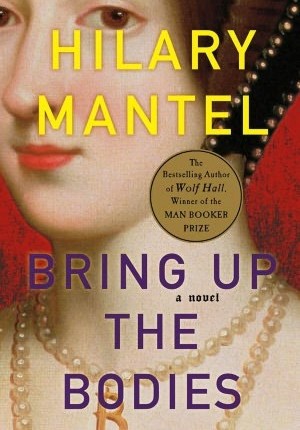
Bring Up the Bodies by Hilary Mantel

Bring Up the Bodies by Hilary Mantel

Hilary Mantel’s brilliant and Man Booker Prize-winning books about Thomas Cromwell continue with Bring Up the Bodies.

Cromwell is the right-hand man of Henry the VIII. His masterful manipulation of people and circumstances to make the world as Henry wants it has brought Cromwell wealth and power.

Getting Anne Boleyn on the throne was a struggle. Now he has to get her off of it without losing his own head in the process.

Mantel doesn’t just tell history, she makes it come alive.

Photo by Daria Shevtsova on Pexels.com

In one scene I can’t get out of my head: Henry has a temper tantrum because of the Spanish ambassador’s continued disrespect towards his new wife, Anne, and the repeated requests from the Spanish crown for money owed. The king blows his top at Cromwell and screams in his face.

He says he believes Cromwell has always manipulated him and laughed at him. But he is king and he will not be steered.

And, even though I knew the history, I thought for a moment Cromwell was going to be taken to the Tower in that instant.

Instead, he quietly apologizes to the king and dismisses himself, then goes to a different room to take a drink. With shaking hands, Cromwell spills a drop of the wine on himself and sits there, contemplating the small stain on his shirt.

Photo by Polina Tankilevitch on Pexels.com

And I said to myself, “Mantel is a genius.”

In that passage, it was as if I was in that room, living the moment. She makes you forget you’re reading a book. It’s so immersive. It’s almost magical.

Cromwell’s efforts to collect evidence against Queen Anne fills much of this book. As he tightens his net around her, you can almost feel it tighten around yourself.

Cromwell jokes with his sworn men to ease some of the tension, but it is always there, buzzing beneath the surface.

Highly recommended for historical fiction readers. Bring Up the Bodies is one of the best books I’ve read this year.

Photo by Rachel Claire on Pexels.com

To see my review of Mantel’s Wolf Hall, click here.

If you enjoyed Wolf Hall or Bring Up The Bodies, you may also enjoy Elizabeth I by Margaret George.

Thanks for reading!

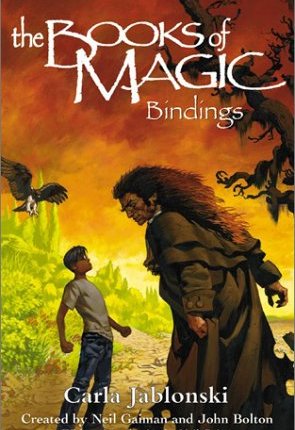
Bindings (The Books of Magic, #2) by Carla Jablonski

Bindings (The Books of Magic, #2) by Carla Jablonski

Faerie is slowly dying from a mysterious wasting disease. Tim Hunter, the new and as-yet-untrained magician, may be the only one who can save it.

But could Timothy Hunter, who briefly visited the realm of the Fair Folk, be the child of the prophecy?” pg 2

Photo by Tom Fisk on Pexels.com

You don’t have to read the previous entry in the series about Timothy to understand this stand-alone story. Carla Jablonski does a good job recapping what has gone on before.

“Throughout all the journeys, it seemed like there were always people trying to kill him or take his magic.” pg 12

My beef with this book is, even though she uses Neil Gaiman’s characters, she doesn’t write with the magic of Gaiman.

The plot is incredibly straight-forward, the bad guys are sadly predictable and it just doesn’t sparkle.

Photo by Maria Orlova on Pexels.com

Even Tamlin, the man who went to Faerie long ago and fell in love with its Queen, isn’t as complex as I wish he would be.

Tamlin knew that to the Fair Folk, as something was, it always would be. Nothing ever changed. The ability to see reality and to change was man’s magic. My magic, Tamlin thought.” pg 42

It’s not her fault. Jablonski has written a thoughtful young adult novel about reality not always being what it appears to be and explaining some of Tim’s origins.

She’s just not Neil Gaiman. There’s nothing wrong with that, but if you’re going to write someone’s characters, you need to embody who they are.

Now that he was in a real-life fairy tale, complete with its own monster, he realized how unlikely those stories really were.” pg 111

Photo by Johannes Plenio on Pexels.com

Read this entry in the series if you’re a completionist. Otherwise, may I recommend The Sleeper and the Spindle.

See my reviews of the first entry of The Books of Magic on my blog or the third entry in the series, Free Country: A Tale of The Children’s Crusade.

Thanks for reading!

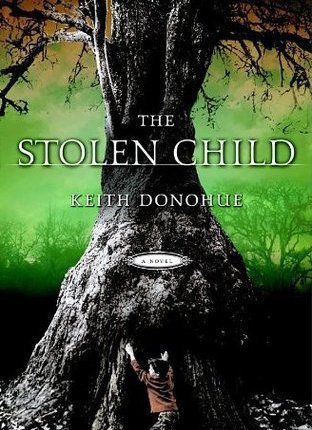
The Stolen Child by Keith Donohue

The Stolen Child by Keith Donohue

If you must give me a name, call me hobgoblin. Or better yet, I am a changeling- a word that describes within its own name what we are bound and intended to do. We kidnap a human child and replace him or her with one of our own.” pg 7, ebook.

The Stolen Child is the story of a changeling and the boy whose place he took, Henry Day.

The chapters alternate between the real Henry Day and the false Henry Day. It is a captivating story about magic, family and belonging.

Photo by Gary Barnes on Pexels.com

“This is my confession, too long delayed, which I have been afraid to make, and only now reveal because of the passing dangers to my own son. We change. I have changed.”

It also addresses the issues of the modern world and how technology and humanity has driven nature into corners.

The changelings are basically immortal children (but they can die through accidents) who live in the woods until their turn comes to rejoin the human world. Years before, they were all ripped from their families and made a part of the same group their replacement just deserted.

Their world is brutal, cold and always on the verge of collapse. One of their only rules is they don’t discuss a new changeling’s prior life during his new one.

Photo by Stijn Dijkstra on Pexels.com

The adjustment period from human to changeling is difficult enough without keeping the memories alive through the long years of their unchanging childhood.

But things aren’t much easier on the changelings who take the child’s place. If they are discovered, in the past, the changelings have been killed or their family members have gone mad from the strain.

They must carry a secret with them for the rest of their lives. It is as a lonely an existence as the changeling group separated from humanity in the forest.

Photo by ArtHouse Studio on Pexels.com

I enjoyed this story. Keith Donohue has a way with making the fantastical seem real and the miraculous into the mundane.

But that ending. It didn’t complete the excellent characters and storyline Donohue had constructed, in my mind.

Recommended for those who like to read modern fairy tales. Just don’t expect a life-changing finale.

Thanks for reading!

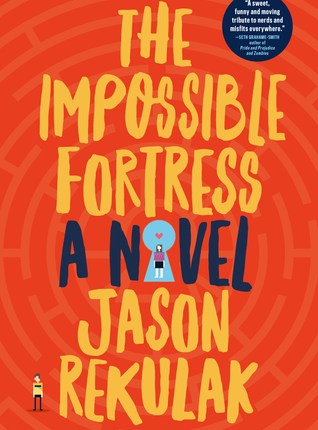
The Impossible Fortress by Jason Rekulak

The Impossible Fortress by Jason Rekulak

A cute coming-of-age novel about a boy, a computer, a Playboy magazine and first love.

Billy and his awkward friends are in love with Vanna White, the girl-next-door who flips the letters on Wheel of Fortune. When some pictures of Vanna appear in Playboy, they know they have to get that magazine, at any cost.

One problem, none of them are even close to eighteen years old.

This was the moment of truth- the moment I’d rehearsed with Alf and Clark again and again. They’d coached me to keep my pitch exactly the same- to speak the words like I used them all the time: “Just some Tic Tacs,” I said, “And a Playboy.” pg 29

Photo by Athena on Pexels.com

Part of this story is enjoying the humor and innocence of the boys in an era before the internet. The other part of this story, the one that occupied my book club, was reminiscing about technology and early computers.

We spent most of the time at book club talking about what our first computers were, who knew coding, and what were our favorite early games.

“If I was serious about Planet Will Software, I couldn’t work on a Commodore 64 much longer. Newer computers offered more memory and better graphics, and C64s would be obsolete in another year or two. I needed to upgrade to the latest technology, and the contest was my best chance to do it.” pg 43

Photo by Soumil Kumar on Pexels.com

That part of the evening seemed to entertain the older members of our book club more than me. It’s not that I didn’t have an early computer, I did, I was more interested in the coming-of-age part of this story and the heist-type scenarios the boys go through to get their dirty magazine.

I also enjoyed Billy’s struggles to understand Mary and the cute dynamic between them. I liked learning about his loyalty to his friends and his dreams for future computer programming greatness.

“I’m going to make video games,” I said. “I’m going to start my own company, and I’ll only hire cool people.” pg 81

Photo by Barik5ive on Pexels.com

If I ever start my own company, in whatever business sector that it may be (not computer programming), I’ll only hire cool people too.

Recommended for book clubs or if you just want a sweet, light read by the pool, The Impossible Fortress just may fit the bill.

Thanks for reading!

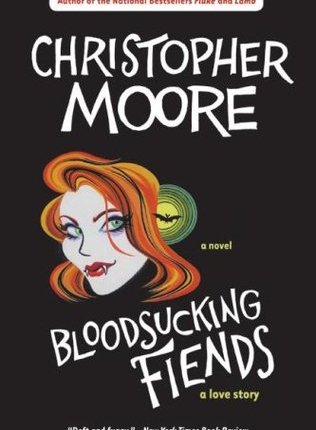
Bloodsucking Fiends (A Love Story, #1) by Christopher Moore

Bloodsucking Fiends (A Love Story, #1) by Christopher Moore

Jody was attacked by a man who bit her neck and left her for dead in an alleyway. She woke up a vampire. What is she going to do now?

“(Jody) was twenty-six and pretty in a way that made men want to tuck her into flannel sheets and kiss her on the forehead before leaving the room; cute but not beautiful.”

Photo by Mariah Green on Pexels.com

C. Thomas Flood wants to be an author, but where he comes from (Indiana) that’s not an acceptable trade for a man. He flees to San Francisco to “starve in the city.” After some misadventures with too many roommates and turkey bowling at the Safeway, he meets Jody and his life is never the same.

“Turkey bowing is not recognized by the NCAA or the Olympic Committee. There are no professional tournaments sponsored by the Poultry Farmers of America, and the footwear companies do not manufacture turkey bowling shoes. … Despite this lack of official recognition, the fine and noble tradition of ‘skidding the buzzard’ is practiced nightly by supermarket night crews all over the nation.”

Christopher Moore takes on the “vampire genre” and it’s not his best effort. If you’re going to read one of his books, I recommend Lamb: The Gospel According to Biff, Christ’s Childhood Pal.

It’s still ridiculous fictional literature, but I enjoyed the characters in Lamb more. In Blocksucking Fiends, everybody reads like one cliché after another.

Photo by cottonbro on Pexels.com

“In another time she would have called a girlfriend and spent the evening on the phone being comforted. She would have eaten a half gallon of ice cream and stayed up all night thinking about what she was going to do with her life. .. But that was another time, when she had been a person.”

And perhaps that was Moore’s point. It was as if he was mocking the sub-genre of vampire novels by his one-dimensional characters and thin plot.

Or maybe it is just a sub-par effort.

I don’t think I’ll be picking up the other books in this series.

Thanks for reading!