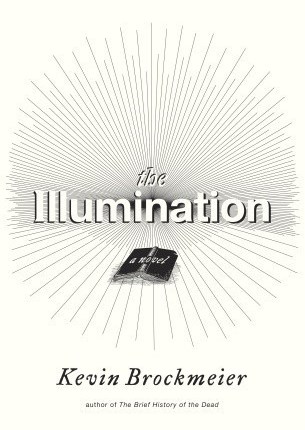
The Illumination by Kevin Brockmeier

The Illumination by Kevin Brockmeier

Humanity suddenly changes as emotional and physical pain begins to shine out of our bodies like light. How would a shift like that change culture? And what does it all mean?

Kevin Brockmeier examines these questions through six different lives that are tied together through a diary filled with love notes from a husband to his wife.

Rarely has a book stuck in my mind like The Illumination. Since putting it down, I’ve found myself thinking about it and asking myself what the author was saying.
Photo by Pixabay on Pexels.com

“Through the haze of drugs, it seemed to her that the light was not falling over her wound or even infusing it from the inside but radiating through it from another world. She thought that she could live there and be happy.” pg 8, ebook

Throughout the centuries, mystics and others considered “holy” or infused with spirit have been depicted with light shining from their bodies and hands. The ineffable connection to God or gods is shown in the artistic shorthand of light, an illumination in the dark.

In the day-to-day business of living, many of us are too busy with our individual lives to stop a second and ask ourselves, what is the purpose of this experience? It feels so random for the most part. Terrible things happen to good people, good things happen to terrible people. It feels arbitrary and, worst of all, meaningless.

So many are in pain and we can’t possibly heal them all. We don’t acknowledge that. But what if it became so obvious that we couldn’t ignore it.
Photo by Luis Dalvan on Pexels.com

“The world had changed in the wake of the Illumination. No one could disguise his pain anymore.” pg 29, ebook

The Illumination illustrates another of humanity’s foibles – the tendency to demote the miraculous to the mundane once it becomes a common place experience. Babies are born every day. People die every day. Life in its beginnings, endings, and everything in the middle, is extraordinary but I don’t think we appreciate the enormousness of it unless something unexpected or earth-shattering happens in our own lives.

“He watched with interest as his body was chafed and torn, thinking, Look what’s here inside me. Who ever would have guessed? pg 164, ebook

Maybe, if we truly tried to let it all in, we would all stand around paralyzed by awe.

“It turned out that the world at the end of time was just like the world at the beginning: a single set of footsteps printing the grass, everything lit with its own newness, a brighter and much, much emptier place.” pg 48, ebook
Photo by Stanislav Kondratiev on Pexels.com

In this world, the past is reexamined in the wake of the new light-filled reality. Historic photos are doctored to make the pain visible through light. Hospitals develop new protocols to address the change in reality. Communication and politeness take on new meaning as private pain becomes public knowledge.

“For a few months, church attendance spiked. Some of the seats at Fellowship Bible were taken by visitors, some by the Christmas-and-Easter set. It didn’t matter – each new face showed the guilt, fright, or confusion of someone confronted by a game whose rules had suddenly changed.” pg 104, ebook

The dystopian worlds of literature present authors’ various views on what the world would look like at the end of all things. Brockmeier’s world is so very much like ours except for one glaring difference. Perhaps that’s the point. The end of the world is much like today – light or no light, we’re all wandering around seeking meaning and bumping into each other and causing pain, intentional and unintentional.

Photo by Rodolfo Clix on Pexels.com

The spiritual and religious beg for illumination, a shining light through the confusion, a removal of a metaphysical blindfold. But what would we do if those prayers were answered in a concrete way? Probably nothing once the initial shock wore off.

Recommended for readers who seek the answers to unanswerable questions. Some trigger warnings for cutting, self mutilation, and violence.

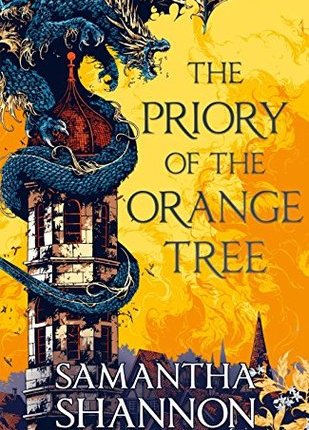
The Priory of the Orange Tree by Samantha Shannon

The Priory of the Orange Tree by Samantha Shannon

A cast of interesting and well-imagined characters stumble through poorly-written plot twists on their way to saving the world from “The Nameless One”.

“The House of Berethnet may protect us from the Nameless One, or it may not. There is no proof either way. … That is the problem with stories, child. The truth in them cannot be weighed.” pg 109

Photo by Suraphat Nuea-on on Pexels.com

I started out enjoying The Priory of the Orange Tree. The way the story builds is engaging and moves along at a fast clip.

My main quibble with this fantasy book is Samantha Shannon takes more than 800 pages to create her world with its countries, religions, magic systems, but then resolved major plot points in two to three sentences or less in some cases.

We learn about items that have been missing for a millennia and I thought, oh this is going to be interesting to figure out. But then, two pages later, through a series of ludicrous coincidences, two of the main characters have one of the items in their hands.

In one of the major confrontations of the book, Shannon doesn’t even write dialogue and played it out through the eyes of a character who had no idea what was going on. I wouldn’t have been so put off by it if she hadn’t spent literally hundreds of pages getting us to that point. That particular villain may not have been the focus of the tale, but I think she at least deserved a final monologue.

Photo by Snapwire on Pexels.com

When traveling from place to place, there aren’t tantalizing descriptions of the trip. Basically, the character gets in the conveyance and, boom, they’re at the destination. Shannon used more descriptive words when she talked about the food characters were eating than she did when her characters were moving from here-to-there.

The exception to this rule were her descriptions of “the Abyss”. The way she depicted the stars shining down from above and out of the depths was beautiful.

Complaints aside, there were plenty of things I liked about the book. I enjoyed the way Shannon took real life alchemical principles and wove them into something otherworldly for her story.

“What is below must be balanced by what is above, and in this is the precision of the universe. Fire ascends from the earth, light descends from the sky. Too much of one doth inflame the other, and in this is the extinction of the universe.” pg 150

Photo by Pixabay on Pexels.com

I also liked the secret order whose name graces the front cover of the book. The different cultures Shannon created were a treat a learn about. I thought her characters were, for the most part, quite relatable.

“So you see, Ead,” the queen said, “I do not sleep because I’m not only afraid of the monsters at my door, but also of the monsters my own mind can conjure. The ones that live within.” pg 203

The characters were diverse and, as I mentioned, well-written. A couple times in the story, particularly in the portions about the Abyss, I felt Shannon’s writing was elevated to something like prose.

“Love and fear do strange things to our souls. The dreams they bring, those dreams that leave us drenched in salt water and grasping for breath as if we might die – those, we call unquiet dreams. And only the scent of a rose can avert them.” pg 416

Photo by Irina Iriser on Pexels.com

I think this story could have been extraordinary if Shannon hadn’t been trying to fit so much into one volume. A trilogy with lingering descriptions of landscapes and nail-biting conclusions to the various story arcs would have been much more enjoyable.

Thanks for reading!

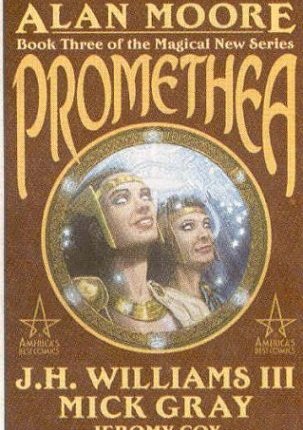
Promethea, Vol. 3 by Alan Moore

Promethea, Vol. 3 by Alan Moore

The saga of Promethea continues in Volume Three of the five book series.

Promethea, the version embodied by Sophie Bangs, has embarked on an adventure through the myriad worlds of the Tree of Life. She seeks another of the avatars of Promethea who recently died. Together, they hope to find the deceased woman’s husband and learn about the occult on the way.

Photo by Stacey Gabrielle Koenitz Rozells on Pexels.com

Meanwhile, back in the real world, Sophie has left someone unexpected in charge of keeping the baddies at bay while she’s away. Is Stace up to the task?

The artwork of the series continues to impress with its beauty and ingenuity. I especially enjoyed the mobius strip path of the world of Hod.

Alan Moore’s writing is at its best when he’s waxing on about the complexity of the universe and delivering punchy one-liners ending those conversations.

Photo by Pixabay on Pexels.com

However, he takes the characters through so many different places so quickly that the adventures themselves end up feeling rather stilted. I think I may have enjoyed this entry more if he had spent a little more time exploring the worlds rather than simply explaining them.

I get that Promethea has places to be. But she could have savored the journey along the way.

Recommended for graphic novel readers who enjoy a mix of fantasy and occult in their stories. Thanks for reading!

Here are links to the other two reviews I’ve written for this series:

Book One

Book Two

In a Cottage In a Wood by Cass Green

In a Cottage In a Wood by Cass Green

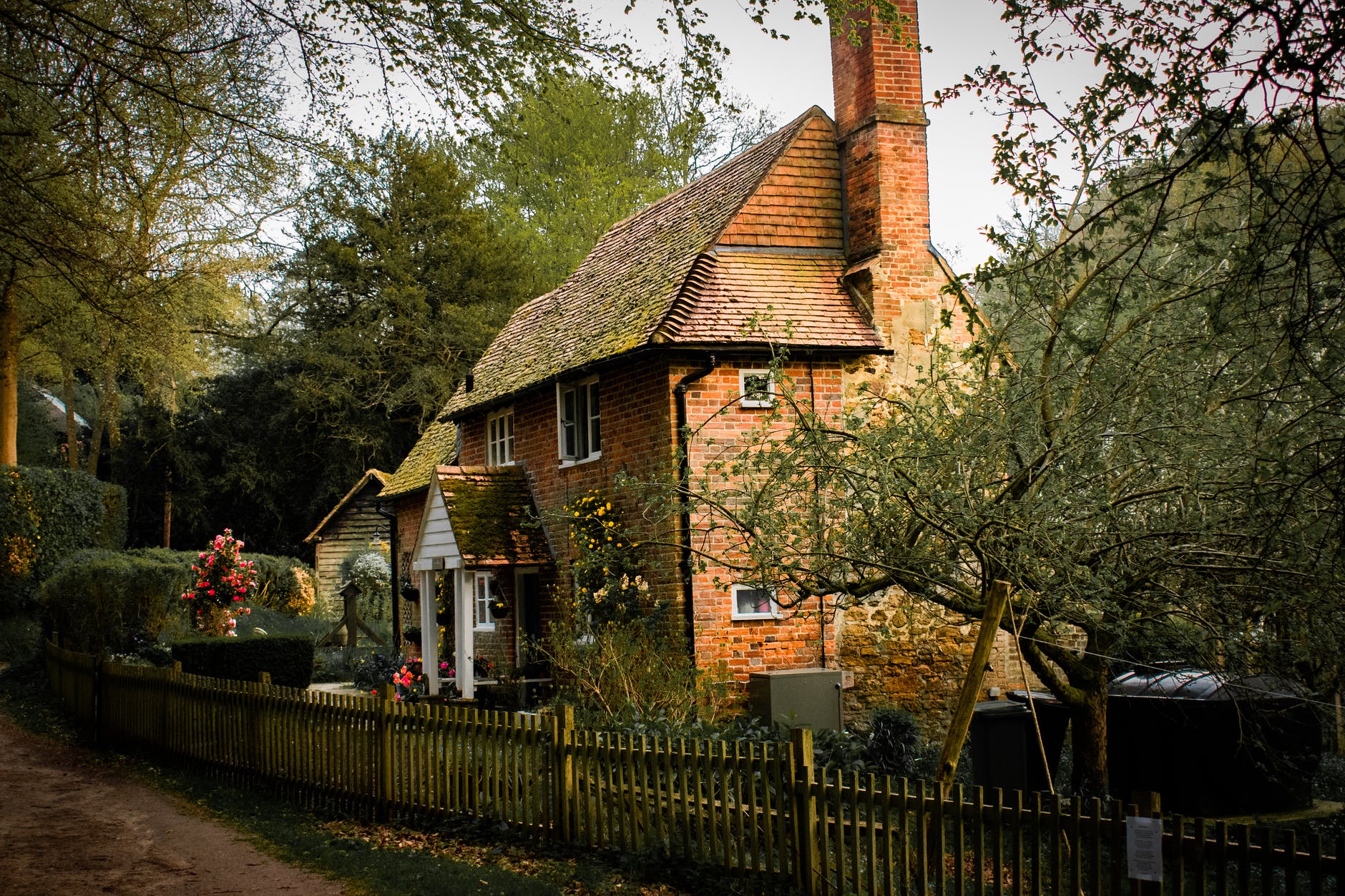
Neve’s life is a mess. She recently broke up with her boyfriend, has no place to go and an unfortunate drinking habit. Perpetually hung over and disappointed in her job, friends, and family, Neve experiences a shocking event on a London bridge that changes her life forever.

Now the proud owner of a cottage in the woods, Neve can hardly believe her good fortune. But when unexplained events begin to haunt her waking hours, she begins to question whether it was luck that led her to the bridge or something else entirely.

Photo by Tatiana Syrikova on Pexels.com

“This really is happening quite legally, Neve,” she says in a gentle voice. “You own Petty Whin Cottage and everything in it. It’s all yours now.” pg 48, ebook

Cass Green has crafted a suspenseful mystery with an unreliable narrator that holds your attention but doesn’t necessarily deliver on the thrills. But it is enjoyable enough for what it is.

I read In a Cottage In a Wood in just a few sittings with a mug of hot chocolate in my hand while a winter storm raged outside. I think the book is a good choice to pass a few hours and I could also see it being an interesting pick for book clubs.

Photo by Simon Sikorski on Pexels.com

Green is at her best when building a growing sense of isolation and Neve’s teeth-on-edge feelings at the cottage, all while utilizing every day events that could be completely innocuous. What’s so scary about power outages, a dead bird and a dog getting outside the fence? It’s in the timing and the incremental increase in emotional tension, which Green has down perfectly.

Neve is a relatable character even while making poor choices. I found myself cheering her on, hoping she finds whatever it is she’s looking for to bring some peace to her soul. But the unreliable narrator bit has been used a great deal lately, hasn’t it?

Photo by Tobi on Pexels.com

Recommended for readers who like to use suspenseful thrillers as a brief escape from reality.

Thanks for reading!

Promethea, Vol. 2 by Alan Moore

Promethea, Vol. 2 by Alan Moore

Promethea, Volume 2 was an incredibly disappointing follow-up to a promising comic series.

The reader continues to follow the efforts of Sophie, a student who has learned to channel the spirit of a being of enlightenment named Promethea, while battling demons and other nebulous, bad guys.

Photo by Francesco Ungaro on Pexels.com

We have yet to learn more about the villains of the story, except in brief asides, or Sophie’s allies, some sort of technological heroes.

This entry is bogged down with a lengthy metaphysical poem about the progression of tarot cards and an unexpected tantric sex primer.

Photo by Alina Vilchenko on Pexels.com

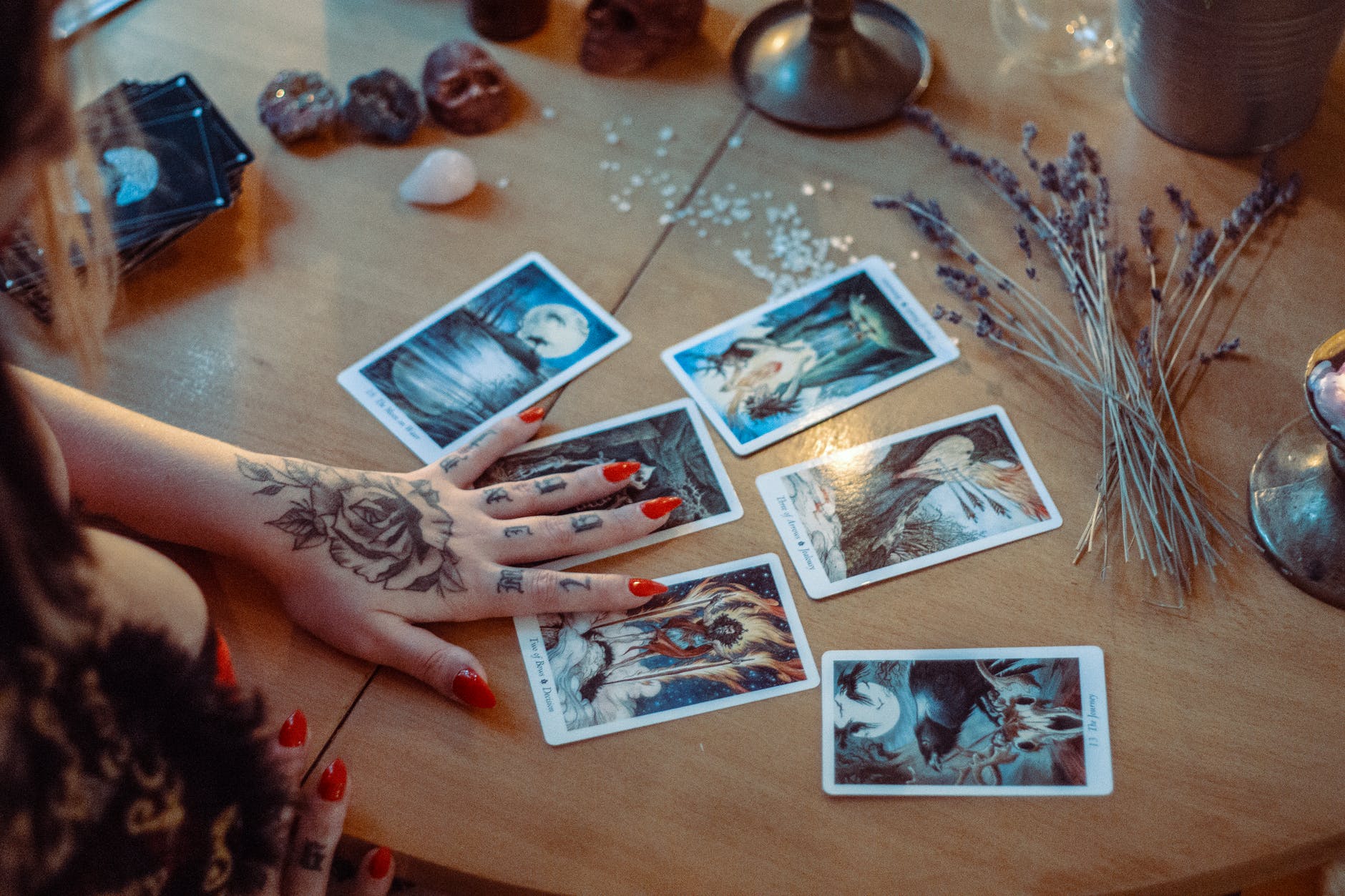
My quibbles with the tarot card piece is it is far too simplistic but also too long. Each card can be interpreted a number of different ways, and not just applied to principles of civilization. It is also a metaphor for the soul’s journey, which Alan Moore touches on, but, I feel, never truly explains.

Also, by presenting the whole thing through rhyme, I couldn’t help but draw comparisons to Dr. Seuss. I get what Moore was going for, but it didn’t work for me.

Meanwhile, I couldn’t help but wonder if the lead character in this story was a guy if we would have been subjected to the tantric stuff at all.

Photo by Roy Reyna on Pexels.com

I believe the earthly can be spiritual and the spiritual can be earthly. I think “kundalini rising” is just the lightning flash of inspiration in reverse. But a male hero being pressured into trading his body for secret knowledge? I don’t see it happening.

I liked the first entry of Promethea. I thought it was ground-breaking in the way it depicted a strong female character on a spiritual journey.

This second book simply isn’t of the same quality. Perhaps the series will redeem itself in the next entry. One can only hope.

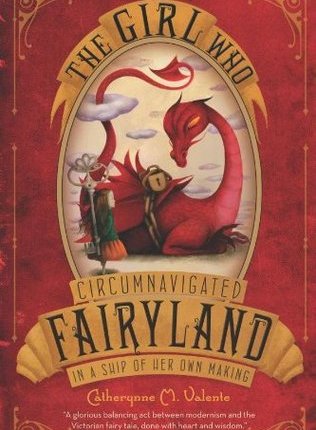
The Girl Who Circumnavigated Fairyland in a Ship of Her Own Making by Catherynne M. Valente

The Girl Who Circumnavigated Fairyland in a Ship of Her Own Making by Catherynne M. Valente

The Girl Who Circumnavigated Fairyland in a Ship of Her Own Making is a modern take on more traditional fairy tales wherein a child finds a way to another world and comes back changed.

Photo by Pixabay on Pexels.com

I first read the title of this book in Catherynne Valente‘s much more adult novel, Palimpsest. I think it was mentioned as sitting on someone’s book shelf. I remember thinking how I wish I could read that book too. Imagine my surprise to discover it was actually a book in the real world. Of course, I had to pick it up.

“You seem an ill-tempered and irascible enough child,” said the Green Wind. “How would you like to come away with me and ride upon the Leopard of Little Breezes and be delivered to the great sea, which borders Fairyland?” pg 2

Photo by Geran de Klerk on Pexels.com

How could any heroine refuse an invitation like that?

The main character of this tale, a girl with the curious name of September, has read enough books to know a once-in-a-lifetime chance when she sees it. Though she doubts, at first, that she is the appropriate girl for the adventure.

“In stories, when someone appears in a poof of green clouds and asks a girl to go away on an adventure, it’s because she’s special, because she’s smart and strong and can solve riddles and fight with swords and give really good speeches, and… I don’t know that I’m any of those things.” pg 14

Photo by Ksenia Chernaya on Pexels.com

Part of Valente’s fairytale, like most good fairytales, is how September realizes how special she actually is — one of the conclusions heroes tend to arrive at during their various journeys.

September’s journey is a danger-filled jaunt through a land under the thumb of a smartly-hatted villain named the Marquess. September meets curious characters along the way including a trio of witches, a wyvern who claims his father is a library, and a boy from under the ocean with dark eyes and a secret.

The story contains plenty of winks and nods to anyone who loves reading: “Stories have a way of changing faces. They are unruly things, undisciplined, given to delinquency and the throwing of erasers. This is why we must close them up into thick, solid books, so they cannot get out and cause trouble.” pg 36

Photo by Zichuan Han on Pexels.com

And: “She sounds like someone who spends a lot of time in libraries, which are the best sorts of people.” pg 55

They are the best sorts, aren’t they.

Recommended for young adults, the young-at-heart, or anyone who enjoys quirky portal fantasy reads. I thought this book was charming.

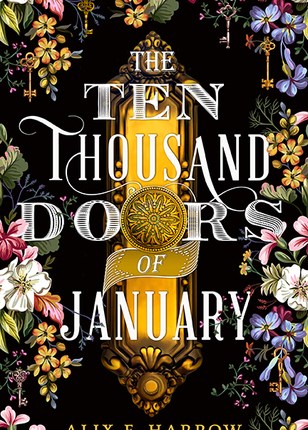
The Ten Thousand Doors of January by Alix E. Harrow

The Ten Thousand Doors of January by Alix E. Harrow

The Ten Thousand Doors of January is a beautiful portal fantasy novel wherein our heroine learns the world contains far more magic than she imagined and so does she.

Photo by Pixabay on Pexels.com

“If we address stories as archaeological sites, and dust through their layers with meticulous care, we find at some level there is always a doorway. A dividing point between here and there, us and them, mundane and magical. It is at the moments when the doors open, when things flow between the worlds, that stories happen.” pg 2

January has never quite fit into the glittering and privileged world of her fabulously wealthy guardian, Mr. Locke. She perpetually waits for her father to return from his many voyages where he’s constantly seeking lost treasures for his demanding employer.

She has very few friends, except Samuel, the local grocer’s son, and, eventually, a feisty hound named Sinbad, “Bad” to those who know him. In her enforced solitude, January has a lot of time to herself. One day, she discovers something strange in a field.

Photo by Irina Iriser on Pexels.com

“I almost didn’t notice the Door at all. All Doors are like that, half-shadowed and sideways until someone looks at them in just the right way.” pg 8

Once she has found the way to another world, January’s life is never quite the same.

I really enjoyed this debut novel by Alix Harrow. The writing is beautiful and most of the book acts as an homage to reading as an escape.

“It smelled of salt and age and adventure. It smelled like another world, and I want to return right this minute and walk those strange streets. Instead, I added articulately, “I liked it.” pg 13

Photo by Harrison Haines on Pexels.com

It also asks the reader to consider the magic of thresholds. The two-headed Roman god, Janus, from which we get the name of the month, January, had an interesting place in the pantheon. Though he didn’t necessarily have a priest dedicated to only him, Janus would be invoked at the start of each religious ceremony, no matter who the ceremony was dedicated to. It was appropriate because Janus holds the authority over beginnings and endings.

He also has a mystical association with the conscious and subconscious mind. The two faces of the god coincide to the two portions of a person’s psyche. Janus can symbolize the unification of these two minds in order to become something greater.

Photo by Octoptimist on Pexels.com

It relates to this story as January comes of age and claims her own, very unique, abilities as well as discovering her mysterious past.

It is also somewhat of a love story: “It’s a profoundly strange feeling, to stumble across someone whose desires are shaped so closely to your own, like reaching toward your reflection in a mirror and finding warm flesh under your fingertips. If you should ever be lucky enough to find that magical, fearful symmetry, I hope you’re brave enough to grab it with both hands and not let go.” pg 91

Photo by Ashley Williams on Pexels.com

Highly recommended for readers who enjoy fantasy. There’s plenty of magic and escape to enjoy in these pages.

Thanks for reading!

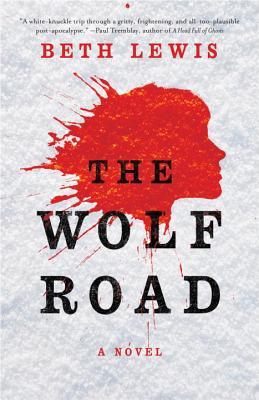
The Wolf Road by Beth Lewis

The Wolf Road by Beth Lewis

Elka grew up in a world where nuclear bombs fell from the sky and poisoned the earth, and the weather can turn deadly in a heartbeat. In this apocalyptic landscape, she found a home in the wilderness with a man she called, “Trapper,” and he was like a father to her. Turns out, there was a dark side to the person who fed and sheltered Elka. Now, Elka has to find her real parents who went north years before. And she has to hurry, because if Trapper finds her first, something terrible will happen.

“Trapper was my family even though I didn’t know a sure thing about him, but I figured quick I didn’t know much more ’bout my parents and they was kin. Trapper was the kind a’ family you choose for yourself, the kind that gets closer’n blood.” pg 21

Photo by Valiphotos on Pexels.com

The title of the book speaks to Elka’s disdain for taking the regular road through the wilderness — in her world, that’s where the predators find you. It’s also a metaphor for living the life you want to live, not the one that others expect for you.

“I don’t much like roads. Roads is some other man’s path that people follow no question. All my life I lived by rules of the forest and rules of myself. One a’ them rules is don’t go trusting another man’s path.” pg 85

Elka, instead, forges her own road through the trees and, as she goes, chooses a new family including a beautiful young woman with a background as mysterious as Elka’s own and a lone wolf who appears one day out of the blue. But she doesn’t trust her own choices because she made such a terrible one by relying on the monster she called Trapper.

Photo by Pixabay on Pexels.com

“He bolted up, stood tall and kinglike, towering above me. Felt like I’d lost a piece of me in that moment, like that wolf had stolen something and I had to stick with him always to make sure I’d get it back.” pg 73

Written in first-person narrative style, The Wolf Road is a dystopian coming-of-age story with some elements of horror and mystery. I found the opening to be a bit slow, but was swept up in the plot as the story progressed and Elka remembered certain details she had forgotten from her unique childhood.

Recommended for readers who like the thrills and chills of dystopian worlds.

Thanks for reading!

The Three-Body Problem by Liu Cixin

The Three-Body Problem by Liu Cixin

The Three-Body Problem is an inventive science fiction read that suffers, in my opinion, from some translation issues. None of the characters feel quite right. Their dialogue seemed wooden and stilted. And, perhaps this was just my Western mind, I never really understood some of their motivations.

“She could no longer feel grief. She was now like a Geiger counter that had been subjected to too much radiation, no longer capable of giving any reaction, noiselessly displaying a reading of zero.” pg 22

Photo by Pixabay on Pexels.com

My quibbles with the characters aside, some of the concepts in this book were utterly fascinating.

There’s a mysterious government installation, video game with a deeper, hidden meaning, unexplained deaths, numbers appearing out of thin air, and, my favorite part, an in-depth imagining of what unfolding a proton in different dimensions might look like. For fans of the genre, I can see why the The Three-Body Problem would be appealing.

“All the evidence points to a single conclusion: Physics has never existed, and will never exist. I know what I’m doing is irresponsible. But I have no choice.” pg 61

Photo by Sourav Mishra on Pexels.com

In the library copy I read, some of the major cultural issues needed to understand the text are included in footnotes. It helped, but it made me wish I could read this in its original form.

“Everything that’s happening is coordinated by someone behind the scenes with one goal: to completely ruin scientific research.” pg 135

I particularly liked Liu Cixin’s descriptions of the landscapes contained in the video game of the story. The desolate vistas and civilization-ending weather were fascinating to explore.

The idea that there was a world where the law of physics didn’t apply was also mind-bending. Cixin has created a place where suns swirl through the sky in no discernible pattern and pendulums don’t swing in the expected pattern. In a world like that, anything could happen. And it does.

Photo by Pixabay on Pexels.com

“Even if God were here, it wouldn’t do any good. The entire human race has reached the point where no one is listening to their prayers.” pg 205

Recommended with reservations for fans of science fiction. There’s much to enjoy in this read, especially if you favor the “science” part of the genre.

For readers who enjoy book to screen adaptations, this novel has already been made into a film. It is also slated to become a television series.

Thanks for reading!