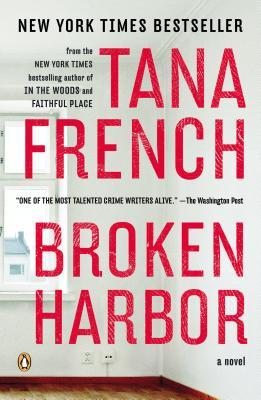
Broken Harbor (Dublin Murder Squad, #4) by Tana French

Broken Harbor (Dublin Murder Squad, #4) by Tana French

When a family is attacked and three of its members die, the Dublin Murder Squad activates Detective Michael “Scorcher” Kennedy to solve the case.

“Here’s what I’m trying to tell you: this case should have gone like clockwork. It should have ended up in the textbooks as a shining example of how to get everything right.” pg 13, ebook

Photo by Rachel Claire on Pexels.com

But things are never that simple in Tana French’s thrilling, mystery series.

I said, “This is a bad one.” O’Kelly laid one heavy palm on the call sheet, like he was holding it down. He said, “Husband, wife and two kids, stabbed in their own home. The wife’s headed for the hospital; it’s touch and go. The rest are dead.” pg 15, ebook.

Readers were introduced to Scorcher in the last book, as the tight-laced and slightly inept officer assigned to investigate the cold case that took place in Faithful Place. I didn’t like him much in that book and this one didn’t change my opinion.

“Probably he was thinking what a boring bollix I was. … Only teenagers think boring is bad. Adults, grown men and women who’ve been around the block a few times, know that boring is a gift straight from God.” pg 22, ebook.

Photo by Dimitry Anikin on Pexels.com

I thought he was kind of boring too.

Unlike the last books which mainly dealt with psychological tension caused by fear, Broken Harbor delves into the murky waters of mental illness.

“I don’t know what word you want me to use, but if this fella’s mental, then nobody has to go asking for trouble. He’s bringing it with him.” pg 81, ebook.

In addition to juggling his case, Scorcher is trying to protect his sister, who is bipolar and refuses to seek help. The family hides her illness from their neighbors because of shame and something that happened in their past.

Photo by Daria Shevtsova on Pexels.com

This plot point seemed outdated to me. Culture has shifted in the past decade so that mental illness is no longer something that is swept under the rug. Maybe this is different in Ireland than the States, but I kept getting hung up on that and it spoiled my enjoyment of what would have otherwise been another thrilling story.

Recommended for readers who enjoy psychological thrillers. Be aware of potential triggers for anyone who struggles with auditory hallucinations, suicidal tendencies and mood swings.

Thanks for reading!

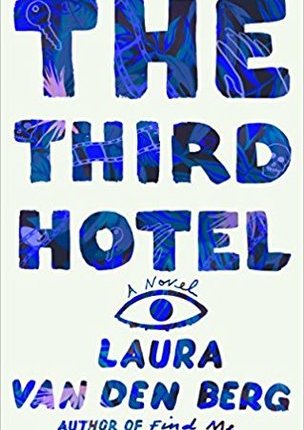
The Third Hotel by Laura van den Berg

The Third Hotel by Laura van den Berg

A strange and confusing ride through a world seen through the eyes of a grieving widow. A short time prior to attending a film festival in Cuba, Clare’s husband Richard was killed. Now, she sees him on the streets of Cuba.

“Clare had never before seen her husband operate a motorbike, but he navigated it like he had been riding one all his life, like he had been riding one in Havana all his life, like he had not been struck by a car and killed in the United States of America some five weeks ago.” pg 13

Photo by Valeriia Miller on Pexels.com

What is going on? The reader isn’t sure what’s real and what’s only in the mind of Clare. Laura van den Berg raises mammoth questions and leaves the interpretation to the reader.

My book club picked a heck of a read for March. Reactions to this book ranged from the disgusted to the mystified to the fascinated. I’d put myself somewhere in between.

I like having complex symbolism to pick apart and magical realism to consider in a story. I like having an open-ended mystery. I don’t need to have all the answers.

But I do like to have more hints at the possible interpretations than van den Berg gives us.

“She might have said, I am not who you think I am. She might have said, I am experiencing a dislocation of reality.” pg 3

Photo by cottonbro on Pexels.com

Or she might have said, I have no idea what’s going on in this story. A character in the novel itself explains this confusion (in the guise of talking about horror films), suggesting it’s purposefully created by the author, and says it is designed to create a sensation of “eels under the skin.” This book definitely had that type of impact on me.

“Besides, he added, raising a finger, the foundation of horror is a dislocation of reality, a dislocation designed to reveal the reality that has been there all along, and such dislocations happen all the time.” pg 9

As I said, it’s weird, but there’s something genius about it too. Van den Berg’s words are beautiful, but they don’t always make sense. I turned the last page and was infuriated at how confused I was.

“She wondered what the eye would see and what she would see in what the eye saw. She imagined the suspension transforming into a warm flood of inevitability as the gate swung open and she stepped into whatever new dislocation of reality lay ahead.” pg 32

Photo by Tobias Bju00f8rkli on Pexels.com

In conclusion, it’s a hard book to read, but perfect for groups who are looking to spur a literary discussion. There’s so much to unpack.

Is she in an alternate reality or having a psychotic break? Or is she just grieving the whole time? What does her life now have to do with her childhood? What is the secret Clare shares with her father? Is there hidden meaning in her trip to the southern part of the island?

That’s just what pops into my head when considering the title of this book. Recommended for readers who don’t mind being totally confused and left with eels under their skin.

Thanks for reading!

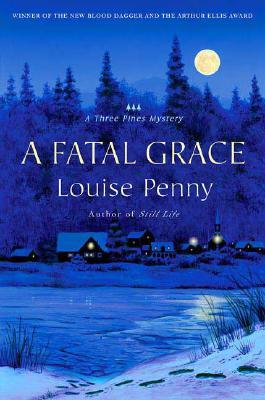
A Fatal Grace (Chief Inspector Armand Gamache, #2) by Louise Penny

A Fatal Grace (Chief Inspector Armand Gamache, #2) by Louise Penny

Chief Inspector Armand Gamache solves more murders while surrounded by the sparkling personalities that compose the small town of Three Pines in Canada. 

Nobody likes the victim of the murder, which makes the job harder for Gamache. As a reader, I was cheering for Gamache to solve the crime, but not because of the unlikeable CC de Poiters. She was as different a character from the victim of the first book, Jane, as you could possibly be.

I wonder if Louise Penny’s editors said, ‘Give us another cozy murder, but different.’ Well, she delivered.

Photo by eberhard grossgasteiger on Pexels.com

“Anything CC didn’t like didn’t exist. That included her husband and daughter. It included any unpleasantness, any criticism, any harsh words not her own, any emotions. CC lived, Saul knew, in her own world, where she was perfect, where she could hide her feelings and hide her failings. He wondered how long before that world would explode.” pg 11, ebook

Meanwhile, a storm is brewing at Gamache’s headquarters because of fall out from the mysterious Arnot case (which the reader first read about in the last book and finally gets to learn about in this one).

“Only fools underestimated (Gamache), but Brault knew the service was full of fools. Fools with power, fools with guns. The Arnot case had proved that beyond a doubt. And had almost destroyed the large, thoughtful man in front of him.” pg 57, ebook

We are also treated to more background on some of my favorite characters from the last book, Clara and Myrna, plus poetry from the irascible Ruth.

Well, all children are sad
but some get over it.
Count your blessings. Better than that,
buy a hat. Buy a coat or pet.
Take up dancing to forget.
 pg 39, ebook.

Photo by Zen Chung on Pexels.com

I like that Penny is developing these characters. They’re not just stuck in a time or place, unmoving and stiff. For example, Clara and Peter, her husband, are still fighting, but about different subjects now than from the last book. How very realistic for a married couple.

“When my death us do part
Then shall forgiven and forgiving meet again,
Or will it be, as always was, too late?”
 pg 61, ebook.

And it’s simply a treat to follow Gamache around and listen to his inner voice. He’s sensitive and kind, smart and intuitive. He also likes good food and drink. It makes him so relatable. He’s one of those characters that I’d like to meet for a drink sometime, if he were real. Or I’d want him in my book club.

“Gamache’s job was to collect the evidence, but also to collect the emotions. And the only way he knew to do that was to get the know the people. To watch and listen. To pay attention. And the best way to do that was in a deceptively casual manner in a deceptively casual setting. Like the bistro.” pg 142, ebook.

Photo by Atahan Demir on Pexels.com

The only part of this book that I found a bit off-key was a moment between Gamache and one of the town’s oldest residents, Em. They talk about moments from their past when something inexplicable caused them to behave in a certain way. That conversation comes back to haunt Gamache later in the book, and it almost has an air of magical realism to it.

There’s nothing wrong with magical realism, but I felt like Three Pines and its residents had enough every day magic without resorting to the truly far out there. I’d be curious as to what other readers thought of that moment — I won’t say any more because I don’t want to spoil it. You’ll know what I’m talking about when you get there.

Highly recommended for readers with a hankering for cozy mysteries. Thanks for reading!

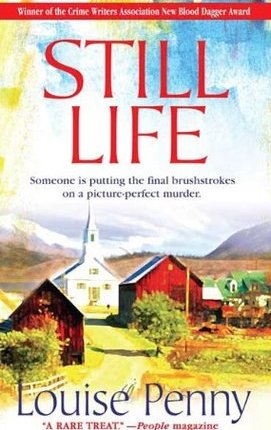
Still Life (Chief Inspector Armand Gamache, #1) by Louise Penny

Still Life (Chief Inspector Armand Gamache, #1) by Louise Penny

Still Life is a satisfying start to a cozy mystery series. It has a diverse and quirky cast of characters and it kept me guessing as to what was coming next.

“Miss Jane Neal met her maker in the early morning mist of Thanksgiving Sunday. It was pretty much a surprise all around.”pg 6, ebook

The small town of Three Pines, Canada, is the kind of place where people don’t lock their doors. Or, it used to be that way.

Now, one of their kindest citizens is dead and a killer walks among them.

Photo by Magda Ehlers on Pexels.com

“Her name’s Jane Neal. Aged seventy-six. Never been married. We got this information from Mr. Hadley who says she was the same age as his mother who died a month ago.” pg 29, ebook

Chief Inspector Armand Gamache is one of the top of his field. He knows how to listen and he’s a keen observer — of people, of scenes, of everything. He’s a dazzling main character.

“Ruth Zardo, my job is to find out who killed your friend. And I will do that. I will do it in the manner I see fit. I will not be bullied and I will not be treated with disrespect. pg 41

As for the townsfolk, you’ll enjoy meeting each and every one. We have the owners of the local restaurant and bed & breakfast, local artists, real estate sales people, a book shop owner, an award winning poet and more. The dialogue between all of them is a delight to read. You may find yourself laughing out loud… I did.

Photo by Daniel Joseph Petty on Pexels.com

Also, I’d recommend starting the last chapters of this book either during the day or early in the evening. I thought I’d just read a few pages before bed and found myself finishing the book two hours later. (And far past my bedtime.)

Highly recommended for readers who love mysteries. This is a gem.

For readers interested in page to screen adaptions, this book has been made into a film. It is also slated to become a series for Amazon.

Thanks for reading!

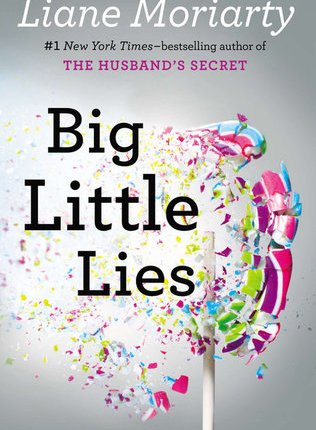
Big Little Lies by Liane Moriarty

Big Little Lies by Liane Moriarty

Big Little Lies follows three different women who all have children starting kindergarten. It is a mystery, drama and satire about the pressures of parenthood, modern motherhood especially, all rolled into one.

“Should I call the police?” wondered Mrs. Ponder out loud, but then she heard the wail of a siren in the distance, at the same time as a woman on the balcony began to scream and scream. pg 19, ebook.

Photo by 112 Uttar Pradesh on Pexels.com

I couldn’t put the book down. I don’t know people who are as intense as the parents are in this book, but with a little push, I could see some of the PTO members making that leap and fitting right in. You know they care about their kids, but it makes them a bit competitive and unapproachable. This book made me wonder what may be going on at home if that’s the face they choose to display in public…

My favorite character in Big Little Lies was Jane, the youngest of the mothers and one who is carrying a devastating secret. She allows her intense love for her son, Ziggy, to keep her going through her anxiety.

If it weren’t for Ziggy she would have driven off. She would have been so focused on her goal of getting him to his kindergarten orientation that she would have left a woman sitting on the road, writhing in pain. pg 28, ebook.

But a close second for favorite character was Madeline, a fiery mother of three children, one from her first marriage and two from her second. She doesn’t let anybody push her around and she stands up for those she takes under her wing. It’s nice to have friends like that.

Photo by Ketut Subiyanto on Pexels.com

Madeline saw Celeste and her face lit up. One of the nicest things about Madeline was the way her face transformed when she saw you, as if there were no one else in the world she’d rather see. pg 40, ebook.

Madeline is also the cause of much of the drama in this story. She has a tendency to cause trouble when she’s upset rather than back away from it. Also, gossip seems to follow her around.

Madeline, she realized, was one of those slightly dangerous people who jumped right in defending their friends and stirred up far bigger waves than the first tiny ripple. pg 90, ebook.

Mysterious and beautiful Celeste is the last of the main characters in this story. She’s so easy to love, but, like Jane, also has a terrible secret. And while all of this drama is going on in their personal lives, their children are trying to make it through kindergarten in one piece.

Photo by Anete Lusina on Pexels.com

Highly recommended for readers who like their mysteries interlaced with some backstabbing parents and heartbreaking secrets. I’m interested to see the HBO series now and see how true they were to the book.

Thanks for reading!

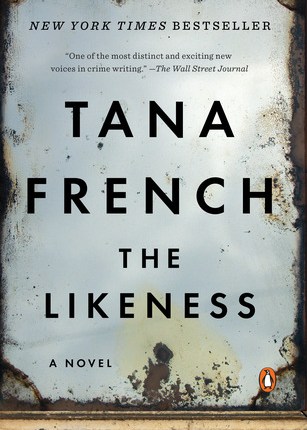
The Likeness (Dublin Murder Squad, #2) by Tana French

The Likeness (Dublin Murder Squad, #2) by Tana French

Tana French’s second book in The Dublin Murder Squad series packs a serious punch. Cassie Maddox, a former murder squad detective, has moved to a different unit because of the stresses of the case called “Vestal Virgin” and personal difficulties with her former partner. She’s dragged back into the murder squad, when a woman’s body is found and she’s carrying identification showing her name is one of Cassie’s former undercover personas.

This is the main thing you need to know about Alexandra Madison: she never existed. Frank Mackey and I invented her, a long time ago, on a bright summer afternoon in his dusty office on Harcourt Street. pg 12, ebook.

Photo by Alex Fu on Pexels.com

The slain woman has a unique living situation. She rooms with four other adults in a stately manor home called Whitethorn House. The group is a tightly-knit bunch of university students who not only live together, but also spend nearly every waking moment in each other’s company.

“Her main associates,” Sam said evenly, “were a bunch of other postgrads: Daniel March, Abigail Stone, Justin Mannering and Raphael Hyland.” pg 71

None of the group had a motive for killing Alexandra, whom they called Lexie. Or did they? Or perhaps it was someone outside the group, someone who had an old reason for hating them and the house. Or maybe it was a crime of opportunity… and who was Lexie Madison anyway?

Cassie’s superiors ask her to use her physical similarity to the dead woman to infiltrate the group in an undercover operation to try to dig up some answers. Can she pull it off? And, if she does, will whoever attacked Lexie come at her again?

Photo by Faisal Rahman on Pexels.com

“This is the part I didn’t tell Sam: bad stuff happens to undercovers. A few of them get killed. Most lose friends, marriages, relationships. A couple turn feral, cross over to the other side so gradually that they never see it happening till it’s too late…” pg 62, ebook.

The tension throughout this entire book is incredible. I noticed the same thing with French’s other book, In the Woods. She really has a way of building the story up through complex layers and then delaying the big reveal to pour on the stress.

The characters are fantastic. The conversations are dances, setting up further plot points.

“She’s fine,” said Abby. “She just said so.” “I’m only asking. The police kept saying—” “Don’t poke at it.” “What?” I asked. “What did the police keep saying?” “I think,” Daniel said, calmly but finally, turning in his chair to look at Justin, “that we should leave it at that.”

Photo by Andrea Piacquadio on Pexels.com

I had to suspend my disbelief at a couple points in the story. The big one was believing that Cassie looked enough like the dead woman to make the undercover part even possible. I suppose I’ve heard stories about doppelgangers, but I’ve never truly believed such a thing actually exists.

Highly recommended for readers who like their mysteries with a heaping side dish of tension.

Thanks for reading!

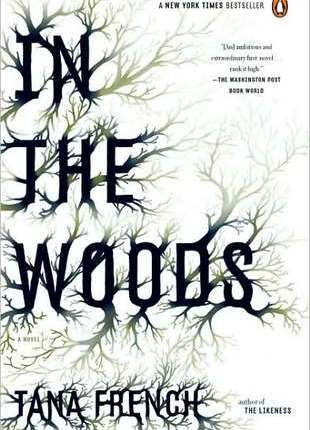
In the Woods (Dublin Murder Squad, #1) by Tana French

In the Woods (Dublin Murder Squad, #1) by Tana French

“They are running into legend, into sleepover stories and nightmares parents never hear. Down the faint lost paths you would never find alone, skidding round the tumbled stone walls, they stream calls and shoelaces behind them like comet-trails.” pg 14, ebook.

Rob Ryan is a detective in the Dublin Murder Squad. He has a curious past, being the only survivor of a strange afternoon in the woods. Rob and two of his friends went into the woods, but only he emerged. His memories of that time are a blank. It may be that his subconscious prefers it that way.

“Obviously, I have always wished I could remember what happened in that wood. The very few people who know about the whole Knocknaree thing invariably suggest, sooner or later, that I should try hypnotic regression… I worry that I might come out of hypnosis with that sugar-high glaze of self-satisfied enlightenment, like a seventeen-year-old who’s just discovered Kerouac, and start proselytizing strangers in pubs.” pg 35, ebook

Photo by Darius Krause on Pexels.com

Fast forward twenty years, a child’s body is found in the same town, Knocknaree, where Rob lived when he was a child. Could the two cases be related?

“This is what I read in the file, the day after I made detective. I will come back to this story again and again, in any number of different ways. A poor thing, possibly, but mine own: this is the only story in the world that nobody but me will ever be able to tell.” pg 15, ebook

I loved the unfolding of both of these stories. Tana French was able to build tension through the slow reveal and she kept me guessing. Rob was the quintessential unreliable narrator and likable (for the most part). He made some bone-headed decisions that I didn’t agree with, but the reader always knew why he was making them.

Rob’s partner, Cassie, was my favorite character in the story. She’s the only woman on the Dublin Murder Squad and loyal to a fault. Cassie also has some dark secrets in her past. She and Rob complement each other perfectly.

Photo by eberhard grossgasteiger on Pexels.com

“When we went into work the next morning we were friends. It really as simple as that: we planted seeds without thinking, and woke up to our own private beanstalk.” pg 30, ebook

I also loved the layers of this story. There’s the relationship between Cassie and Rob, their relationship to the rest of the squad, Rob’s memories, Cassie’s backstory, the two cases, and the reactions of everyone around them.

“Now death is un-cool, old-fashioned. To my mind the defining characteristic of our era is spin, everything tailored to vanishing point by market research, brands and bands manufactured to precise specifications; we are so used to things transmuting into whatever we would like them to be that it comes as a profound outrage to encounter death, stubbornly unspinnable, only and immutably itself.” pg 57, ebook

Photo by Stephan Mu00fcller on Pexels.com

Recommended for readers who enjoy mysteries and not-so-scary thrillers. I’m definitely picking up the next book in this series.

For any readers who enjoy page to screen viewing, the show adaptation of this book and its sequel called “Dublin Murders” was pretty well done.

Thanks for reading!

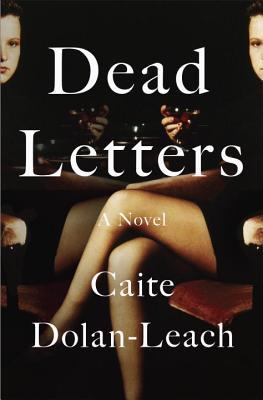
Dead Letters by Caite Dolan-Leach

Dead Letters by Caite Dolan-Leach

Dead Letters is a mystery and psychological thriller about a dysfunctional family and two unhealthily entwined twins. It is also about how relationships with those closest to us can be an unending source of unhappiness, if that is what we choose.

Ava has felt stifled by her family. Her mother has dementia, her father left them to start another family and conflict with her twin sister, Zelda, has dominated her existence. She now lives in Paris, when she receives an unexpected email from her mother… Zelda is dead.

The whole thing was so very Zelda. Too Zelda. When I finally reached my mother on the phone, she slurrily told me that the barn had caught fire with Zelda trapped inside. pg 8

Photo by Harrison Haines on Pexels.com

From the very beginning, Ava has her doubts about Zelda’s “accidental” death. Then, when the police reveal evidence that points towards a murder, things begin to spiral out of control.

Adding to the confusion, Ava and Zelda are/were identical. The whole community confuses one sister for the other. Even their own mother, whose mind is slipping away, calls Ava by her dead sister’s name.

Alcohol contributes its own fog to this story as Ava deals with her childhood demons while tangling with some new ones.

Not wanting to acknowledge consciousness in that desperate, dry-mouthed morning-after horror, I’m eventually forced to crack open my eyes. Jolted awake in suddenly sober distress, I blink owlishly and struggle to open my exhausted, quivering eyes, which are agonizingly dry, filched of liquid. … I should quit drinking, I reflect. It’s not the first time I’ve had this thought. pg 170

Photo by Charlotte May on Pexels.com

And, of course, there’s the highschool sweetheart hanging around and the relationship that ended very badly, as if Ava doesn’t have enough going on.

The mystery of this story isn’t all that mysterious, but the characters and the slow unwinding of the past are superb. I read this book almost in one sitting the day before Thanksgiving and it made me appreciate my own fairly-functional family much more.

Our mother had started her mimosas somewhat earlier, and I knew from her glassy eyes and gingery steps that Nadine was approaching the danger zone, the state between mildly and mindlessly drunk wherein she could marshal enough sobriety to do real damage but was uninhibited enough to not care how much damage was inflicted. pg 116

We can’t control what’s happened to us in the past, but moving forward, our lives are what we make of them. Look at the stories you tell yourself and examine why you do the things you do. You wouldn’t want, like the characters in this tale, to be controlled by incessant competition, booze or your weight on a scale, would you?

Photo by Charlotte May on Pexels.com

Caite Dolan-Leach doesn’t turn over every stone, leaving some of the characters’ pasts foggy. But she leaves hints everywhere and allows readers to fill in the blanks.

A criticism: some of the twists in the story are too perfectly orchestrated, and I doubted that such things would be possible, even with intricate planning and if you knew someone as well as you know yourself.

I’ll certainly have plenty to talk about at book club tonight. It was a good pick and I’d recommend it for other groups who read psychological thrillers. There’s a lot to unpack: the family dynamic, mystery, thrills, romance, layered characters and alcohol, so much alcohol.

Thanks for reading!

Under the Harrow by Flynn Berry

Under the Harrow by Flynn Berry

Nora’s sister is dead. Through the fog of her grief, one thing is clear: Nora is going to find out who did it. And she’s going to make him pay.

The sky foams, like the spindrift of a huge unseen wave is bearing down on us. Who did this to you, I wonder…” pg 9.

Photo by u0410u043bu0435u043au0441u0430u043du0434u0440 u041fu0440u043eu043au043eu0444u044cu0435u0432 on Pexels.com

As she frantically tries to piece together the last days of Rachel, her sister’s life, Nora discovers things she never knew about her secretive sibling. There are some secrets that should have gone to the grave…

“He might have come in the house on one of the days he watched her. She left a key under the mat, he could have let himself in when she was at work or asleep.” pg 62

Like other thrillers, Under the Harrow slowly dishes out the clues to the mystery and introduces elements of danger just when the reader is starting to feel comfortable.

“There are too many people I don’t recognize, which I hadn’t expected. I thought I would be able to note any strangers. Whoever did it might come today.” pg 69

Photo by Max Flinterman on Pexels.com

It also flirts with the “unreliable narrator” trope. Not in an annoying, over-done way, but, just enough so it makes the reader question the bits of information we are receiving.

Is what we’re learning true or only true in Nora’s mind?

“I wanted both of us to forget what we had learned. For the past five years, I’ve pretended that we did forget, and ignored any signs otherwise.” pg 83.

Readers experience Nora passing through the stages of grief, sometimes making better choices than other times. She desperately misses her sister.

“It is so easy to think about her. Each memory links to another one, and time doesn’t seem to pass at all. I sit for hours remembering, until the first commuters, unbearably sad, begin to arrive, waiting in the darkness on the platform for the early train to London.” pg 111

Photo by Leon Warnking on Pexels.com

Recommended for readers who enjoy thrillers and quick reads. At less than 250 pages, you can finish this book in one afternoon. I did. 🙂

Thanks for reading!