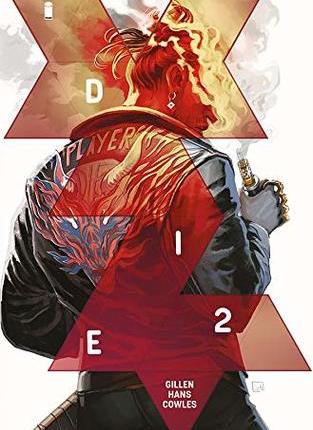
Die #2: Split the Party by Kieron Gillen, Stephanie Hans (Artist)

Die #2: Split the Party by Kieron Gillen, Stephanie Hans (Artist)

Now that the main characters from Die, Vol. 1: Fantasy Heartbreaker are back in the fantasy gaming world of Die, they are struggling to make their way back to the real world.

Part of that struggle involves delving into the past and decisions made by their teenage selves. There are lost loves, old enemies and even a few descendants to contend with- not to mention old hurts that they’ve carried for years between members of their own party.

Which is a particular problem for our intrepid heroes. They all have to agree that they want to leave “Die” in order to do just that. And they don’t all want to leave anymore.
Like most sequels, at least in my experience, the follow up to the first issue wasn’t as strong. Now that readers are in the character development section of the story, action moves a little slower and it reads less like a fantasy adventure and more like a drama.

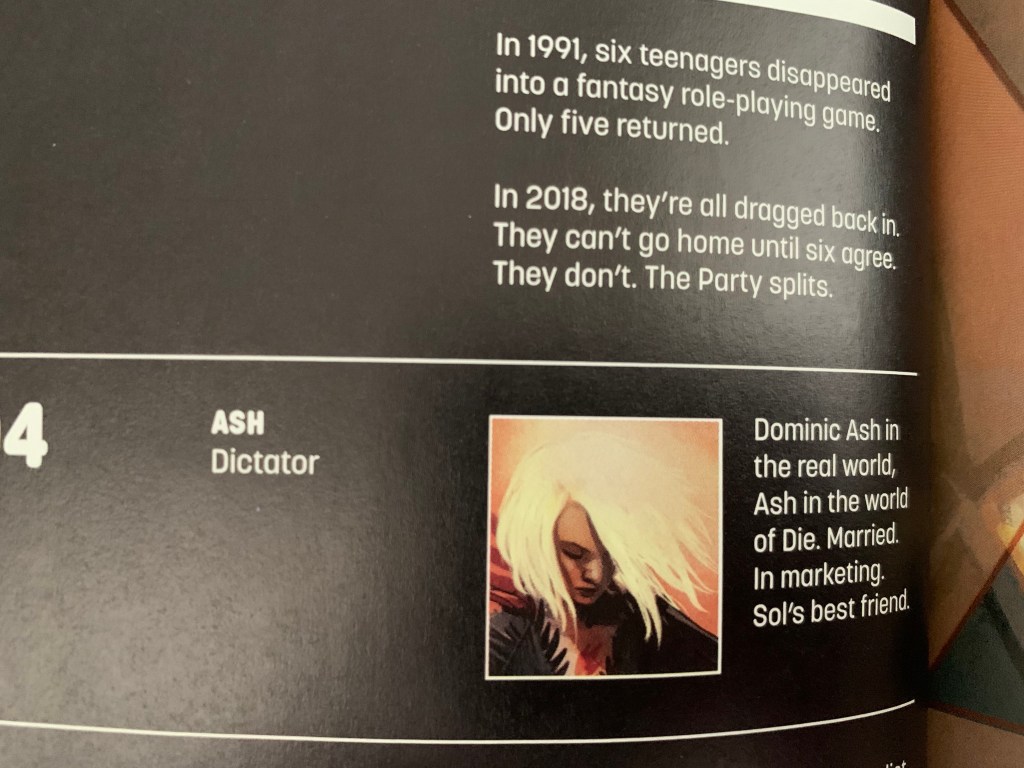
I think the character with the most potential for growth is Ash, the Dictator, who is a man in the real world, but a woman in the world of Die, and controls people’s emotions with her voice. But all of the movers and shakers in this drama have some growing to do.
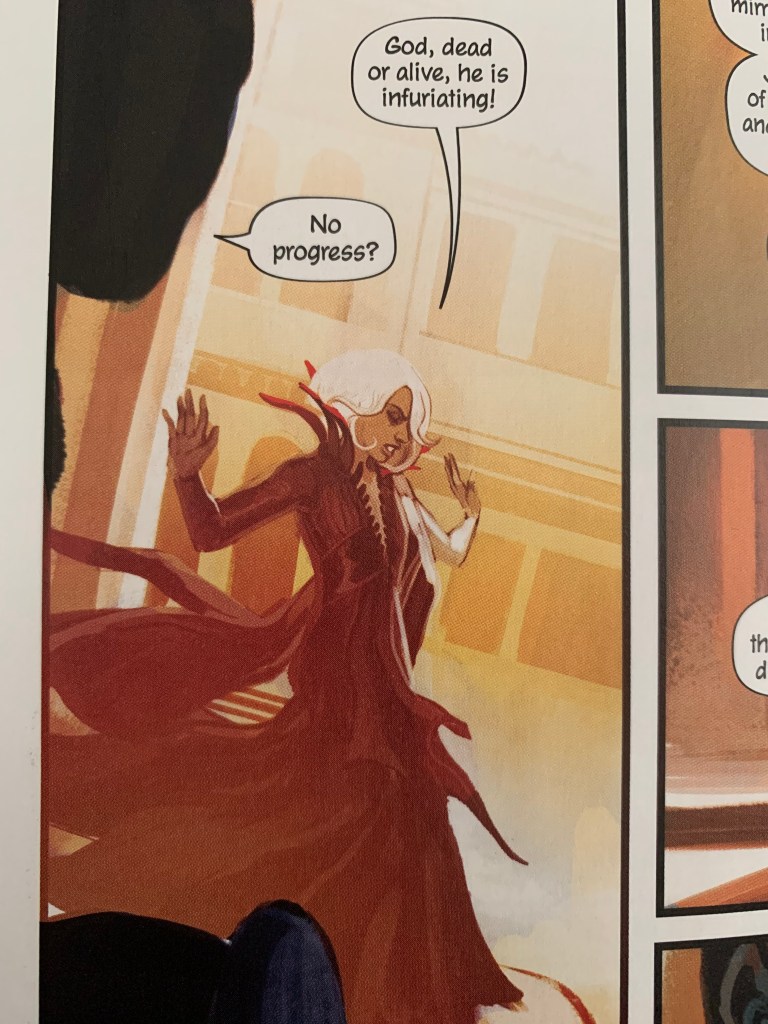
Ash from “Die #2”

There’s Ash’s sister Angela who plays a cyberpunk named Neo. In order to power her electronics, she uses ‘fair gold’, something which readers get to learn a little more backstory about in this issue.

My favorite character is Matt, the Grief Knight, whose power is fueled by his depression and despair. Of everyone in this story, I’m rooting for him to get home the most because of the unshakable love and devotion he has for his family.

He’s also, I think, the most relatable of the group. Who among us hasn’t felt the sting of the pain and sadness that life occasionally dishes up and wishes for a way to harness that power for the greater good?
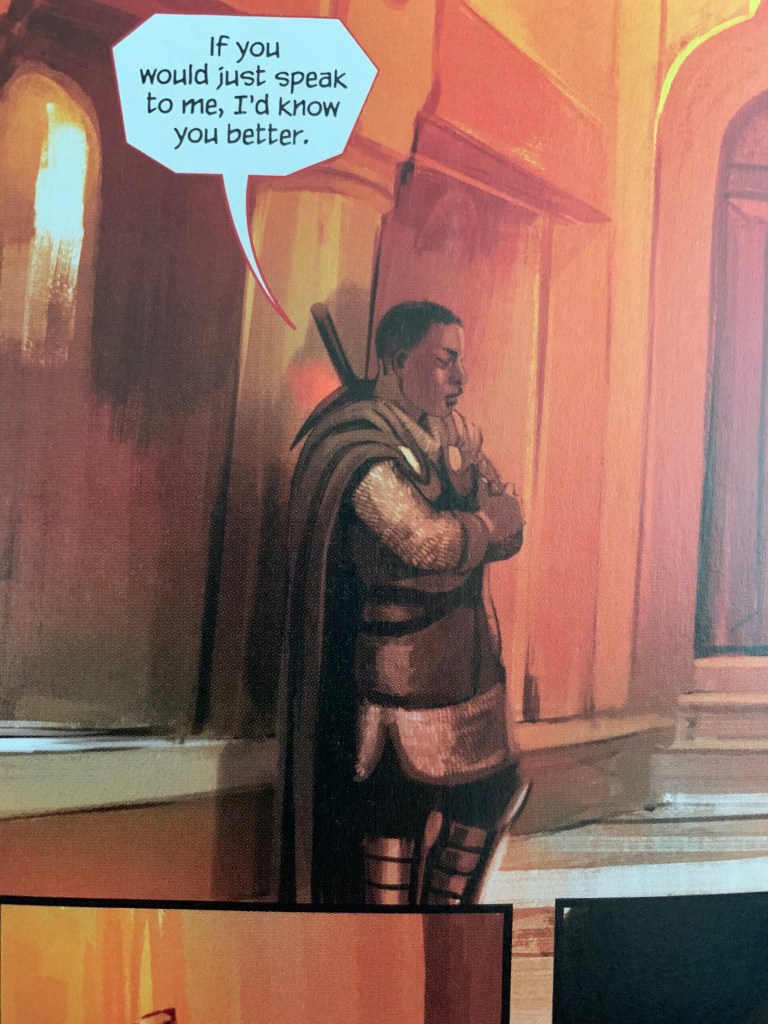
Matt, The Grief Knight

In this issue, readers get to learn about the origins of Matt’s magical sword, the outer representation of that inner voice that whispers to him about his failings and secret anxieties.

We also brush on the mysteries of Sol’s resurrection, Chuck’s astounding conflict avoidance and the awesome extent, as well as limitations, of Isabelle’s godbinding powers.
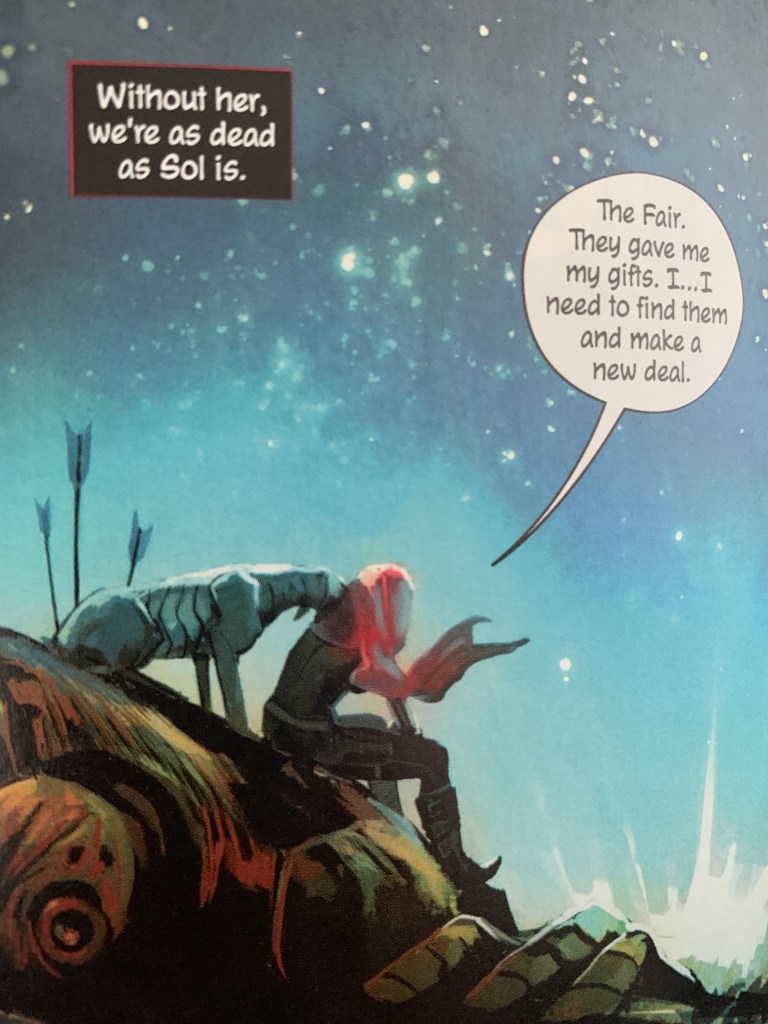
Neo the Cyberpunk from “Die #2”

I’m interested to see where the story goes next. Highly recommended for readers who enjoy fantasy and horror-tinged graphic novels.

Thanks for reading!

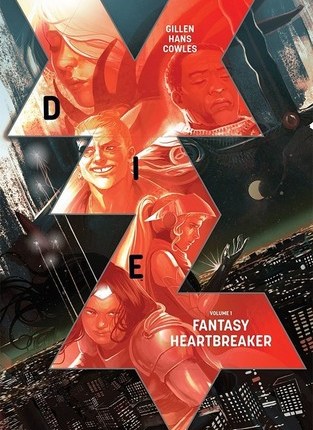
Die, Vol. 1: Fantasy Heartbreaker by Kieron Gillen, Stephanie Hans

Die, Vol. 1: Fantasy Heartbreaker by Kieron Gillen, Stephanie Hans

In Die, six teens enter a fantasy role-playing game, disappearing from the mundane world for two years. When they reappear, they are missing one of their members and carrying scars, both physical and emotional, from their ordeal.

Fast forward twenty five years, and a blood stained die shows up on someone’s birthday, mirroring the date when they last entered the game. The group has to face the fantasy world that has given them nightmares for decades in order to put the past to rest. But some things are easier said than done.

Readers of this series seem heavily divided on its quality. I thought it was brilliant.

Photo by Armando Are on Pexels.com

This isn’t because of the fantasy elements which, as many have noted, rely heavily on tropes and the established world building of touchstone series like The Lord of the Rings and The Chronicles of Narnia.

What I loved was the character development and its relatability for aging gamers.

The author shares a series of essays in the back of the graphic novel about the development of the story and characters as well as their associations with classic rpgs. He nails the reasons why I loved the book so much:

“… the simple idea of six forty-something adults contrasting their teenage fantasies with the realities of where their lives ended up. It’s a pure midlife crisis scream of a book. And the bit that got me? The idea that maybe part of me did disappear into a fantasy world at the age of sixteen and never came out.”

In the hero’s journey, we venture forth into trials and return changed but bearing gifts from the experiences we went through. That format- there and back again- seems so clear cut and simple in many of the “through the looking glass” fantasy stories.

Photo by Thiago Matos on Pexels.com

It is not so simple in this one.

In Fantasy Heartbreaker, the journey isn’t finished when the characters return to where they started and they aren’t bearing gifts, but a curse. It is only through the natural passage of time and the development of the adolescent into the adult, that the heroes in this story can finish their journey or, unbeknownst to them, begin an entirely new one.

This delayed emotional development speaks to any manner of gamers, both video or tabletop, who may find themselves, for a variety of reasons, gaming with a dysfunctional group of people over and over again each week. Perhaps this is because there are only a few people in their lives who love to game as much as they do.

For whatever reason, from the outside, such intense and conflict-prone relationships can seem confusing at best or borderline abusive at worst. But from inside the group itself, the bonds created through the traversing of realms of the imagination and overcoming obstacles as a team are real and important.

Photo by Plato Terentev on Pexels.com

The members of the group form a family of sorts- one that they chose rather than one they were born with. It can be beautiful but bewildering. Something that one has to experience to truly understand.

Sort of like visiting a different world, and never really coming home again.

In addition to the peek into gamer culture, the artwork in Fantasy Heartbreaker is gorgeous, one of the most beautiful I’ve ever seen in a comic.

Highly recommended for readers, and gamers, who like fantasy graphic novels.

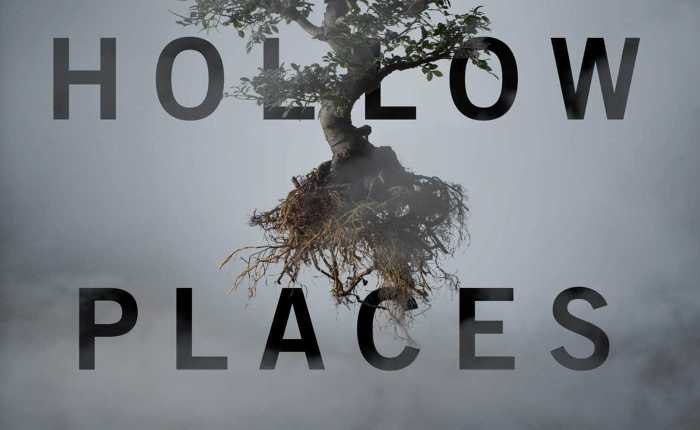
The Hollow Places by T. Kingfisher

The Hollow Places by T. Kingfisher

Kara is going through a hard time and is grateful for a chance to help out at her Uncle Earl’s museum. She has always loved it there.

“Nobody ever believes me when I tell them my uncle Earl owns a museum. They start to come around when I explain that it’s a little tiny museum in a storefront in Hog Chapel, North Carolina, although there’s so much stuff jumbled together that it looks bigger than it is.”

Photo by Tobias Bju00f8rkli on Pexels.com

But when Kara and Simon, the barista next door, attempt to repair a hole in the wall of the museum, they discover a hallway that shouldn’t be there.

“Frankly, I wasn’t even sure what you were supposed to do when you had an impossible hallway in the walls. Did you call the police to report that the laws of time and space were getting broken?”

What lies beyond the hallway? Kara and Simon are going to find out, and their lives are never going to be the same.

Photo by Elina Krima on Pexels.com

First, I am not a big fan of the horror genre. But, The Hollow Places, is horror done the way I like it best.

There’s an unknown world with as-yet unknown dangers. The story is one of exploration and carefully-crafted reveals so you feel as if you’re on an adventure.

The characters are fantastic. Kara and Simon are people I would walk down a mysterious and magical hallway with, no question.

The author slowly builds the tension of the story so, for the most part, the main emotion the reader feels is a growing sense of dread. It’s an emotion a reader with an anxiety disorder (like me) is familiar with and there’s something very satisfying about having that feeling validated and then resolved.

I believe life rarely gives the same kind of closure.

Photo by Elina Krima on Pexels.com

The voice of the main character, Kara, is down-to-earth and, occasionally, quite funny. I liked how the author gave her all sorts of relatable, every-day type problems and then, once the story started rolling, she re-evaluated the importance of issues that would have caused her major headaches prior to her life-changing experience.

I could see myself doing the same sort of thing if I was in her shoes.

The Hollow Places contains some nightmare-inducing moments but nothing I considered gratuitously violent. There’s some mild sexual references in the banter between the two main characters. This book might work for older teens who are looking for a spooky October read.

Highly recommended for readers of horror or who like their fantasies to have some thrills and chills.

Thank you to NetGalley and the publisher for a free digital copy of this book.

The Loop by Jeremy Robert Johnson

The Loop by Jeremy Robert Johnson

“It was so surprisingly calm that it took a few minutes before anyone in the room even noticed the way that Chris Carmichael was twitching at his desk.”

Photo by Pixabay on Pexels.com

The first hint that something has gone wrong in Lucy Henderson’s town is a horrific event in her high school classroom. The violent-nature of the event triggers trauma from Lucy’s past, an emotional wound that goes so deeply into her psyche that she hasn’t begun to process it- let alone the damage it has left behind.

It doesn’t help that Lucy feels like an outcast and an outsider in her small hometown. Part of this is baggage from Lucy’s past, but the majority of it is the racism and tribalism she faces from the small-minded young adults in the community. They won’t let her forget she looks different from them and torment her with their racial hatred on a near-daily basis.

The only semblance of friendship in her life is with a young man who goes by the name of “Bucket,” for reasons that are explained in the story. (No spoilers.)

Photo by Anna Shvets on Pexels.com

When all hell breaks loose in town, Lucy and Bucket only have each other and a few acquaintances to help in a race to save their families. The nightmare that they had been living solely in their minds becomes all too real.

“What the hell is going on in this town? Sometimes it feels like things are f*cked up in every direction, you know?”

The character and world-building of The Loop is well done in that I connected deeply with Lucy and Bucket before the story took off.

My lack of enjoyment of the book stems from the graphic nature of the violence against people and animals, both physical and mental. There are also brief instances of sexual abuse between underage teens as well as the discussions of porn with descriptions vague enough that young adults reading this book will immediately turn to Google to answer any questions they may have. There is bullying, unaddressed by the adults in the young peoples’ lives, as well as the trauma Lucy suffered at the hands of a system that should have protected her.

Photo by cottonbro on Pexels.com

Which brings me to another discussion point, this is not a book for young adults. If it was television, it would carry a mature rating. The horror genre has a huge following and graphic violence is definitely a part of that. That being said, it is strange to me how cavalierly some treat depictions of absolutely horrific things.

I feel like society has become desensitized to violence in the media we mindlessly consume. Descriptions of fingers popping through eyeballs and knives cutting through flesh is delivered as a matter-of-course, part of what makes the story so scary.

I picked this title out of the myriad being published in the next months because it was compared to Stranger Things, a horror show, true, but one that leans on the psychological and paranormal scares far more than the physically violent ones. I watched that show with my young daughter. I would not let her read this book, at least until she’s 18.

I say that as a former librarian but also a mother.

All that being said, there are beautiful lines in the book that perfectly capture the agony of mental pain.

For example: “She imagined herself tilting her head back and opening her mouth to scream again, only this time her mouth kept opening and her jaw detached like a snake’s and she kept splitting until she was cleaved in two and all that came out of her was white flame.”

Photo by Matej on Pexels.com

But I didn’t feel that the beauty of those fleeting moments made the time I spent reading the title worth it.

Recommended only for adult horror readers who can handle the triggers of violence and everything else described above.

Thank you to NetGalley and the publisher for a free digital advance readers copy of this book. The brief quotations I cited may be changed or omitted in the final, printed version.

The God Engines by John Scalzi

The God Engines by John Scalzi

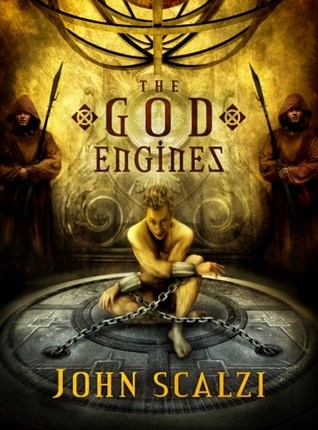
In the world of The God Engines, beings called gods power the ships that take humanity between the stars. How the world became this way is not for Captain Tephe to question, instead it is a matter of faith. As part of Tephe’s service and devotion to his own deity, he has to keep the being that powers his engine in check and subservient to his will.

That is not a simple task.

Photo by Pixabay on Pexels.com

“I do not know why this is. Why single made iron can kill a god. I know only that it can. I know the gods fear death more than do men. I can kill you with this, god.” pg 8, ebook

When Tephe is called to perform a secret mission of great importance for his deity, it throws his entire world view in jeopardy. He discovers his god, and all the others, may not be what they appeared to be.

“Words. They have power. To name a god is to give it power. To deny it such is to take it.” pg 16, ebook

I feel like this story was too short to fulfill its full potential. The general idea was very promising – what would a world where embodied gods were used as power sources look like? How would the society be structured? And how would a worshiper’s faith change or be challenged through day-to-day interactions with the gods?

Photo by Ben Yi on Pexels.com

The plot felt rushed as the characters raced from one place to another. I also wanted a bit more background about the universe of The God Engines, but the lack of it added somewhat to the mystery of the story.

“You are charged with silence,” proclaimed the third Bishop. “What is spoken to you here is not to be spoken again, on remit of your soul.” pg 31, ebook

I think the strength of this story is in how it addresses faith. Faith in the goodness of the unseen shapes lives and guides actions. It explains why some gods power ships and others rule empires. Because of faith, humanity has waged wars and conquered planets.

Perhaps someone should have made certain this faith wasn’t misplaced…

Recommended for readers who enjoy short science fiction novels with a liberal dash of horror.

Last Ones Left Alive by Sarah Davis-Goff

Last Ones Left Alive by Sarah Davis-Goff

Last Ones Left Alive brings the zombie-genre to Ireland. Orpen, the daughter of Muireann and Maeve, spends her life training, running, and learning to throw knives. The end has come and humanity has, for the most part, been wiped out by zombie-like creatures called “skrake.”

“I’m to put away the stories about the monsters that are not real and to hear about the others. They’ve got worse as I got older; heroes are caught, turned, burned, throttled, they die of hunger and cold. Children same as me.” pg 33

Photo by tom balabaud on Pexels.com

Orpen lives a sheltered existence on an island. But she dreams of going to the mainland, once-Ireland, and finding the fabled “Phoenix City,” which she learned about through flyers rotting in abandoned buildings. Phoenix City is touted as a paradise with women warriors protecting the walls and weak from the encroaching skrake.

Orpen’s mother and Maeve have drilled rules into her head since the day she turned seven. Some of these rules are: Don’t go near tall buildings. Count your ‘Just-in-Cases’. and Beware people.

“Beware people. I can’t stay on my own, though, I can’t. If they’re men, I will run.” pg 71

Photo by Ricardo Esquivel on Pexels.com

But is life worth living without the interaction of other people? Orpen doesn’t think so. She dreams of the day she’ll leave the island… and wanders the land with the skrake.

I enjoyed Last Ones Left Alive but it felt like more of an homage to Ireland than a truly scary horror novel. Much of the gore and scares felt done as readers have been exposed to them all before in such series as The Walking Dead, Book One or Saga, Vol. 1.

The narration is related in two parallel lines with the past woven among the present by alternating chapter. It’s not my favorite way to read a story, but I can see how it could appeal to some readers.

The female characters in this broken world are unapologetically strong. Readers looking for books with self-reliant female characters may really enjoy this read. It may also be a great pick for a book club to pick apart and discuss.

Photo by Khoa Vu00f5 on Pexels.com

Personally, I wanted more details about the dangers this world had to offer rather than focusing on Orpen’s journey, which is the main part of the story. There’s something to be said for unknown horrors… true. But when you peer deeply into the darkness, there’s the feeling that it looks back into you. 

That’s what I felt was missing in this excellent debut novel by Sarah Davis-Goff. I wanted more looking into the shadows.

Thank you to the publisher for an advance reader copy of this book. The short quotations I cited in this review may vary in the final printed version, which I believe is available today (August 27, 2019).

Thanks for reading!

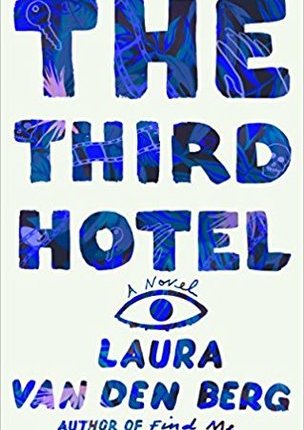
The Third Hotel by Laura van den Berg

The Third Hotel by Laura van den Berg

A strange and confusing ride through a world seen through the eyes of a grieving widow. A short time prior to attending a film festival in Cuba, Clare’s husband Richard was killed. Now, she sees him on the streets of Cuba.

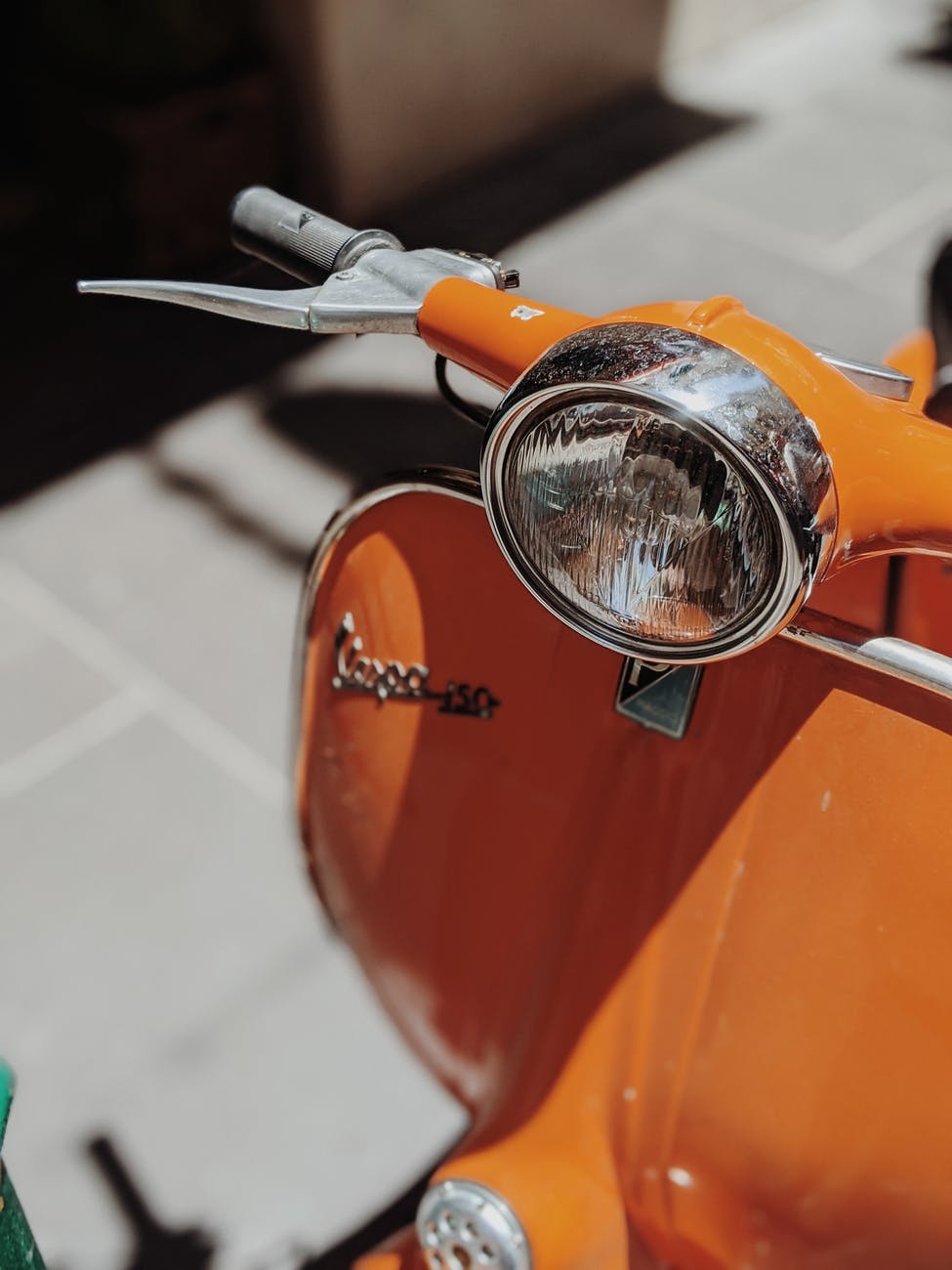
“Clare had never before seen her husband operate a motorbike, but he navigated it like he had been riding one all his life, like he had been riding one in Havana all his life, like he had not been struck by a car and killed in the United States of America some five weeks ago.” pg 13

Photo by Valeriia Miller on Pexels.com

What is going on? The reader isn’t sure what’s real and what’s only in the mind of Clare. Laura van den Berg raises mammoth questions and leaves the interpretation to the reader.

My book club picked a heck of a read for March. Reactions to this book ranged from the disgusted to the mystified to the fascinated. I’d put myself somewhere in between.

I like having complex symbolism to pick apart and magical realism to consider in a story. I like having an open-ended mystery. I don’t need to have all the answers.

But I do like to have more hints at the possible interpretations than van den Berg gives us.

“She might have said, I am not who you think I am. She might have said, I am experiencing a dislocation of reality.” pg 3

Photo by cottonbro on Pexels.com

Or she might have said, I have no idea what’s going on in this story. A character in the novel itself explains this confusion (in the guise of talking about horror films), suggesting it’s purposefully created by the author, and says it is designed to create a sensation of “eels under the skin.” This book definitely had that type of impact on me.

“Besides, he added, raising a finger, the foundation of horror is a dislocation of reality, a dislocation designed to reveal the reality that has been there all along, and such dislocations happen all the time.” pg 9

As I said, it’s weird, but there’s something genius about it too. Van den Berg’s words are beautiful, but they don’t always make sense. I turned the last page and was infuriated at how confused I was.

“She wondered what the eye would see and what she would see in what the eye saw. She imagined the suspension transforming into a warm flood of inevitability as the gate swung open and she stepped into whatever new dislocation of reality lay ahead.” pg 32

Photo by Tobias Bju00f8rkli on Pexels.com

In conclusion, it’s a hard book to read, but perfect for groups who are looking to spur a literary discussion. There’s so much to unpack.

Is she in an alternate reality or having a psychotic break? Or is she just grieving the whole time? What does her life now have to do with her childhood? What is the secret Clare shares with her father? Is there hidden meaning in her trip to the southern part of the island?

That’s just what pops into my head when considering the title of this book. Recommended for readers who don’t mind being totally confused and left with eels under their skin.

Thanks for reading!

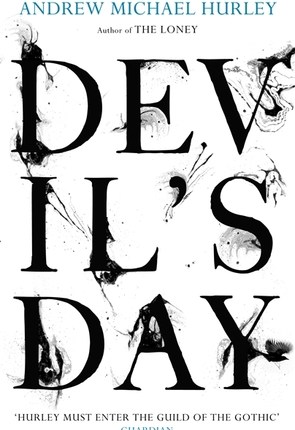
Devil’s Day by Andrew Michael Hurley

Devil’s Day by Andrew Michael Hurley

A slow-moving horror story that asks the reader to consider what may be the truth behind ancient customs and myths, and what secrets a small, isolated community may be hiding from the rest of the world.

“One late October day, just over a century ago, the farmers of the Endlands went to gather their sheep from the moors as they did every autumn. Only this year, while the shepherds were pulling a pair of wayward lambs from a peat bog, the Devil killed one of the ewes and tore off her fleece to hide himself among the flock.” pg 1

Photo by Snapwire on Pexels.com

The small gathering of farms, Underclough, is as much a character in this story as the actual characters.

“When the first buildings appeared, I could tell that Kat was disappointed. I think she’d expected to find Underclough nestled in the valley, not dark and cramped like something buried at the bottom of a bag.” pg 24

There’s a sense of inevitability about the whole thing. You’re not just born in this place. You live, work and die here, on the edge of the wilderness and the known world.

“Living on the farms was one endless round of maintenance. Nothing was ever finished. Nothing was ever settled. Nothing. Everyone here died in the midst of repairing something. Chores and damage were inherited.” pg 38

Photo by Karolina Grabowska on Pexels.com

John Pentecost knows from his childhood that there are forces in nature that cannot be explained. There are whispers in the woods and shadows beneath the trees that move with their own power. There’s a reason why the farmers have a “Devil’s Day” each year, to put the spirit to sleep while they gather their flocks in peace.

“As the Devil watched me, the same question ran through my mind as incessantly as the river. Did I like stories? Did I like stories? I answered yes.” pg 146

Andrew Michael Hurley uses the environment and setting to slowly create a feeling of dread, but then I felt like he never delivered on the story that he so painstakingly sets up. The pace is glacially slow.

Photo by Lucas Pezeta on Pexels.com

That being said, there are one or two scenes from Devil’s Day that haunted me when I read them. I just happened to be reading this the night a record-breaking windstorm blew through town. I heard eerie shrieks and groans coming from outside my windows throughout the evening.

I couldn’t help but wonder what I would say if the Devil asked me if I like stories…

Thanks for reading!

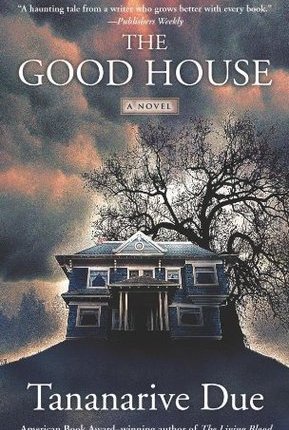
The Good House by Tananarive Due

The Good House by Tananarive Due

The Good House is a horror story spanning generations of the Toussaint family and their home. The family has a history of healing and mysterious vodun practices, or maybe they’re just extremely lucky. Take, for example, a mud slide that destroyed every home in their part of town, except theirs.

“The mud’s recent wrath had left their two-story house untouched, but sprays of buckshot fired at the house during cowardly moments, usually at night, had pocked and splintered the old door. The mere sight of the damaged door had always made her angry, and Marie Toussaint no longer trusted herself when she was angry.” pg 10, ebook.

Photo by Maria Orlova on Pexels.com

Sacajawea, the town where the Toussaints live, is small. Everyone knows each other and have long memories.

“Aside from the handful of vacationers who frequented the town’s two popular B&Bs, most people in Sacajawea had lived here for generations, earning hourly wages in the mills in Longview or taking down trees in the woods. And even if Sacajawea had been a more sometimey place, the rules would have been different for Angela, or anyone else who was kin to Marie Toussaint.” pgs 25-26, ebook.

Why is the Toussaint home called “the Good House”?

“…this house was built in 1907 by the town pharmacist, Elijah Goode. He chose this place because he said the land felt ‘blessed beyond all description,’ or in any case that’s what he wrote to his brother in Boston.” pg 30

After a tragic Fourth of July party, Angela Toussaint, the granddaughter of Marie Toussaint, thinks her family home may be mislabeled.

Photo by Tamas Marton on Pexels.com

What I enjoyed most about The Good House is the author Tananarive Due wrote an epic horror story around a family with characters I cared about. This wasn’t just a thrill-a-minute short story. Getting to know the residents of Sacajawea and the Toussaint family was a treat. Then, when things started to get scary, I was completely hooked.

This is a horror story for readers who enjoy a slow reveal and an extremely satisfying conclusion. Highly recommended.

Thanks for reading!