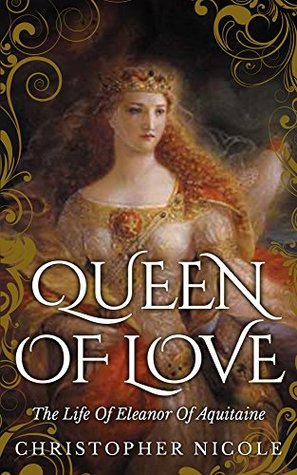
Queen of Love: The Life of Eleanor of Aquitaine by Christopher Nicole

Queen of Love: The Life of Eleanor of Aquitaine by Christopher Nicole
queenoflove

Eleanor of Aquitaine blows my mind.

So, this lovely lady lived in the 1100’s, when women were property, but somehow, she managed to become one of the most powerful people of her time.

Granted, she was born into a privileged position, was one of the largest landholders in France, and, by all accounts, was absolutely gorgeous. I’m sure that helped.

But, imagine the social and political acumen she had to possess to make it all work.

This historical fiction is written as a first-person memoir of the time period after her marriage to the King of France was annulled and she was forced into marriage with Henry, the soon to be, King of England and the narrative continues until her death.

I understand that the first person point-of-view doesn’t work for everyone, but I loved it. Then again, there are few historical fictions that I don’t enjoy, so take my review with a grain of salt.

Historical fiction is literary candy for me. When I need to escape reality, I jump into the past, usually with royalty because, let’s face it, the life of a peasant was probably nothing to write home about.

The manner in which Henry acquired the most eligible woman in Europe for his bride was rather questionable. In essence, he kidnapped her, raped her, and then insisted on the match.

She forgave him because, frankly, she could have made worse matches and wasn’t really in a position to bargain.
Photo by Pixabay on Pexels.com

Here are her thoughts about the man: “… the aspect of Henry which most strikes one is his energy. It was such as almost to make one believe the tales of a devilish ancestor. From the moment my new husband rose in the morning until the moment he collapsed exhausted in bed at night, he never rested either his body or his brain for a moment.” loc 81, ebook.

Henry was known for his energy and fiery temper. I didn’t mark the passage, but Eleanor relates how, when the King became angry, he would throw himself to the floor and eat the rushes.

For modern folks who may not know what rushes are- these are essentially plants that were used to keep the floor clean, sort of like throw away rugs. Remember, floors were pretty disgusting back then as transportation was done mainly by horse and certain things were tracked in on people’s boots.

The King of England would get so mad that he ate poop-covered rushes! In the modern age, that would so not fly. I can just see the covers of the tabloid mags.
Photo by OVAN on Pexels.com

I completely forgot that it was Eleanor’s husband who had the infamous disagreement with Thomas Becket. “The quarrel thus commenced dragged on for some time. It was fairly well known, and i do not propose to go into details about it- during this period I had a fair number of problems of my own, and while I felt sorry for Thomas, placed in such a dilemma as having to choose between King and Church, I am bound to admit that he made life unnecessarily difficult for himself.” loc 880, ebook.

That seemed to be Eleanor’s way- go with the flow of what happens, but don’t forget what happened and strike back when you’re in a place of power.

In this passage, Eleanor is fretting over turning 40, which, had she only known it, wasn’t even halfway through her life: “I should point out that in the summer of 1162 I reached my fortieth birthday. This is a most depressing milestone, for anyone, but more I think for a woman than a man, and most of all for a woman once accounted the most beautiful of her time. At forty there could be no disguising the fact that I was growing old, and that even my beauty was fading. In addition, forty brings with it the approach of the dreaded end of fertility, and what has a woman got left?” pg 915.

She had ten kids, how many more does a woman need? And, although much of her power was based in her beauty and fertility, she was still a formidable spirit. I mean, the lady was locked up by her husband for over a decade and yet, she manages to come back from it! Talk about aging gracefully…

Photo by Pixabay on Pexels.com

Here, Eleanor is holding her own after being defeated in battle with the King of England, her husband. (She went to war against him for her sons- how hardcore is that!): “I would say that it is fairly well established that you have recently been in arms against your king.” “I acted as Duchess of Aquitaine,” I pointed out. “As we are now in Aquitaine, you are an invader, and I am a prisoner-of-war.” “I am the ruler of Aquitaine,” he argued. “In my name,” I riposted. “I have now withdrawn that privilege from you.” “Madame, your effrontery is startling.” “I am Eleanor of Aquitaine.” loc 1988. Boom.

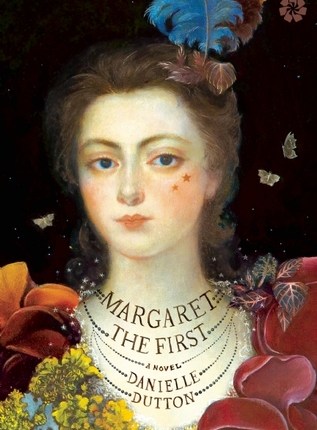
If you like historical fiction about strong women, The Queen of Love may be something that you really enjoy. Some other suggestions: Margaret the First, Isabella: Braveheart of France, The Dream Lover: A Novel of George Sand, or Pope Joan.

Thank you to NetGalley and Endeavour Press for a free digital copy of this book! And, thank you for reading.

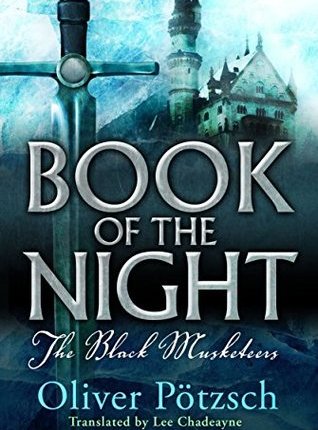
Book of the Night: the Black Musketeers by Oliver Pötzsch, translated by Lee Chadeayne

Book of the Night: the Black Musketeers by Oliver Pötzsch, translated by Lee Chadeayne

“Book of the Night” tells the story of Lukas Lohenfels, whose family is driven apart by an evil monk, intent upon finding a relic of power.

Along the path to revenge and redemption, Lukas makes some friends, some enemies, and discovers that magic may be more real than he ever imagined.

This is the 1600’s Germany, a land of princes and shifting alliances. A war has been going on for a very long time.

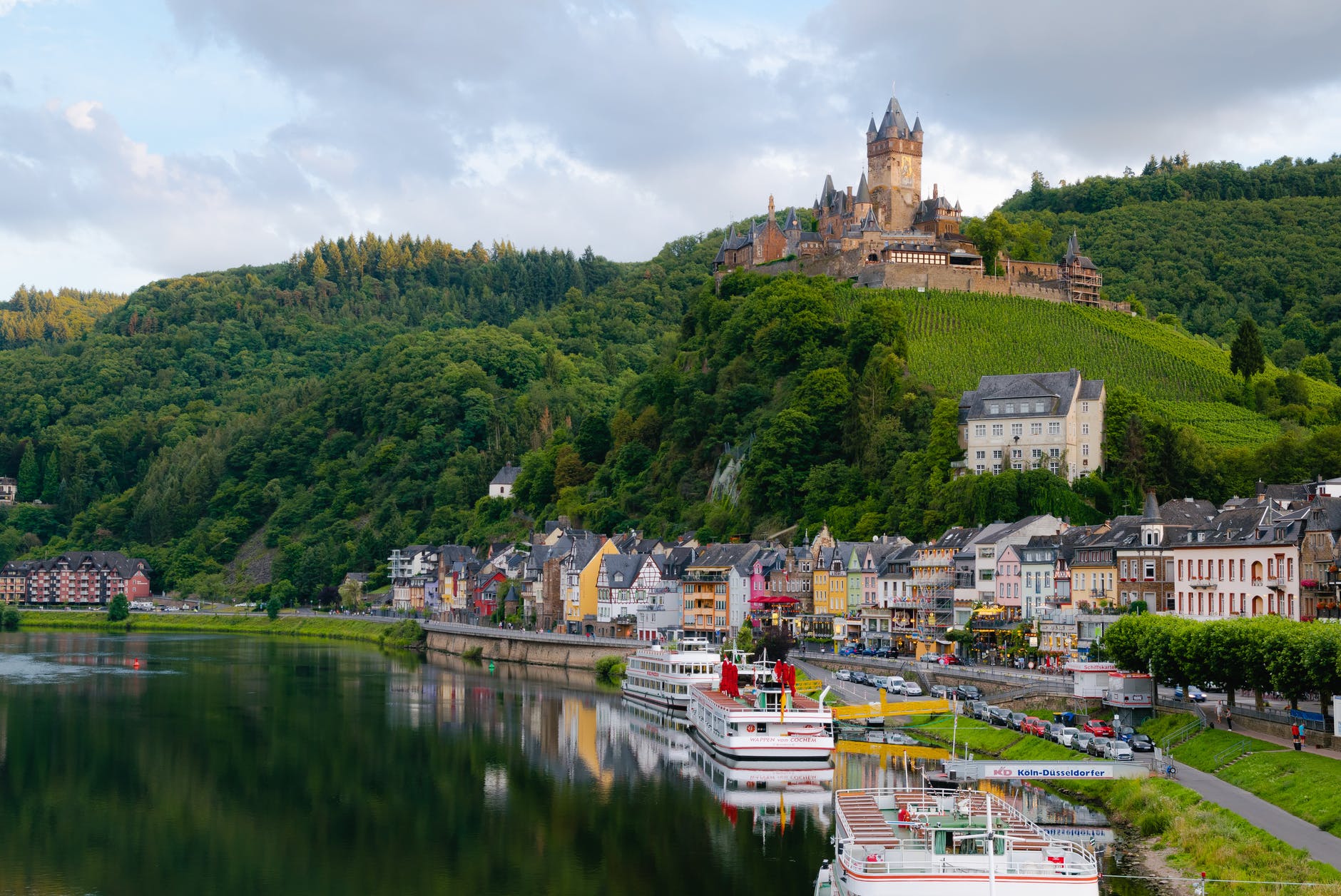
Photo by Kai Pilger on Pexels.com

Who are the Black Musketeers of the title?: “The Black Musketeers were the best fighters in the Reich,” he began, “trained in the use of all sorts of weapons and fear by everyone. They served as bodyguards to the Imperial General Wallenstein … We fought and shot like the devil, with swords, pikes, daggers, muskets, and pistols, and drove the Danes and their allies back across the Elbe River.” loc 129, ebook.

Lukas is forced to grow up quickly, not only because of what happens to his family, but also because of the unending war: “Lukas thought of the dreadful stories he’d heard about the war. Last year in Magedeburg, twenty thousand citizens had been slaughtered by mercenaries, who then completely destroyed the city.

Similar things had happened in other parts of the Reich. Whenever the troops passed by, no matter which side they were on, they left behind death, destruction, hunger, and disease. When he was young, Lukas had always imagined war as something heroic. … but for some time now, he had understood that war was not an adventure, but left horror and misery in its wake.” loc 1112, ebook.

Photo by Egor Kamelev on Pexels.com

Author Oliver Pötzsch is a master storyteller. His story flows smoothly and well.

I particularly enjoyed this homage to the classic, The Three Musketeers by Alexandre Dumas:

“If you have something to tell me or the others,” Gionvanni said softly, in order not to waken the other sleeping boys, “please don’t hesitate. We’re always here for you, do you understand?” He smiled. “One for all and all for one. I heard those words somewhere before, and they apply to us as well.” loc 1148, ebook.

I liked how Lukas and his friends were never entirely certain about the existence of magic until it entered their lives in a very real way: “Nonsense,” Paulus muttered. “Magic is humbug! I only believe things I can see and fight with my sword.” “It’s said there are certain vapors and gases that make people sick and can even cause the plague,” Giovanni replied matter-of-factly. “Can you see them, Paulus?

No. But still they’re there, invisible, all around us. Perhaps there’s lots more out there that we simpleminded little men can’t even imagine.” loc 1428, ebook.

Photo by Simon Berger on Pexels.com

When I saw the name, Oliver Pötzsch, and snapped up this book from NetGalley, not realizing that Book of the Night is intended for a young adult audience.

As I wrote earlier, it is very well-written and I had a lot of fun reading it. That being said, the Book of the Night isn’t very sophisticated nor are there any true surprises within its pages.

Book trailer for ‘Book of the Night’ in German.

However, it is a perfect pick for anyone in the 12 to 16 age group, or anyone who enjoys an adventure with some magical undertones.

If you’re looking for some more magical/coming-of-age young adult read-alikes try: Seraphina by Rachel Hartman, Archivist Wasp by Nicole Kornher-Stace, and Jackaby by William Ritter.

Thank you to NetGalley and Amazon Crossing Publishing for a free digital copy of this book!  And, thank you for reading.

Margaret the First by Danielle Dutton

Margaret the First by Danielle Dutton

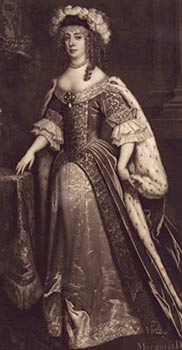
This book is life story of Margaret Cavendish, a duchess and one of the first popular female writers in England.

cavendish

Nice hat, right?  Digital image from nottingham.ac.uk

Margaret the First is written like a dream- the scenes come and go with little or no explanation in them and years pass in the blink or an eye or turning of the page.

Usually, I read historical fiction to immerse myself in the details of a time period, but this book doesn’t really cater to that. It’s a bubble in the wind or a glimpse from the windows of a fast moving car. It hints at depth more than delivers it.

Photo by Lucas F. on Pexels.com

But still, despite this strangeness, I was mainly captivated.

Margaret describing her mother: “As for our mother, she was beautiful beyond the ruins of time. None of her children would be crooked, of course, nor in any ways deformed. Neither were we dwarfish, or of a giantlike stature, but proportional, with brown hair, sound teeth, sweet breath, and tunable voices- not given to wharling in the throat, I mean, or speaking through the nose, unless we had a cold- yet we were none so prone to beauty as she, and I perhaps the least of them all.” pg 14, ebook. Beautiful.

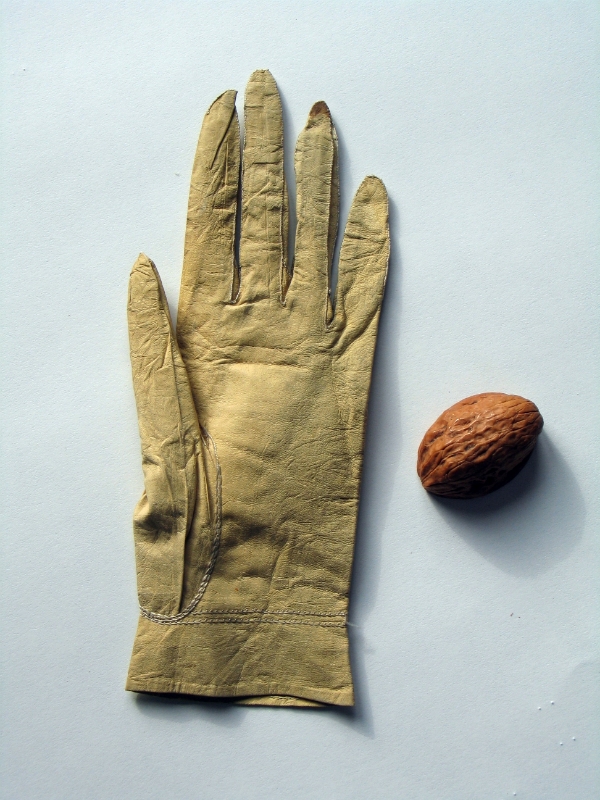
Margaret describing the difference between her childhood education and her brother’s: “You must wear chicken-skin gloves on your hands all night,” my mother began… “When inside the house,” my mother went on, “you must not spend all your time writing little books.” Yet out the window, as she spoke, under a net of branches, my youngest brother, Charlie, arrived on the lawn with a hawk. … It is nobler to be a boy, I thought- and looked back with nostalgia, as if I just had been.” pg 18, ebook

chicken-skin-gloves-0031

Actual chicken skin glove. Image from www.museumofleathercraft.org

The first time Margaret speaks out in a group of intellectuals: “A second man then sportingly suggested they debate the nature of woman. “You will find, sir,” I abruptly spoke, “women as difficult to be known and understood as the universe.” The room fell silent. I was surprised as any man.” pg 43, ebook.

This may be a work of fiction, but I feel like that’s something that Margaret would have actually said. Don’t you?

theblazingworld

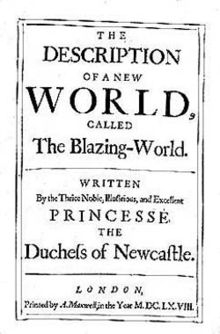
Cover of one of Margaret’s books.  Photo from wikipedia.org.

The attitudes of that time period were astonishing: “Unlike Mr. Hobbes in his Leviathan, then under production in Paris, William thought that common man should be kept illiterate and happy, with sport and common prayer. “Too much reading,” he said, “has made the mob defiant.” I chewed my mutton and considered.” pg 56 (ebook)

Margaret undergoes a lot of unfortunate medical treatment in this book.

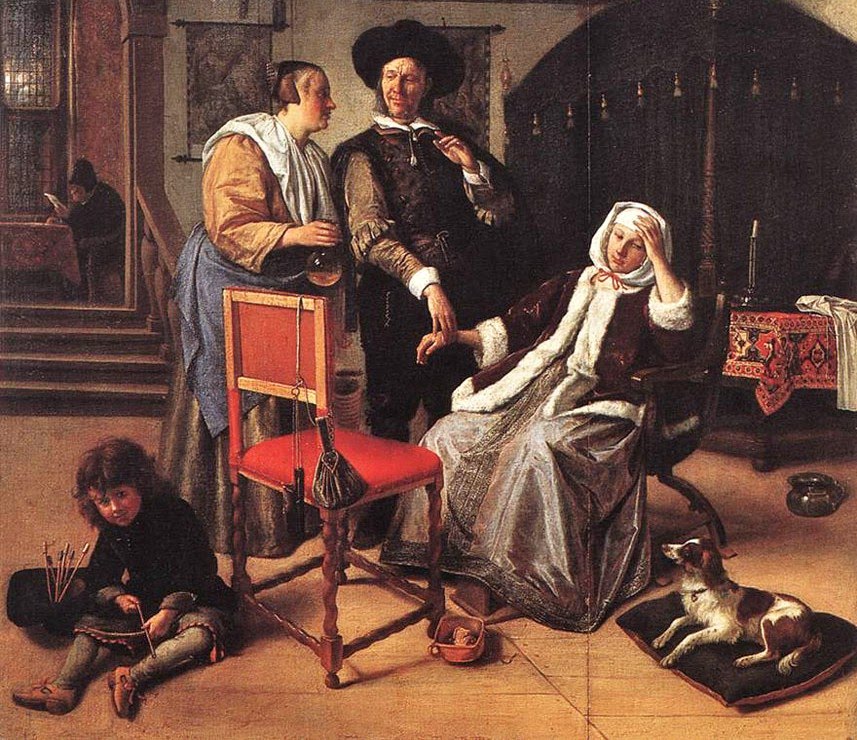
I thought that this passage was charming and really showed the time period rather than purely grotesque, bodily manipulations like some of the other doctor visits: “He (the doctor) tapped and patted, then scribbled in a book: how clear, how pale, how pink. I looked, he assured me, ten years younger than my age, in blossom, in perfect health, and prescribed only a new herb from China called tea. “The decoction of it drunk warm doth marvels,” he told Charles. “Very comforting, abates fumes.” To me he spoke nonsense, as he would to any child, suggesting candy or gossip, or candy with gossip, to lift my mood.” pg 64 (ebook)

thedoctorsvisit

Painting: The Doctor’s Visit by Jan Steen.

Digital image from b-womeninamericanhistory17.blogspot.com

The science of the 1600’s was so off from reality as to seem absurd now in retrospect.

Take this scene where Margaret and an intellectual friend are viewing a map of the North Pole:“Here,” he said, “lies the very pole of the pole of the Earth, where all the oceans’ waters circle round and fall, just as if you’d poured them down a funnel in your head, only to see them come back out the southern end. And in the middle of the middle sits a large black rock, the very pole of the pole of the pole of the Earth, wholly magnetic, possibly magic, and thirty-three miles across!” “Where is the ice?” she wanted to know.” pg 100, ebook.

Photo by Ylanite Koppens on Pexels.com

In this passage, Margaret’s husband asks her what she wants in life and I thought that Dutton captured the (occasionally) unsettled attitude of every woman who has ever lived nearly perfectly:“But Margaret wanted the whole house to move three feet to the left. It was indescribable what she wanted. She was restless. She wanted to work. She wanted to be thirty people. She wanted to wear a cap of pearls and a coat of bright blue diamonds. To live as nature does, in many ages, in many brains.” pg 102, ebook. I’ve been there.

If the reader is looking for a historical fiction with more umph to it, she may want to consider The Dream Lover: A Novel of George Sand by Elizabeth Berg.

But, if she wants a frothy, fun, and fantastical journey into what might have been, look no further than Margaret the First.

Thanks for reading!

This review also appeared on O’Fallon Public Library’s blog.

The Abominable: a Novel by Dan Simmons

The Abominable: a Novel by Dan Simmons

The Abominable by Dan Simmons is a historical fiction novel about mountain climbing and a mystery that is set, for the most part, during the early years of World War II.

The story reads like less of an adventure novel and more like an homage to the sport of mountaineering.

Photo by Pixabay on Pexels.com

Dan Simmons takes his time building the tension of the tale with back stories and detours until I nearly lost interest in the whole thing. But, to be fair, I have never been a serious mountain climber, having injured myself the first and only time I tried it.

I do enjoy long hikes in beautiful spaces. I don’t like risking my life or the lives of my companions in the process. So, not my thing, but maybe it’s somebody else’s.

Photo by Sagui Andrea on Pexels.com

If hiking is your jam, the long and technical descriptions of climbing techniques, knots, and methods in The Abominable might be just the read you’ve been looking for.

Here’s a pretty passage about viewing the night sky, high up in the mountains: “When you look at the stars near the horizon…especially when it’s really cold.. they tend to jitter around. Jumping left, then right… all while they jiggle up and down at the same time. I think it has something to do with masses of super-cold air lying over the land or frozen sea acting like a lens that’s being moved…” pg 18

One of the many passages that literally made my hands sweat in fear for the characters: “It’s tricky playing out the rope to Jean-Claude as I crab-shuffle to the left. Most of it is in my rucksack, which keeps trying to pull me back and off the face with just the weight of the extra rope and a few other small things in it, but some I’ve had to loop over my right shoulder to keep playing out to J.C. …

I’ve made it a little more than halfway to the pipe ledge when I slip…” pg 111

There are hundreds of pages with writing like that. I found it stressful, but again, I’m not a mountain climber.

Photo by eberhard grossgasteiger on Pexels.com

There’s a lot of wry humor in this read too: “…why are they so eager to get this blessing from the monastery’s holy man, Dzatrul Rinpoche? If everything’s predestined for them anyway, what difference will the abbot’s blessing make?” Pasang smiles his small smile. “Do not ask me, Mr. Perry, to make sense of the internal contradictions that are common in all religions.” pg 341

More love for mountain climbing: “Machig Labdron once wrote, Unless all reality is made worse, one cannot attain liberation… So wander in grisly places and mountain retreats… do not get distracted by doctrines and books… just get real experiences… in the horrid and desolate.” “In other words,” I say, “face your demons.” “Exactly,” says Reggie. “Make a gift of your body to the demons of the mountains and wilderness. It’s the best way to destroy the last vestiges of one’s vanity and pride.” pg 346

This book in two lines: “We were metaphorical inches from hypothermia-which has a wider range of terrible symptoms than merely going to sleep and freezing to death, not the least of which would be intemperate belligerence and a need to rip our clothes off as we froze-and literal inches from a 9,000-foot drop to our south side and a 10,000-foot drop a few more feet away to the north side. But for the moment, we were very happy.” pg 554

Photo by Aleksandr Slobodianyk on Pexels.com

And some people call that fun.

So, beyond being terrified during the climbing portions and bored by the never ending, rambling style of story-telling, I wanted much more of the fantastical in this tale, for example: the abominable snowman!

I’m not going to say anymore about yetis because I don’t want to spoil the surprising twists and turns of this tale for those who do choose to pick it up. Prepare yourself for one hell of a climb though- because it’s a long and meandering one.

Thanks for reading!