Elizabeth I by Margaret George

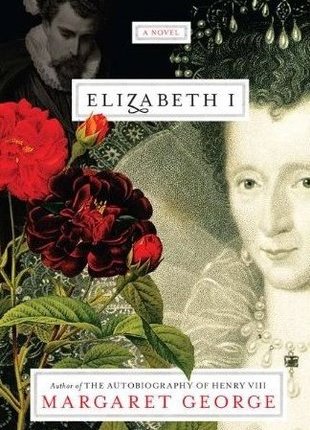
Elizabeth I by Margaret George

Margaret George writes about Queen Elizabeth I of England and the last years of her reign.

I think most people are aware that Elizabeth’s father was Henry VIII and the tumultuous going’s on that preceded and then ushered in her reign. But fewer are aware of what happened during the later years of her life.

The last years were still exciting and dangerous, filled with invading Spanish armadas (more than one) and power hungry lords. That’s what this book is all about.

I confess: I am a major fan of both Elizabeth I and Margaret George.

“I know I have the body but of a weak and feeble women, but I have the heart and stomach of a king and of a king of England, too- and think it foul scorn that Parma or any prince of Europe should dare to invade the borders of my realm.” pg 41.
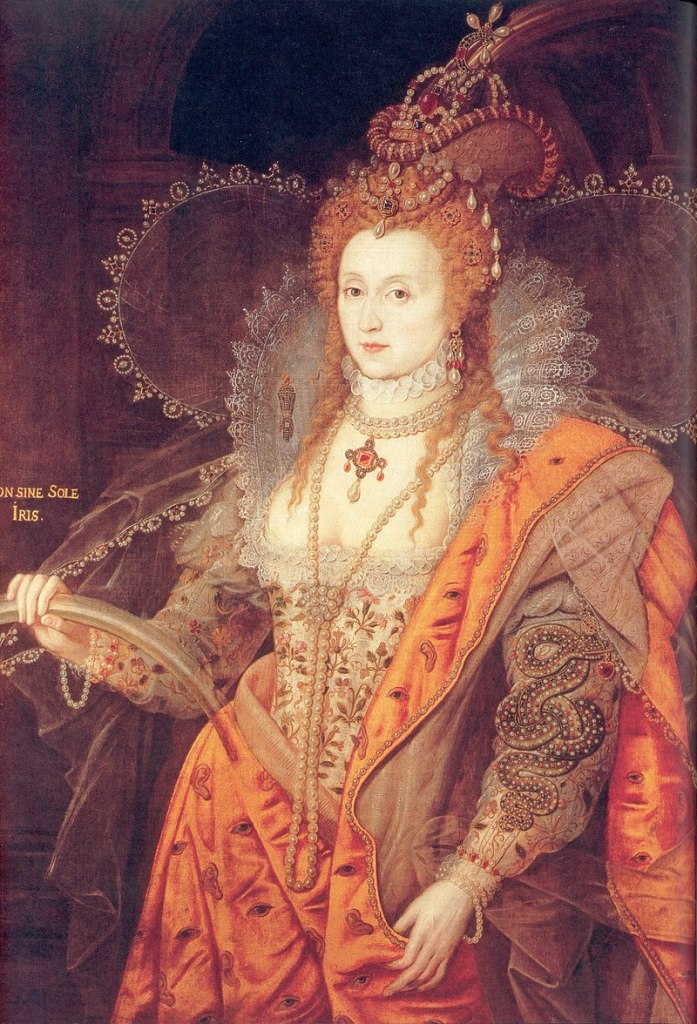
A few years ago, I had the privilege of visiting Westminster Abbey and seeing the tomb of Elizabeth I. The crowds were such that I couldn’t linger by the effigy but was forced into constant motion, rushed past.

I burst into tears as I exited the area of the church that contained her tomb and I was completely overcome with emotion. My husband led me through the throng again, just so I could spend a moment more near one of my favorite historical figures.

What do I love about Elizabeth I? Let me count the ways!

First of all, she insisted that she was a ruler in her own right, not because she was married to a royal. Elizabeth used the game of courtship to increase her power. That’s hard core.

“Francois had been my last, and in many ways my only, serious marriage possibility. I had been wooed by twenty-five foreign suitors over the years. I never intended to marry any of them, but it was my best tool of diplomacy.” pg 72.
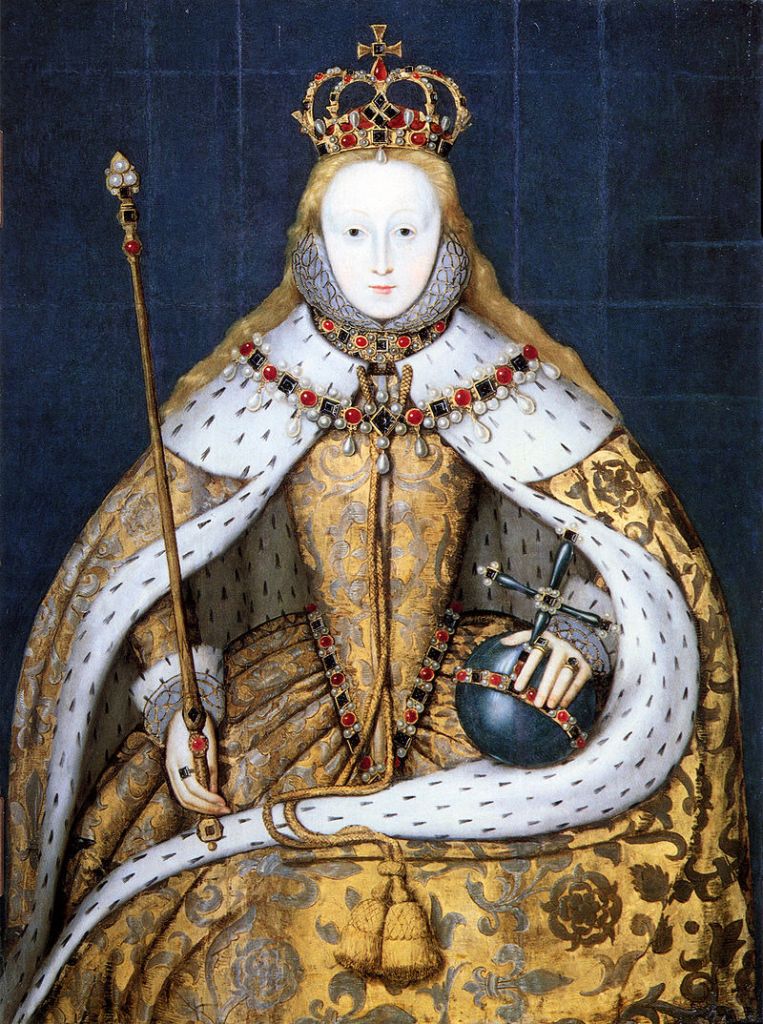
Second, she smart with her power rather than greedy. She navigated a world in which she had few allies because of her religion. And she never accepted defeat. “For my own part, I swear that my heart has never known what fear is. In ambition of glory I never sought to enlarge the territories of my land. If I have used my forces to keep the enemy from you, I have thereby done it for your safety, and to keep dangers at bay.” pg 145.

She was well-learned, charismatic and always knew what to say in public situations.

“It is not possible to see a woman of so fine and vigorous a disposition both in mind and in body. One cay say nothing to her on which she will not make an apt comment. She is a great princess who knows everything.” pg 363.

And finally, she was honest and true to the end of her life to the responsibility of leading her country. Elizabeth I loved her people.

“There will never queen sit in my seat with more zeal to my country, care to my subjects, and that will sooner with willingness venture her life for your good and safety, than myself. … And though you have had and may have many princes more mighty and wise sitting in this seat, yet you never had or shall have any that will love you better.” pg 608.

Photo by Pixabay on Pexels.com

My quibble with this book was not with the research or the story, which were both fine in my opinion. It was the fact that George split the narrative- most of the chapters are told from Elizabeth’s point of view, but some are from Lettice’s point of view, the mother of Robert Devereux.

I understand Lettice’s narrative was used to explain Devereux’s motivations and unexplained behavior, but I felt as if it slowed the story down. Coming in at 662 pages, this was a book that needed to stay at a fast clip. I didn’t feel as if it achieved that.

That being said, George provides an amazing escape from the world and unparalleled historical fiction, with this story.

The weekend I started this book, my mother had an unexpected heart attack and nearly died. She was in good health and relatively young. It was quite a shock.

Some people spend hours worrying, others in conversation or watching TV to wile away stressful hours.

Photo by Photography Maghradze PH on Pexels.com

I picked up Elizabeth I by Margaret George and transported myself to Elizabethan England. There was worry, danger, intrigue… and when I needed to put down the book and attend to family concerns, I could. By the time the weekend was over, I had completed this book and my mother was discharged from the hospital.

It looks as if she will make a full recovery. And I learned quite a bit more about Elizabeth I.

If you are looking for distraction from every day life, this epic tale could fit the bill. Recommended for historical fiction lovers, of course, but also for anyone who desperately needs a way to pass the time.

Thank you, Margaret George, for providing that for me, just when I needed it most.

Thanks for reading!

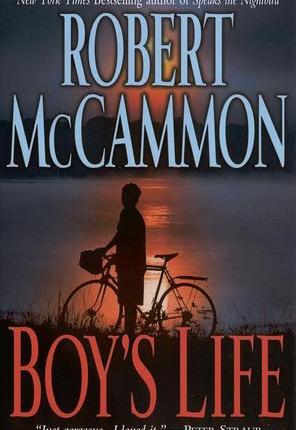
Boy’s Life by Robert McCammon

Boy’s Life by Robert McCammon

Boy’s Life is about Cory Mackenson, the southern town of Zephyr and the magic of every day life.

We had a monster in the river, and a secret in the lake. We had a ghost that haunted the road behind the wheel of a black dragster with flames on the hood. We had a Gabriel and a Lucifer, and a rebel that rose from the dead. We had an alien invader, a boy with a perfect arm, and we had a dinosaur loose on Merchants Street. It was a magic place.” pg 10, ebook.

Photo by Swapnil Sharma on Pexels.com

The story begins with a death and a mystery.

“On that morning before the sun, as I sat eating my breakfast with my dad and mom in our house on Hilltop Street, the year was 1964. There were great changes in the winds of earth, things of which I was unaware.” pg 15.

After witnessing something terrible sinking into the lake, Cory sets about discovering what or who put it there.

The trauma is almost too much for Cory’s father to bear.

“Whoever did it had to be a local. Had to be. … It might be somebody who sits on our pew at church. Somebody we buy groceries or clothes from. Somebody we’ve known all our lives… or thought we knew. That scares me like I’ve never been scared before.” pg 35, ebook.

Photo by Kirill Belotserkovsky on Pexels.com

But this book is about more than just the central mystery. It is also about the community of Zephyr and the relationships between the people who live there.

There is a racial divide in the town. When the river overflows its banks, the white and black communities come together to prevent disaster.

“There is something about nature out of control that touches a primal terror. We are used to believing that we’re the masters of our domain, and that God has given us this earth to rule over. … The truth is more fearsome: we are as frail as young trees in tornadoes, and our beloved homes are one flood away from driftwood.” pg 97, ebook.

Boy’s Life also examines coming-of-age issues like bullies, over-bearing parents, and accepting the realities of old age and death.

“But I’ll tell you a secret, Cory. Want to hear it?” I nodded. “No one,” Mrs. Neville whispered, “ever grows up. … They may look grown-up but it’s a disguise. It’s just the clay of time. Men and women are still children deep in their hearts.” pg 221, ebook.

Photo by Skitterphoto on Pexels.com

I loved this book. It is a far-reaching tale made for winter nights, to be read with a hot drink in your hand and a warm blanket on your lap.

It vaguely reminded me of The Help because of its southern location, the racial issues and some of the mystery elements. But really, Boy’s Life stands on its own.

Recommended for readers who enjoy historical fiction with a touch of magic and mystery.

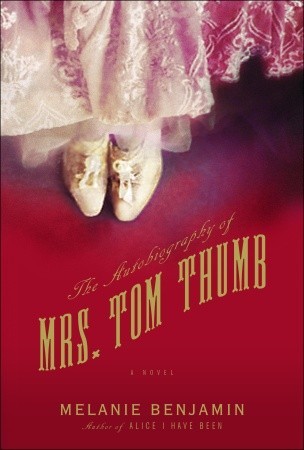
The Autobiography of Mrs. Tom Thumb by Melanie Benjamin

tomthumb

The Autobiography of Mrs. Tom Thumb is a historical fiction novel based on the real life of Lavinia Bump Warren, an extraordinarily small person.

Lavinia participated in P.T. Barnum’s museum, traveling acts and circus, becoming one of the most popular acts of her era. Her wedding to Charles Stratton, another little person, was such a huge story that it bumped the Civil War from the front pages for a time.

Melanie Benjamin speculates at the end of the book that Lavinia had a pituitary gland problem and today would receive appropriate treatment. But, in the 1800s, no such treatment existed.

As a journalist, I appreciated the actual stories and newspaper headlines from the time period. It shows just how far we’ve come and how the public appetite for sensational stories has never changed.

Benjamin writes a heroine that is so easy to love. Lavinia is different but determined, small and brave. She doesn’t let her size define her and always seeks to be a proper lady, even when those around her aren’t minding their manners.

This book was sad in that, because of her deformity, Lavinia had very few options. Early in her life, she felt as if she either had to display herself as a freak or depend upon her family in a backwater town where nothing ever happened.

In some ways, she never fit in to a world that was simply too big for her. I can’t imagine how difficult that must have been.

Photo by RODNAE Productions on Pexels.com

But in other ways, Lavinia traveled more than any woman of her era would be expected to. She experienced a world beyond the reach of all but the ultra-rich and privileged. There was a high price to be paid for it, but I don’t think Lavinia would have had it any other way.

Benjamin wrote in an unlikely twist in the story that I thought was unnecessary and it soured the ending of the book for me. I understand why she did it but it felt like a bridge too far, especially when the author admits at the end that there was nothing in the historical record to support her creative decision.

The Autobiography of Mrs. Tom Thumb becomes repetitive in Lavinia’s traveling years. I felt as if I was reading the same thing over and over again.

But I did learn a great deal about Lavinia Warren, Charles Stratton and P.T. Barnum. How extraordinary that these people even existed. It seems like a piece of American history that has been all but forgotten.

Recommended for readers who enjoy historical fiction novels about people overcoming adversity and about heroines who won’t give up, no matter the odds or size of the problem.

Thanks for reading!

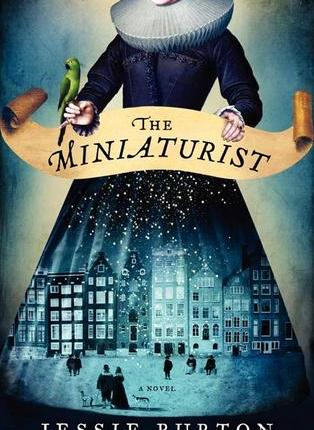
The Miniaturist by Jessie Burton

The Miniaturist by Jessie Burton
miniaturist

A young woman gets married to a man she’s never met. The household she enters is cold and uninviting. As a strange wedding present, her husband buys the woman a mock up of her household.

Against her wishes but wanting to please her husband, Nella hires a miniaturist to build furniture for the gift. The miniatures she receives are accurate enough to be scary. It seems that the miniaturist knows things about her life that Nella doesn’t.

This is a story about secrets, trust and unexpected magic.

What killed this story for me was the pacing. It dragged agonizingly along.

The bits about the miniaturist were fascinating. I loved the premise of it- a complete stranger seems to know more about your life than you do. How is that possible?

But, I found the rest of the story to be too slow to make up for the fun parts.

Also, I have so many unanswered questions. I felt like Jessie Burton didn’t answer most of the questions she raised in the story.

And, I found the ending to be completely unsatisfying.

I enjoyed learning about 17th century Amsterdam. I liked learning about the societal roles of men, women and the power that religion held over people’s lives.

I also liked Cornelia and Otto- the two servants in Nella’s new home. Any scene with either or both of them was charming.

Recommended for readers who have much more patience than me. The Miniaturist reveals its secrets slowly, if at all.

It sounds like The Miniaturist is going to appear on BBC the day after Christmas. I wonder if it will be better than the book: www.radiotimes.com/news/tv/2017-12-13…

Thanks for reading!

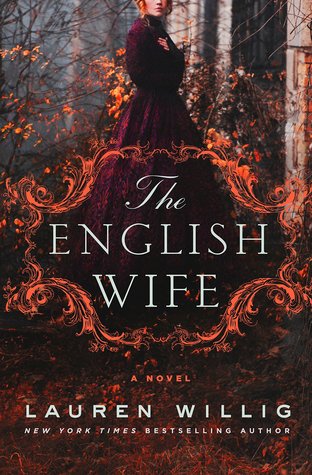
The English Wife by Lauren Willig

The English Wife by Lauren Willig
english wife

The year is 1899. The Van Duyvils are an extraordinarily wealthy and established family in New York. One night, at a holiday party, there is a murder… or is it a suicide?

The newspapers whip the public into a fury with their sensational headlines. They ask, ‘Who are the Van Duyvils and who is the new English wife?’

And there, our story begins.

Lauren Willig has created a lovely mystery/historical fiction with snappy dialogue and enough layers to keep readers guessing to the very end.

I loved Janie Van Duyvil, one of the main characters in this tale “There were times when she wished she had been born a male, that she might make her own way, that she might marry as she pleased and live as she would.” loc 45, ebook.

As she desperately tries to piece together the clues to find the murderer, Janie also comes into her own and begins to stand up to her tyrannical mother.

“It is her marriage,” Georgie pointed out drily. “Surely, she has some say.” “If you can think that, you haven’t met my mother.” loc 1179, ebook

I also enjoyed the role of the press in this story. James Burke is a reporter for ‘The News of the World.’ He wants to get the scoop on the murders. But, part of his job, is to sell papers. “The man had the gall to widen his eyes in innocence. “We prefer to call it investigative reporting, Miss Van Duyvil.” “I call it scandal-mongering, pure and simple.” loc 252, ebook.

My favorite scene is when Janie goes to ‘The News of the World’ building and readers get a glimpse into the crazy newsroom. “There was an undeniable energy to the room, the clacking typewriters, the shouting voices, that put energy into her step and color in her cheek.” What fun.

Photo by Suzy Hazelwood on Pexels.com

Willig seems to have a handle on what makes reporters tick. She even captures the gallow’s humor that they use to maintain their sanity. “Will it appear in an illustrated supplement in The World?” “Not unless there’s a body hidden there.” Mr. Bruke grimaced. “Sorry. In the newsroom, we… well, the worse it is, the more of a joke we make it. It’s a way to get through the day without being sick.” loc 2765, ebook.

Recommended for readers who want to lose themselves in a mystery with some romance along the way, The English Wife may just fit the bill.

Thank you to NetGalley and St. Martin’s Press for an advance digital copy of this book. Reminder: the brief quotations in this review may vary from the final printed form.

Thanks for reading!

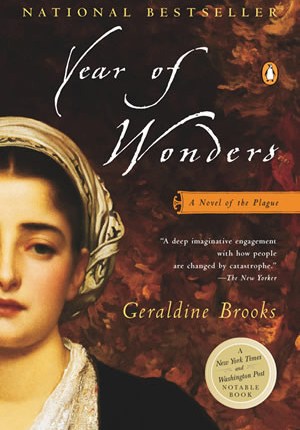
Year of Wonders: A Novel of the Plague by Geraldine Brooks

Year of Wonders: A Novel of the Plague by Geraldine Brooks
yearofwonders

Year of Wonders tells the story of Anna, a servant to a pastor, and how she emotionally and physically survives the plague while the majority of her village falls ill around her.

I was enthralled. I listened to the audiobook on my daily commute and it was fantastic.

You get the very real drama of life in a small village mixed with the the despair that must have accompanied the plague. There’s finger-pointing, people taking advantage of other’s need and, above all, the need to rationalize why all of the deaths were occurring.

My favorite part of this book was when Anna stopped in the middle of her hectic life to reconsider how she viewed God. She uses common sense reasoning to pick apart why a deity would allow such tragedy to occur and then wonders why the young are taken rather than the old.

She comes to the conclusion that what’s happening is a biological thing rather than a divine thing. Then, once she has that straight in her mind, she’s better equipped to handle everybody else’s irrational responses to the plague without being bogged down by her own.

Anna is a great heroine. She has her flaws- a flirtation with opium addiction to dull her grief and a crush on someone else’s husband- but she tries to be a good person. Mainly, she’s just overwhelmed by what’s going on and wants to feel loved and safe.

Photo by Nico Becker on Pexels.com

She cares for the ill, helps an orphaned child hold on to her family’s lead mine and tries to help her village keep body and soul together.

The ending of Year of Wonders was incredibly shocking to me, but in a good way. Geraldine Brooks stayed true to her characters but took the story in such an unexpected direction, that I had to turn it off for awhile to absorb what I had just heard.

Highly recommended for book clubs or people who love historical fiction. Year of Wonders is wonderous indeed.

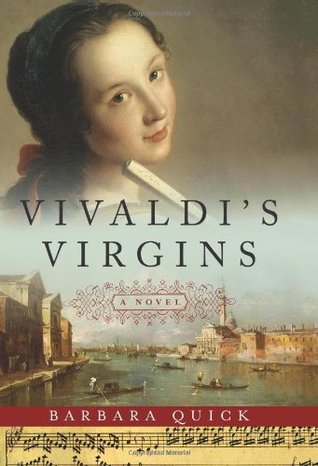
Vivaldi’s Virgins by Barbara Quick

Vivaldi’s Virgins by Barbara Quick
vivaldi

Vivaldi’s Virgins is a sparkling historical fiction about Anna Maria dal Violin, one of the orphans trained to perform music for the well-fare of the souls of Venice in the 1700’s.

One of her instructors is Antonio Vivaldi, who is called “The Red Priest” because of his fiery hair: “I heard and then watched Maestro Vivaldi climb the stairs. He has been my teacher- and one of the very few men who has ever seen my face or spoken to me- for nearly half of my lifetime. I was only a girl of eight when, newly ordained as a priest, Antonio Vivaldi, native son of Venezia, was hired by the governors of the Pieta to be our master of the violin.” pg 2

Only girls are allowed to perform music in the Pieta. They are kept separate from the general population and all men, except for the priests who are their instructors, to maintain their purity. “Our lives are arranged so that every piece of every day and night is fit together into an intricate mosaic of music and study and prayer. But it is only a counterfeit of real life. We have no more reality in the world than the trompe l’oeil floor tiles of the church have depth or height.” pg 85

There is drama among the children through their interactions and competition with each other and some of their instructors, who are either nuns or priests. “Whoever says that girls are kind has never lived among them.” pg 13.

Anna longs to know who her family was, but that is a secret kept by the nuns who watch over the children. She spends much of her time trying to figure out how to learn more about who her family may be.

Anna also strains against the restrictions placed on her because of her gender in the 1700’s. The government only allows the female musicians from the Pieta to perform in public if they remain in the cloister. If they choose to marry, they have to sign a contract to promise not to perform or pay an exorbitant amount of money to the orphanage to pay for their childhood musical education. “It is one of the great injustices of this fair city. And it has made me dream sometimes of other cities- of London and Paris and Vienna, where, I’ve heard, female instrumentalists have actually been welcomed, from time to time, on the performance stage.” pgs 145-146.

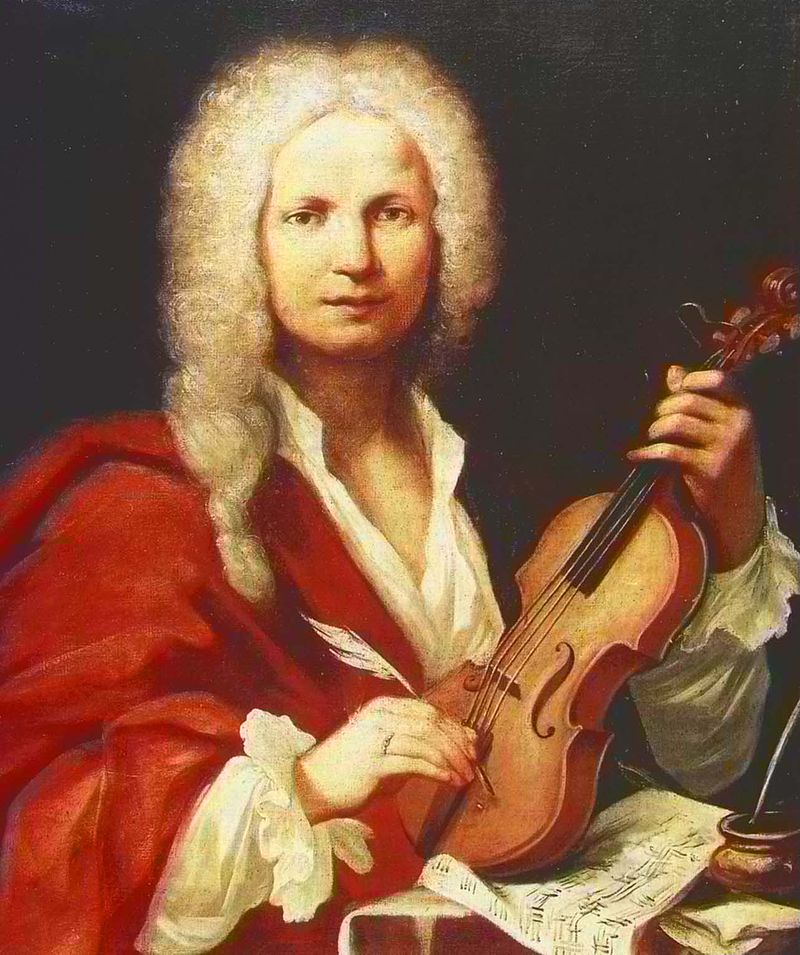
A probable portrait of Vivaldi

During these struggles, Anna forms true friendships with other foundlings in the Pieta. “When I think of who my companions will be in Hell, I feel rather glad that I will be going there. It will be filled with those I most well and truly loved.” pg 150

I learned a lot about 18th century Venice in this book and Vivaldi. All that I knew about Vivaldi, before reading this book, was that he liked to use a bunch of stringed instruments in his compositions.

It makes so much more sense when I discovered who it was he had been composing for.

Recommended for those who enjoy historical fiction, books about composers or stories about troubled childhoods.

Thanks for reading!

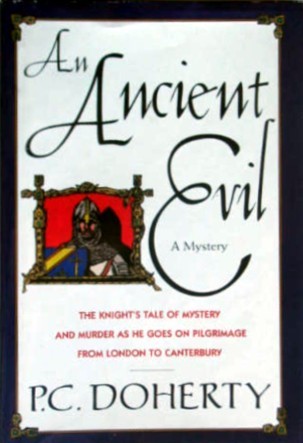
An Ancient Evil (Stories told on Pilgrimage from London to Canterbury, #1) by Paul Doherty

An Ancient Evil (Stories told on Pilgrimage from London to Canterbury, #1) by Paul Doherty
anancientmystery

An Ancient Evil is a charming historical fiction based loosely on the premise of The Canterbury Tales.

In the introduction, a knight tells a story to a group of pilgrims on their way to Canterbury. “My tale begins hundreds of years ago, just after the great Conqueror came here. So, gentles all, your attention as I describe these horrors sprung from the very pit of Hell.” pg 6.

In the story within the story, a menacing prologue introduces the reader to Sir Hugo, who buries alive the leader of a group of evil magic doers and burns the rest of his order. The evil leader who is buried alive doesn’t seem that upset about the whole thing. Which is weird.

Fast forward a couple hundred years into the future.

Sir Godfrey and a clerk, Alexander, are tasked by the king of England to discover the truth behind a series of mysterious and grisly murders in Oxford.

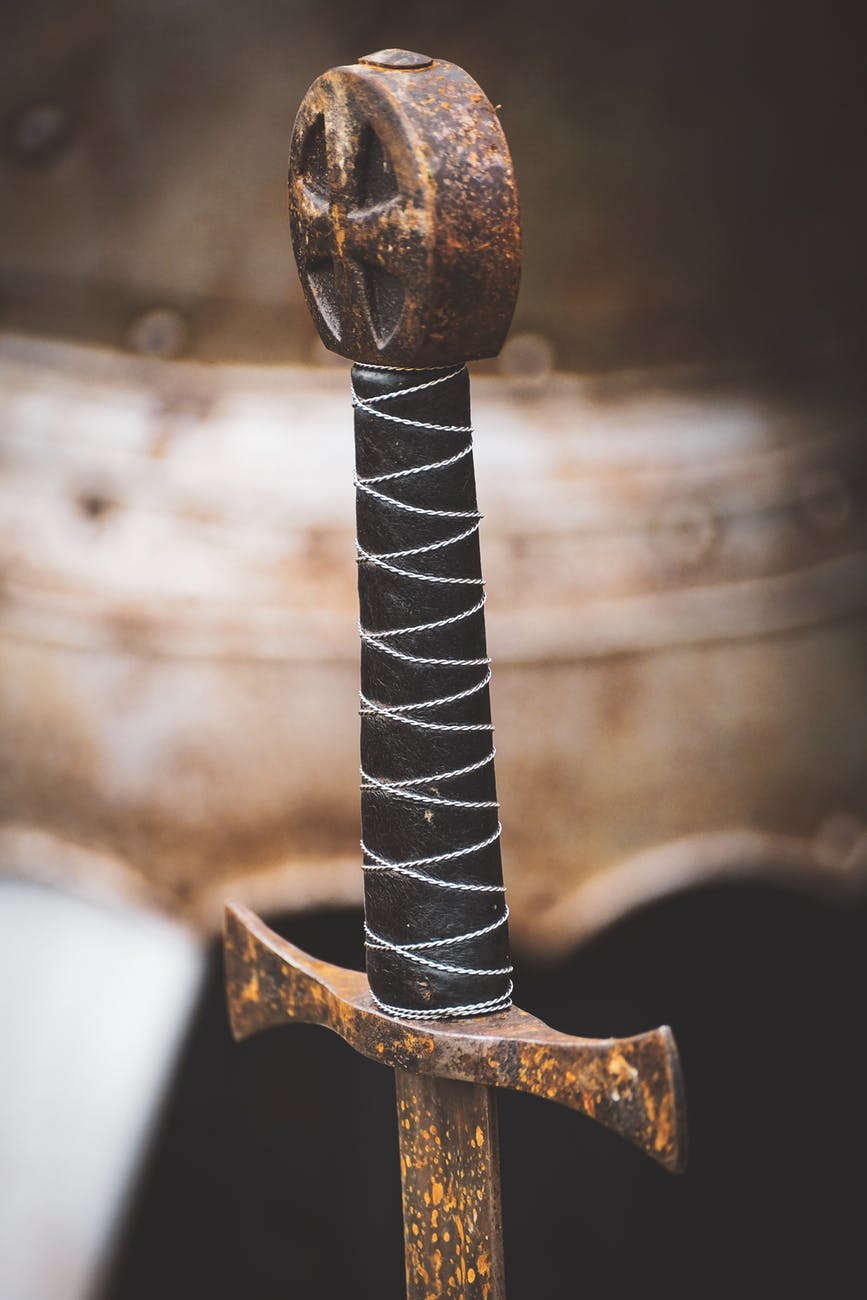
They are assisted in their task by Dame Edith, a blind anchorite who is known for her exorcism talents. ‘Sir Godfrey, whoever the killers are, we are about to enter the Valley of Death, but,’ Alexander couldn’t resist gentle banter, ‘we have your sword, my brains and the prayers of Dame Edith.’ ‘I think we might need more than that.’ pg 64.

I enjoyed this medieval, just a bit too bloody to be called “cozy”, mystery.

Photo by Susanne Jutzeler on Pexels.com

The characters are layered. The author drops enough hints to lead the reader towards the bad guy without giving the game away.

It reads a bit like a Nicholas Cage movie. We’ve got a battle between good and evil with some paranormal stuff and swords thrown in.

“Dame Edith tapped the side of her head. ‘Sir Godfrey, you are a soldier. You, of all people, should realize that a man is what he thinks he is. What causes one man to be a coward and another to be a hero? After all, they may be the same flesh and blood. They may even be brothers from the same womb. It’s what they think.” pg 170.

I also enjoyed the details about medieval life that are sprinkled throughout.

Recommended for readers who enjoyed The Thief Taker by C.S. Quinn or Mistress of the Art of Death by Ariana Franklin.

Thanks for reading!

The Kingdom of Little Wounds by Susann Cokal

The Kingdom of Little Wounds by Susann Cokal

The Kingdom of Little Wounds is about a seamstress, a nursemaid and a royal family haunted by illness. It is a, sometimes very, adult tale about secrets, sex and power.

Confession: I picked this one out at the library for the cover.

I saw it and thought, “This must be a young adult fantasy of some kind about a princess who works magic with needles.” Sometimes it’s nice to indulge in a pleasant escape from the world.

So, this book is nothing like that.

In the afterword, Susann Cokal describes her work as “a syphilitic fairy tale.” There’s nothing wrong with that. It just really wasn’t what I expected and wanted it to be.

This tale has rape and madness to it. There’s also some torture, severing of body parts and other pretty gross stuff that goes on.

It is definitely geared towards an adult audience. Librarians, please put it in the proper collection. It is not young adult.

The main characters, Ava and Midi, are likeable but powerless. “I truly would like to think I’m in the middle of a fairy tale, facing the period of hardship that precedes a triumph. But I am not a likely heroine.” pg 9, ebook.

The king, Christian, is ridiculous and controlled by his courtiers. “Have you found any… any culprits?” Sir Georg hesitates, and the favorites tense. Who will be blamed? A Lutheran? … Or perhaps some cousin with a tenuous but plausible claim to succession – someone who should be removed for the health of the court anyway?” pg 77, ebook. Notice how they are unconcerned with justice.

Alliances and power shift quickly in this story like the tide. The characters never know who they can trust. “We are all, of course, in service of the Crown and King. Who is known for being liberal with his gratitude, no matter what the rank of the creditor.” I recall something my mother used to say: Be wary of a promise without a clear price.” pg 131, ebook.

Photo by Mike on Pexels.com

Also, in the afterword, Cokal shared that a piece of this story, the appearance of a star, actually happened in Europe in the late 1500’s, early 1600’s. “The new star has put all of us off balance. We’ve always expected things to change down below, in the canals, the streets, and so on, but the heavens have been constant in our memory. This star shines even in the daylight, as if to drive away the sun. It is so bright that it seems heavier than the rest; we have the impression that if we were to stand on tiptoes, we might touch it.” pg 192, ebook.

Recommended for readers who aren’t bothered by dark themes and are in the mood for a “syphilitic fairy tale.”

Thanks for reading!