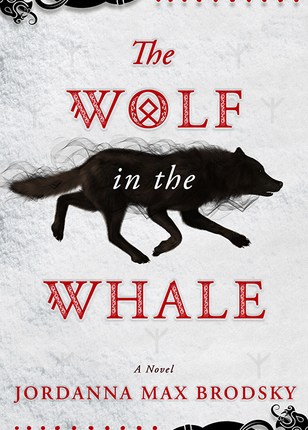
The Wolf in the Whale by Jordanna Max Brodsky

The Wolf in the Whale by Jordanna Max Brodsky

“You still have much to learn,” he agreed. “But you already carry a power in you that I can’t match.” pg 31, ebook

Omat is learning to become an angakkuq, a shaman for her tribe. This is a role that is traditionally filled by a male, so Omat considers herself a man for a long time.

“I drifted into dreams and visions for much of those three days, and soon I could not tell reality from imagination. Perhaps, I reasoned, in the end they are one and the same.” pg 70, ebook

Photo by Pixabay on Pexels.com

After repeated tragedies strike her tribe and Omat is captured by a vengeful hunter, her world changes. She goes on a quest to save her brother and best friend as well as herself.

This quest brings her into contact with gods and goddesses as well as the spirits of various arctic animals.

“Stories are ever changing, just like the gods. Assuming you understand either is a grave mistake.” pg 295, ebook

Photo by Jean-Christophe Andru00e9 on Pexels.com

I very much enjoyed this adventure tale. The main character, Omat, is quite complex in the way she communicates with others and grows throughout the story.

In the afterward, the author talks about the research into Inuit culture she completed to write this book and her work shows. I felt like Omat’s shamanistic journeys and methods could have actually happened the way she described- it’s that well written.

There is darkness in this story and I nearly stopped reading at first because I was afraid it was going to be too depressing. But I kept on and I’m so very glad I did.

“That which is dead can always come back. Men live in many worlds at once. So do gods.” pg 431, ebook

I enjoyed the fantasy elements of the gods and goddesses in this book. It reminded me of The Odyssey in some ways. The supernatural tries to control the world of humans and it results in a grand adventure.

Highly recommended for readers who like their historical fiction mixed with fantasy elements.

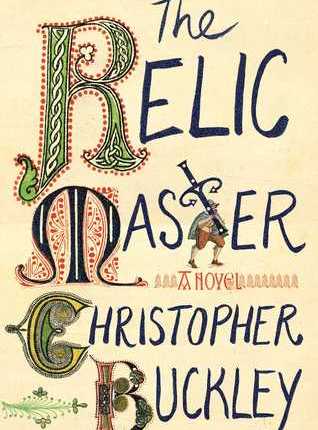
The Relic Master by Christopher Buckley

The Relic Master by Christopher Buckley

The Relic Master is set in the early stages of the Reformation and concerns holy relics, so-called pieces of the bodies of saints as well as objects that were said to have belonged to them.

Our hero, Dismas, is a trader in holy relics. When he finds himself in a thorny situation because of a false relic, he is sent on a quest to steal what would later be called the Shroud of Turin. Hijinks ensue on the way.

“This bone dealing, Dismas. There’s something not right about it.” “We used to earn our living by killing. Was that right?” pg 26, ebook

I enjoyed this historical fiction. It is humorous, not in a laugh-out-loud way, but instead in a satirical manner about religion. If you find such things offensive, it would be wise to choose another book.

The only main female character in this book is somewhat of an after thought but I liked her anyway. She’s a trained medic (as much as someone could be in that time period) and is mistaken for a witch.

Recommended for readers with a sense of humor and a little patience as the story has somewhat of a slow burn.

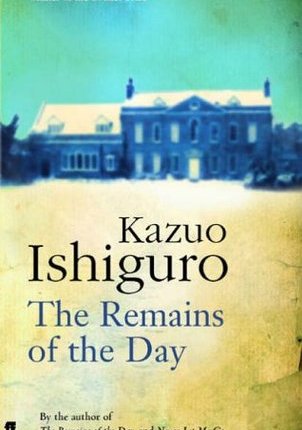
The Remains of the Day by Kazuo Ishiguro

The Remains of the Day by Kazuo Ishiguro

“So then, there seems little reason why I should not undertake my motoring trip to the West Country.” pg 20, ebook

The Remains of the Day is mainly told through the memories of a butler named Stevens of Darlington Hall as he takes a short vacation to visit an old friend.

“It is sometimes said that butlers only truly exist in England.” pg 44, ebook

Throughout the story, Stevens again and again demonstrates his inability to connect with or show his emotions. But he believes this to be a positive attribute, something that he calls, “dignity.”

He gives all that he has to his position as a butler of Darlington Hall. And I was hoping his striving was worth it. In the end, the reader gets to decide if his was a life worth living or not.

Kazou Ishiguro received the Nobel Prize for this book and it is very well written. I was impressed by how Ishiguro tells the story and finds a way to connect the reader with this character who can be very unlikeable at times.

Despite some of his more infuriating attributes, I found myself cheering for Stevens anyway.

I did not like the ending of this book, which I won’t spoil for anyone. It reminded me of The Buried Giant, another well written book by Kazou Ishiguro with an ending I didn’t connect with.

This story is easier to experience than describe. If you read it, please let me know what you think about it.

Sixteen Ways to Defend a Walled City (The Siege, #1) by K.J. Parker

Sixteen Ways to Defend a Walled City (The Siege, #1) by K.J. Parker

“Orhan.” Nobody called me that. “You’re a clever man and you use your brain, which makes you unique in this man’s town, but you’ve got to do something about your attitude.” “Attitude? Me?” pg 16

Through a series of unfortunate events, Orhan, the leader of a group of military engineers, finds himself in charge of the defense of “the City”, the capital of the Robur empire. The Robur empire seems to have been loosely based on the Roman empire, which, in its conquering of the world, took diverse sets of people and organized them into useful groups under its overarching control.

Orhan is one of these conquered peoples. But he has a unique set of skills, all of which will be put into use during the siege that is to come.

“My meteoric rise, from illiterate barbarian serf to commander of an Imperial regiment, is due to the Hus, the Sherden, the Echmen and, last but not least, the Robur, who are proud of the fact that over the last hundred years they’ve slaughtered in excess of a million of my people.” pg 5

Photo by Maria Orlova on Pexels.com

The story is told entirely from Orhan’s point of view in first-person narrative. This invites the reader to step into Orhan’s shoes and makes the tale quite exciting and immediate.

On the other hand, Orhan is emotionally bereft and runs his life through merciless logic, which doesn’t always serve him, or the people around him, very well.

“That’s one thing about human beings I don’t see the point in: love. It does nobody any good. You love someone, and either they let you down or they die. Either way, you end up crucified.” pg 55

He is an impatient and, occasionally, violent character, who literally punches people when they don’t conform to his view of the world fast enough.

In other words, wearing Orhan’s shoes for the length of the story is an uncomfortable ride for anyone who uses a modicum of emotional intelligence in their lives.

Photo by Miquel Rossellu00f3 Calafell on Pexels.com

That being said, K.J. Parker (pen name for Tom Holt) has done a brilliant job of creating an unforgettable, if unpleasant, narrator. By the end of the book, even though I didn’t like him, I found myself rooting for Orhan anyway because that’s the kind of reader I am.

But if you have trouble connecting with stories where you don’t like the characters, this might not be the book for you.

The one moment where I did connect with the narrator was when he discovers his importance in the siege that is to come.

“If, as I was horribly afraid, I was the senior military officer in the City, I needed confirmation or a warrant or something. If there was someone higher up than me, I desperately wanted to hear about him and ask him for orders.” pg 78

I used to have similar feelings when I first started working as a reference librarian at the library. Prior to that, as a circulation assistant, if I had any question about anything having to do with the library or technology or research, I’d call up whoever was sitting at the reference desk and they’d supply me with the answer.

Photo by Olenka Sergienko on Pexels.com

It was my own version of chain-of-command. There was an unspoken faith that I carried- if I didn’t know the answer, the reference librarian would so there was never any reason to worry.

The day that my training was done, my supervisor went home, and I was left alone at the reference desk, that was my Orhan moment. If I didn’t know or couldn’t find the answer, there was no one else for me to turn to.

It is humbling to realize that it all rests on your shoulders, but it is also a character making moment. How you respond to the pressure says so much about you. And that is the strength of this story, the slow revelation of Orhan’s character under pressure.

Recommended for readers who enjoy historical fiction. Though this is classified as a fantasy too, I feel like it veers more into a parallel universe than a true fantasy world where magic is real and otherworldly creatures are running around. I’d be curious to know what other readers think about its genre.

Thanks for reading!

A Golden Fury by Samantha Cohoe

A Golden Fury by Samantha Cohoe

“Do you think I do not know why you wish to send me away? But I will not let you, not when we are near to making the White Elixir! I will not be erased from our achievement!”

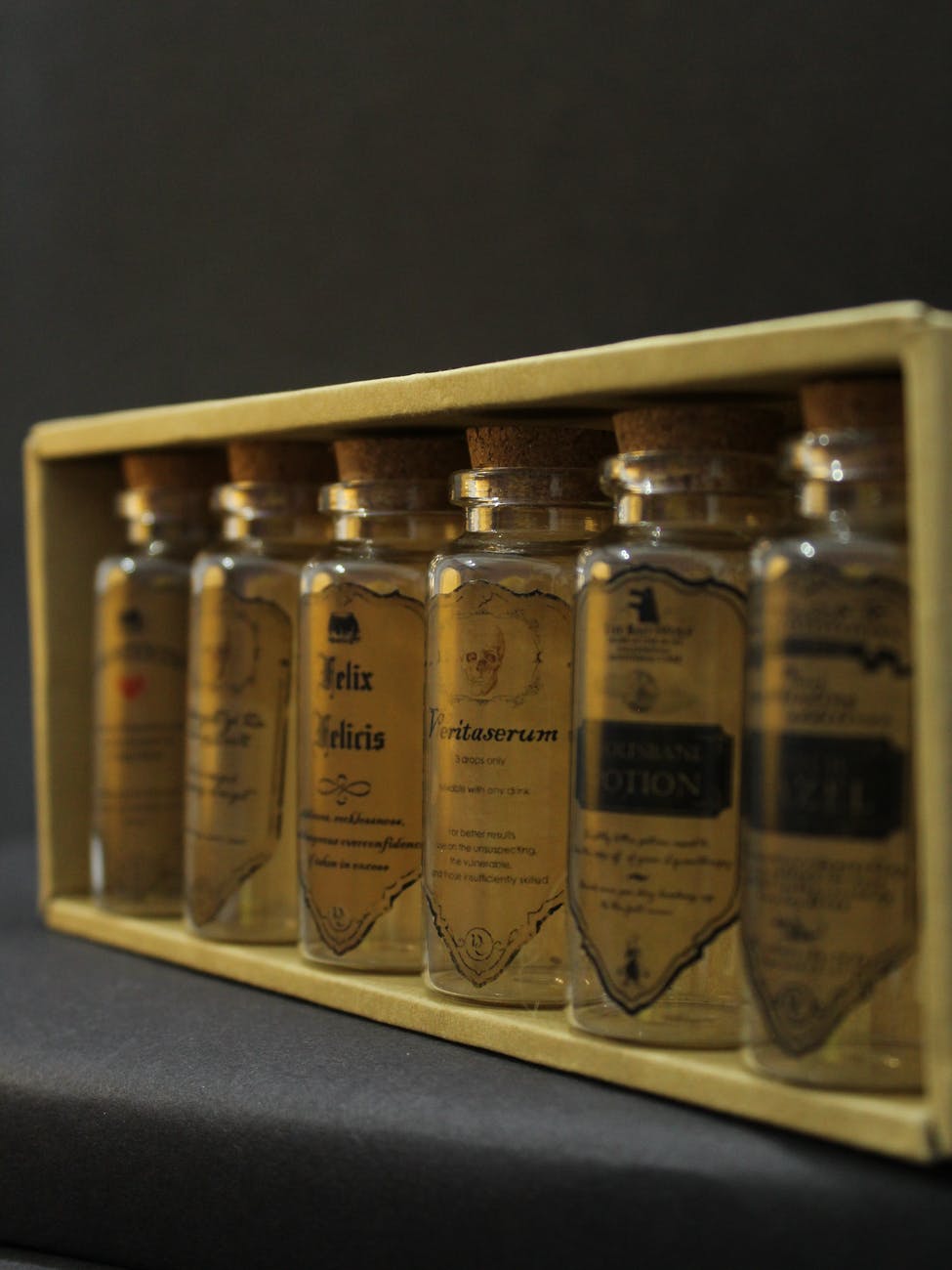
Photo by Designdrunkard on Pexels.com

Thea has worked her entire life in her mother’s alchemist laboratory. Now, she’s in love with a former apprentice and ready to begin a laboratory of her own, but her mother is acting strangely. Could it be because her mother is near to the breakthrough of a lifetime or is she having a breakdown? Thea is going to find out.

This young adult, coming-of-age story weaves alchemy and romance in a slow paced foot race to a predictable ending.

The thing that I find so compelling about alchemy, which I felt the author didn’t use to its maximum effect, is the spiritual side of the practice. Perhaps, historically speaking, most concerned themselves with alchemy for its elusive promises of immortality and unending wealth. But it is the spiritual treasures of the practice that most interest me and that I feel have the most untapped storytelling potential.

Though there were a few spiritual elements in A Golden Fury, I wanted there to be much more.

Photo by Matheus Bertelli on Pexels.com

“The Philosopher’s Stone gave everything humankind wanted but did not believe we could have in this life. With such a reward, it was not hard to see how so many great minds had wrecked themselves in its pursuit.”

To be fair, I think the intended audience for this book is younger than I am. However, I believe even young adults can appreciate a story with a little more complexity than A Golden Fury dishes up, especially in the development of the main character, Thea, and the various antagonists.

Thank you to NetGalley and the publisher for a free digital copy of this book.

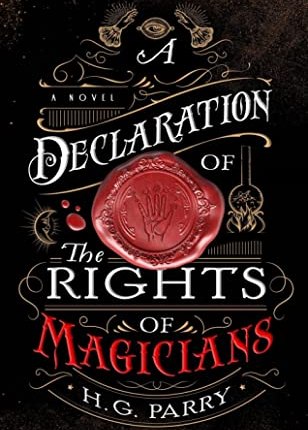
A Declaration of the Rights of Magicians by H.G. Parry

A Declaration of the Rights of Magicians by H.G. Parry

In a world where magic is real and controlled by government authorities, H.G. Parry re-imagines true historical events and people, inviting readers to add an additional layer of conspiracy to movements that changed the course of history like the French Revolution or the slave rebellion in the Caribbean.

Photo by Andreea Ch on Pexels.com

The premise didn’t work for me for a couple reasons.

I felt like this book minimized the atrocities that were committed during the era. The slave trade and the French Revolution’s cost in both human lives and suffering is immeasurable, and it felt somewhat flippant to take those events and say, “Well, magic,” as the main driving force behind the conflicts.

I felt the same could be said for the subtle twisting of the lives of historic figures.

“His quiet voice spoke of a country built on Enlightenment principles, whose people were virtuous, where magic was a free resource to be used for the betterment of all, where food was well distributed and plentiful, where courts were in the hands of the people and not the talons of the Aristocracy, where the poorest Commoner was free to vote and grow and be educated.” pg 155

Photo by Dominika Greguu0161ovu00e1 on Pexels.com

That is not to say that history or historic personages couldn’t or shouldn’t be in fantasy novels. It is a hallmark of the genre to take a reality, change the rules of that reality, and then tell the story with the new rules. Though if that was what the author was going for, perhaps she should have staged her story in another world or made the focus of the story characters she invented with the real people living their lives in the backgrounds.

Taking real events, real people and real world locations to drive the story didn’t coalesce into the fantasy novel I believe she was reaching for.

I think fantasy, alternative-historical fiction is something that can be done successfully, but I have yet to see its promise fulfilled. This may be an unpopular opinion, but I had the same issues with this story that I had with Abraham Lincoln: Vampire Hunter.

Photo by eberhard grossgasteiger on Pexels.com

Students of history may find themselves frustrated by A Declaration of the Rights of Magicians because of the way the true events are spun. I didn’t have any specialized knowledge of the era, but a friend who is somewhat of an expert told me the complexity of the time period is so dumbed down that he was distracted by it.

“It had seemed so simple after the fall of the Bastille. The National Assembly of Magicians had risen up, exactly as Robespierre had hoped. They had issued a proclamation declaring it the right of all citizens to be free to practice their own magic: a Declaration of the Rights of Magicians.” pg 179

Setting my concerns with fantasy clumsily applied to horrific real life events aside, my biggest issue with this book was the glacial pacing. Readers sit through meeting after meeting, and it’s incredibly dull. But with the time period we were in, it should have been gripping. I told myself that a big payoff for all of this story building was coming, as the book clocks in at over 500 pages, but I felt like it never materialized.

I don’t mind a long book. But please, tell the story.

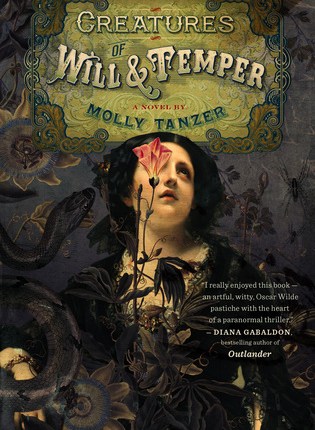
Creatures of Will and Temper by Molly Tanzer

Creatures of Will and Temper by Molly Tanzer

Creatures of Will and Temper is a historical fiction and fantasy novel that takes some of the magic contained in The Portrait of Dorian Gray and mixes it with some demons, and a pair of extraordinary sisters.

“Death is an illusion, just like anything else – like distance, for example, or time, or the separateness of one thing from another. The whole universe is only matter forming and reforming itself, endlessly, beautifully.” pg 6

Photo by Francesco Ungaro on Pexels.com

The author, Molly Tanzer, builds layered characters with distinctive personalities who are a pleasure to read about. However, she takes so long doing this, that I nearly put the book down before I hit page 200 and the main story arc took off.

“Never let anyone tell you demons are unnatural things – they are perpetual, like fragile flowers that blossom anew each year, like the majestic pine that never goes brown.” pg 53

Photo by Brett Sayles on Pexels.com

Prior to around page 200, Creatures of Will and Temper reads like a historical fiction with magical realism rather than the fantasy it actually is. The pace was incredibly slow.

But once I was over that two-thirds slump, the rest of the story (another 150 or so pages) was fantastic. I couldn’t put the book down at that point.

“We must give in to beauty, surrender ourselves to pleasure and enjoyment. We must return to hedonism, but we must also make it our own – for we are not sentimentalists, seeking to recreate an emotion time and again. It is our holy duty to create a new hedonism, a philosophy of passionate experience.” pg 170

The strength of this book is in the complex demonic world Tanzer hints at throughout. I wish she had focused on that world instead of this one! What a unique story it would have been.

As it stands, only recommended for readers who can tolerate a glacial pace on the way to a breath-taking ending.

Before We Were Yours by Lisa Wingate

Before We Were Yours by Lisa Wingate

Before We Were Yours is a historical fiction based on the real and heart-breaking scandal of child kidnappings and paid adoptions from the Tennessee Children’s Home Society.

Children were treated like a type of rare commodity. Sadly, abuse and even death awaited some of the unfortunates who passed through the society. Some of the children taken in had families, but the society acted as if they did not.

Photo by Pixabay on Pexels.com

As a student of forgotten history, I didn’t want to believe that such things could have happened in the United States and, relatively, recently. But, it’s true.

“The Foss children and the Arcadia were formed from the dust of imagination and the muddy waters of the Mississippi River. Though Rill and her siblings exist only in these pages, their experiences mirror those reported by children who were taken from their families from the 1920s through 1950.” pg 295, ebook

Lisa Wingate tells the story in two different timelines – one in 1939 and the other in the modern day. The earlier story line is by far the most compelling.

Readers meet Rill Foss, one of five children belonging to an itinerant family who live on the Mississippi River in their house boat. Her story begins the night her mother, Queenie, is having trouble delivering a new baby.

When Rill’s father, Briny, takes Queenie to the local hospital for help, something terrible happens to the children they leave behind.

Photo by Maximilian Mu00fcnzl on Pexels.com

Meanwhile in the modern day, Avery Stafford has moved home to help her father, a senator, during his re-election campaign. There are also concerns about her father’s health as well as her upcoming nuptials to organize.

But then she stumbles upon an elderly woman who has a picture that closely resembles Avery’s own grandmother. Could there be a connection between the two?

“Grief and a change of location can often be more than the mind and body can handle.” pg 43, ebook

Of the two stories, the earlier one is far more interesting. Rill is such a strong and indefatigable heroine in her struggle to keep her siblings together. I was enthralled by each chapter narrating her life.

Photo by Kristina Paukshtite on Pexels.com

The Avery portion of the story, on the other hand, was just so predictable. If Before We Were Yours had just been the modern story, this book would hardly have earned a mention from me, let alone netting the Goodreads Choice Award for historical fiction from 2017.

“Life is not unlike cinema. Each scene has its own music, and the music is created for the scene, woven to it in ways we do not understand.” pg 278

Recommended for readers who enjoy historical fiction as well as book clubs.

In the future, I may pen a History Guy episode about the Tennessee Children’s Home Society. It seems to me that the fate of these poor children, now grown and many departed from this life, is history that deserves to be remembered.

The Story of the Stone (The Chronicles of Master Li and Number Ten Ox, #2) by Barry Hughart

The Story of the Stone (The Chronicles of Master Li and Number Ten Ox, #2) by Barry Hughart

“Ox,” he said, “the writing of your memoirs is doing wonders for your calligraphy, but I must question the content. Why do you choose the rare cases in which matters run melodramatically amok?” I heroically refrained from saying, “They always do.”

The Story of Stone, Barry Hughart

Master Li and Number Ten Ox are at it again.

There’s an unexplained murder, puzzling fragment of a poorly-finished forgery, and nature herself is leaving clues behind with whole swathes of plants dying in a strange pattern.

Photo by carol wd on Pexels.com

“I wasn’t sure that any autopsy could be delightful, but I didn’t care. The old fire had returned to Master Li’s eyes, and I felt like a warhorse who was being called back into battle.”

In the course of solving the mystery, Li and Ox encounter ghosts, hidden torture chambers, and make a journey down to the depths of hell. It is one of the finest homages to Dante’s Inferno that I’ve ever had the pleasure to read.

“Ox, what do you smell in the air?” he asked. “Wet earth, pine needles, pork fat, donkey manure, and perfume from Mother Ho’s House of Joy,” I said. “Wrong. You smell destiny,” Master Li said happily.

And, as usual, readers get to enjoy the sometimes hilarious, and always entertaining, interplay between a brilliant scholar and his surprisingly strong sidekick.

Recommended for readers who enjoy a blend of fantasy, mystery and historical fiction.