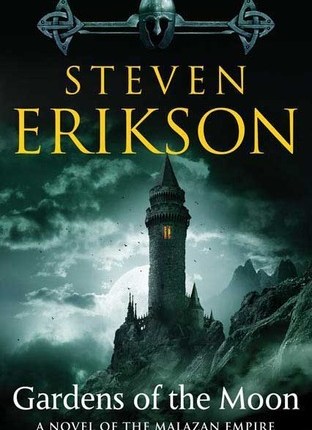
Gardens of the Moon by Steven Erikson

Gardens of the Moon by Steven Erikson

Second read-through August 2021: I have a few thoughts to add on my second read-through of Gardens of the Moon. Unlike my first foray into Malazan, I came out of this reading with a better appreciation of the female characters of the story.

Instead of being focused on what the characters were not, I looked at what the characters were. Powerful leaders, most of them, who imposed their will on the world around them through violence. It is an unexpected role for women, but still feels somewhat one dimensional. I wish some of the characters were more fleshed out, but I have the feeling that this development will happen before the end of the series.

Also, this go-round, I had a better grasp on the complexities of Gardens of the Moon and was prepared to be dropped into the middle of the action. Steven Erikson doesn’t hold the reader’s hand. He pushes her through the door into another world. Some readers hate/love this strategy. I fall mainly on the side of hate, but if it’s a good story, I’ll put up with it.

My favorite part is still the new tarot card deck that Erikson created.

Unlike last time, I’m going to keep pushing forward with this series. On to the next book!

Photo by ArtHouse Studio on Pexels.com

Review from first read-through June 2016: Gardens of the Moon is an extraordinarily complex fantasy. The over-arching story: the Malazan Empire (a militaristic conglomeration of nations) is invading everywhere and trashing cities as it goes. The Empress of Malazan, her High Fist Dujek (like a top general), Adjunct Lorn (a magic-hating fixer), Whiskeyjack and the Bridgeburners (like the A-team for Malazan, they go in and cause chaos before the main army arrives), Tattersail (a Malazan mage), Ganoes Paran (a soldier), and more are on the side of the Empire.

There’s about a dozen other main characters that I won’t list here for brevity’s sake.

One of the many heroes of this tale is Paran. The story begins with Paran as a child, gazing down from the walls of his city, towards destruction being wreaked by Malazan mages. He dreams of being a warrior and tells this dream to the aged soldier with him.

Their conversation: “Every decision you make can change the world. The best life is the one the gods don’t notice. You want to live free, boy, live quietly.” “I want to be a soldier. A hero.” “You’ll grow out of it.” pg 5
Photo by Mikhail Nilov on Pexels.com

And so the story begins. Paran gets his desire, of course, but so much more than he bargained for… kind of like the reader who picks up this book.

At first, I thought that the story was going to go like The Game of Thrones. We were going to have a bunch of different characters all fighting for the same thing. I was so wrong. The only similarities between the two tales are that 1. they’re fantasies, 2. they have a bunch of characters, and 3. there is a power struggle, but otherwise, they’re very different.

Gardens of the Moon contains direct interventions between gods and humanity as well as magical creatures from the past and other realms of existence.

As for the magic system, the magically-inclined in this story take their power from different dimensions called “warrens“. There are half a dozen different ones, with further warrens hinted at as the story progresses.
Photo by Filipe Delgado on Pexels.com

Taken as a whole- it is a many layered cake of fantasy awesomeness. I was overwhelmed by it all at times.

Perhaps because of the sheer scope of the story, the characterizations suffered. The author could only build so much detail into each person.

For example, Erikson tried to make Paran more than just a simple hero, but it didn’t always work: “When he thought of himself, of that young noble-born man with the overblown faith in honesty and integrity, the vision that came to him now was of something cold, hard, and dark. It hid in the deepest shadows of his mind, and it watched. No contemplation, no judgment, just icy, clinical observation.” pg 110

I was unimpressed with the role of the females in this story. With as many characters that we had, I thought we’d have at least one or two amazing, strong, female heroes. I know that fantasies are not known for their gender equality but in a world with magic, gods, and other surprising things, I would count a strong female character as one of the greatest miracles of all.

Erikson’s world building was so complete that he even created a new set of Tarot cards, just for his world. It’s one of my favorite parts of the story.
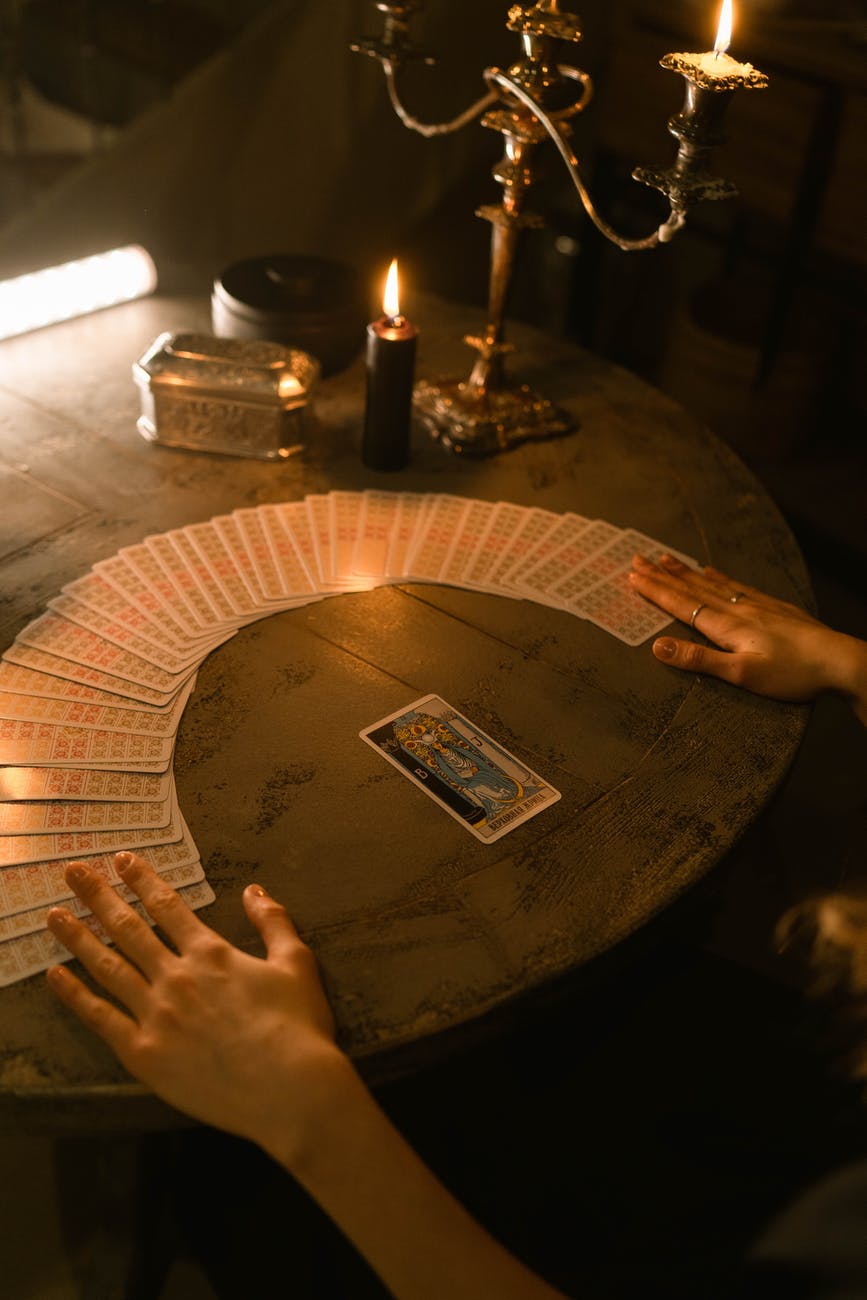
Photo by Anastasia Shuraeva on Pexels.com

Here’s a passage that I really liked: “Those whom the gods choose, ’tis said, they first separate from other mortals- by treachery, by stripping from you your spirit’s lifeblood. The gods will take all your loved ones, one by one, to their death. And, as you harden, as you become what they seek, the gods smile and nod. Each company you shun brings you closer to them. ‘Tis the shaping of a tool, son, the prod and pull, and the final succour they offer you is to end your loneliness- the very isolation they helped you create.” Never get noticed, boy. pg 510 Bleak, but beautiful.

Or this part, the explanation of the story’s title, which is so brief, if you blink, you’ll miss it: (On the moon) The Lord of the Deep waters living there is named Grallin. He tends vast, beautiful underwater gardens. Grallin will come down to us, one day, to our world. And he’ll gather his chosen and take them to his world. And we’ll live in those gardens, warmed by the deep fires, and our children will swim like dolphins, and we’ll be happy since there won’t be anymore wars, and no empires, and no swords and shields.” pg 531-532

That’s the dream of all of the characters in this story- to live in peace. But, because of the Malazan Empire, they can’t.

Recommended for true fans of fantasy. There’s so much to sink your teeth into that, unless you really love the genre, you’ll probably just put it aside for simpler fare.

Thanks for reading!

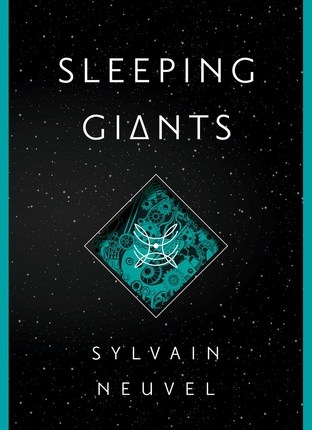
Sleeping Giants by Sylvain Neuvel

Sleeping Giants by Sylvain Neuvel

In Sleeping Giants, a large, metal object shaped like a gigantic hand is found in South Dakota. It glows with its own light and scientists have no idea what it is made of or what it can do. And so, the mystery and adventure begins.

Photo by Mayur Rawte on Pexels.com

I enjoyed the story a lot but not how it was written. Neuvel tells Sleeping Giants through a series of “case files” or question and answer sessions between the main characters and a mysterious, all-powerful figure who is manipulating the scenario from behind the scenes.

This method of storytelling seemed especially ridiculous during some of the action scenes, when Neuvel had the characters talking to each other on the phone, describing what was happening to them as it occurred.

But, otherwise, the Q & A setup gave readers a behind-the-scenes look at what was going on in the character’s minds and allowed for a lot of personality development.

I wish that Neuvel had switched back and forth between traditional storytelling and the “case file” thing, so that he could both tell the story and have the in-depth character portions. Maybe he could do something like that in the next book.

I was nervous that Sleeping Giants was going to be more science fiction than fantasy, but it wasn’t. There are only a few mind-boggling moments when the scientists are trying to figure out mathematics with a base of 8 rather than a base of 10.

Mostly, The Sleeping Giants asks the questions: what would happen to humanity if something very strange and not of our civilization was discovered on earth? What would that mean for world politics? And how, on an individual level, would everyone involved handle it?

Photo by Pixabay on Pexels.com

Kara Resnik, a pilot, was my favorite character in this story. She’s impulsive, passionate, and honest.

In this passage, she’s talking about the possibility of leaving the project before it’s completed: What would I do anyway? Go about my business as if nothing ever happened? I couldn’t even talk about it to anyone. This is gonna sound incredibly selfish, but I’d get bored to death unless someone started World War III or something.” pg 54

The moral dilemma for the scientists involved in the project is interesting.

In this passage, lead scientist Rose Franklin talks about the fact that the technology discovered could be used for good or ill, depending on who controls it and how that makes her complicit in their actions, because she’s the one figuring out how it works: “What I’ve been trying so hard to deny is that I’m loving every minute of it. … I’m a scientist, and this is what I breathe for. If I had learn to live with that, I might be able to sleep again.” pg 167

Photo by Pixabay on Pexels.com

If you enjoyed Sleeping Giants, you may want to pick up The Many Selves of Katherine North by Emma Geen (in which, advanced technology raises moral questions) or The Interminables by Paige Orwen (in a dystopian world, humanity tries to save itself from inter-dimensional creatures, but maybe some solutions aren’t worth the cost).

Big thanks to the Goodreads First Reads Program for a free copy of this book. And, thank you for reading!

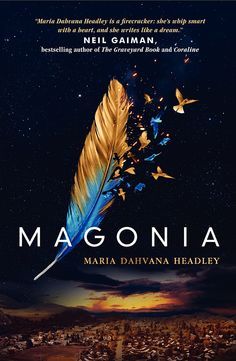
Magonia by Maria Dahvana Headley

Magonia by Maria Dahvana Headley

magoniaAza Ray Boyle can’t breathe. It seems like she has always been sick- inexplicably short of breath and weak.

This continuous illness has made her always feel different from the people around her. But, perhaps, there are stranger and more exotic reasons why she is different. Ones that Aza can’t even imagine…

Jason is Aza’s dearest friend. They are so close that they almost speak their own language.

He realizes there is more to Aza than meets the eye. How will Jason handle it when he discovers the shocking truth?

This young adult fantasy is weird, but I enjoyed it.

That’s probably because I read a lot of weird, non-fiction. The story of Magonia, a world in the sky above the every day world which we know, has shown up in some of those books.

One of those books, Passport to Magonia: On UFOs, Folklore, and Parallel Worlds, captured my imagination.

That book recounts an incident where a bunch of villagers were holding church service and they heard a crash outside. They went to investigate the noise and discovered what appeared to be a ship anchor attached to the roof of their church. It was connected to, this just blows my mind, a ship in the sky. This supposedly happened in 1211 AD.

The astonishing thing about Passport to Magonia is it has pages and pages of stories like that, eyewitness accounts of bizarre ships, people, and incidents concerning people from the sky. And they all actually happened, reportedly.

I remember thinking that an author needed to get her hands on these stories and turn it into something fantastic. Maria Dahvana Headley used a different source material than the book that I read, but does a good job bringing a mysterious blip in history to life.

She has the ability to interweave actual events with fantasy fiction story lines so that the two begin to blur in the reader’s mind.

I read Headley’s first book Queen of Kings years ago and I remember being struck by its originality.

Headley took Cleopatra’s life and turned it into a vampire story. It sounds sort of silly described that way, (oh, ANOTHER vampire story) but it is actually rather fun.

I had read Margaret George’s The Memoirs of Cleopatra shortly before Queen of Kings so I had a pretty good idea of the actual story of the Egyptian queen.

Back to this book, Magonia isn’t going to appeal to everyone.

I was, at first, rather turned off by the uber-intellectual back and forth conversations of the main characters- Jason and Aza.

I think, since the mega success of John Green’s The Fault in Our Stars, authors make their teenage protagonists so brainy and well-spoken, it is just unbelievable.

I mean, it’s been awhile, but I remember high school. My peers and I were lucky if we could string two cogent sentences together, let alone present verbal dissertations on the meaning of pi.

Anyway, once I was able to look past their flowery repartee, I got really into the story.

Headley paints a magical and dangerous world.

If you enjoyed Magonia, you may also enjoy The Mermaid’s Sister or Under the Empyrean Sky. Both are young adult novels and take place in fantasy worlds that are so close to the world we know, but different in surprising ways.

Check out my review of Aerie, the sequel to this book.

Thanks for reading!

More Than This by Patrick Ness

More Than This by Patrick Ness

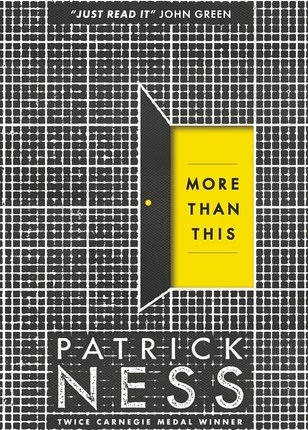
I picked up More Than This because I recently enjoyed A Monster Calls. This book, like Monster, is about a young man learning how to handle life’s major hurdles. That, though, is where their similarities end.  More than This opens with Seth drowning in the ocean and the story really begins when he opens his eyes after death…

Photo by Amber Janssens on Pexels.com

More Than This is darker than A Monster Calls in many ways. For readers who are concerned about the maturity level of themes in this book: there are some (short) scenes of physical abuse, non-graphic GLBT teen sex, teen suicide, brief moments of bullying, extremely brief nudity (both male and female), and a short masturbation bit. On the other hand, there’s a lot of empowering elements in here too. There’s a very strong, young, black female heroine, a plucky, brainy, Polish sidekick, and some really trippy depictions of reality itself. The GLBT relationship is healthy and non-abusive. The friendships that develop between the main characters are real and beautiful.

Depending on the young adult reading the book, I’d say 14+ might be a good age for this one.

I loved the ambiguity of Seth’s situation in the afterlife. No spoilers here, but that was my favorite part, the “what the heck is going on here” moments that Ness kept handing to me. Read it and you’ll see what I mean in mere pages.

Photo by Jonathan Andrew on Pexels.com

Patrick Ness is at his strongest when he’s writing his way around painful emotions, which there are piles of in this book. He’s at his lowest during the first part of More Than This because of the pacing. This starts out seriously slowly, but if you can make it through the first section, things pick up considerably afterwards.

Some of my favorite moments: “Is this a dream? he thinks, the words coming to him slowly, thickly, as if from a great distance. The last dream before death?” pg 13 ebook

“He looks out toward the darkened sitting room and wonders what he’s supposed to do here. Is there a goal? Something to solve? Or is he just supposed to stay here forever? Is that what hell is? Trapped forever, alone, in your worst memory? It makes a kind of sense.” pg 31 ebook

Seth’s relationship with his parents is pretty messed up, which is very sad, really: “His mother made a sign with her hands of sarcastic surrender, then stared firmly at the ceiling. His father turned to look at him, and Seth realized with a shock how rare it was for his father to look him straight in the eye. It was like having a statue suddenly ask you for directions. pg 97 ebook

Photo by Denise Duplinski on Pexels.com

My favorite character was Tomasz. He has wisdom far beyond his age:“Tomasz shrugs. “People ask for what they need in different ways. Sometimes by not even asking for it at all.” pg 149 ebook

The heroine: “People see stories everywhere,” Regine says. “That’s what my father used to say. We take random events and we put them together in a pattern so we can comfort ourselves with a story, no matter how much it obviously isn’t true.” She glances back at Seth. “We have to lie to ourselves to live. Otherwise, we’d go crazy.” pg 159 ebook. Very true.

One last passage, for my husband, who argues with people on the internet far too much and who came to mind here: “And that’s what the Internet age has done for us,” his mother says, sitting down. “Anything you don’t like is automatically disgusting and anyone who may like it themselves is an idiot. So much for a world full of different viewpoints, huh?” pg 319 ebook.

If you enjoyed More Than This, you may like A Monster Calls even more (I know I did) or try The Last One by Alexandra Oliva (a book written for adults, but a mature young adult would probably enjoy it too).  Thank you for reading!

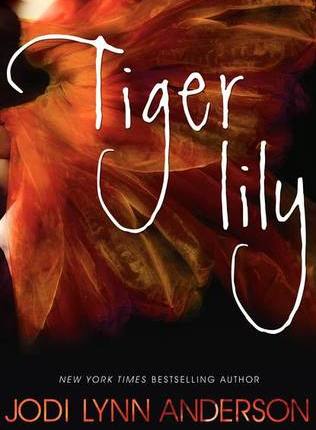
Tiger Lily by Jodi Lynn Anderson

Tiger Lily by Jodi Lynn Anderson

tigerlilyThis book is an absolutely magical re-telling of the story of Tiger Lily from Peter Pan. The narrator is the fairy, Tinker Bell.
I’ve always had a soft place in my heart for J. M.Barrie’s masterwork. Who among us hasn’t wanted to go to a place where you could remain young forever and never grow up?

Jodi Lynn Anderson writes that “never aging” magic of Neverland quite well: “Englanders had come to Neverland before. … The Englanders had the aging disease. As time went on they turned gray, and shrank, and, inexplicably, they died. It wasn’t that Neverlanders didn’t know anything about death, but not as a slow giving in, and certainly not an inevitability.” pg 13 (ebook)

Tiger Lily’s tribe may age, but how old they appear is contingent on something other than time. It’s curious and magical.

The lost boys come alive in this book with a wildness and unpredictability that I loved: “There was a joyfulness and- at the same time- a fragility about each of them. They were sloppy and uncared for and wildly alert and full of energy.” pg 61, ebook.

Despite their untamed natures, they are still children: “Straw beds had been separated haphazardly into different areas of the burrow, as if the boys hadn’t counted on wanting to live separately when they’d first built it, and only recently pushed themselves as far apart from each other as possible. Still, on one of the beds there was a worn home-sewn toy in the shape of a rabbit, and lying on a pillow, as if it had just been played with, a model of a ship.” pg 61, ebook.

Peter is the boy who has emotions but doesn’t understand them- perpetually young yet always on the verge of growing up.

He’s fiercely admired by his lost boys and, eventually, Tiger Lily: “Peter picked at his hangnail again. “Actually, I never get sad. It’s a waste of time, don’t you think?” Tiger Lily didn’t answer. She was impressed by the idea of deciding not to be sad. His words made him seem very strong. Impervious.” pg 67, ebook

Peter is still Peter in this tale. As far as girls go, he can be charming but also rude and aloof: “I think we could be good friends,” he said, falling into step with her. “It’s perfect because I wouldn’t fall in love with you, like I do with the mermaids. Girls always seem so exotic. But it would be okay with you, because you’re more like… you know. Not like a girl.” pg 77, ebook.

Tinker Bell was a sympathetic character in this book, rather than the spoiled, jealous creature that she is portrayed as in Peter Pan“A faerie heart is different from a human heart. Human hearts are elastic. They have room for all sorts of passions, and they can break and heal and love again and again. Faerie hearts are evolutionarily less sophisticated…. Our hearts are too small to love more than one person in a lifetime. … I tried to talk sense into my hard little heart. But it had landed on Peter, a creature two hundred times my size and barely aware of me, and there was no prying it loose.” pg 77-78, ebook.

Hook is extra creepy and villainous: “Neverland had called to him out of legends. A green place. A wild place. And most of all, a place where he’d never grow old. Most people in London hadn’t believed it existed, but some still insisted it did, and Hook had cast his lot with them. To get to the island, he’d begged, stolen, and eventually murdered.” pg 89-90, ebook.

And so is Mr. Smee. But, I’ll let Anderson tell you his story. She does a wonderful job of it.

The relationship between Tiger Lily, Peter, and Wendy makes a lot more sense in this story. It is less about any potential failings by the girls. The main source of conflict seems to be Peter’s emotional immaturity: “As you may have guessed already, Peter had a soul that was always telling itself lies. When he was frightened, his soul told itself, “I’m not frightened.” And when something mattered that he couldn’t control, Peter’s soul told itself, “It doesn’t matter.” pg 169, ebook.

The ending of this book was totally satisfying as well for all of the characters, even little Tinker Bell. I can’t say enough good things about it.

It’s easy to see why fairy tell retellings are so popular with books like Tiger Lily out there, waiting to be discovered.

Thanks for reading!

The Many Selves of Katherine North by Emma Geen

The Many Selves of Katherine North by Emma Geen

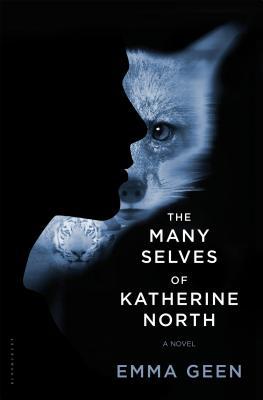
katherinenorthIn The Many Selves of Katherine North by Emma Geen, humanity has harnessed the power of consciousness and mechanized the ability to place that consciousness in different bodies at will.
Katherine is a teenager who works for a large research company. She’s the longest lasting “phenomenaut” (person who’s consciousness is put into the body of an animal) because she seems to be special.

The process of consciousness transfer seems to stop working when the brain ages and loses its plasticity. Despite her age, Katherine’s brain seems to be fine.

But then, one day, Katherine sees something strange when she’s out of her body… and perhaps she’s not as well as she imagined.

The Many Selves of Katherine North asks some pretty powerful questions like: What is consciousness? How does our physical body change how we perceive the world? What is reality?

I think that this story has the potential to open up a dialogue about these questions between readers who may not have considered them before. In that way, this is a very powerful book.

I did not like how the story flips back and forth between the present and the past. I think Geen was using the shifting timeline to build the mystery, but, because of the nature of Katherine’s many consciousness experiences, it made things rather confusing.

This is a complicated book. At times, maybe too complicated.

The richness and variety of Katherine’s experiences drives a wedge between her reality and the rest of humanity’s reality.

The reader really sees difference in this moment, when Katherine is preparing to go into work: “Later, I lie in bed quivering… because it’s only hours until I’m out of here. Here- not just a room but skin. How can other people call this their totality? There is so much more.” pg 19

Katherine captures the impossibility of explaining out-of-body experiences very succinctly here: “Because how do you cram the lived experience on to a page? The words available to me were never enough. Something would always slip the sentences. Human language developed around human bodies, it never quite fits other ways of being. pg 66

I loved all of the chapters when Katherine was in the body of an animal. In this one, she was a snake: “Old scents have imprinted upon the world like spoor into soft mud, the past blundering prey. I wonder if this is one reason many animals have a poor memory compared to humans. What’s the use in remembering when the world does it for you? pg 146 Fascinating.

Emma Geen included a disclaimer at the back of her book and it contained some of my favorite lines: “…what if there are other valid ways of knowing? What is the world is not one, but multitude, with as many ways of being as there are beings? What if literature were the opportunity to glimpse such refractions, thrown by the world as though from a diamond?” pgs 349-350 Loved that.

If you enjoyed The Many Selves of Katherine North, you may want to pick up The Night Circus by Erin Morgenstern or Mythago Wood by Robert Holdstock for more glimpses of worlds hidden within worlds.

Big thanks to Goodreads First Reads program, NetGalley, and Bloomsbury USA for providing me with an advance reading copy of this novel.

Thanks for reading!

Expecting Someone Taller by Tom Holt

Expecting Someone Taller by Tom Holt

expecting someone tallerExpecting Someone Taller by Tom Holt is a humorous fantasy novel based off of the Ring Cycle of Norse mythology.  It’s older (published in 1990) but I like reading pulp fantasy fiction, no matter its age.

Full disclosure: I know The Lord of the Rings better than the Norse mythological stories it is based on. Holt provides a very short synopsis of the myths for folks like me and I was grateful for it. Otherwise, I would have not understood what on earth was going on.

Holt is an English fantasy-humorist and, like Pratchett’s many offerings, I enjoy his books but never have laugh out loud moments. I don’t know if the humor is lost-in-translation or what.

I expect that those who are more familiar with the Norse myths and who enjoy subtle humor might really love this rather silly tale of Malcolm and the ring.

There were some memorable lines: “Ingolf eased the plain gold ring off his finger and passed it to Malcolm, who accepted it rather as one might accept some delicacy made from the unspeakable parts of a rare amphibian at an embassy function.” pg 7 Nice.

“The next morning, Malcolm thought long and hard before waking up, for he had come to recognise over the past quarter of a century that rather less can go wrong if you are asleep.” pg 15 Absolutely true in my experience too.

Malcolm figuring out how the Tarnhelm (a hat that can change the wearer into anything) works: “Make me,” he said aloud, “as handsome as it is possible to be.”… He stood for awhile and stared… “We’ll call that one Richard” (he had always wanted to be called Richard). He resumed his own shape (which came as a bitter disappointment) then said “Richard,” firmly. At once, the Most Handsome Man reappeared in the mirror, which proved that the Tarnhelm had a memory, like a pocket calculator.” pg 20-21

The difference between smiles: “The girl looked at him and smiled. Malcolm had come to believe that he was fairly well equipped to deal with smiles, but this was a new sort; not a happy, optimistic smile but a sad, wistful smile. It didn’t say, “Wouldn’t it be nice if…” like the stock delivery of a Rhinemaiden, but, “It would have been nice if…” which is quite different.” pg 117

Why humans are the worst pick for ring bearing: “And so you give this irregularity in your minds a name of its own. You call it Love, which is meant to make everything all right. Rather than try to sort it out or find a vaccine, you go out of your way to glorify it. I mentioned your art and your poetry just now. What are your favourite themes? Love and War.”…”Now be fair,” he continued, “can you honestly say that a member of a species with this ancestral fallibility should be allowed to rule the universe?” pg 160 Fair question.

If you enjoyed Expecting Someone Taller, you may want to pick up The Good Fairies of New York by Martin Millar (a modern day fantasy with fairies) or Anansi Boys by Neal Gaiman (a fantasy about gods and their descendants).

Thanks for reading!