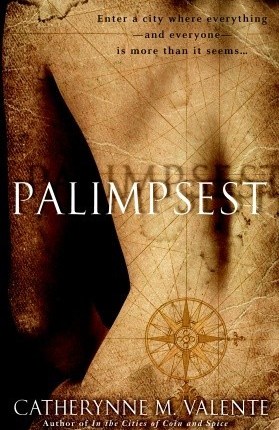
Palimpsest by Catherynne M. Valente

Palimpsest by Catherynne M. Valente

Sex and sleep with a marked individual is the way to the city of Palimpsest, a mystical and deadly place that exists beyond the borders of our world.

The first time you cross over, your spirit is bound with four other travelers. For what purpose, no one knows.

“Where you go in Palimpsest, you are bound to these strangers who happened onto Orlande’s salon just when you did, and you will go nowhere, eat no capon or dormouse, drink no oversweet port that they do not also taste, and they will visit no whore that you do not also feel beneath you, and until that ink washes from your feet… you cannot breathe but that they breathe also.” pgs 4-5, ebook.
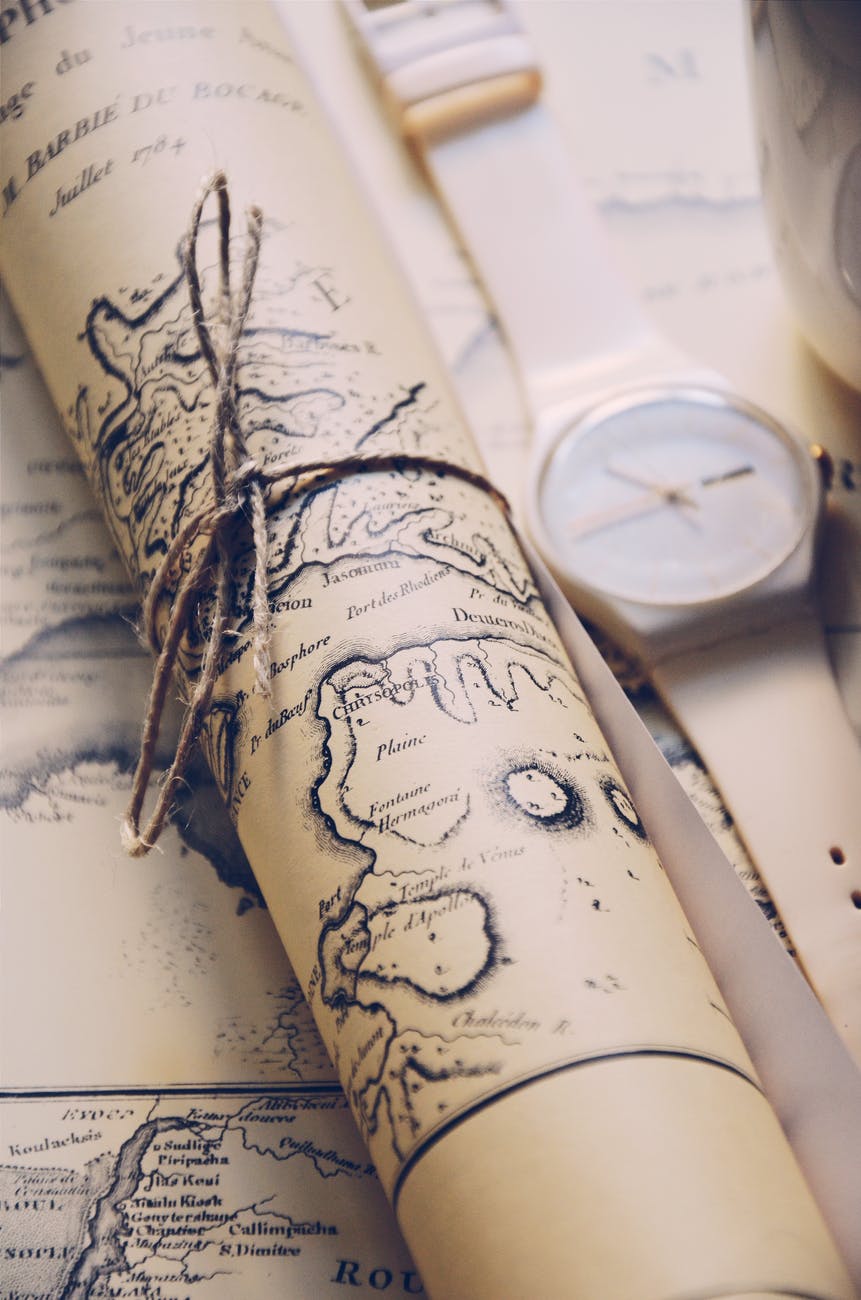
Photo by Ekrulila on Pexels.com

A visit to the city leaves a visible mark on your skin, a map of the location you visited. You cannot travel beyond the borders of where you have already been, unless you sleep with someone who has a different map.

“It’s like a ticket. And once you’ve bought your ticket, and been to the circus, ridden the little red train, then you can sort of see other people who’ve done it, too. They walk a certain way. Smell a certain way. Their whole body becomes like an accent.” pg 42, ebook.

Palimpsest is so beyond belief, some people who have been there can’t believe it is more than a dream, at first.

“But it’s a dream,” Oleg insists. “It was fun. We won’t even remember it in the morning.” “You don’t know anything, Oleg,” sighs Gabriel. pg 73, ebook.
Photo by Dapo Abideen on Pexels.com

But, no one has ever woken up from a dream covered in blood.

Palimpsest showcases Catherynne Valente’s mammoth imagination and descriptive powers. The pieces of the city she allows readers to glimpse draw you in and make you want to see more.

Each location is unique, has its own backstory and feel. It’s an extraordinary work of urban fantasy.

The gates of sleep are two, a gate of ivory and a gate of horn. He had been horrified as a child, picturing a great door of tangled antlers and tusks. Surely that was the gate of Palimpsest.” pg 144, ebook.
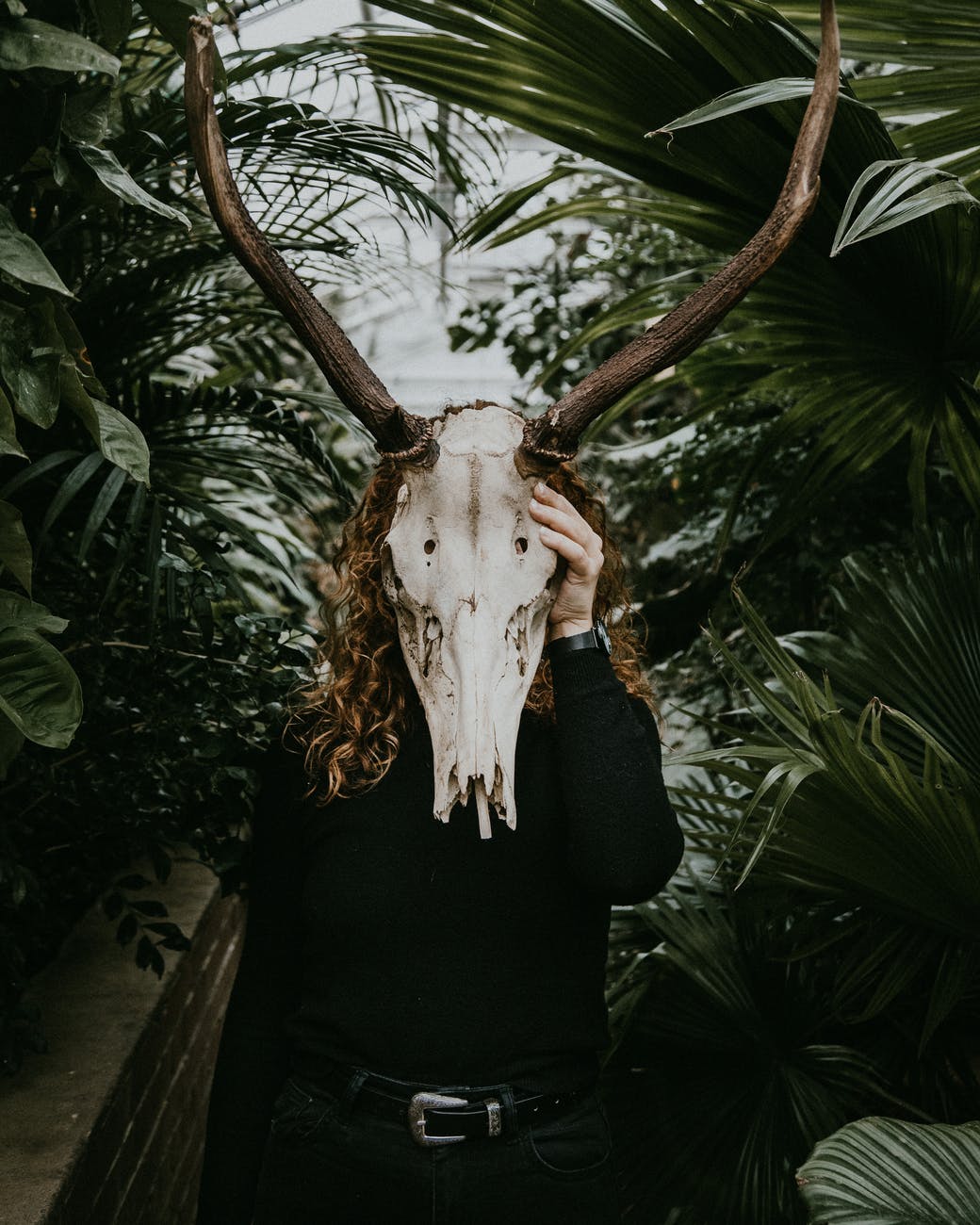
Photo by Sinitta Leunen on Pexels.com

It’s disturbing to read the main characters become more and more desperate to re-enter Palimpsest.

The way they seek out sex with strangers reminded me of a drug addict’s desperate search. The cost of entering the city is too high.

It ruins peoples’ lives.

I read Palimpsest years ago and couldn’t finish it then because the narration made me feel sick.

I think the trouble was that I used to put myself into the stories I read, imagining myself as the hero, villain, every part.

I’ve ceased doing that, at the cost of some grand adventures. But, in hindsight, it also allows me to navigate my way through stories I would not have been able to touch back then.

Because of its content, I’d recommend Palimpsest only for mature readers and fans of urban fiction. It’s a strange trip, but full of wonders if you can endure the cost to get there.

Thanks for reading!

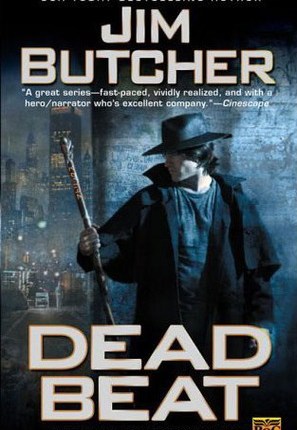
Dead Beat (The Dresden Files #7) by Jim Butcher

Dead Beat (The Dresden Files #7) by Jim Butcher

This entry in The Dresden Files has wizard Harry Dresden fighting necromancers to protect his friends and contemplating his own mortality. We also get to hang out with a few side characters and see a fascinating new side of Bob, who just happens to be one of my favorite characters in the whole series.

“Because that Kemmler was a certifiable nightmare,” Bob said. … That got my attention. Bob the skull was an air spirit, a being that existed in a world of knowledge without morality. He was fairly fuzzy on the whole good-evil conflict…” pg 39, ebook.

Photo by cottonbro on Pexels.com

There’s some ridiculousness and danger to the story, but mainly Harry-angst and the perpetual struggle against darkness.

“And despite every religious faith, the testimony of near-death eyewitnesses, and the imaginations of storytellers throughout history, death remains the ultimate mystery. No one truly, definitely knows what happens after.” pg 30, ebook.

And a few old enemies, of course: “She laughed harder, and the sound of it spooked the hell out of me. … There was no warmth in it, no humanity, no kindness, no joy. It was like Mavra herself…”pg 33, ebook.

Photo by Lachlan Ross on Pexels.com

Harry is still dealing with his disabled hand, which he burnt the heck out of in the last book. “I had a responsibility to keep that destructive strength in check; to use it to help people, to protect them. It didn’t matter that I still felt terrified. It didn’t matter that my hand was screaming with pain.” pg 65, ebook.

Also, some of Harry’s previous decisions about vampires and the Wizard Counsel have some serious consequences. But, anybody who’s been reading this series for awhile, knew that that was only a matter of time.

And there’s the small matter of a certain silver coin that Harry picked up a few books ago and buried under the concrete in his lab. But whatever is in the coin can’t get out of the circle he put it in… right?

“I just keep getting more wounded and tired. … I’m not some kind of superhero. I’m just me. And I didn’t want any of this.” pg 131, ebook.

Photo by Daria Shevtsova on Pexels.com

If you haven’t read this series, I highly recommend you start with the first book. The stories build on each other and become quite satisfying, in my opinion.

The ending of this one contains some ridiculousness that I was not prepared for, but after some thought about the series, I’ve decided that it doesn’t matter.

There is very little Jim Butcher could write in here that I wouldn’t like. Somewhere along the line, I’ve become quite a fan of The Dresden Files.

I didn’t expect it. But that’s the truth.

Check out my other reviews of the series:

Storm Front (The Dresden Files, #1) by Jim Butcher

Fool Moon (The Dresden Files #2) by Jim Butcher

Grave Peril (The Dresden Files, #3) by Jim Butcher

Summer Knight (The Dresden Files #4) by Jim Butcher

Death Masks (The Dresden Files, #5) by Jim Butcher

Blood Rites (The Dresden Files, #6) by Jim Butcher

Thanks for reading!

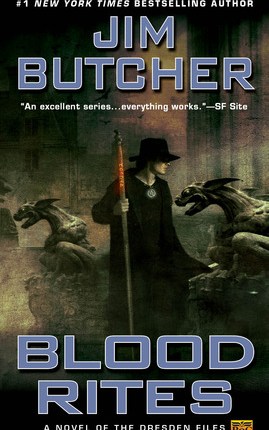
Blood Rites (The Dresden Files, #6) by Jim Butcher

Blood Rites (The Dresden Files, #6) by Jim Butcher

In this entry in The Dresden Files, the vampire Thomas asks Harry to help his friend, an adult film maker. People keep dying on set and Thomas thinks its magic-related.

Part-mystery, part-comedy and 100 percent wizard, I think Blood Rites is one of the best in the series so far.

“I was agreeing to help him and taking a job, just as though Thomas were any other client. It probably wasn’t the smartest thing I’d ever done. It had the potential to lead to lethally unhealthy decisions.” pg 17

Photo by Sharon McCutcheon on Pexels.com

As usual, Harry can’t seem to get his life together long enough to get anything done. He runs from crisis to crisis. But, he’s become self-aware enough to realize what he’s doing.

“My worry and tension slowly grew, and as they did I took a perverse comfort in the familiar emotions. It actually felt good to feel my survival instincts put me on guard against premature mortality. Hell’s bells. Is that insane or what?” pg 93

We learn a lot more about Harry’s personal life in this story.

“The hardest lesson a wizard has to learn is that even with so much power, there are some things you can’t control. No matter how much you want to.” pg 353.

Photo by Ruvim on Pexels.com

And we also get to meet a shady character or two from his past.

Highly recommended for urban fiction fans.

Check out my other reviews of the series:

Storm Front (The Dresden Files, #1) by Jim Butcher

Fool Moon (The Dresden Files #2) by Jim Butcher

Grave Peril (The Dresden Files, #3) by Jim Butcher

Summer Knight (The Dresden Files #4) by Jim Butcher

Death Masks (The Dresden Files, #5) by Jim Butcher

Thanks for reading!

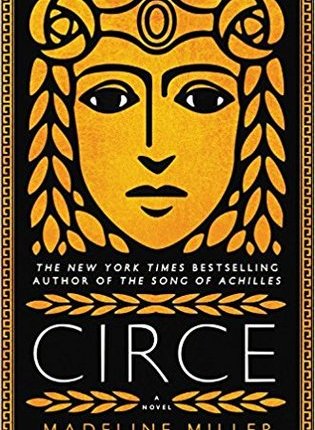
Circe by Madeline Miller

Circe by Madeline Miller

Circe is an epic fantasy that reads like a historical fiction novel, based on the Greek mythology of the witch of Aiaia, the daugher of a Titan- Circe.

I minored in the classics at university and one of my favorite classes was mythology. I love taking apart stories that mirror humanity’s foibles and try to explain the origin of some of life’s harder truths.

Photo by jimmy teoh on Pexels.com

In the war between the Titans and the Olympians, a creation story that could be interpreted to mean the ascension of modern culture over more ancient superstitions, the Olympians triumph. But the Titans are not wiped off the face of the earth.

“Beneath the smooth, familiar face of things is another that waits to tear the world in two.” loc 272, ebook.

Some of the Titans’ powerful and mysterious children play central roles in the great mythological stories. Circe is one of those.

“They called me nymph, assuming I would be like my mother and aunts and cousins. Least of the lesser goddesses, our powers were so modest they could scarcely ensure our eternities. We spoke to fish and nurtured flowers, coaxed drops from the clouds or salt from the waves.” loc 102, ebook.

Photo by ArtHouse Studio on Pexels.com

She began her life in the halls of Helios, a Titanic deity who was a god of the sun, much like Apollo.

“At my father’s feet, the whole world was made of gold. The light came from everywhere at once, his yellow skin, his lambent eyes, the bronze flashing of his hair. His flesh was as hot as a brazier, and I pressed as close as he would let me, like a lizard to noonday rocks.” loc 158, ebook.

Compared to her great father and gorgeous, manipulative mother, Circe was nothing- one of the many faceless children of the greater gods, whose future was destined to be a wife and then mother to more godlings.

Circe’s future is not as simple as all that.

She, and her brothers and sister, have a unique power that no other gods possess. They have the ability to harness the plants and power of the earth, to create potions and salves with miraculous effects. They call it: pharmakeia.

Photo by Daria Shevtsova on Pexels.com

Modern readers can recognize the roots of the word “pharmacy” in the name.

“Pharmakeia, such arts are called, for they deal in pharmaka, those herbs with the power to work changes upon the world, both those sprung from the blood of gods, as well as those which grow common upon the earth.” loc 909.

It is a power no one understands and, because of its mysteriousness, it makes even the gods afraid.

There is more to Circe’s story than pharmakeia. She also interacts with Hermes, Daedalus and Odysseus. She creates a god and a monster. She shakes the foundation of the oceans.

Photo by Kevin Menajang on Pexels.com

Highly recommended for those who enjoy mythology or historical fiction. It will transport you to a world where gods and goddesses walk the earth and humanity can do nothing but tremble in their shadows.

Thank you to NetGalley and Little, Brown and Company for an advance, digital copy of this book.

Thanks for reading!

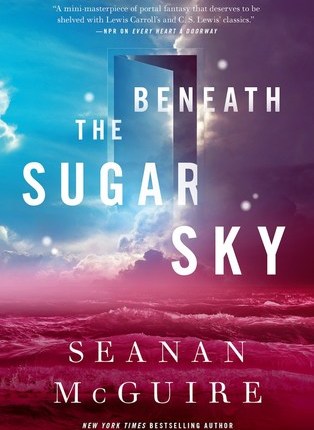
Beneath the Sugar Sky (Wayward Children, #3) by Seanan McGuire

Beneath the Sugar Sky (Wayward Children, #3) by Seanan McGuire

Beneath the Sugar Sky takes readers back to the world of Eleanor West’s Home for Wayward Children, but not to a moment in time before the events of the first book. It is a sequel rather than a prequel.

I found it strangely satisfying in a way that Down Among the Sticks and Bones was not.

“They can be hard for their families to understand, those returned, used-up miracle children. They sound like liars to people who never had a doorway of their own.” pg 7, ebook.

And instead of just one world other than our own, readers get to experience a couple in Beneath the Sugar Sky.

Photo by ArtHouse Studio on Pexels.com

The trouble begins when someone from a different world shows up in the everyday world and asks to see her mother. The thing is, her mother died in the real world some time ago.

The world that the girl comes from doesn’t pretend to follow time the normal way- it’s a nonsense world. Now, this visitor is disappearing and needs help from some of the residents of Eleanor West’s Home before she vanishes altogether.

“That makes no sense at all,” she said. “That means it may well work. Go, my darlings, and bring your lost and shattered sister home.” pg 29, ebook.

Photo by Yousaf Abbasi on Pexels.com

A new character in this book is Cora, a girl who went to a water world. She has an insightful way of viewing reality and seems able to see to the heart of people with little trouble: “They always had their shoes, their scissors, whatever talisman they wanted to have to hand when their doorways reappeared and they had to make the choice to stay or go.” pg 19, ebook.

Kade, Christopher and Nancy are in this book as well. “So many different doors, and yet here you are, all of you together, trying to accomplish the impossible.” pg 40, ebook.

Photo by Antonio Dillard on Pexels.com

I recommend reading Every Heart a Doorway before this book, to get the most enjoyment out of it. It’s perfect for young adults or readers who like fairy tales.

Thanks for reading!

The Lady Who Plucked Red Flowers Beneath the Queen’s Window by Rachel Swirsky

The Lady Who Plucked Red Flowers Beneath the Queen’s Window by Rachel Swirsky

The Lady Who Plucked Red Flowers Beneath the Queen’s Windowis a fantasy short story about how much one’s world view is shaped by culture, the time period in which one lives, and love.

The main character, Naeva, is a powerful magician. She serves the queen of a matriarchal society to the best of her capability.

Naeva’s love for the queen is used to trap her soul, so she can be summoned from beyond the grave to serve forever.

Photo by Maria Orlova on Pexels.com

“The Queen needs you, Naeva. Don’t you love her?” Love: the word caught me like a thread on a bramble. Oh, yes. I loved the queen. My will weakened, and I tumbled out of my body. Cold crystal drew me in like a great mouth, inhaling.

This binding is problematic, because the queen doesn’t live forever.

I was captivated by this story. It surprised me because short stories aren’t usually my thing.

During a bout of insomnia one night, I read The Lady Who Plucked Red Flowers in one sitting.

You can read it too, if you’d like. It is available in its entirety online: https://subterraneanpress.com/magazin…

There are subtleties in the story about feminine and masculine power, but also mankind’s penchant for judging current culture as superior to all others that have ever or will ever exist.

Photo by Teddy Yang on Pexels.com

“It was becoming increasingly clear that this woman viewed me as a relic. Indignation simmered; I was not an urn, half-buried in the desert. Yet, in a way, I was.”

Naeva suffers not only because she’s trapped and cannot die, but also because her matriarchal culture is left behind in the depths of time.

“I had never before been aware of the time that I spent under the earth, but as the years between summons stretched, I began to feel vague sensations: swatches of grey and white along with muted, indefinable pain.”

Photo by Aistu0117 Sveikataitu0117 on Pexels.com

She changes, but reluctantly and slowly. And love has as large a role in shaping her development as it did in her entrapment.

It is a wonderful fairy tale. I highly recommend it for sleepless nights or a boring lunch hour.

Thanks for reading!

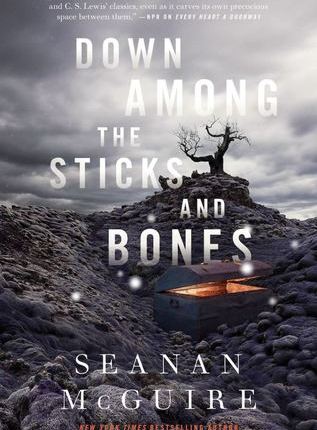
Down Among the Sticks and Bones (Wayward Children, #2) by Seanan McGuire

Down Among the Sticks and Bones (Wayward Children, #2) by Seanan McGuire

Down Among the Sticks and Bones is the back story of the twins, Jack and Jill, and the dark world they wandered through.

It takes place before the events of the first book in the series, Every Heart A Doorway.

The reader learns why the twins are so different and how their strange and disturbing other world opened its door to them in the first place.

The majority of the problem was Jack and Jill’s parents. They had children for reasons other than love.

The father wanted to children to move up in his career. The mother wanted to improve her status with her group of female friends: “A person may look at someone else’s child and see only the surface, the shiny shoes or the perfect curls. They do not see the tears and the tantrums, the late nights, the sleepless hours, the worry. They do not even see the love, not really.” pg 13.

Photo by RODNAE Productions on Pexels.com

So, instead of loving Jack and Jill for themselves, their parents instead seek to mold them into a perfect of ideal of what they thought their children should be.

The one bright spot in the twin’s childhood is their grandmother, Louise Wolcott. Chester and Serena, Jack and Jill’s parents, call her in desperation after the birth of the children because they have no idea what they’re doing or how to balance their careers while raising children.

Louise steps in without complaint. She is quite easily my favorite character in the book: “There’s nothing tiring about caring for children you love like your own,” said Louise… pg 34.

Despite Grandmother Louise’s best efforts, Jack and Jill end up fairly emotionally stunted from their parents’ dysfunction. The twin’s discovery of another world leads to some hard lessons about love, belonging and consequences.

“The Moors were beautiful in their own way, and if their beauty was the quiet sort that required time and introspection to be seen, well, there was nothing wrong with that. The best beauty was the sort that took some seeking.” pg 171.

Photo by Lachlan Ross on Pexels.com

I enjoyed this story. But, I think it should have been combined with Every Heart A Doorway.

I felt like so much of the plot of this book was given away in the first, by what happens. It would have been more enjoyable to learn about Jack and Jill’s Moors in flashbacks rather than a separate story.

That being said, it is a good enough young adult tale for what it is. The fairy tale quality to it is undeniable.

Recommended for readers who like a dark undercurrent of emotion, coming-of-age and self knowledge in their fairy tales. If you liked this book, you may also enjoy A Monster Calls.

One may be better served reading this book before Every Heart A Doorway. I think, if I had read this first, I may have enjoyed it more.

Thanks for reading!

Every Heart a Doorway (Wayward Children #1) by Seanan McGuire

Every Heart a Doorway (Wayward Children #1) by Seanan McGuire

everyheartWhat if children actually fell into other worlds, like Alice in Wonderland or the Pevensies into Narnia, far more often than anyone realized? What if those worlds were superior in every way to the normal, mundane world- not in that they were in heaven, but the child felt finally at home?

And what if those worlds cast the children out, to live in the “real world” again? It might not be a pretty picture.

That is why Eleanor West started a home for children who went away, came back and didn’t belong anymore. All of those reasons, but also, because she went away once too.

“Eleanor West spent her days giving them what she had never had, and hoped that someday, it would be enough to pay her passage back to the place where she belonged.” pg 13.

I loved the basic premise of this story. All of the worlds the children went to were so different, but the fact that the worlds were “other,” tied them altogether.

“‘Real’ is a four-letter world, and I’ll thank you to use it as little as possible while you live under my roof.” pg 20

This story has the drama of a bunch of misfit children all trying to get along, but also the mystery of these other worlds. There’s also a deeper mystery that develops when one of the children seems determined to find a way home- at any cost.

“You will not all find your doors again. Some doors really do appear only once, the consequence of some strange convergence that we can’t predict or re-create. They’re drawn by need and by sympathy. Not the emotion- the resonance of one thing to another. There’s a reason you were all pulled into the worlds that suited you so well.” pg 97

I was concerned when I started this book that it would be too much like Miss Peregrine’s Home for Peculiar Children. That was a needless concern.

They are similar in that both contain orphanages for extraordinary children and fantasy has a large part in the story. But that was where I felt the similarities ended.

I also found myself wishing that Every Heart a Doorway was written for adults rather than young adults. This was a fairytale that could have used some darker twists to it.

Seanan McGuire didn’t make this story all rainbows and gumdrops, but I would have liked it to be edgier.

I loved the “longing to belong” feeling McGuire wove into the book. It seems to me to be a quintessential teenage feeling, but I suppose everyone wants to feel completely at home- whatever that might mean.

For some people, that longing is attached to a place, another person, or to the drug addict, it’s the next hit. Other people crave a moment in time, or a particular period in their life.

I would say, on second consideration, “longing to belong” is perhaps the human condition itself.

Recommended for fans of Miss Peregrine’s Home for Peculiar Children. If you’re looking for a darker, more adult fairytale, I’d recommend The Magicians by Lev Grossman.

Thanks for reading!

The Book of Speculation by Erika Swyler

The Book of Speculation by Erika Swyler

Simon works in the reference section at a struggling library in Maine, whose biggest draw is a whaling archive. He’s hard up for money and his historic home on the coast is in such disrepair that it’s about to fall into the ocean.

One day, Simon receives a very old book in the mail. Strangely, it has some of his family member’s names in it.

Photo by Suzy Hazelwood on Pexels.com

The text describes a circus, a boy who can’t speak, and a girl who can hold her breath so long that they call her a mermaid.

But, what does this have to do with his family? And why do so many of the people in the book die on the same day?

In addition to the mystery, The Book of Speculation includes one or two love stories: “Redheaded and pretty, Alice has her father’s smile and a way with kids. She’s better with people than I am, which is why she handles programming and I’m in reference.”pg 9, ebook.

Photo by Maycon Marmo on Pexels.com

I did not like how the reference section was stereotypically depicted as the “bad with people” part of the library. I have a soft spot in my heart for those reference types, having been one myself in my previous job. 🙂

Also, for being a librarian, Simon doesn’t act very librarian-y.

Take this part when he receives the mysterious book: “The box contains a good-sized book, carefully wrapped. .. A small shock runs through me. It’s very old, not a book to be handled with naked fingers, but seeing as it’s already ruined, I give in to the quiet thrill of touching something with history.” pg 15.

Photo by cottonbro on Pexels.com

No self-respecting archivist would do that. “Already ruined” so who cares? I don’t think so.

The fantasy/magic portions of this book are subtle and written so that one could almost believe that it was real.

Take Amos’ (one of the characters from the old book) ability to disappear: “People may live for a century without discovering the secret of vanishing. The boy found it because he was free to listen to the ground humming, the subtle moving of soil, and the breathing of water- a whisper barely discernible over the sound of a heartbeat. Water was the key.” pg 18 ebook.

Photo by Jess Vide on Pexels.com

The history recorded in the old book is revealed to the reader through a series of flashbacks. That bothered some of my friends on Goodreads but the circus folk stories are my favorite parts of this book.

The characterizations are ok, nothing extraordinary.

My favorite minor character, Benno, could have used more fleshing out: “After a time Benno climbed down from the wagon. “You are my friend and you are kind,” he said quietly. “More than is good. I was taught to watch for gentle souls, as they’ve not the wit to look after themselves.” pg 124, ebook.

Some similar reads (perhaps a bit more magical than this): The Golem and the JinniMagonia or The Mermaid’s Sister.

Thanks for reading!