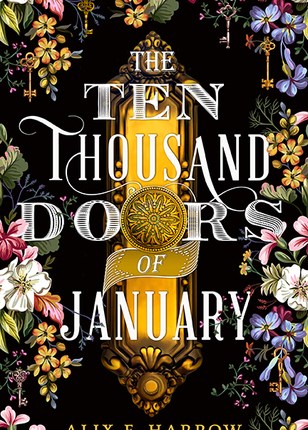
The Ten Thousand Doors of January by Alix E. Harrow

The Ten Thousand Doors of January by Alix E. Harrow

The Ten Thousand Doors of January is a beautiful portal fantasy novel wherein our heroine learns the world contains far more magic than she imagined and so does she.
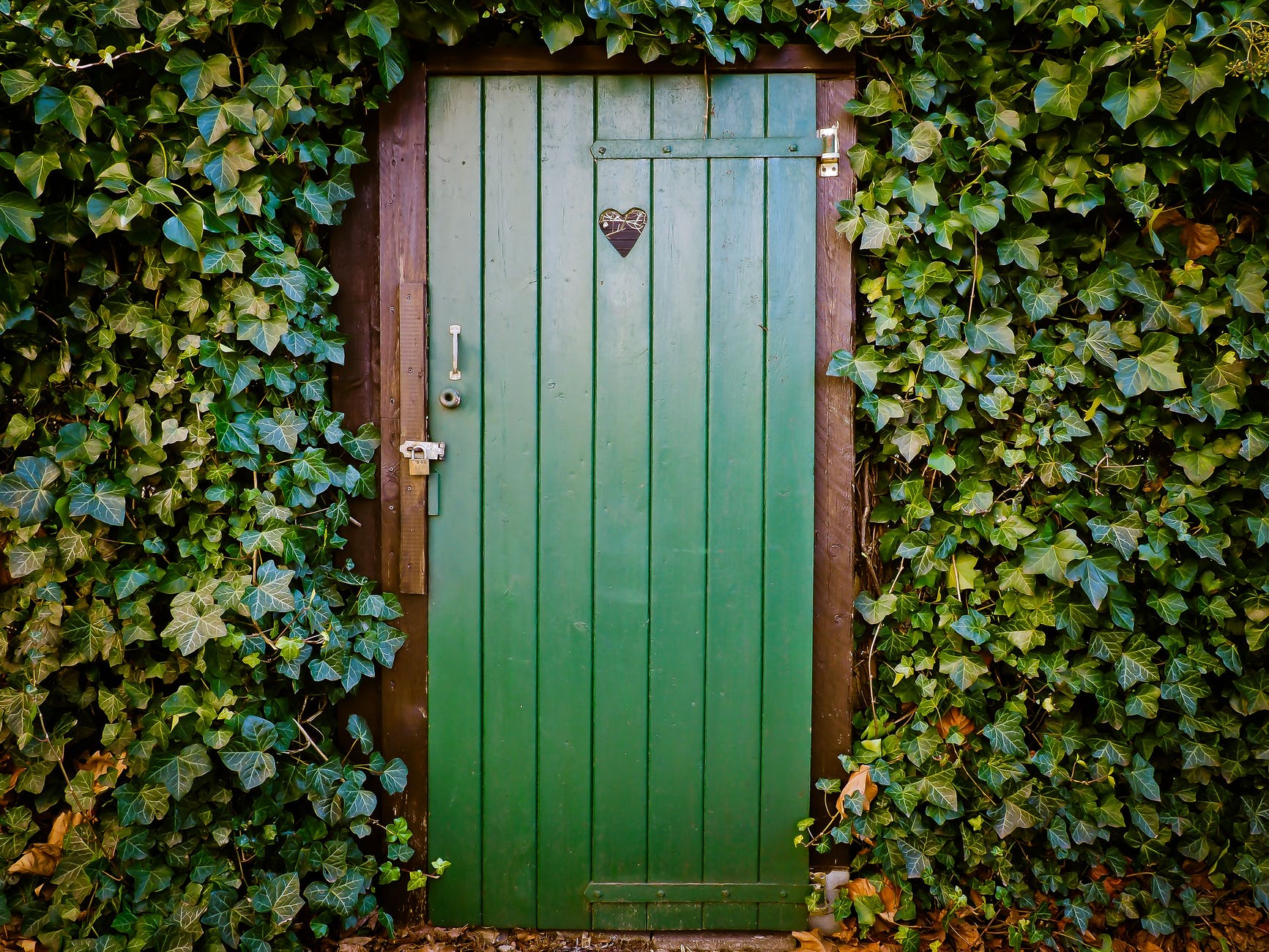
Photo by Pixabay on Pexels.com

“If we address stories as archaeological sites, and dust through their layers with meticulous care, we find at some level there is always a doorway. A dividing point between here and there, us and them, mundane and magical. It is at the moments when the doors open, when things flow between the worlds, that stories happen.” pg 2

January has never quite fit into the glittering and privileged world of her fabulously wealthy guardian, Mr. Locke. She perpetually waits for her father to return from his many voyages where he’s constantly seeking lost treasures for his demanding employer.

She has very few friends, except Samuel, the local grocer’s son, and, eventually, a feisty hound named Sinbad, “Bad” to those who know him. In her enforced solitude, January has a lot of time to herself. One day, she discovers something strange in a field.
Photo by Irina Iriser on Pexels.com

“I almost didn’t notice the Door at all. All Doors are like that, half-shadowed and sideways until someone looks at them in just the right way.” pg 8

Once she has found the way to another world, January’s life is never quite the same.

I really enjoyed this debut novel by Alix Harrow. The writing is beautiful and most of the book acts as an homage to reading as an escape.

“It smelled of salt and age and adventure. It smelled like another world, and I want to return right this minute and walk those strange streets. Instead, I added articulately, “I liked it.” pg 13
Photo by Harrison Haines on Pexels.com

It also asks the reader to consider the magic of thresholds. The two-headed Roman god, Janus, from which we get the name of the month, January, had an interesting place in the pantheon. Though he didn’t necessarily have a priest dedicated to only him, Janus would be invoked at the start of each religious ceremony, no matter who the ceremony was dedicated to. It was appropriate because Janus holds the authority over beginnings and endings.

He also has a mystical association with the conscious and subconscious mind. The two faces of the god coincide to the two portions of a person’s psyche. Janus can symbolize the unification of these two minds in order to become something greater.

Photo by Octoptimist on Pexels.com

It relates to this story as January comes of age and claims her own, very unique, abilities as well as discovering her mysterious past.

It is also somewhat of a love story: “It’s a profoundly strange feeling, to stumble across someone whose desires are shaped so closely to your own, like reaching toward your reflection in a mirror and finding warm flesh under your fingertips. If you should ever be lucky enough to find that magical, fearful symmetry, I hope you’re brave enough to grab it with both hands and not let go.” pg 91

Photo by Ashley Williams on Pexels.com

Highly recommended for readers who enjoy fantasy. There’s plenty of magic and escape to enjoy in these pages.

Thanks for reading!

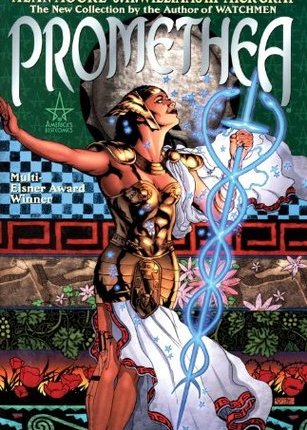
Promethea, Vol. 1 by Alan Moore

Promethea, Vol. 1 by Alan Moore

Promethea is a brilliant fantasy graphic novel by the legendary Alan Moore. It follows a woman who is researching a story for her thesis, only to discover that the story actually lives in the imagination and can explode into the real world in surprising and mystical ways.

“Tell me, child, what is your name?” “Promethea.”

Photo by Hert Niks on Pexels.com

It is a clever, gender-bent retelling of Prometheus. But, it presents the exploration and knowledge of the mystical worlds of the qabalah as Prometheus’ gift to the world, instead of the usual literal interpretation of the gift of fire to light the night.

It seems to be Promethea’s destiny to bring fire and knowledge back to the imagination of humanity in order to change the world forever for the better.

“I am Promethea, the rumored one, the mythic bough that reason strains to bend. I am that voice left, once the book is done… I am the dream that waking does not end.”

Photo by Suvan Chowdhury on Pexels.com

To free her conditioned mind from the limitations of this reality, the woman, now bearing the incarnation of Promethea, needs to learn from her previous incarnations. If she doesn’t quickly grasp the secrets of the four sacred weapons, the cup, sword, pentacle and wand, Promethea’s ancient enemies will rip her to pieces.

“Humans are amphibious, Sophie. That means they live in two worlds at once: matter and mind. Yet many people only notice the solid world they have been conditioned to think of as more real while all about them diamond glaciers creak and star-volcanoes thunder.”

This graphic novel is pretty far out there. I really liked the mythic and occult themes, and strong female characters.

Photo by Erik Mclean on Pexels.com

There’s some near nudity, but nothing too ridiculous. One of the incarnations of Promethea was brought into being by an author who used words and his imagination to shape his mistress into something more. Because of this sexual-themed awakening, she only wears a sheet, but it covers all the wobbly bits. Barely.

Highly recommended for adult readers who like fantasy graphic novels. There are few authors who write such themes better than Alan Moore.

Thanks for reading!

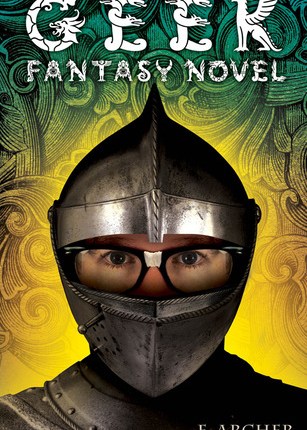
Geek Fantasy Novel by E. Archer

Geek Fantasy Novel by E. Archer

This book is a meandering, young adult novel that takes the reader into weird fantasy worlds through the power of wishes and on an epic quest by an unexpected hero who strives to make everything right, when things continually go wrong.

Along the way, you experience fairies, snow queens, the undead, and plenty of teen angst.

“(Ralph’s parents) were, in fact, endlessly tolerant — except when it came to their one ironclad rule: Ralph must never, ever, make a wish. Not under any circumstances whatsoever.” pg IV

Photo by Isabella Mariana on Pexels.com

I thought I would enjoy this story more than I did. The trouble is I don’t feel like the author successfully managed to tie the different pieces of the story together. It was disjointed and strange, but not in a good way.

That might appeal to some readers, but not me.

“I think she really wants to be the characters she reads about.” “Well, I guess that’s the point of it all,” Ralph said, out of dork solidarity. pg XXIV

Some of the details of the fantasy worlds were amusing and most certainly will appeal to young adult and reluctant readers.

“These tree-homes are lovely to look at, but so intricate that fairies spend almost all of their waking hours building and maintaining and getting lost in them. Which is a shame, really, since that leaves them so much less time for gamboling about meadows, visiting wishing wells, leaving money in return for teeth, and such.” pg CVII

Photo by Javon Swaby on Pexels.com

In the way it wandered through completely different fantasy worlds, it reminded me of The 13½ Lives of Captain Bluebear… until the unexpected ending.

“In a wish, when one is pursuing one’s greatest desires, one isn’t killed by microbes. One is killed by monsters. That’s what makes it so great.” pg CXXII

Recommended, with reservations, for young adult readers who are more interested in the journey than character building.

Thanks for reading!

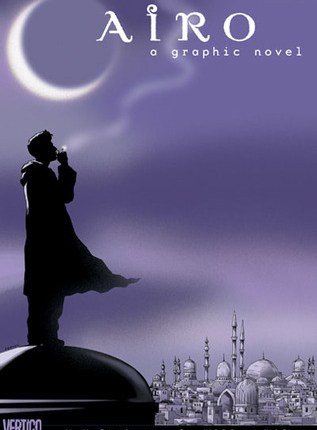
Cairo by G. Willow Wilson

Cairo by G. Willow Wilson

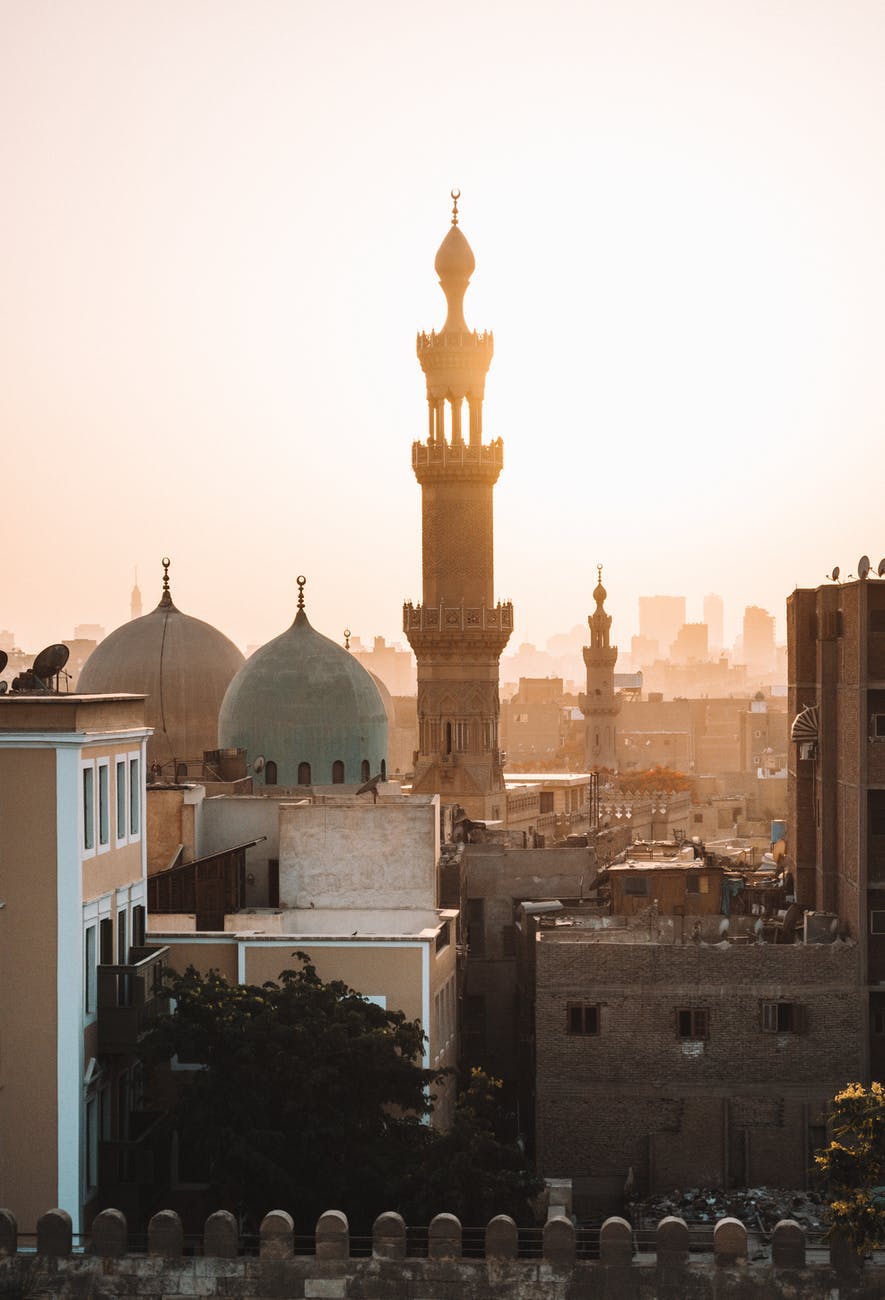
Cairo is an urban fantasy graphic novel set against the backdrop of the desert city of the same name. It has magical creatures, confused young men, drug dealers, magicians, Israeli soldiers and more.

Everyone in this story is looking for something. If it’s not a magical hookah, it is a search for love, truth, their higher self or more power. I suppose the entire story could be used as a reminder that “wherever you go, there you are”.

Photo by Alex Azabache on Pexels.com

“I wanted to do something. Get away from self-obsessed first world crap. I felt like the monoculture was suffocating me. I didn’t want to get stuck where I was. You know that feeling?” “I know it. But I do not think you’ll find what you are looking for in Cairo.” “Why’s that?” “Because a lot of us are stuck here.”

I was drawn to this graphic novel because of the teasers that promised mythology mixed with fantasy. It does contain that, but everything felt so rushed. Readers didn’t get the context of any of it. We’re just thrust into a world that doesn’t make much sense and spend much of the story grasping at straws of understanding.

In a way, it is much like real life. However, I prefer my graphic novels to be more of an exercise in escapism than a mirror for real life.

Give me layered worlds, complex story lines, nuanced characters and deep-seated meaning. I felt Cairo reaching for those things, but not quite getting there.

Photo by Deep Kumar on Pexels.com

We do have quite a number of main characters, which, by its nature, makes the story more complex. But, in this case, I felt that more was not better because all of the characters felt so one-note.

The exception to this classification was Shams, the jinn. We get glimpses into his millennias-long life, relationships to other storied characters, guardianship of a sacred object and spiritual leanings. Even then, I wanted more.

“Welcome to your new home, oh jinn. We’ll talk again when you are more reasonable. Take all the time you need.”

The illustrations are done in black and white, and feel rather gritty. I imagine the whole thing could have taken on a completely different character with a couple good punches of color.

Photo by Olha Ruskykh on Pexels.com

My favorite part was when one of the main characters reaches for a hero’s sword in a test of faith. G. Willow Wilson, the author, uses a poem by Hafiz to put words in the hero’s mouth as he strives to touch another reality and lay claim to the magical blade.

“The place where I am right now… was circled on a map for me.”

Though the translation Wilson used varies from the version I am familiar with, which reads: “This place where you are now, God circled on a map for you.”

Still, it is a beautiful sentiment. Rather like the intention, if not execution, of this graphic novel.

Thanks for reading.

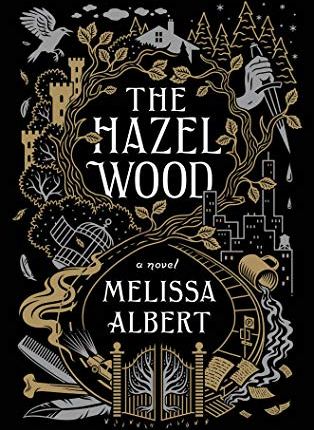
The Hazel Wood by Melissa Albert

The Hazel Wood by Melissa Albert

Alice and her mother live their lives on the road. Everywhere they go, they’re haunted by misfortune. Alice calls it bad luck. It could be something worse.

“We moved at least twice a year and sometimes more, but the bad luck always found us.” pg 12, ebook

Her grandmother, Althea Proserpine, was the creator of a whispered-about collection of fairy tale stories. For almost her entire life, Alice has wanted to read the collection but her mother forbids it and copies are impossible to find. Althea lives the life of a hermit on a secluded property called the Hazel Wood.

Photo by veeterzy on Pexels.com

“My grandmother’s estate, which I’d only seen in photos, felt like a place I remembered from some alternate, imaginary childhood. One where I rode horses and went to summer camp.” pg 10, ebook

One day, Alice’s mother disappears and, in order to find her, Alice is going to have to go into the Hazel Wood, a place that holds secrets darker than she’s ever imagined.

“My situation hit me hard. Homeless. Without my mom. Being stalked, by something I couldn’t see the breadth of or understand.”pg 79

Melissa Albert has created a fairy tale for young adults that I think would have been more fun if she’d gone the non-YA route.

My favorite parts were the fantasy stories themselves within the story. I found them to be very reminiscent of Catherynne Valente, whom Albert lists as one of her favorite authors in the back of this book.

They’re hard-edged, glittering things. These are creepy fairy tales, not made for children.

Photo by Maria Orlova on Pexels.com

“On a cold day in a distant kingdom, a daughter was born to a queen and king. Her eyes were shiny and black all over, and the midwife laid her in the queen’s arms and fled.” pg 69

I can understand why some readers didn’t like this book with its twisted stories. They’re unnerving, popping in and out of the narrative. And, as I said before, I felt like this book twisted itself into knots trying to be a young adult read when, in reality, I think it could have just been dark fantasy.

There’s a love interest who, I thought, sort of gets in the way except as a young adult plot device. 

The main character, Alice, is a cold young woman with little concern for anyone in her life except her mother. I can also see why readers didn’t warm up to her, but it didn’t bother me all that much. I figured, with someone moving around as much as she did, how would Alice figure out how to have normal relationships? It fit.

Photo by Rachel Claire on Pexels.com

In conclusion, I liked The Hazel Wood but didn’t love it. Personally, I think it’s worth the read for the interesting short fantasy stories alone. But if you’re not into that kind of thing, this book probably won’t appeal.

Thanks for reading!

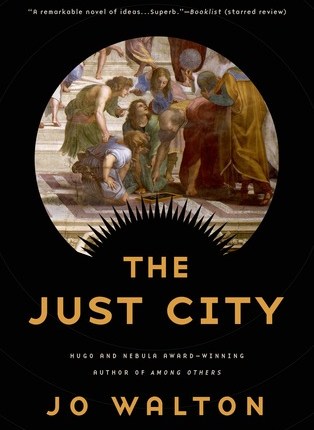
The Just City (Thessaly, #1) by Jo Walton

The Just City (Thessaly, #1) by Jo Walton

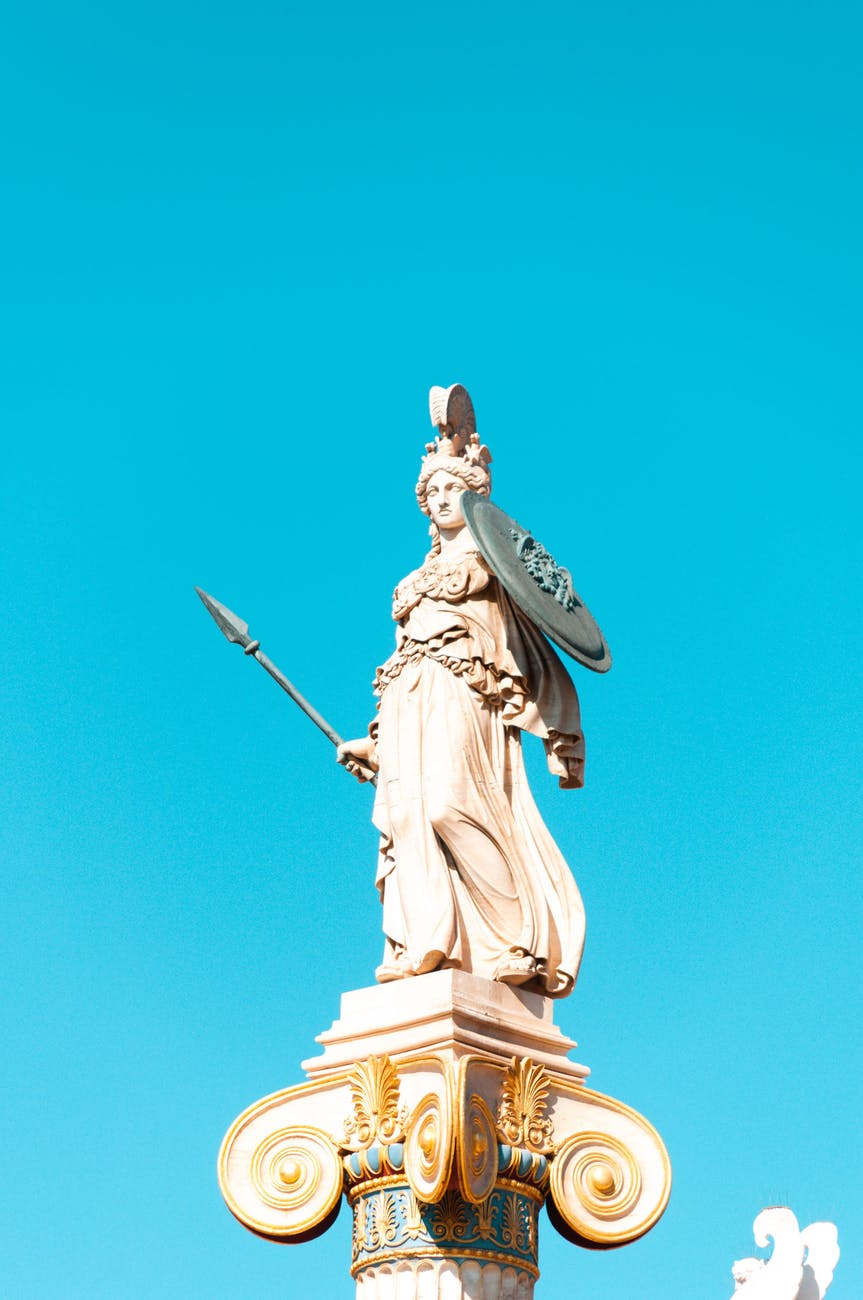
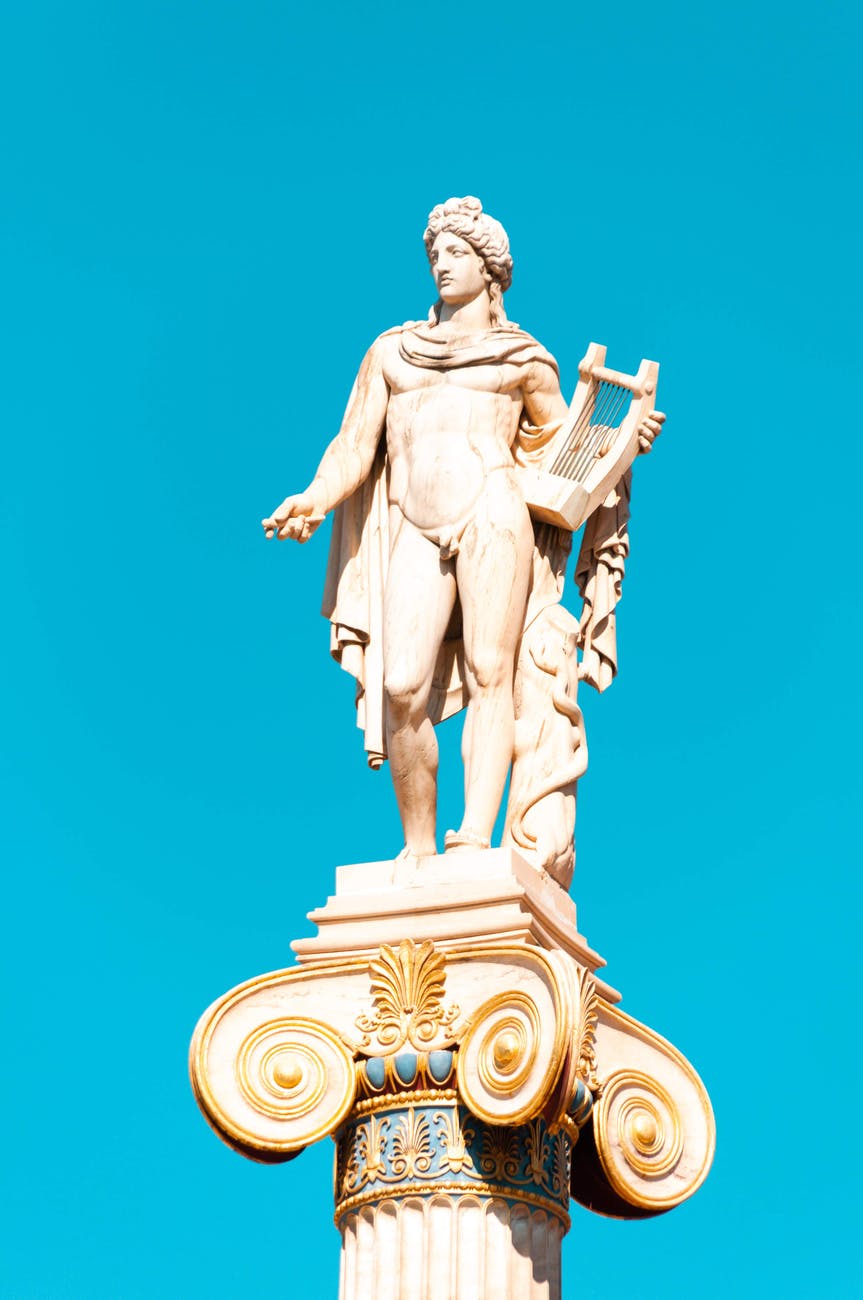
When the god Apollo seeks to understand the workings of the mortal mind and heart, he asks his sister, Athene to help him. She reveals a project in which she has gathered together philosophers from across time and space and put them in a settlement called, “The Just City”. In this city, set near a volcano that will one day explode and destroy all evidence of the project, a group of men, women and children will try to recreate the hypothetical state described in Plato’s “Republic”.

Apollo asks to join this group. And our story begins.

Photo by Hert Niks on Pexels.com

The city itself shone in the afternoon light. The pillars, the domes, the arches, all of it lay in the balance of light and shadow. Our souls know harmony and proportion before we are born, so although I had never seen anything like it, my soul resonated at once to the beauty of the city.” pgs 35-36

But what is perfect in theory turns out to be not-so-perfect in practice. Among the thornier problems, the city has shared marriages and children raised by the group, not families. This causes predictable jealousies and secret romances. There’s also something strange going on with the robotic workers Athene brought from a future time to help with the mundane tasks of civilization, like raking the roads and planting the vineyards.

“We are in a time before the fall of Troy. And we are on the doomed island of Kallisti, called by some Atlante.” Even I had heard of Atlantis.” pg 45

Photo by Travel Sourced on Pexels.com

Another major issue, caused because they were pulled from different points in history, are the different philosophers’ views on gender equality. Consent in the Renaissance doesn’t mean the same thing as consent in the Victorian Age.

“You love this city,” Pytheas said. That was what we had been debating that day. “I do,” I said, spreading out my arms as if I could hug the entire city. “I love it. But Sokrates has made me see that it’s only the visible manifestation and earthly approximation of what I really love, the city of the mind.” pg 131

Though I enjoyed this book, the pace was what spoiled it for me somewhat. It marches forward towards an inevitable conclusion far too slowly. The debate scenes are interesting, but simply too plodding.

Photo by Dominika Roseclay on Pexels.com

There’s also a rape, so please be aware if you have potential triggers.

Recommended tentatively for readers who love the classics or historical fiction and can stand a slower-paced read.

Thanks for reading!

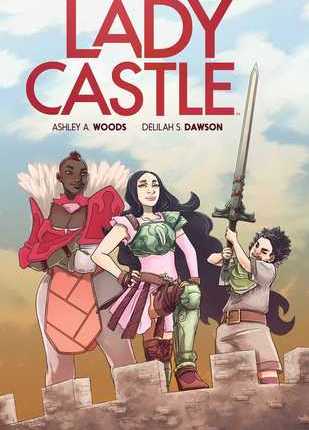
Ladycastle by Delilah S. Dawson

Ladycastle by Delilah S. Dawson

Aeve, a princess of Mancastle, is locked in a tower by her father, King Mancastle, for her refusal to chose a husband. Aeve’s younger sister, Gwyneff, is free to roam the castle, until she turns twelve and is subjected to the same fate as Aeve.

But Gwyneff doesn’t understand her sister’s choice and blames her for their father’s time-consuming efforts to find a new husband for Aeve and his absence.

“Aeve ruins everything. If she’d married, father wouldn’t go out hunting new princes. He’d be here. All the men would.”

Photo by Jeffrey Czum on Pexels.com

When King Mancastle and his men venture out to find a more suitable groom, and meet a foe they cannot overcome. One of the men returns to report to the women left behind — a curse has been laid on the castle and monsters will “be drawn as to a beacon”.

“For not only was King Mancastle cursed, but so was his domain. This castle shall be a beacon to terrifying monsters until the wizard’s curse is lifted.”

The blacksmith’s wife, Merinor, takes up the Lady of the Lake’s sword and becomes king. She and the women begin preparations to defend themselves from the approaching monsters. And thus our tale begins…

The artwork in Ladycastle is beautifully drawn with bright colors. I enjoyed the premise of the story. But Ladycastle doesn’t quite fulfill its promise in this volume.

Photo by Felix Mittermeier on Pexels.com

In the beginning of each section, the ladies’ inner monologue reads like a Disney or classic Broadway song, purposefully so. It’s distracting and derivative. I get that this work was attempting to point out the inherent bias of the other works, but I feel it takes away from the originality of this one.

The dark ages were brutal on women. I get it. Each lady in Ladycastle has a backstory of abuse or neglect from the man who ran her life, except for Gwyneff who hadn’t yet attained an age to be given away by her father for political purposes.

I liked how this comic flips that gender-issue on its head, the women rule the roost now. But the delivery of the lesson is heavy-handed, especially in the first two sections of the book.

Photo by Engin Akyurt on Pexels.com

As other readers have noted, there is a stab at diversity in this book, but no inclusion of LGBTQ characters. I can’t see any reason for this over-sight.

Recommended for readers who enjoy graphic novels, but with the reservations listed above. I felt like this topic was handled more deftly in the graphic novel for children, Princeless, Vol. 1: Save Yourself.

Thanks for reading!

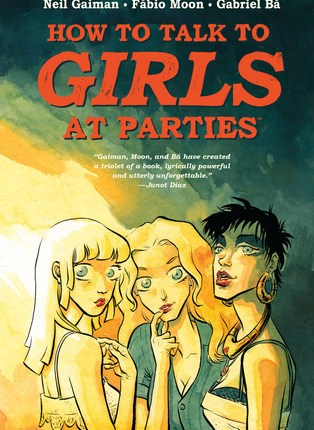
How to Talk to Girls at Parties by Neil Gaiman

How to Talk to Girls at Parties by Neil Gaiman

When two young men go to a party, the young women there are so much more than what they expected.

This short story by Neil Gaiman, adopted in a graphic novel format, perfectly captures (in a science fiction-tinged bubble) the bewilderment that goes along with communication and young adulthood.

Sometimes, when you’re trying to chat up members of the opposite sex, it’s as if you’re talking to someone alien from yourself or even just the idea of a person. Gaiman takes this concept and, in typical Gaiman-fashion, runs with it.

Photo by Francesco Ungaro on Pexels.com

He is even able to touch upon the darker side of young, romantic flings. The popular young man in the story gets all the female attention he could want, but at what cost to both him and the young women he leaves behind?

The other young man, referenced in the title because he is hesitant to “talk to girls at parties”, is the one who the narrative follows. His adventure into the worlds of the mind is certainly as wild as his friend’s experience.

This is a quick read, only 10 or 15 minutes, but I found it stuck with me. I was wondering at the layers of meaning in it.

The artwork is beautiful but strange. The women’s eyes are drawn slightly too large for normalcy. It set me on edge and made most of the story unsettling, which I suppose is also the point of the thing.

Photo by Cole Keister on Pexels.com

The story made me think about how much of our relationships take place because we’re brave enough to face that unsettling feeling. And by experiencing “the other”, we come back home a new person than who we were when we left. Maybe not a better person, but different.

Recommended for teens or adults who enjoy science fiction. I think anybody who has faced down their own fears to talk to someone they find enchanting will find something to ponder in this graphic novel.

Thanks for reading!

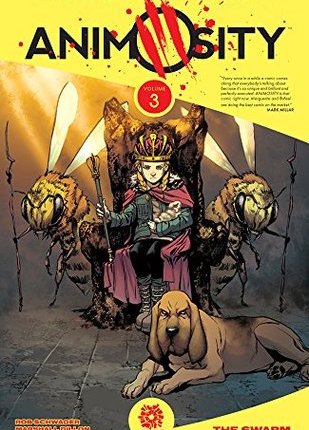
Animosity, Vol. 3: The Swarm by Marguerite Bennett

Animosity, Vol. 3: The Swarm by Marguerite Bennett

In the world of Animosity, the animals became sentient one day. In some areas of the world, this transition occurred more smoothly than others. Strangely, all of the bees disappeared.

This issue sheds some light on where they went.

As this series continues to get darker, I can’t help but be reminded of The Walking Dead, Book One. (Especially with the rumors of a “walled city” in this issue.)

Photo by Lisa Fotios on Pexels.com

You have a world, much like our own, but with unexpected dangers and predators around every corner. Some have adopted in strange ways to survive, sometimes at the great expense of others. Cultures have entirely changed or adopted to embrace different manners of communication and family.

The strong are thriving, but so are the smart. What matters most are your relationships and how you interact with others.

My one criticism of this series is how dark it seems to be turning. If animals became like people, wouldn’t they get some of our most positive characteristics too, instead of mainly or entirely the negative?

It’s still a fascinating premise in that the carnivores still need to eat meat even though they now have the cognitive abilities of a human. There’s a few panels in this issue showing krill having a conversation about the dangers of trying to communicate with the deep ocean creatures shortly before being swallowed by a whale.

Photo by Andrea Holien on Pexels.com

How small does the sentience go? To one-celled organisms? We don’t know yet. But it is a mystery the series is working on solving.

Recommended for adult or older teen readers because of some violence, not too graphic, and stressful situations. This issue ends on a cliffhanger so if you can’t handle the uncertainty, you may want to wait to read these until the series is complete.

Thanks for reading!