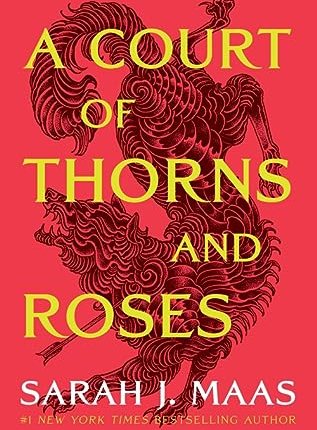
A Court of Thorns and Roses (A Court of Thorns and Roses, #1) by Sarah J. Maas

A Court of Thorns and Roses (A Court of Thorns and Roses, #1) by Sarah J. Maas

Feyre lives in a world where the fae are beyond a wall that separates them from the mortal world. Years and years ago, according to the myths, a great war was fought and a boundary was drawn between the two races.

When Feyre shoots an enormous wolf that is more than what it appears, she is drawn into the world beyond the wall which operates under magic and an entirely different set of rules than the world she knows.

Will she survive?

Photo by Luna Lovegood on Pexels.com

I chose to read A Court of Thorns and Roses because of the millions of positive ratings it received on Goodreads. It is an engaging read, but I don’t think I enjoyed it as much as some other readers.

“… any bit of information might help, and if I showed interest in them, perhaps they would warm to me.” pg 79, ebook

I enjoyed the heroine’s discovery of the magical world. I really liked the different creatures and situations that she found there. The exploration part of the book was my favorite part.

I did not enjoy the romance portion of the book and felt like it slowed the action down to a crawl in the middle of the story. Also, this should not be rated as a young adult book. Some of the relationship and sexual elements mark it clearly as new adult, in my mind.

I get that this is a “Beauty and the Beast” re-telling, but there are very few similarities between the two stories. If you’re looking for a fairy tale re-telling, you might want to keep looking.

And, occasionally, I found the actions of the heroine to be infuriating. She made decisions based on no reasoning that I could understand- much like a spoiled teenager. I suppose some could argue that that is exactly what Feyre is, but it wasn’t much fun to read.

Recommended for any readers who are looking for a light fantasy mixed with a lot of romance. Thanks for reading!

The Daughters of Ys by M.T. Anderson, Jo Rioux (illustrator)

The Daughters of Ys by M.T. Anderson, Jo Rioux (illustrator)

The Daughters of Ys opens with a father relating a story to his daughters. The story concerns the magical way he met his wife and their future mother on a dark stormy night in the middle of the sea. From there, the two carve a city from the sea and begin a new life.

But now, their mother is dead and, the king and his daughters (Rozenn and Dahut) have to figure out their lives and how to run their magical kingdom, Ys, without her.

Photo by Clem Onojeghuo on Pexels.com

In this coming-of-age tale, secrets run in every direction. The discovery of what those secrets are make this story fascinating.

Magic and living comes with a cost is one of the many lessons that could be learned from this fairy tale.

I loved the illustrations by Jo Rioux and feel like they really elevated the story. She uses mostly muted colors to weave shadows and magic throughout the tale. The brightest colors are reserved for Dahut, the younger and more magically inclined daughter.

I think this book is appropriate for young adults. There are some mature themes that are dealt with, but they’re not explicit. Highly recommended.

Thanks for reading!

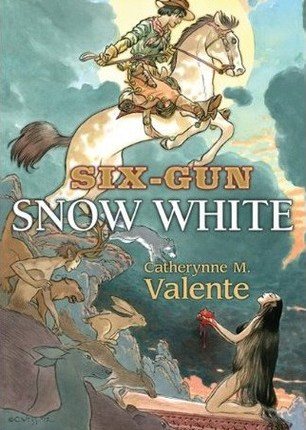
Six-Gun Snow White by Catherynne M. Valente

Six-Gun Snow White by Catherynne M. Valente

“I gradually understood the truth of my situation: I was a secret.” pg 14, ebook.

Catherynne Valente has penned a bewildering and ultimately disappointing western-tinged fairy tale retelling in Six-Gun Snow White. Her reimagining of the classic story has Snow White as an unloved daughter of a mine speculator and an abused, indigenous mother. When her mother ends her own life, Snow White’s father marries a mysterious woman from back East, the evil stepmother of fairytale infamy, whom the narrator calls Mrs. H.

“She named me a thing I could aspire to but never become, the one thing I was not and could never be: Snow White.” pg 27, ebook

Photo by John Finkelstein on Pexels.com

The disappointing part of the story is not the set up or general idea of Snow White as a western, both of which I thought were excellent. The trouble arrives in the magical portions of the story which are, in my opinion, not well written. They felt disjointed and tacked on.

It’s curious to me that I didn’t like this story because Valente is one of my favorite authors. There is no one like her when it comes to an interwoven story or mysterious magic. Maybe my issue with this tale is that it’s so short Valente didn’t have a chance to work her usual story telling magic? Perhaps.

The ending was an enormous let down as well.

Not recommended.

Thanks for reading!

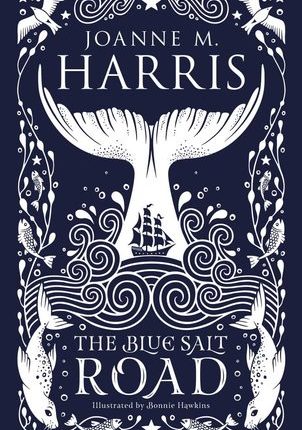
The Blue Salt Road by Joanne M. Harris

The Blue Salt Road by Joanne M. Harris

The Blue Salt Road is where the selkies dwell as kings and queens of the deep. When a young woman named Flora needs to find a husband, she despairs of choosing any of the men on the small island where she lives. They’re hardened by work on the whaling ships and unrefined.

Photo by Andre Estevez on Pexels.com

But when Flora’s grandmother teaches her a secret about mysterious beings called the selkies, she knows her search will soon be over.

“In tears he was summoned, salt as the sea,
In silver was his binding. In blood and betrayal, his calling he found.
In cedar, his salvation.”
 pg 87

Unlike other selkie stories I’ve read, like Sealskin, the person summoned from the waves is male, not female. I’m sure the fairytale has been told both ways, but it’s a nice change from other versions.

Joanne Harris writes interesting and nuanced fantasy in which she takes a look at older stories and puts her own spin on them. If you haven’t had a chance, you may want to read her duology about the Norse god, Loki. (The Gospel of Loki and The Testament of Loki)

“This is my story. The story of the land-folk and the seal-folk, and of treachery, and of the call of the ocean.” pgs 4-5

Photo by Skitterphoto on Pexels.com

There’s quite a lot to unpack in the symbols of The Blue Salt Road and the selkie myth. (Warning, spoilers ahead for those unfamiliar with the selkie myth.) In Jungian psychology and dream interpretation, water is a common symbol for the subconscious mind. What floats or comes to the surface is what you’re aware of. Swimming about in the depths of the ocean, are the feelings or situations you’re perhaps unwilling to confront.

In the sad fairytale of the selkie, the fairytale creature emerges from the ocean as a free being, but then is prevented from returning to the depths where it belongs. He or she forced to live a life on land unless she can find the magical item, her sealskin, that allows her to return to the waves.

The added twist to the tale, sometimes, is the selkie has a child that either gets abandoned when he eventually returns to his home or he takes the child with him and the land-bound parent never gets to see the child again.

Photo by Simon Clayton on Pexels.com

So, we have a fairytale examining the complex relationship between men, women, and how people handle having a child together. In addition, it looks at the loss of freedom some experience when a single person adopts a life with a family and how some people can’t deal with it.

It also speaks to the individual ways that people deal with growing up and choosing a trade or growing old and growing apart from the people and things they used to cherish.

In Joanne Harris’ version, there’s a family component with the secret passed between mothers and daughters, grandmothers and grandchildren.

“I told you that within the year I should catch myself a prince, and bear him a pretty princeling,” she said. “Now I shall be the envy of all the maids on the island, and all the young men who missed their chance will curse their evil fortune.” pg 44

Photo by Ruvim Miksanskiy on Pexels.com

These secrets that we carry are unique as well and help create cultures among family groups. Sometimes, the spouses we choose to add to the mix don’t adapt well to these cultures and eventually leave, not because there’s a loss of love, but because they are never truly accepted into the family group.

All of this is symbolic goodness is packed into a story that is appropriate for young adults to read. There is nothing overly graphic in here, just layers of complexity that a tween might not be able to grasp.

Highly recommended for young adult and adult readers of fantasy fiction and mythology.

Thanks for reading!

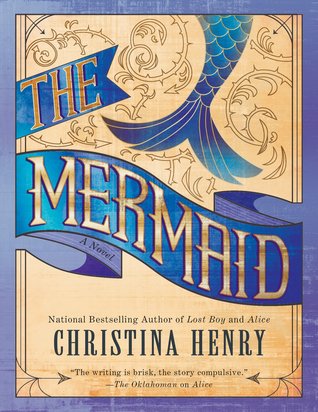
The Mermaid by Christina Henry

The Mermaid by Christina Henry

The Mermaid begins like most other mermaid tales. A creature from the sea is caught in a fisherman’s net. With one glance, the mermaid falls in love with him and decides to leave the ocean.

But her eyes had seen inside him the way that women’s eyes do, and his loneliness snaked into her, and she was sorry for it, for that loneliness caught her more surely than the net.” pg 4

Predictably, their life together goes well, until one day it doesn’t.

Photo by cottonbro on Pexels.com

Then, one of P.T. Barnum’s right-hand men, Levi Lyman, comes seeking a real mermaid, or at least a woman with a reputation of being a mermaid, for the showman’s museum.

“What he’d caught in his net had been far more alien, a creature covered in silver scales all over, with webbing between its fingers and teeth much sharper than any human’s. pg 9

Barnum is cast as the villain of this tale, a grasping coin-counter with little regard for the feelings of people, let alone magical creatures like a mermaid: “Barnum privately thought that if the woman was really a mermaid — not likely, as Levi had said, but there was always hope — she wouldn’t be going anywhere. There wasn’t a chance in heaven or hell that Barnum would let something like that go once he had it.” pg 43

Photo by Robert Fisk on Pexels.com

Coincidentally, the day before I picked up this book, I had the chance to watch “The Greatest Showman“, a musical film about P.T. Barnum’s life, museum, and the people he hired to fill its halls.

I enjoyed the music and choreography, but felt that a man as complex as P.T. Barnum couldn’t fairly be depicted in a 90-minute film. There was a darker side to Barnum’s story — the way he fleeced people out of their money with “humbugs” and, in a particular, his treatment of a woman named Joice Heth.

P.T. Barnum is a purveyor of wonders, a seller of miracles, a showman of the first order.” pg 58

In this book, Christina Henry doesn’t shy from these shadows in Barnum’s life, but I didn’t feel like he was a particularly scary antagonist.

I suppose the true struggle in The Mermaid could be Amelia’s difficulty in maintaining her mermaid nature in a human world. However, that story has been told before.

She meant to do the proper human thing, to behave the right way, but they were not as easy with each other as she’d thought they would be.” pg 153

Photo by Rachel Claire on Pexels.com

Henry didn’t put a twist to this fantasy tale as she so successfully managed to do with Alice, her dark re-telling of Alice’s Adventures in Wonderland by Lewis Carroll. I confess, I was rather disappointed.

I wanted a unique mermaid story. Instead, I got a fairly standard interpretation of a classic.

“I left because I wanted something I didn’t have, and once I loved Jack and lost him, I wasn’t the same as I was before. Love does that. It changes you in ways that can’t be undone.” pg 177.

The Mermaid is a charming little tale, for what it’s worth. Just don’t expect too much out of it. It’s not a humbug, but I wouldn’t call it a wonder of the world either.

Here are some of my other reviews of books by Christina Henry:

Lost Boy: The True Story of Captain Hook by Christina Henry

The Red Queen by Christina Henry

And thanks for reading!

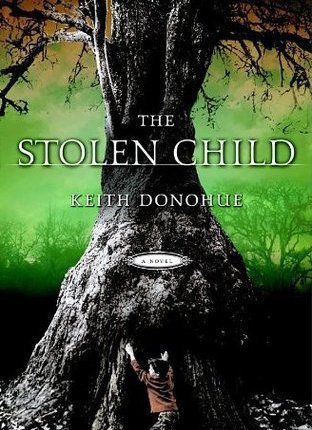
The Stolen Child by Keith Donohue

The Stolen Child by Keith Donohue

If you must give me a name, call me hobgoblin. Or better yet, I am a changeling- a word that describes within its own name what we are bound and intended to do. We kidnap a human child and replace him or her with one of our own.” pg 7, ebook.

The Stolen Child is the story of a changeling and the boy whose place he took, Henry Day.

The chapters alternate between the real Henry Day and the false Henry Day. It is a captivating story about magic, family and belonging.

Photo by Gary Barnes on Pexels.com

“This is my confession, too long delayed, which I have been afraid to make, and only now reveal because of the passing dangers to my own son. We change. I have changed.”

It also addresses the issues of the modern world and how technology and humanity has driven nature into corners.

The changelings are basically immortal children (but they can die through accidents) who live in the woods until their turn comes to rejoin the human world. Years before, they were all ripped from their families and made a part of the same group their replacement just deserted.

Their world is brutal, cold and always on the verge of collapse. One of their only rules is they don’t discuss a new changeling’s prior life during his new one.

Photo by Stijn Dijkstra on Pexels.com

The adjustment period from human to changeling is difficult enough without keeping the memories alive through the long years of their unchanging childhood.

But things aren’t much easier on the changelings who take the child’s place. If they are discovered, in the past, the changelings have been killed or their family members have gone mad from the strain.

They must carry a secret with them for the rest of their lives. It is as a lonely an existence as the changeling group separated from humanity in the forest.

Photo by ArtHouse Studio on Pexels.com

I enjoyed this story. Keith Donohue has a way with making the fantastical seem real and the miraculous into the mundane.

But that ending. It didn’t complete the excellent characters and storyline Donohue had constructed, in my mind.

Recommended for those who like to read modern fairy tales. Just don’t expect a life-changing finale.

Thanks for reading!

The Snow Child by Eowyn Ivey

The Snow Child by Eowyn Ivey

A beautiful, magic-tinged tale of an aging couple, the bleak Alaskan wilderness and a child who appears one day in the wood.

Mabel and Jack always wanted a child, but after suffering a miscarriage, they begin to lose hope of ever conceiving. Mabel suffers in female society without a child of her own.

She begs Jack to take her to Alaska for a fresh start. He agrees. But it doesn’t work.

The weather is dark and freezing. The ground is hard and takes more effort than Jack can give. They aren’t thriving.

“All her life she had believed in something more, in the mystery that shape-shifted at the edge of her senses. It was the flutter of moth wings on glass and the promise of river nymphs in the dappled creek beds. … Mabel could not remember the last time she caught such a flicker.” pg 6, ebook.

Photo by Sara Loeffler on Pexels.com

Then, out of the blue, a child magically appears during a snow storm.

She is so light on her feet and silent, Jack and Mabel don’t at first believe their eyes. The child travels with a fox and barely leaves prints to follow on the snow.

“What did he expect to find? A fairy-tale beast that holds young girls captive in a mountain cave? … Or nothing at all, no child, no tracks, no door, only insanity bared in the untouched snow? That is perhaps what he feared the most, that he would discover he had followed nothing more than an illusion.” pg 72, ebook.

Mabel remembers a Russian fairy tale from her childhood, of a couple who builds a girl out of snow. In the story within the story, the girl becomes real.

Photo by Ramirez Cooper on Pexels.com

Could Jack and Mabel have created the child they have always dreamed of?

“I am sorry to say no matter which version, the story ends badly. The little snow girl comes and goes with winter, but in the end she always melts.” pg 96, ebook.

How will Jack and Mabel’s story end?

Recommended for fans of historical fiction and tales that contain magical realism.

Photo by Gantas Vaiu010diulu0117nas on Pexels.com

“In my old age, I see that life itself is often more fantastic and terrible than the stories we believed as children, and that perhaps there is no harm in finding magic among the trees.” pg 189, ebook.

I thought The Snow Child was beautiful and well-told. Highly recommended.

I don’t think The Snow Child has been made into a film, yet, but it has been staged as a musical play.

Thanks for reading!

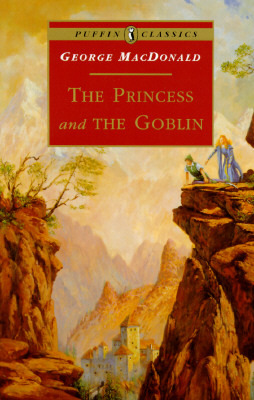
The Princess and the Goblin (Princess Irene and Curdie #1) by George MacDonald

The Princess and the Goblin (Princess Irene and Curdie #1) by George MacDonald
princessandgoblin

A charming fairy tale for children about a princess, a miner and hundreds of goblins- not just one.

The goblins hate the king because they used to be normal humans. They chose to live underground, to be away from the king and his taxes, and that choice has turned them inhumanely ugly and grotesque.

“They had enough of affection left for each other to preserve them from being absolutely cruel for cruelty’s sake to those that came in their way; but still they so heartily cherished the ancestral grudge against those who occupied their former possessions and especially against the descendants of the king who had caused their expulsion, that they sought every opportunity of tormenting them in ways that were as odd as their inventors; and although dwarfed and misshapen, they had strength equal to their cunning.” loc 54, ebook.

So, the king hides away his daughter to protect her from the goblins, while he travels across the kingdom, exerting the rule of law.

One rainy day, she is wandering bored through the house, when she discovers a secret stair with an extraordinary person in a hidden room.

The Princess tries to tell her nurse about her experience, but the nurse doesn’t believe her.

“You don’t believe me, then!” exclaimed the princess, astonished and angry, as she well might be. “Did you expect me to believe you, princess?” asked the nurse coldly. “I know princesses are in the habit of telling make-believes, but you are the first I ever heard of who expected to have them believed.” loc 181, ebook.

Meanwhile, in the mines under the mountains, the miners are accustomed to hearing strange sounds from the goblins who dwell within the walls.

Photo by Sagui Andrea on Pexels.com

“They worked only at night, for the miners’ night was the goblins’ day. Indeed, the greater number of the miners were afraid of the goblins; for there were strange stories well known amongst them of the treatment some had received whom the goblins had surprised at their work during the night.” loc 411, ebook.

One day, a miner named Curdie, hears actual goblin voices and discovers that they are closer to the goblin’s world that anyone ever realized.

He also overhears something frightening and determines to investigate the goblins’ world more to learn the truth.

To discover how the princess’ and Curdie’s worlds come together, you’re going to have to read the story.

Photo by Lisa Fotios on Pexels.com

I enjoyed The Princess and the Goblin. Recommended for tweens or the young at heart.

Readers who crave the simplicity and magic of books like The Hobbit, may also enjoy the story.

Thanks for reading!

Grendel by John Gardner

Grendel by John Gardner

Grendel is the ill-fated monster from the ancient story, Beowulf. This is his tale.

There are very few details shared about Grendel in Beowulf. I thought that this story would be an opportunity for the reader to get to know him.

Unfortunately, we spend most of the time in Grendel’s mind, circling endlessly around the ideas of time, brutality, nature and the meaninglessness of existence.

I wanted to know more about Grendel’s mother, but there was very little about her.

John Gardner wrote her as some kind of void-filled slug monster: “Behind my back, at the world’s end, my pale slightly glowing fat mother sleeps on, old, sick at heart, in our dingy underground room. Life-bloated, baffled, long-suffering hag. Guilty, she imagines, of some unremembered, perhaps ancestral crime. (She must have some human in her.) Not that she thinks. Not that she dissects and ponders the dusty mechanical bits of her miserable life’s curse.” pg 10, ebook.

Not like Grendel does, endlessly.

Photo by Laker on Pexels.com

“I understood that the world was nothing: a mechanical chaos of casual, brute enmity on which we stupidly impose our hopes and fears. I understood that, finally and absolutely, I alone exist.” pg 17, ebook.

I think that was the biggest reason I didn’t enjoy this read. I believe every moment in life is, or can be, filled with purpose, meaning and happiness. Grendel falls on the exact opposite end of the scale.

In that way, Grendel is one of the biggest downers you could ever read. He believes that life means nothing. He acts and kills from this empty center.

Out of this morass, the one part I kind of enjoyed was Grendel’s conversation with a dragon in its hoard.

The dragon lives for millennia and sees the world from a view so wide that it is almost outside of time. Again, there’s a nihilist bent to his view, but the dragon brought a weird bit of humor to an otherwise bleak story.

Photo by Suraphat Nuea-on on Pexels.com

“Don’t look so bored,” he (the dragon) said. He scowled, black as midnight. “Think how I must feel,” he said.” pg 43, ebook.

Yeah, think how I must feel. All I wanted was the story of Beowulf from a unique perspective and what I received was a vague feeling of depression about the meaninglessness of it all.

Thanks for reading.