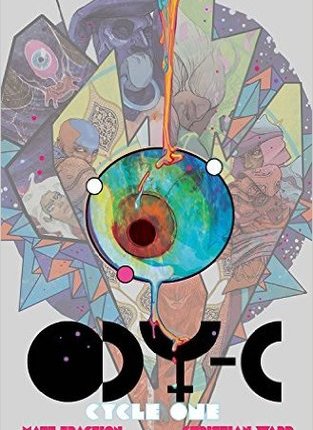
ODY-C: Cycle One by Matt Fraction

ODY-C: Cycle One by Matt Fraction

ODY-C is an incredibly strange, but beautiful graphic novel that takes the classic story line of Homer’s The Odyssey and flips it on its head.

“Here where so many great women died. Three ships leave Troiian space. Three adventures now start. Three great heroes begin their last odyssey.”

Photo by Edvin Richardson on Pexels.com

The book begins with the warriors returning home from an epic war in space. Instead of Helen of Troy, the war was fought over one of the only males in the galaxy, a latex-covered man named “He.”

Like in the old tale, the goddesses, children of Titans, overthrew their father, Kronos. In a twist in this world, they decided that all children grow up to throw down their parents and kill several generations of their own children. In order to ultimately control humanity, Zeus, a curvaceous, powerful woman, in an extraordinary display of power, destroys every male in existence. Eventually leading to the events I just described…

“Sing in us, Muse of Odyssia, witchjack and wanderer. Homeward bound. Warless at last.

Honestly, this book is hard to explain. I think “acid trip” might do it justice. The colors are vivid and the characters can be nightmarish, vulgar or gorgeous. The universe within this book is a science fiction-themed romp with monsters, goddesses, and all sorts of unbelievable settings — a world of bones wherein the child of a goddess forever seeks its prey, a type of space station fueled by a star in which a rare male child of a goddess endlessly mates with women and then kills them when they inevitably give birth to another female… and more.

“Down in the ruinous piles of viscera once her command and her crew, Odyssia recalibrates. Watching the Cyclops of Kylos make feast of the ODY-C’s girls, they know for the first time since Troiia did fall just what fear really feels like inside.”

Photo by Cosmopolitano Model on Pexels.com

It helps to be familiar with classic mythology because the authors don’t take the time to explain how the two are related. Or, I suppose, you could just jump into it blind. I felt like I enjoyed it more knowing both sets of stories.

I was fortunate that the library’s copy of this book included creator interviews in the back to give more context to this incredible work they’ve created.

“Between bearded-lady gods, gender-flipped heroines, gender-uncertain sebex and the odd character who keeps the same gender as their source, the ODY-C is less a gender-bent Odyssey than it is an Odyssey-flavored gender pretzel. Rather, ODY-C is an early next step into what comes after the gender flip: the unfurling of the gender spectrum both to comment on and to dismiss outright what we understand as gender roles and norms in classic literature.”

There is certainly a lot to unpack in here. And it is such a good story.

“The act of telling a story — especially of telling one well — turns your audience’s brain into a photocopy of your own, overriding any other stimuli that the listener is experiencing independently. When a story is so good you feel like you were actually there in the middle of it, it’s because, at least as far as your brain is concerned, you actually were.”

Photo by Engin Akyurt on Pexels.com

In addition to the Greek and Roman mythology, there’s shades of Scheherazade in the unfolding of the fate of He. Readers are also treated to a new twist on the foundation of Rome myth. At least, I think that’s what it is. With the level of creativity in here, it’s honestly hard to tell.

Recommended for readers who are looking for a graphic novel that is completely different from anything you’ve ever seen before. This is that book.

Thanks for reading!

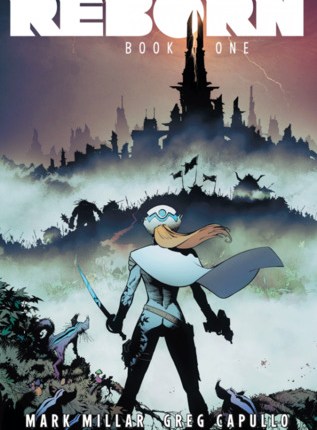
Reborn: Book One by Mark Millar

Reborn: Book One by Mark Millar

Beautiful artwork highlights a so-so story about a woman who dies, only to be reborn into a fantasy-themed world where a perpetual war of good versus evil rages on.

I think the basic idea of this graphic novel is fascinating. What happens to us after we die? We have faith, religion and all sorts of near-death experiences to fall back on, but who can say with any certainty.

From an interview in the back of the book with Greg Capullo, one of the creators: “What I loved about the story is that it deals with all of our fears about what happens when we die, but amidst the fear and the sorrow, we have this spectacular adventure that takes place in a fantastic and exciting world — a world I got to invent.”

Photo by Susanne Jutzeler on Pexels.com

Some of my quibbles with this story include that the good versus evil theme makes all of the characters seem so simplistic. You can predict almost exactly what they’re going to do before they do it — no gray areas. Also, everything is based around Bonnie, one character, and she becomes the savior archetype for the entire tale.

But, on the other hand, if you take this book, as a whole, for a metaphor of what happens after death, it works. Like so many near-death experiences, it all boils down to one view point, that of the newly departed. If you consider it like that, of course the story would be based around one person. She is seeing the next world entirely from her point of view, everything is interpreted through that lens.

It’s a curious phenomena, those who have had NDE’s, generally describe imagery and a storyline that makes sense to them culturally and fits within their framework of faith. Bonnie didn’t want to die, but when she does, she sees a world so similar to where she just came from, except it contains people who have died before she did.

Bonnie’s relationships with the people she knew before her death determine so many of the other character’s roles in the story. She has a curious relationship with the “faerie queen” which I found interesting.

Photo by Ferdinand Studio on Pexels.com

I can’t decide if I’m reading more into this story than is actually there, or if it was actually touching on some of the larger themes I mentioned. As I said, I got bogged down in the predictable characters.

At least the artwork is pretty…

I’m interested to see where Netflix goes with this, as I read in Variety that they’re developing it into a film starring Sandra Bullock.

Thanks for reading!

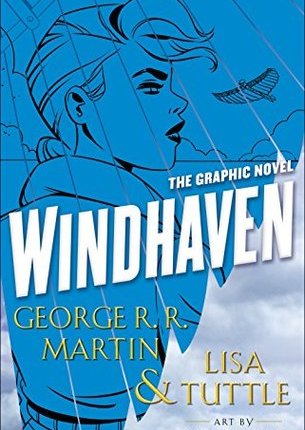
Windhaven: the Graphic Novel by George R.R. Martin, Lisa Tuttle

Windhaven: the Graphic Novel by George R.R. Martin, Lisa Tuttle

Windhaven is a world of small islands, connected by messengers who fly with intricate metal wings. The culture of the “flyers” is a closed one, with wings handed from messenger to his or her first born child.

Maris is not the child of a flyer, but that’s not going to keep her from joining their world.

“You don’t bother me. Maybe when you grow up, you can help the flyers like my friends here. Would you like that?” “No.” ” No? What then.” “I want to fly.”

Photo by eberhard grossgasteiger on Pexels.com

And when she does, things will never be the same.

This graphic novel was based off of Windhaven, the first book in a fantasy series by George R.R. Martin and Lisa Tuttle. Readers get a “Game of Thrones”-ish feeling from this book in the political machinations between the flyers and those they call the “land bound.” But it lacks the intricacy and extraordinary cast of characters that is “Game of Thrones”.

Having never read anything by Tuttle, I’m not sure how she and Martin blended their visions.

“Don’t waste your time on foolish dreams! I won’t have my daughter be a woodwings!”

Photo by Wendy Wei on Pexels.com

The artwork by Elsa Charretier is pretty and I enjoyed how she aged Maris throughout the book.

The scenes of the flyers themselves, especially a few of the chase scenes, must have been difficult to draw. Charretier had to make the characters look like they were in motion for it work. I think she did well, but the wings look kind of chunky in some of the pages, rather than the slick, technological wonders I pictured in my mind.

As for the story itself, I was surprised by the actions of some of the characters, but for the most part, it all seemed inevitable. Maybe that’s what the authors were going for — Maris’ fate was more destiny than choice.

Thanks for reading!

Shades of Magic Vol. 1: The Steel Prince by V.E. Schwab

Shades of Magic Vol. 1: The Steel Prince by V.E. Schwab

V.E. Schwab has penned a graphic novel about Maxim Maresh, one of the ancillary characters from The Shades of Magic series.

I was very excited to read this. The tidbits Schwab dropped about Maxim in the trilogy were enticing. We learned he had a storied past. He fought notable outlaw figures. Somehow he developed an extraordinary control of his powers, which others had not been able to mimic.

Under his reign, a certain magician opened the doors between the worlds to act as emissaries and messengers. But also, exposed the worlds to the greatest danger that they had ever faced.

Photo by Aidan Roof on Pexels.com

“Before he was the King of Arnes, Maxim Maresh was a young, head strong prince with a penchant for metal magic and a lot to learn about the world beyond Red London. Banished by his own father to Verose, a city on the dangerous Blood Coast, Maxim was plunged into a world of danger and adventure.” Foreward, by V.E. Schwab.

So, who was this man? This graphic novel series sheds some light on an enigmatic figure.

“Why would you see those doors pried open again?” “Because sooner or later, all spells fail. And one day the doors to those worlds will open whether we wish it or not.”

What did I think of it? It was the first in a series. It’s hard to give all of the contextual information of a new story without it turning into an info dump or neglecting to develop the characters.

Schwab does a good job of avoiding these pitfalls, but I wanted more depth and development.

We do get to see something of “bone magic,” one of the more terrifying of the magics from Schwab’s stories. Bone magic, unlike the elemental basis of the other magics, allows the user to literally control the actions of those around them.

Photo by Pixabay on Pexels.com

Bone magicians can make you throw yourself onto their enemies or your friends. Hold still while you’re tortured. Stick a knife in your own eye.

Bone magic, the removal of free will, is the idea that has continued to haunt me from the Shades of Magic series and Schwab uses it to good effect in this story.

That being said, Maxim, at first, acts like a brat and doesn’t understand the complexities of real life, running headlong into the “royalty removed from the world” trope. This focus of his character doesn’t lend itself to likability. Perhaps that will change as the series goes along. Also, we get to see so very little of his extraordinarily abilities and more of his mediocrity.

However, the artwork is stunning. I hope to read and enjoy the next volume. But I can’t say I was knocked off my feet by this installment.

Recommended, of course, for fans of the Shades of Magic series.

Thanks for reading!

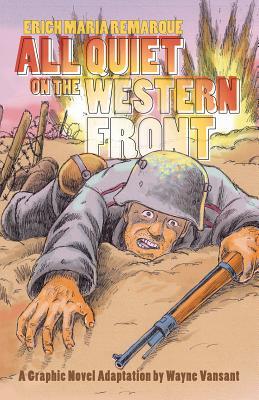
All Quiet on the Western Front by Wayne Vansant (adapter), Erich Maria Remarque

All Quiet on the Western Front  by Wayne Vansant (adapter), Erich Maria Remarque

This is a graphic novel remake of the classic All Quiet on the Western Front and it packs as much punch as the original.

Paul Bäumer and his classmates are encouraged to join the German army in WWI by an enthusiastic professor. What they find is not the heroic battlefields of the classical texts they’ve studied, but one nightmare after another.

“We plunge again into the horror, powerless, madly savage, and raging; we will kill, for they are still our mortal enemies, their rifles and bombs are aimed against us, and if we don’t destroy them they will destroy us.” pg 68

Photo by Kirsten Bu00fchne on Pexels.com

As his friends slowly die and he takes an uncomfortable leave home, Paul comes to realize that there will be no end to this war for him.

“He fell in October 1918, on a day that was so quiet and still on the whole front, that the army report confined itself to the single sentence: All quiet on the western front.” pg 170

This book is an interpretation of war that was banned and burned in Erich Maria Remarque’s home country of Germany. To go to war, it seems that the world has to sanitize it and completely demonize the other side, otherwise, we would never do it.

All Quiet on the Western Front refuses to look away from the humanity on both sides of the conflict. It is tough to read, and kicks you in the feels. But, in my mind, that’s what makes it so great.

Photo by Jan Tancar on Pexels.com

Though it is fictional, it is the story of a generation of young men who were shipped off to war and never came home again. And, if by some miracle they did, they’re forever haunted by the sound of a train car because it reminded them of the sound of falling bombs. When they picked up a book that they used to love, it didn’t ignite their souls in the same way, because they’d seen the worst that life can offer. War kills more than the ones who end up dead on the battlefield.

This graphic novel version of All Quiet on the Western Front should appeal to reluctant readers. Though it is about a very serious and triggering topic, the artwork is done tastefully. I read the original All Quiet on the Western Front as a seventh grader, age 13. I think this book would be appropriate for children of that age and up.

I received a free advance reader copy of this book from the publisher. This quotations I cited in this review may vary in the final printed version.

Thanks for reading.

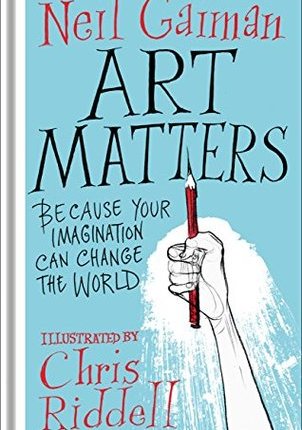
Art Matters: Because Your Imagination Can Change the World by Neil Gaiman, Illustrated by Chris Riddell

Art Matters: Because Your Imagination Can Change the World by Neil Gaiman, Illustrated by Chris Riddell

Neil Gaiman and Chris Riddell have created a manifesto for readers, librarians and content creators. This little book celebrates everything having to do with reading, freedom of information and ideas, and how to start creating the life of your dreams, even if you don’t know where to start.

It was compiled from Gaiman’s prolific back catalog of speeches, poems and various other writings about creativity.

“The world always seems brighter when you’ve just made something that wasn’t there before.”

Photo by Matt Hardy on Pexels.com

I feel like this should be required reading — especially the parts about how to respond to intellectual disagreements. I think Gaiman penned these words after the bombing at Charlie Hebdo, and they still ring true.

“I believe I have the right to think and say the wrong things. I believe your remedy for that should be to argue with me or to ignore me. And that I should have the same remedy for the wrong things that I believe you think.”

And, of course, I was partial to all of the praise directed towards librarians and libraries, having been a librarian once myself. Sometimes people ask me if I ever think libraries will be closed because “they’re just a building with books” or “they’re a waste of taxpayer money”.

This is how I wished I had replied: “Libraries are about freedom. Freedom to read, freedom of ideas, freedom of communication. They are about education, about entertainment, about making safe spaces and about access to information.” How could that ever possibly go out of style?

Photo by Zichuan Han on Pexels.com

Gaiman also gives attention to the bookworms of the world. We make it a better place through our reading and daydreaming and daydreaming about reading. Also, our epic library patronage is a good thing.

“We have an obligation to read for pleasure. If others see us reading, we show that reading is a good thing. We have an obligation to support libraries, to protest the closure of libraries. If you do not value libraries you are silencing the voices of the past and you are damaging the future.”

Gaiman shares a bit about how he became the universally beloved author he is today. Step one, you’ve just got to get started.

“If you have an idea of what you want to make, what you were put here to do, then just go and do that and that’s much harder than it sounds and, sometimes in the end, so much easier than you might imagine.”

He confesses that he lied on early resumes to get his foot in the door. But, after his later success, he went back and worked at all of the places he had claimed before. That way, he didn’t see himself as lying but as “chronologically challenged.” I loved that he took the time to make things right.

Gaiman also has some interesting views about no-start dreamers. He says the saddest thing to him are friends that say they’re too committed to follow their dreams. There’s bills to pay, mortgages and families to support and they can’t take the dive to do whatever it is they’ve always dreamed of doing.

Photo by Karolina Grabowska on Pexels.com

He said he dodged that particular roadblock by skipping a well-paying job or two early in his career, so that he didn’t get too comfortable doing something other than writing. I thought that was an interesting strategy. Creating is about having the courage to just do it, no matter what and not stopping until you’re doing it.

“Somebody on the internet thinks what you do is stupid or evil or it’s all been done before? Make good art.”

The good news is there are more platforms than ever before to get your creations in front of the people who will care about them.

“The gatekeepers are leaving their gates. You can be as creative as you need to be to get your work seen. YouTube and the web (and whatever comes after YouTube and the web) can give you more people watching than television ever did. The old rules are crumbling and nobody knows what the new rules are. So make up your own rules.”

My own life right now points to the truth of that. I left a guaranteed paycheck and employer provided health care to write for my husband’s YouTube channel. We’re not only succeeding but we’re having a lot of fun doing it.

Thank you, Gaiman and Riddell for this beautiful book. I hope it encourages creators everywhere to take the leap.

Thanks for reading!

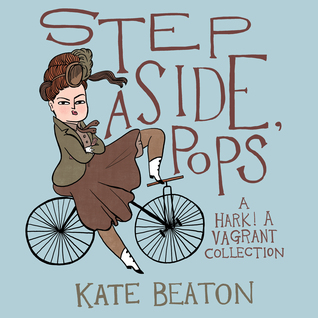
Step Aside, Pops (Hark! A Vagrant, #2) by Kate Beaton

Step Aside, Pops (Hark! A Vagrant, #2) by Kate Beaton

An incredibly clever collection of comics with topics ranging from history to literature to pop culture and everything in between.

You don’t have to know a thing about Kate Beaton’s Hark! A Vagrant to enjoy this book. (I didn’t.) And it is so much fun.

Like any great observational comedian, Kate takes idiosyncrasies or exaggerates details to create comic gold.

For instance, here’s the dialogue from a comic about the Black Prince and some of his early exploits: “How are you feeling about being a hero of the battle of Crecy?” “Bro I am stoked.” “This is quite a momentous event so far in the war…” “Those French guys were like ‘Whoaaaaaa’.” “I keep forgetting you are sixteen.” “And my army was like eat it. Ka chow!!” pg 114

Photo by Julia Volk on Pexels.com

There’s another one I liked about the Greek god Zeus going on a first date that doesn’t make much sense without the pictures so you’ll just have to check it out for yourself on page 123. Basically, it’s a play on all of the mythological stories about Zeus revealing himself to mortals as a swan, shower of gold or something else and still getting the girl. Kate has a point. I mean, how does that even work… showing up as a shower of gold. It’s ridiculous and almost begging for a comic to make fun of it. Like this one. 🙂

In addition to the observational humor, Kate takes characters from old posters, newspaper clippings or magazine photos and gives them a back story. Some of her creations are just hysterical.

Photo by brotiN biswaS on Pexels.com

The spare and pencil-drawn style strongly reminded me of Nimona, which I also enjoyed. I highly recommend this collection for readers who enjoy comics or satire.

Thanks for reading!

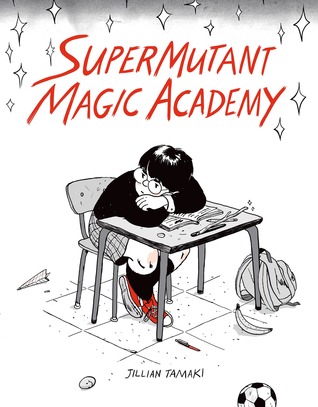
SuperMutant Magic Academy by Jillian Tamaki

SuperMutant Magic Academy by Jillian Tamaki

At the SuperMutant Magic Academy, strange things happen and everyone looks different, but teenage angst and questions about reality remain the same. There is unrequited love, hormones run amok and popularity problems. There is a young man who can’t seem to die, no matter how he tries to end his life. There’s an artist who puts herself into shocking situations to underline the pointlessness of reality.

There’s a young woman with the head of a lizard who just wants to find a boyfriend and a beautiful girl with ears like a fox who occasionally has to change into a fox and hunt prey. There’s drugs and alcohol and a host of other issues, while the poor teachers are simply trying to educate the group.

Photo by fauxels on Pexels.com

I didn’t connect well with this graphic novel and question its appropriateness for the younger end of the young adult scale. Older or more mature teens should be ok. There’s moments that make light of self harm without, what I think, is the appropriate context. There’s some sexual content that may be incredibly confusing and inappropriate for 11 and 12 year olds.

When I borrowed this from the library, I was under the impression that I could share this book with my child. After reading it, I realized I was wrong. That may have affected my opinions of SuperMutant Magic Academy. If I had just read it for enjoyment’s sake, maybe I would have thought more of its content.

Or maybe not. Jillian Tamaki gives herself, usually, just six panels to create a narrative and it isn’t enough. The jarring moments of reality left me with more questions than answers. I wanted more of a story and never really got that.

Photo by Thiago Matos on Pexels.com

It made me think maybe I was missing out on something. If this is based off of a web comic, maybe I would have enjoyed it more if I had read it in its original medium.

Thanks for reading!

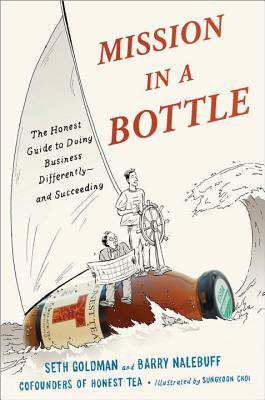
Mission in a Bottle: The Honest Guide to Doing Business Differently – And Succeeding by Seth Goldman, Barry J. Nalebuff

Mission in a Bottle: The Honest Guide to Doing Business Differently – And Succeeding by Seth Goldman,  Barry J. Nalebuff

Barry Nalebuff and Seth Goldman, who are the cofounders of Honest Tea, tell how they created their bottled tea business and grew it into something more.

Photo by Cup of Couple on Pexels.com

I understand what they were trying to accomplish with telling their business story in a graphic novel format but it didn’t work for me.

Graphic novels are great platforms to tell stories with a lot of action, colorful figures, and fantastic backgrounds. The story of founding a business, any business, seems to take place mostly in rooms with a bunch of people in business attire. The creation of a mission statement is mainly words on a page with little to show, action-wise. That doesn’t make it less important, but simply less exciting than a superhero comic.

Even the tense moments of Mission in a Bottle, like the time when a guy thought he found a piece of a male body part in one of the brands that they were renting their bottling facility out to, just didn’t translate in a meaningful way to a cartoon format.

Photo by Pixabay on Pexels.com

Overall, I enjoyed the business story and found it inspiring. I wish Goldman and Nalebuff had written it as a traditional book rather than a graphic novel.

Thanks for reading!