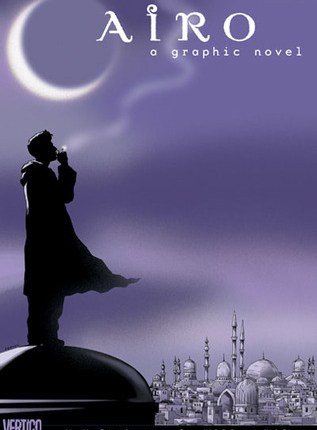
Cairo by G. Willow Wilson

Cairo by G. Willow Wilson

Cairo is an urban fantasy graphic novel set against the backdrop of the desert city of the same name. It has magical creatures, confused young men, drug dealers, magicians, Israeli soldiers and more.

Everyone in this story is looking for something. If it’s not a magical hookah, it is a search for love, truth, their higher self or more power. I suppose the entire story could be used as a reminder that “wherever you go, there you are”.

Photo by Alex Azabache on Pexels.com

“I wanted to do something. Get away from self-obsessed first world crap. I felt like the monoculture was suffocating me. I didn’t want to get stuck where I was. You know that feeling?” “I know it. But I do not think you’ll find what you are looking for in Cairo.” “Why’s that?” “Because a lot of us are stuck here.”

I was drawn to this graphic novel because of the teasers that promised mythology mixed with fantasy. It does contain that, but everything felt so rushed. Readers didn’t get the context of any of it. We’re just thrust into a world that doesn’t make much sense and spend much of the story grasping at straws of understanding.

In a way, it is much like real life. However, I prefer my graphic novels to be more of an exercise in escapism than a mirror for real life.

Give me layered worlds, complex story lines, nuanced characters and deep-seated meaning. I felt Cairo reaching for those things, but not quite getting there.
Photo by Deep Kumar on Pexels.com

We do have quite a number of main characters, which, by its nature, makes the story more complex. But, in this case, I felt that more was not better because all of the characters felt so one-note.

The exception to this classification was Shams, the jinn. We get glimpses into his millennias-long life, relationships to other storied characters, guardianship of a sacred object and spiritual leanings. Even then, I wanted more.

“Welcome to your new home, oh jinn. We’ll talk again when you are more reasonable. Take all the time you need.”

The illustrations are done in black and white, and feel rather gritty. I imagine the whole thing could have taken on a completely different character with a couple good punches of color.

Photo by Olha Ruskykh on Pexels.com

My favorite part was when one of the main characters reaches for a hero’s sword in a test of faith. G. Willow Wilson, the author, uses a poem by Hafiz to put words in the hero’s mouth as he strives to touch another reality and lay claim to the magical blade.

“The place where I am right now… was circled on a map for me.”

Though the translation Wilson used varies from the version I am familiar with, which reads: “This place where you are now, God circled on a map for you.”

Still, it is a beautiful sentiment. Rather like the intention, if not execution, of this graphic novel.

Thanks for reading.

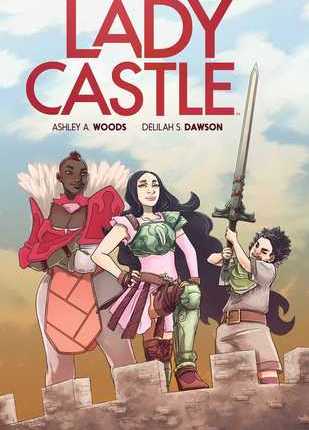
Ladycastle by Delilah S. Dawson

Ladycastle by Delilah S. Dawson

Aeve, a princess of Mancastle, is locked in a tower by her father, King Mancastle, for her refusal to chose a husband. Aeve’s younger sister, Gwyneff, is free to roam the castle, until she turns twelve and is subjected to the same fate as Aeve.

But Gwyneff doesn’t understand her sister’s choice and blames her for their father’s time-consuming efforts to find a new husband for Aeve and his absence.

“Aeve ruins everything. If she’d married, father wouldn’t go out hunting new princes. He’d be here. All the men would.”

Photo by Jeffrey Czum on Pexels.com

When King Mancastle and his men venture out to find a more suitable groom, and meet a foe they cannot overcome. One of the men returns to report to the women left behind — a curse has been laid on the castle and monsters will “be drawn as to a beacon”.

“For not only was King Mancastle cursed, but so was his domain. This castle shall be a beacon to terrifying monsters until the wizard’s curse is lifted.”

The blacksmith’s wife, Merinor, takes up the Lady of the Lake’s sword and becomes king. She and the women begin preparations to defend themselves from the approaching monsters. And thus our tale begins…

The artwork in Ladycastle is beautifully drawn with bright colors. I enjoyed the premise of the story. But Ladycastle doesn’t quite fulfill its promise in this volume.

Photo by Felix Mittermeier on Pexels.com

In the beginning of each section, the ladies’ inner monologue reads like a Disney or classic Broadway song, purposefully so. It’s distracting and derivative. I get that this work was attempting to point out the inherent bias of the other works, but I feel it takes away from the originality of this one.

The dark ages were brutal on women. I get it. Each lady in Ladycastle has a backstory of abuse or neglect from the man who ran her life, except for Gwyneff who hadn’t yet attained an age to be given away by her father for political purposes.

I liked how this comic flips that gender-issue on its head, the women rule the roost now. But the delivery of the lesson is heavy-handed, especially in the first two sections of the book.

Photo by Engin Akyurt on Pexels.com

As other readers have noted, there is a stab at diversity in this book, but no inclusion of LGBTQ characters. I can’t see any reason for this over-sight.

Recommended for readers who enjoy graphic novels, but with the reservations listed above. I felt like this topic was handled more deftly in the graphic novel for children, Princeless, Vol. 1: Save Yourself.

Thanks for reading!

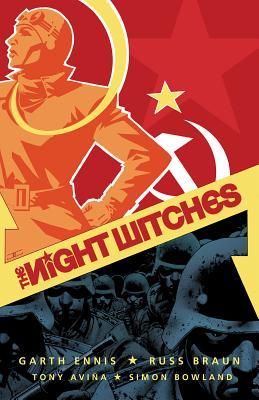
The Night Witches by Garth Ennis

The Night Witches by Garth Ennis

Though the main characters in The Night Witches are a work of fiction, Garth Ennis based them on real-life women, the female-Russian aviators who flew for their country during WWII. Their older airplane engines were too loud and alerted the Germans before their aerial night attacks, so the aviators developed a technique of cutting the engines and gliding over their targets before dropping their bombs.

“You know what it’s like when a P.O.-2 comes along, if you’re on the ground you can hear it for miles, that pop-pop-popping the engine makes… Two more missions like that and we’ll all be done with, unless we can magically stop them from hearing us coming.”

Photo by Pixabay on Pexels.com

Their method of attack was unique and terrifyingly effective at robbing the invading troops of sleep and peace of mind. The Germans called these pilots, because they were women and attacked at night, “Nacht Hexen” or the “Night Witches”.

This graphic novel is filled with violent warfare, rape, loss, heartache and other dangers the women faced during their service, including male counterparts who didn’t want their help. But Russians were so hard-pressed in their fight against the Nazis, that they had no choice.

“I think the notion of women aircrew is a joke; I think women combat fliers are a worse joke; I think women assigned to this base alongside my fighter squadron are the worst joke of all.”

It is a sad but true chapter of history. The Russians lost more troops than any other country in the conflict, a staggering twenty seven million dead.

Photo by Gladson Xavier on Pexels.com

They didn’t have time to properly train or equip the people they were throwing at the Germans. It was a bloodbath. But the women flew and fought all the same. They were the most decorated female combat unit of WWII and their service is worth being remembered.

Recommended for adult readers who enjoy military history and aviation. 

Thank you to the publisher for a free copy of this book for review purposes.

If you’re interested in more non-fiction information about the Night Witches, check out The History Guy’s video “The Night Witches and World War II”:

The History Guy remembers the service and courage of the Night Witches.

And thanks for reading!

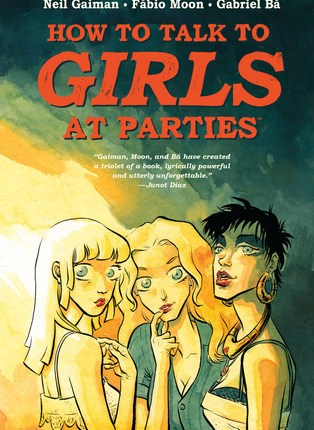
How to Talk to Girls at Parties by Neil Gaiman

How to Talk to Girls at Parties by Neil Gaiman

When two young men go to a party, the young women there are so much more than what they expected.

This short story by Neil Gaiman, adopted in a graphic novel format, perfectly captures (in a science fiction-tinged bubble) the bewilderment that goes along with communication and young adulthood.

Sometimes, when you’re trying to chat up members of the opposite sex, it’s as if you’re talking to someone alien from yourself or even just the idea of a person. Gaiman takes this concept and, in typical Gaiman-fashion, runs with it.

Photo by Francesco Ungaro on Pexels.com

He is even able to touch upon the darker side of young, romantic flings. The popular young man in the story gets all the female attention he could want, but at what cost to both him and the young women he leaves behind?

The other young man, referenced in the title because he is hesitant to “talk to girls at parties”, is the one who the narrative follows. His adventure into the worlds of the mind is certainly as wild as his friend’s experience.

This is a quick read, only 10 or 15 minutes, but I found it stuck with me. I was wondering at the layers of meaning in it.

The artwork is beautiful but strange. The women’s eyes are drawn slightly too large for normalcy. It set me on edge and made most of the story unsettling, which I suppose is also the point of the thing.

Photo by Cole Keister on Pexels.com

The story made me think about how much of our relationships take place because we’re brave enough to face that unsettling feeling. And by experiencing “the other”, we come back home a new person than who we were when we left. Maybe not a better person, but different.

Recommended for teens or adults who enjoy science fiction. I think anybody who has faced down their own fears to talk to someone they find enchanting will find something to ponder in this graphic novel.

Thanks for reading!

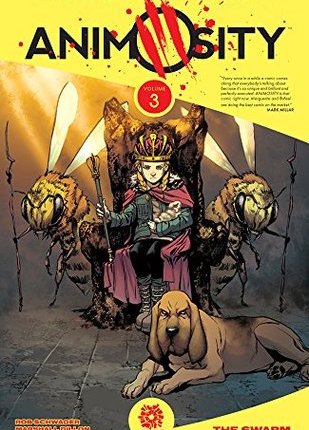
Animosity, Vol. 3: The Swarm by Marguerite Bennett

Animosity, Vol. 3: The Swarm by Marguerite Bennett

In the world of Animosity, the animals became sentient one day. In some areas of the world, this transition occurred more smoothly than others. Strangely, all of the bees disappeared.

This issue sheds some light on where they went.

As this series continues to get darker, I can’t help but be reminded of The Walking Dead, Book One. (Especially with the rumors of a “walled city” in this issue.)

Photo by Lisa Fotios on Pexels.com

You have a world, much like our own, but with unexpected dangers and predators around every corner. Some have adopted in strange ways to survive, sometimes at the great expense of others. Cultures have entirely changed or adopted to embrace different manners of communication and family.

The strong are thriving, but so are the smart. What matters most are your relationships and how you interact with others.

My one criticism of this series is how dark it seems to be turning. If animals became like people, wouldn’t they get some of our most positive characteristics too, instead of mainly or entirely the negative?

It’s still a fascinating premise in that the carnivores still need to eat meat even though they now have the cognitive abilities of a human. There’s a few panels in this issue showing krill having a conversation about the dangers of trying to communicate with the deep ocean creatures shortly before being swallowed by a whale.

Photo by Andrea Holien on Pexels.com

How small does the sentience go? To one-celled organisms? We don’t know yet. But it is a mystery the series is working on solving.

Recommended for adult or older teen readers because of some violence, not too graphic, and stressful situations. This issue ends on a cliffhanger so if you can’t handle the uncertainty, you may want to wait to read these until the series is complete.

Thanks for reading!

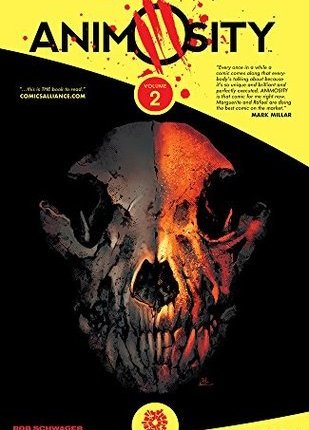
Animosity, Vol. 2: The Dragon by Marguerite Bennett

Animosity, Vol. 2: The Dragon by Marguerite Bennett

The plot thickens for Sandor, the hound dog, and his human, Jesse, as they attempt to make their way across the country to reunite Jesse with her half-brother.

“Jesse is growing up, and signs of it frighten Sandor more than they even frighten her. Sandor fears, so much, that he will be unable to protect Jesse from all pain, all terror, aware that he will not be there for her adulthood.”

Photo by cheptu00e9 cormani on Pexels.com

Now that all of the animals are sentient, the lines between human and animal, predator and prey have blurred. Certain species are starving to death. Other species are being farmed for their meat. It’s a dark story, but still fascinating in the way it flips reality on its head.

“The honeybees have retreated to some secret place, and the ants threaten blistering violence for the paw that reads the wrong mound, yet each seem unusual in their clannishness to their own kind.”

Along with their new sentience, some of the animals are considering the state of their souls… do they have one, and where do they go when they die? Others are banding together to fight against the humans or each other. And still others are protecting the only person or thing they care about, like Sandor.

My favorite part of this issue was the series recap at the end where the author, Marguerite Bennett, gives a brief glimpse into what’s going on in every state and country since the animals “woke”. Highlights include my home state of Illinois trying to figure out how to regulate the new reality (you know they would) and her description of the new Mongolia: “Little has changed.”

Photo by Julia Volk on Pexels.com

Honestly, this book is worth reading if only for that section. I can’t help but be impressed by the imagination it took to combine the cultures, unique creatures and people of each corner of the world and provide its own mini-story.

The artwork, as you can tell from the cover, is haunting in places. You see animals wielding human weapons and wearing clothing. But it’s not cute, the overall effect is very disturbing. I won’t soon forget a deer lobbing a hand grenade into a group of shadowy figures in the forest and I think that’s probably the point.

Recommended for fans of dark science fiction graphic novels. Thanks for reading!

To read more of my reviews of graphic novels, go to
https://thehelpdeskbookblog.wordpress.com/category/comic-or-graphic-novel/page/1/


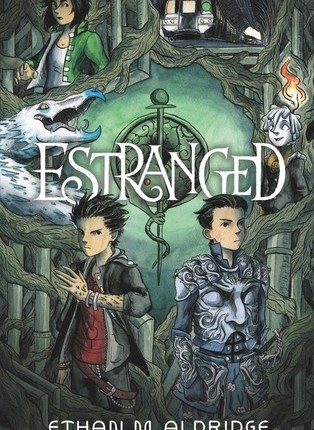
Estranged (Estranged, #1) by Ethan M. Aldridge

Estranged (Estranged, #1) by Ethan M. Aldridge

A cute graphic novel for middle graders that features a changeling, his human counterpart, their human sister and a golem made out of wax.

“There hasn’t been a human in High Court in a century. That makes you special, doesn’t it?” “Oh, they never let me forget that. It’s always ‘the human childe’.”

Photo by Danielle Reese on Pexels.com

But trouble brews when a disgruntled elf turns the king and queen of the High Court into rodents. Then, she goes after the “Childe”. In response, he seeks out his changeling twin in the world above or the real world. And that is where our adventure begins.

“The only home I’ve ever had has been taken! This was meant to be my home, my life, and it was taken before I was old enough to remember it!” “I’ve got nothing, nowhere to go! I have as much right to be here as you!”

Along the way, they have to face goblins, magic statues, a witch and a treasure-hungry dragon. The plot is a bit simplistic but it is perfect for children who like fantasy and urban fantasy.

In fact, I picked this book up at the local game shop for my daughter and she read it in one sitting, which is a miracle because she’s a reluctant reader. I’m always looking for stories or formats that appeal to someone who enjoys video games more than books.

Photo by Andrea Piacquadio on Pexels.com

She absolutely loved it and said I HAD to read it. I asked why and she said, “Because it’s just awesome.” She loved the magic and world Ethan Aldridge has created. She also loved the artwork. Her favorite character, and mine, was Whick, the brave wax golem who accompanies the Human Childe from the court below to the world above and back.

The story also touches on the sometimes difficult relationship between a brother and sister. There’s a good message about taking care of your family that I resonated with.

In conclusion, I loved that my Human Childe loved it. Highly recommended.

Thanks for reading!

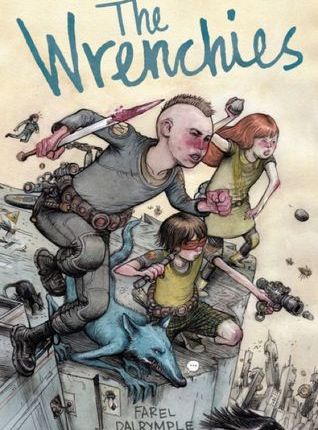
The Wrenchies by Farel Dalrymple

The Wrenchies by Farel Dalrymple

A gorgeously-drawn graphic novel that suffers from a bonkers plot and scrambled timeline.

I’ll try to give a brief summary here, but understand that this is gleaned from every part of the book — beginning, middle, end. Farel Dalrymple doesn’t present the story in a linear fashion, which is incredibly frustrating.

A boy and his brother enter a cave and are attacked by a demon-like creature called a shadowman. During the course of the attack, the demon messes with the first boy’s eyes and something radically shifts in his brain/destiny. After his brother saves him, the boy’s eyes are drawn to a medallion in the demon’s cave through which he sees/astral travels into a different dimension where he can view aspects of the future.

Photo by Francesco Ungaro on Pexels.com

This future is an apocalyptic world filled with these shadowmen and children who fight against them. All grownups in the world have become shadowmen. When a child reaches a certain age, they are “harvested” by the demons and become part of the problem. Something powerful and magical is fueling these shadowmen, but discovering and disabling that artifact is the large story arc so I won’t spoil it for you here.

Meanwhile, the boy-with-the-demon-altered-eyes is (I kid you not) kidnapped by aliens while his brother goes on to fight the shadowmen in the real world. Then there’s some character development about the children/warriors in the apocalyptic world, the involvement of a child from our time, a blind child who uses technology in a way that borders on magic, another child who actually uses magic… And, at one point, I think the author tries to add the difficulty he had writing the comic into the comic itself. 

Photo by Michael Herren on Pexels.com

I think that’s enough of a summary. Don’t you?

This isn’t a fairy tale story for teens though it seems to reach for a coming-of-age feel. The children use drugs to protect themselves from the mind-altering powers of the shadowmen and are constantly fighting bugs that pop out of the shadowmens’ heads after they kill them. It is a paranoid schizophrenic’s nightmare.

The Wrenches is violent and disturbing, rather like Peter Pan on acid with demons instead of pirates. And not in a good way.

I suppose if you just looked at the artwork and didn’t read it, you might enjoy this graphic novel. Honestly, the panels are stunning. Shame about the story tho.

Thanks for reading!

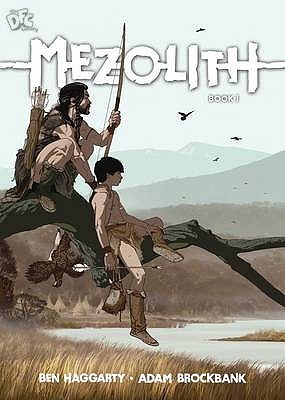
Mezolith by Ben Haggarty, Adam Brockbank

Mezolith by Ben Haggarty, Adam Brockbank

A beautifully illustrated coming-of-age tale about a boy who lives with his stone age tribe. Reality and mythology are mixed in his life to create something else, something that feels true though it couldn’t possibly be.

“Poika, at the heart of the world there is a cave and in that cave there are countless urgas, all sleeping… all dreaming… and when one dreams that a brother has been destroyed he wakes. Crawls into the world. Finds some humans and cries pitifully near them… until someone comes to care for him…”

Photo by Rozemarijn van Kampen on Pexels.com

How do you imagine that Stone Age peoples explained phenomena that scientists today have only begun to unravel? Where does love come from? What brings a fever or trouble? They explained these things by telling stories.

There’s the story of a man who fell in love with a woman who was actually a swan, so he travels to the end of the world to convince her father, the Swan King, to let her live with him.

There’s a demon who conceals itself as a baby and then in the night, if you take it into your tribe, it wakes and consumes everything in its path.

There’s a woman who should have died, but survived, and now has an uncanny relationship with crows and can see through their eyes… and more.

Photo by Pixabay on Pexels.com

It’s magical and strange, and Adam Brockbank has illustrated Ben Haggarty’s stories beautifully. It is easy to see why this was a Times pick for Best Graphic Novel.

Despite this excellence, only one library in my enormous, interconnected library system owned this book. I was surprised. It has appeal for both young adults and the young-at-heart. The violence in it isn’t overly graphic. The themes are appropriate and intriguing for reluctant readers.

If any librarians read this review, please consider buying a copy of Mezolith for your shelves. I think your patrons would enjoy it. I certainly did.

Thanks for reading!