A girl from Indiana goes to Hollywood and ends up taking care of Hollywood royalty in A Touch of Stardust.
The reader gets a behind the scenes look at the making of Gone With the Wind and the private, slightly dysfunctional lives of Carol Lombard and Clarke Gable.
It was fun learning about what went into the creation of Gone With the Wind. Those parts of the book sort of read like a Hollywood-fan magazine, but better written.
The dialogue in this book is snappy and smart, like a Bogie and Bacall film.
I loved the heroine and how she pulled herself up by the bootstraps to make it in Hollywood at a time when very few women did.
Jazz lives on Artemis, the first city on the moon. She delivers packages to eek out a living as well as other, more shady, methods of income.
“I live in Artemis, the first (and so far, only) city on the moon. It’s made of five huge spheres called “bubbles.” They’re half underground, so Artemis looks exactly like old sci-fi books said a moon city should look: a bunch of domes.” pg 5
One day, one of the richest men on the moon makes her an offer far too lucrative for her to refuse… all she has to do is something very dangerous and illegal. No problem, right?
“I’m sorry, but this isn’t my thing,” I said. “You’ll have to find someone else.” “I’ll give you a million slugs.” “Deal.” pg 46.
Andy Weir’s follow-up to The Martian was disappointing to me.
Unlike his first book, the science is watered down. It’s not as educational and quirky. In my mind, the exceptional science was what separated The Martian from other science fiction offerings.
The characterizations are one dimensional, like The Martian, but it was less of a problem in the first book. In that one, you were mainly dealing with one person, alone.
In Artemis, Weir tries to build a city of characters and I didn’t buy into it.
The main character, a female narrator, is particularly problematic. She just didn’t sound like a woman to me.
“I landed like a sack of sh*t. But I landed on the other side of the alcove and didn’t break anything. … Whatever. A clumsy, awkward success is still a success.” pg 124.
But beyond those small problems, Artemis is still enjoyable.
Weir put a huge amount of thought into how an economy on the moon would work. It is the most realistic I’ve ever read.
He also nails the human condition, the drive for novelty and tourism.
Weir describes the trouble with travel: Even when it’s a once-in-a-lifetime vacation. You leak money like a sieve. You’re jet-lagged. You’re exhausted all the time. You’re homesick even though you’re on vacation.” pg 152.
First of all, the introductory portion doesn’t make sense until the last half of the book. The pacing is glacially slow. A few of our club members couldn’t make it through the first couple of chapters.
Secondly, the constant warring and torture of innocents by the conquering forces is really difficult to read.
“We welcomed them because we’d been persecuted by the Burmans for centuries, we’d been their slaves – our villages perpetually attacked, our people perpetually preyed upon, stripped of everything from our clothing to our lives.” pg 37.
It is an important history, certainly, but the darkness of it made me feel sick.
A third problem club members had with Miss Burma is it feels disjointed.
At first, readers thought Khin and Benny were the focus of the book. But then, the point of view drifted around to Louisa, their beautiful daughter, and her story took over.
We must find a way to rejoice in our circumstances. We must find a way to do more than endure.” pg 145
Basically, the Karen are an ethnic minority in Burma, now Myanmar. For centuries, the Karen have been enslaved by the Burmese. The underlying story is about how the Karen tried to unite against the ruling government to create a federation.
“Our modesty that runs so deep it is almost self-annihilating. But now.. our relative invisibility strikes me as very sad. … If you stand for a moment behind their eyes- behind the eyes of anyone for whom modesty is not an ultimate virtue- we appear to value our lives less than they do.” pg 168
Against this background, the family of Khin and Benny tries to survive and do what they believe is right.
This story is full of flawed characters and whole passages where most of the action takes place in people’s minds.
There is fairly graphic torture, rape and violence. If any of those are triggers for you, beware.
Recommended for patient readers and those who can handle a very dark history. The book club certainly learned a lot about Burma from this book. And bullets still fly in Myanmar today.
I See You is a tense thriller with fairly good execution that stumbles on its ending.
It takes place in London. The scary parts mainly take place on the public transport system.
“…I don’t know how you do this every day.” “You get used to it,” I say, although you don’t so much get used to it as simply put up with it. Standing up on a cramped, malodorous train is part and parcel of working in London.” pg 42.
Zoe Walker sees her photo, or what she believes is her photo, in the papers on her way to work. It’s weird and scary because she didn’t submit her photo to the press.
“Routine is comforting to you. It’s familiar, reassuring. Routine makes you feel safe. Routine will kill you.” pg 51.
Kelly is a member of the police. She has secrets in her past and reasons to prove herself.
“Kelly thought of all the crime prevention initiatives she’d seen rolled out over her nine years in the job. Poster campaigns, leaflet drops, attack alarms, education programs… Yet it was far simpler than that; they just had to listen to victims. Believe them.” pg 83.
Dark Matter is a fantastic, sci-fi read about regret, love and quantum mechanics.
My book club picked this wild ride of a book and everybody took something different out of it.
We all enjoyed it, which is weird for us. Usually, we have opinions across the spectrum. This one, though, was universally loved. That’s saying something.
“In the shadow of this moment, my life is achingly beautiful. “I have an amazing family. A fulfilling job. We’re comfortable. Nobody’s sick.” pg 28. And then, something truly surprising happens. No spoilers!
I think that, as time passes, we grow comfortable in our lives, our marriages and relationships. Part of this book is about appreciating what you may take for granted. “He says, “It’s like we get so set in our ways, so entrenched in those grooves, we stop seeing our loved ones for who they are. But tonight, right now, I see you again, like the first time we met, when the sound of your voice and your smell was this new country.” pg 67.
The leader of my book club picked quotations that had to do about self-knowing and quantum mechanics. It was no surprise that mine were all about love. I’m one of the hopeless romantics of the group.
And one of the most open-minded: “We all live day to day completely oblivious to the fact that we’re a part of a much larger and stranger reality that we can possibly imagine.” pg 96. I truly believe that.
A local physics professor joined our circle and gave a short lecture on basic quantum mechanics and wave theory. But, you don’t have to be an expert on the subject to enjoy this story. It’s approachable science, like The Martian.
Recommended for book clubs, especially, but also anyone who wants an unbelievable story will probably love this too.
I heard that this is going to be made into a film- read the book anyway. It’s always better.
A so-so mystery with an unreliable narrator that takes place, for the most part, on a boat. It was ok thriller, but I would never have read it without the encouragement of my book club.
In the desperate search for “the next Gone Girl“, The Woman in Cabin 10was put forward as an option. I think that’s unfair. The next Gone Girlor Hunger Games will be so clearly original and ground-breaking that it couldn’t be titled the next fill-in-the-blank.
And, with that sort of hype, it put an expectation on this story that it didn’t live up to. But, that’s not The Woman in Cabin 10‘s fault.
It was clear to me that Ruth Ware had experience as a journalist. Her character, Lo Blacklock, is completely believable in that regard. But, I found that I didn’t like her much. She puts too much pressure on herself to succeed.
“I had to get myself together before I left for this trip. It was an unmissable, unrepeatable opportunity to prove myself after ten years at the coalface of boring cut-and-paste journalism. This was my chance to show I could hack it…” pg 20.
But, if she had taken the time to stay home and recover from her PTSD, what sort of thriller would that be? So, off she goes, onto a billionaire’s exclusive boat.
“…it was pretty nice. I guess you had to get something for the eight grand or whatever it was they were charging for this place. The amount was slightly obscene, in comparison to my salary- or even Rowan’s salary.” pg 47.
Then, in classic thriller fashion, she hears a scream in the night, sees something that no one, even she, believes and is now stuck in an enclosed space with a potential killer.
Even with that set-up, I didn’t get into the story. Lo is overly-dramatic and doesn’t take the time to think things through. I found myself wishing that she would slow down and start keeping a complete written record rather than running from one disastrous encounter to the next.
“I lay there, cudgeling my battered brain to try to work it out, but the more I tried to ram the bits of information together, the more it felt like a jigsaw with too many pieces to fit the frame.” pg 242.
She jumps to conclusions and accuses or dismisses people nearly on a whim. I’d read a passage and then say to myself, “Come on, is that really the best you could do?” Now, that’s hardly fair as she’s exhausted, terrified and traumatized. But still. That’s what I thought.
Plus, the “unreliable narrator” thing has been done. In this story, Lo’s unreliable because she has anxiety and drinks a lot to forget that fact. That sounds like almost everyone I know.
Recommended for fans of mystery. It is enjoyable, but don’t make my mistake and expect too much complexity from The Woman in Cabin 10.
Extraordinary and true story about how Gil and Eleanor Kraus saved fifty Jewish children from the Nazi Holocaust.
I watched the HBO documentary after I read this and, though similar and emotionally powerful, I enjoyed the book more because it provides a detailed history for each child (that Pressman was able to locate).
My only complaint about the book is that, though the story is gripping, it moves very slowly. My book club had a fascinating and educational discussion about 50 Children and, all said, I am very glad that it was the final club pick of 2016.
Did you know about this episode from US history?: “The fifty boys and girls whose lives were saved by Gil and Eleanor Kraus comprised the largest single known group of children, traveling without their parents, who were legally admitted into the United States during the Holocaust.” pg 9, ebook.
I didn’t realize that in the late 1930’s, that Jewish people were allowed, and even violently encouraged, to leave the Third Reich. The trouble was that, like other large displaced populations more recently, no country on earth was prepared to let that many people in or provide the social services required.
Fortunately, Gil Kraus was a well-connected lawyer who was willing and able to work within existing immigration and labor laws to find a way to bring the children into the US.
I knew that the situation was awful for Jewish people in Europe before and during World War II, but, until I read this book, I didn’t realize the complete hopelessness that was experienced even before concentration camps became the ‘final solution’: “Within the first ten days of the Anschluss, the Viennese police reported nearly one hundred suicides throughout the city, virtually all of them Jews. By the end of April, the number of suicides had jumped to at least two thousand. Among the victims was Henny Wenkart’s pediatrician, who took his life by jumping out a window.” pg 42, ebook.
The American diplomats in Austria and Berlin had a front row seat to the horrors that the Jewish population were experiencing, but their hands were tied by national policy and immigration caps.
George Messersmith and Raymond Geist helped the Krauses as much as they could, within the law: “The Jews in Germany are being condemned to death. Their sentence will be slowly carried out, but probably too fast for the world to save them,” Geist (US foreign service officer in the Third Reich) wrote in a private letter to Messersmith (State Department secretary, stationed in Washington D.C.) in December 1938, less than a month after Kristallnacht.” pg 61, ebook.
Why was the American publication so anti-immigration?: “The United States still bore the scars of the Great Depression, and restricting immigration was seen as a way to protect jobs for Americans, who for years had been plagued with staggering unemployment rates. But challenging economic considerations were not the only factors at play in the immigration debate. The American public simply was not moved by the dire situation in Europe.” pg 68, ebook.
And, antisemitism was far more prevalent than it is today. All of these things made it difficult if not impossible for the Jewish people who were trying to escape the Nazis.
Even after the Krauses were able to get the children to the United States, they faced harsh criticism from other Jewish charity groups for their actions. I was absolutely blown away by that.
You’d think that people would have banded together and said, “Look what’s possible!”, but instead, they fractured and accused the Krauses of breaking immigration laws. “Was it envy that prompted others to criticize what had clearly been a stunningly unique and successful rescue? Whatever their motivation, some of these same people now wondered if they might simply duplicate Gil’s strategy. pg 201, ebook.
But, since this was the largest group to get out, clearly the others didn’t succeed.
At book club, we talked about how the 1939 situation is similar to what the world is facing today with the Syrian refugee crisis and, though we all thought that immigration policy needs to be re-examined, that the real tragedy is that the world still hasn’t found a way to respond to the wars and conflicts that cause such displacement in the first place.
Is humanity ever going to figure out a way to either co-exist peacefully or provide sanctuary for those displaced by the fighting? I don’t know, but it’s a question that we should think about.
Recommended for anyone interested in the Holocaust, immigration, or testimonies from World War II- as uplifting as it is unsettling, 50 Childrenis a timeless lesson for everyone about the evils that happen when those able to help choose not to or look away.
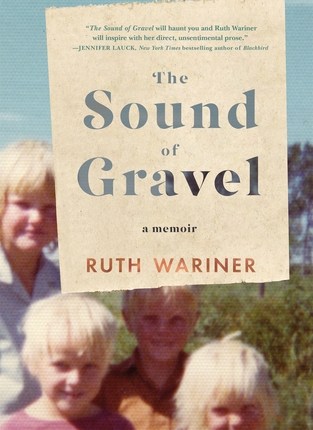
The Sound of Gravel is in the running for my favorite book club read this year! (Bull Mountain is the other pick I really enjoyed.)
It is Ruth Warnier’s memoir about her poverty-stricken childhood in a polygamist cult in Mexico, her dysfunctional mother, abusive step-father, and struggle for survival along with her many siblings.
She pulls you in, first line: “I am my mother’s fourth child and my father’s thirty-ninth.” pg 10, ebook. I read that sentence to my husband and his reaction was, “Are you reading a book about royalty?” Unfortunately, no.
Ruthie’s father was a founding member of the “Firstborns”, a polygamist group that broke away from the Mormon church. He believed that, in order to live in the manner that God intended, men are supposed to have multiple wives and as many children as possible, to become like gods in the next life. He lived what he preached.
But, unlike members of royal families, Ruthie’s father, and later her stepfather, did not have the resources available to allow his wives to live in houses with running water or electricity. It is a hard existence but Ruth’s parents live it because of their faith.
“After all,” she said, “it is better to have ten percent of one good man than to have one hundred percent of a bad one.” The women of LeBaron (the colony in Mexico) were always saying that…” pg 12, ebook. But what about ten percent of a bad man…
At first, Ruth’s stepfather seems almost normal: “Everyone in the colony was always saying how Lane had a strong work ethic. He spent every day milking cows, planting and baling hay, fixing tractors, trucks, and other equipment- all of which broke down regularly. But in spite of all his hard work, he never made enough money to provide for his eleven kids and stepchildren.” pg 21, ebook.
And his family grew larger than that quite quickly. But, after a short time, he begins to show his true self.
It’s hard to imagine the level of poverty that Ruth and her family endured. Every month, her mother and all of her brothers and sisters made their way by bus from Mexico to the US to collect government assistance. The trip took all day and when they got back, if stepfather Lane did not show up at the bus stop to pick them up, they had to walk a mile home.
“The rest of us followed silently, watching and listening as Mom took a wide step over the highway shoulder and onto the dirt road, the gravel crunching beneath her footsteps, the sound of home.” pg 29, ebook.
Ruth’s mother tries to do what she can for her children but there’s only so much a perpetually pregnant, struggling mother of five (or more) can do. Some of Ruth’s siblings suffer from disabilities that make it dangerous for them to be left alone with any of the younger ones. After reading what her childhood was like, I am simply amazed that Ruth survived to write this book.
Major trigger warnings for sensitive readers: there are some seriously disturbing scenes of child abuse and domestic violence. But, it is worth the read.
This is Kevin Hazzard’s memoir- he was a journalist, until 9-11, and then, he decided that he needed to work a job that gave more back to society. So, he decided to become an EMT and, eventually, a paramedic. This is the sometimes insane, sometimes touching, and, many times, yucky record of his ten years in that profession.
It is shocking, but I learned a lot about the physical and emotional toll the job takes on these professionals.
Frankly, I’m surprised that anyone is able to do this job. I know that I couldn’t.
A Thousand Naked Strangers invites the reader to examine their own mortality or, if not examine it, just remember it like a literary memento mori.
I, like most other people, want to pretend that I’m going to live forever when I know I’m not. A Thousand Naked Strangersdoesn’t allow room for that.
Hazzard’s stories can be ridiculous, gruesome, or uplifting. This book has a little bit of everything.
Why Kevin decides to become an EMT: (his first day of class) “…Alan (the instructor) tells us, right out of the gate, if we’re not sure we can handle this, now is the time to leave. A couple of people laugh as though the mere suggestion is ridiculous, but I’m not one of them. I didn’t grow up wanting to be an EMT, nor do I know if I’ll like it. What I do know is I want to get hip-deep in things that matter.” pg 19 ebook.
He certainly manages to do that.
Learning the ropes: “It’s all so new, so foreign, so much like that period of childhood- first or second grade, maybe- when you’re old enough to know you’re alive and one day will die, yet young enough to still believe that a thin vein of magic runs just beneath the surface.” pgs 26-27 ebook.
I still feel like that, most of the time.
Why Kevin stays: “Every word the radio breathes into the stale air of the station sets me on fire. EMS is the greatest show I’ve ever seen, except it’s not a show, it’s all real. No, it’s more than that- it’s reality distilled and boiled down to its essence.” pg 59 ebook
At times, I had trouble connecting with this memoir. He almost felt too excited to be out there… inviting disaster because he was going to be the one to pick up the pieces. I’ve never felt like that.
Why it’s so hard to read A Thousand Naked Strangers: “In a job where it’s possible to scoop up a stranger’s brain, it’s important to have levity. But after a while, I lose the ability to judge which stories to tell my friends and which go beyond the limits of good taste.” pg 90 ebook. That’s it- in a nutshell.
Finally, how Kevin’s job is sort of like everyone else’s: “Like a recurring dream, every working day holds the same frustrations, and the working days never change, they just stretch out for all eternity. For months I’ve wondered how it will end. Maybe I’ll reach my limit and quit.” pg 206 ebook
I think, anyone who works a job for any amount of time, feels like this at some point or another. Kevin’s job was simply more intense and invited that type of introspection more quickly.
My book club picked this memoir as its monthly read. I’m not certain I would have ever chosen to read it otherwise. But, I’m glad I did.















 Dark Matter is a fantastic, sci-fi read about regret, love and quantum mechanics.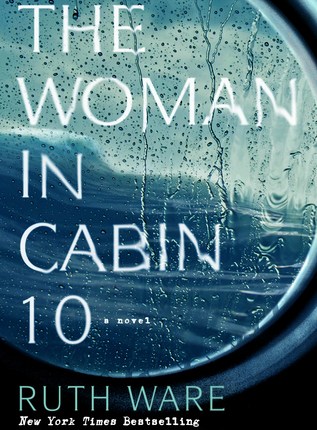










 The Help Desk Book Blog