Cultish: The Language of Fanaticism by Amanda Montell

Cultish: The Language of Fanaticism by Amanda Montell

In Cultish: The Language of Fanaticism, author Amanda Montell examines groups, companies and individuals, and the way they use language to build communities, sometimes for harmless purposes and other times for more sinister.

“We need a more versatile way to talk about communities that are cult-like in one way or another but not necessarily connected to the supernatural. Which is why I like the word “cultish.” pg 39, ebook

Photo by Karolina Grabowska on Pexels.com

Before I read this book, I believed language was powerful. Montell showed me I had no idea about the life and death reality that carefully constructed words can have over people.

“Year after year, we ask: What makes people join cults like Jonestown and Heaven’s Gate? … Here’s where the answer starts: Using systematic techniques of conversation, conditioning, and coercion, with language as their ultimate power tool, Jones and Applewhite were able to inflict unforgettable violence on their followers without personally laying a finger on them.” pg 77, ebook

And the people affected by this language are not just vulnerable people, which is what some folks believe about the others who join cults. The targets of cultish organizations can be just like you and me.

Photo by Eva Bronzini on Pexels.com

“A common belief is that cult indoctrinators look for individuals who have ‘psychological problems’ because they are easier to deceive. But former cult recruiters say their ideal candidates were actually good-natured, service-minded, and sharp.” pg 96, ebook

It was rather scary thinking about how anyone might become prey to a cultish organization.

It was also eye-opening to see how common place this is as Montell talks about so many different organizations. There’s fitness groups, multi-level marketing groups, spiritual and new age groups, as well as more religious organizations. Once you know the tricks of language that are commonly used, you see this type of manipulation almost everywhere.

“A cult is like porn: You know it when you hear it.” pg 219, ebook

I picked up this read for my local book club- it wasn’t something that I would have necessarily chosen on my own. There’s plenty to talk about in here, from the different groups to the various types of language techniques they use.

After awhile, all of Montell’s examples begin to feel repetitive, which wasn’t that fun to read. Still, I’d recommend this book if you’re interested in cults or cultish language.

Thanks for reading!

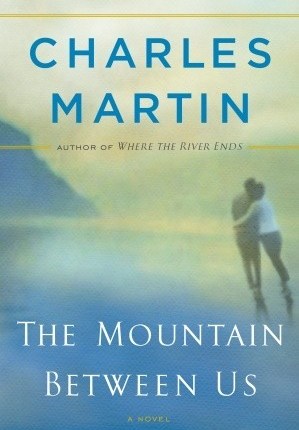
The Mountain Between Us by Charles Martin

The Mountain Between Us by Charles Martin

In The Mountain Between Us Ben Payne and Ashley Knox are in a plane crash in the middle of nowhere. As they fight to survive, the reader learns about their pasts and probable futures.

It is a survival story and also a romance.

“I dumped the bottle and looked around as best I could. Nothing but snow and mountains.” pg 65, ebook

I picked up this book because my book club is going to be discussing it on Monday. It’s not my usual type of read, which veers strongly towards science fiction and fantasy.

That being said, I expected more from this book- more adventure, more near death moments.

At first, I was reminded strongly of Hatchet by Gary Paulson, which I read in grade school. I remember enjoying that book quite a lot and learning about survival techniques along with the protagonist.

The Mountain Between Us has some of that, it’s true, but it is mainly about what’s going on in Ben’s mind. I found the story to be repetitive after the first hundred pages or so.

The romance in this story is way over the top, which I suppose romance readers may like. As for me, an occasional romance reader if at all, I found myself cringing at some of Ben’s revelations.

There’s a twist at the end which I won’t spoil here, but I saw it coming from the way author Charles Martin wrote some of the passages. I wish it had been sign-posted a little less.

Overall, there’s quite a few things for book clubs to dissect. There’s the survival aspect, relationships, the beauty of the outdoors, the disconnect between modern society and nature, and what it means to be human. I think we’ll have a lively discussion.

Recommended for readers who like their romances syrupy with a wilderness aspect thrown in.

This book has been made into a movie. I’m curious as to how they adapted the story.

Thanks for reading!

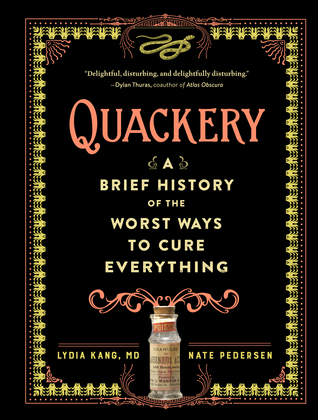
Quackery: A Brief History of the Worst Ways to Cure Everything by Lydia Kang

Quackery: A Brief History of the Worst Ways to Cure Everything by Lydia Kang

Quackery taught me that people have been desperately seeking cures for ailments, real and perceived, for ages. Sometimes that search takes them into disgusting or deadly treatments peddled by others who are taking advantage of that desperation for their own gain.

These human vultures have been called “quacks,” among other things.

Photo by Engin Akyurt on Pexels.com

“But quackery isn’t always about pure deception. Though the term is usually defined as the practice and promotion of intentionally fraudulent medical treatments, it also includes situations when people are touting what they truly believe works.” pg 1

Unfortunately, even those selling the “remedies” with the best of intentions still managed to kill people.

There seemed to be no end to the creative ways we’ve poisoned each other with various metals or concocted deadly and addicting brews in the name of health. We’ve burnt and blistered suffering unfortunates, taken pieces of their skull out to let the evil spirits out of their brains, or ground up human bone and ingested it.

The most disturbing chapter of this book, and there were some serious contenders, was the part about the development of anesthesia.

Photo by Mitja Juraja on Pexels.com

“Several chapters in the annals of anesthesia were written by some hard-partying, borderline sociopathic characters. So the next time you blissfully awaken from a surgery, remember to thank the child-stranglers, sponge-huffers, and ether frolickers of the past.”

Yeah, there have been some awful things done to both animals and people in the name of medicinal research.

The most amusing anecdote in Quackery goes to a section about creative uses of tobacco.

Photo by Aphiwat chuangchoem on Pexels.com

“You know the phrase ‘blowing smoke up your ass’? Well, you can disgust your next blind date with the true life medical origin of that phrase. Because literally blowing smoke up someone’s ass was a sanctioned resuscitation method in the eighteenth century.”

And now you know.

Recommended for readers with a strong stomach who are interested in strange and forgotten medical history.

My book club read this for our June pick but I missed the meeting. I expect an extraordinary conversation was had by all because this book is full of fascinating and disturbing topics of all sorts.

Thanks for reading!

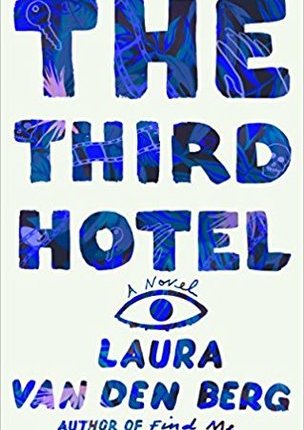
The Third Hotel by Laura van den Berg

The Third Hotel by Laura van den Berg

A strange and confusing ride through a world seen through the eyes of a grieving widow. A short time prior to attending a film festival in Cuba, Clare’s husband Richard was killed. Now, she sees him on the streets of Cuba.

“Clare had never before seen her husband operate a motorbike, but he navigated it like he had been riding one all his life, like he had been riding one in Havana all his life, like he had not been struck by a car and killed in the United States of America some five weeks ago.” pg 13

Photo by Valeriia Miller on Pexels.com

What is going on? The reader isn’t sure what’s real and what’s only in the mind of Clare. Laura van den Berg raises mammoth questions and leaves the interpretation to the reader.

My book club picked a heck of a read for March. Reactions to this book ranged from the disgusted to the mystified to the fascinated. I’d put myself somewhere in between.

I like having complex symbolism to pick apart and magical realism to consider in a story. I like having an open-ended mystery. I don’t need to have all the answers.

But I do like to have more hints at the possible interpretations than van den Berg gives us.

“She might have said, I am not who you think I am. She might have said, I am experiencing a dislocation of reality.” pg 3

Photo by cottonbro on Pexels.com

Or she might have said, I have no idea what’s going on in this story. A character in the novel itself explains this confusion (in the guise of talking about horror films), suggesting it’s purposefully created by the author, and says it is designed to create a sensation of “eels under the skin.” This book definitely had that type of impact on me.

“Besides, he added, raising a finger, the foundation of horror is a dislocation of reality, a dislocation designed to reveal the reality that has been there all along, and such dislocations happen all the time.” pg 9

As I said, it’s weird, but there’s something genius about it too. Van den Berg’s words are beautiful, but they don’t always make sense. I turned the last page and was infuriated at how confused I was.

“She wondered what the eye would see and what she would see in what the eye saw. She imagined the suspension transforming into a warm flood of inevitability as the gate swung open and she stepped into whatever new dislocation of reality lay ahead.” pg 32

Photo by Tobias Bju00f8rkli on Pexels.com

In conclusion, it’s a hard book to read, but perfect for groups who are looking to spur a literary discussion. There’s so much to unpack.

Is she in an alternate reality or having a psychotic break? Or is she just grieving the whole time? What does her life now have to do with her childhood? What is the secret Clare shares with her father? Is there hidden meaning in her trip to the southern part of the island?

That’s just what pops into my head when considering the title of this book. Recommended for readers who don’t mind being totally confused and left with eels under their skin.

Thanks for reading!

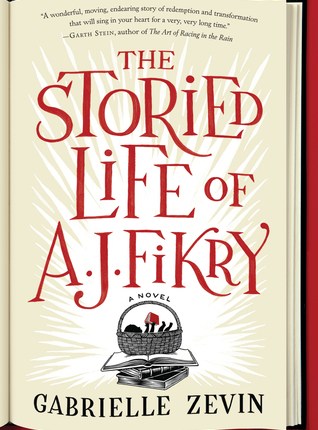
The Storied Life of A.J. Fikry by Gabrielle Zevin

The Storied Life of A.J. Fikry by Gabrielle Zevin

“The Storied Life of A.J. Fikry” is a contemporary fictional story about a book shop owner and how he handles the unexpected twists and turns that life has in store for him. If you are a reader who enjoys mulling over and applying what you read to your real life, you may really like this book. The main characters are all about that — learning lessons from books.

“Her mother likes to say that novels have ruined Amelia for real men. This observation insults Amelia because it implies that she only reads books with classically romantic heroes. She does not mind the occasional novel with a romantic hero but her reading tastes are far more varied than that.” pg 12, ebook.

Photo by cottonbro on Pexels.com

There’s some romance, some mystery, some heart break in this tale. There’s also fantastic book analysis of classic works written by the character A.J. Fikry that add dimension to the story as it unfolds. It is through these mini book reviews (and his actions) that the reader gets to know A.J., who is otherwise a rather introverted and sometimes curmudgeonly character.

“Despite the fact that he loves books and owns a bookstore, A.J. does not particularly care for writers. He finds them to be unkempt, narcissistic, silly and generally unpleasant people. He tries to avoid meeting the ones who’ve written books he loves for fear that they will ruin their books for him.” pg 39, ebook.

But he’s not unpleasant to the extent that I didn’t like him. In fact, A.J. was my favorite character. I felt like he lashed out at people or kept them at a distance because he was hurting. I think at one point or another in our lives, we’ve all been there.

“So it’s basically like a book party.” “Yeah, sure.” Lambiase has never been to a book party. “I hate book parties,” A.J. says. “But you run the bookstore,” Lambiase says. “It’s a problem,” A.J. admits. pgs 74-75, ebook

Photo by Nubia Navarro (nubikini) on Pexels.com

There’s plenty of relate-able moments in The Storied Life of A.J. Fikry. The characters feel real with all of their imperfections and dreams.

The thing is, though, sometimes people tell you you’re on one kind of trip, but it turns out to be another kind of trip, you know what I mean? I just want to know what kind of trip I’m on. Are we going to see topiaries, or are we going to see something else? Maybe that lady friend of yours, say? pg 118, ebook.

The trip this story takes you on is unexpected, very much like life. Who know where we’re all headed and what we’re going to do along the way. But, at the very least, I hope we all get to read as much enjoyable fiction as we want to before the trip ends.

Recommended for readers who enjoy contemporary fiction and book clubs.

Have you heard they’re making this into a film?

Thanks for reading!

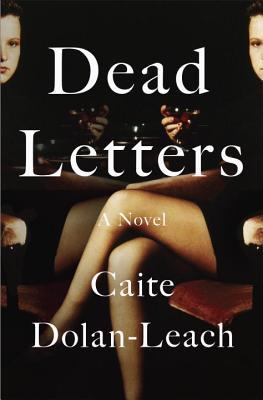
Dead Letters by Caite Dolan-Leach

Dead Letters by Caite Dolan-Leach

Dead Letters is a mystery and psychological thriller about a dysfunctional family and two unhealthily entwined twins. It is also about how relationships with those closest to us can be an unending source of unhappiness, if that is what we choose.

Ava has felt stifled by her family. Her mother has dementia, her father left them to start another family and conflict with her twin sister, Zelda, has dominated her existence. She now lives in Paris, when she receives an unexpected email from her mother… Zelda is dead.

The whole thing was so very Zelda. Too Zelda. When I finally reached my mother on the phone, she slurrily told me that the barn had caught fire with Zelda trapped inside. pg 8

Photo by Harrison Haines on Pexels.com

From the very beginning, Ava has her doubts about Zelda’s “accidental” death. Then, when the police reveal evidence that points towards a murder, things begin to spiral out of control.

Adding to the confusion, Ava and Zelda are/were identical. The whole community confuses one sister for the other. Even their own mother, whose mind is slipping away, calls Ava by her dead sister’s name.

Alcohol contributes its own fog to this story as Ava deals with her childhood demons while tangling with some new ones.

Not wanting to acknowledge consciousness in that desperate, dry-mouthed morning-after horror, I’m eventually forced to crack open my eyes. Jolted awake in suddenly sober distress, I blink owlishly and struggle to open my exhausted, quivering eyes, which are agonizingly dry, filched of liquid. … I should quit drinking, I reflect. It’s not the first time I’ve had this thought. pg 170

Photo by Charlotte May on Pexels.com

And, of course, there’s the highschool sweetheart hanging around and the relationship that ended very badly, as if Ava doesn’t have enough going on.

The mystery of this story isn’t all that mysterious, but the characters and the slow unwinding of the past are superb. I read this book almost in one sitting the day before Thanksgiving and it made me appreciate my own fairly-functional family much more.

Our mother had started her mimosas somewhat earlier, and I knew from her glassy eyes and gingery steps that Nadine was approaching the danger zone, the state between mildly and mindlessly drunk wherein she could marshal enough sobriety to do real damage but was uninhibited enough to not care how much damage was inflicted. pg 116

We can’t control what’s happened to us in the past, but moving forward, our lives are what we make of them. Look at the stories you tell yourself and examine why you do the things you do. You wouldn’t want, like the characters in this tale, to be controlled by incessant competition, booze or your weight on a scale, would you?

Photo by Charlotte May on Pexels.com

Caite Dolan-Leach doesn’t turn over every stone, leaving some of the characters’ pasts foggy. But she leaves hints everywhere and allows readers to fill in the blanks.

A criticism: some of the twists in the story are too perfectly orchestrated, and I doubted that such things would be possible, even with intricate planning and if you knew someone as well as you know yourself.

I’ll certainly have plenty to talk about at book club tonight. It was a good pick and I’d recommend it for other groups who read psychological thrillers. There’s a lot to unpack: the family dynamic, mystery, thrills, romance, layered characters and alcohol, so much alcohol.

Thanks for reading!

The Black Hand: The Epic War Between a Brilliant Detective and the Deadliest Secret Society in American History by Stephan Talty

The Black Hand: The Epic War Between a Brilliant Detective and the Deadliest Secret Society in American History by Stephan Talty

A non-fiction read about an extraordinary man who became the first Italian-American detective in the New York Police Department and his battle against The Black Hand.

Petrosino was “the greatest Italian detective in the world,” declared the New York Times, the “Italian Sherlock Holmes,” according to popular legend back in the old country. introduction, xiv.

Photo by Arthur Brognoli on Pexels.com

Joseph Petrosino was a scrappy boy who grew into a determined man. He dropped out of school after sixth grade and began to work as a shoe shiner on the streets. Then he worked his way up to street cleaner, where he was noticed by a member of the NYPD and recruited to be a member of the police.

He was an excellent recruit, being one of only a handful who could speak multiple dialects of Italian. This was particularly useful in the heavily Irish police force. Petrosino also had a photographic memory and he would arrest suspects off the streets based on a remembered mug shot.

It’s telling that the most famous Italian American in the country in the late 1800s was the one deputized by the powerful to track down and imprison his fellow countrymen. … It was Petrosino, the “hunter of men,” who fascinated the old American stock of Knickerbockers and WASPs, and they embraced him like no other Italian American of his time. pg 19

Photo by Charles Parker on Pexels.com

There was an influx of Italian immigrants into the United States in the late 1800s and they were treated poorly. As a result, they didn’t trust American authorities and didn’t report crimes being committed against them. The Black Hand, a group of unorganized criminals, extorted unknown numbers of Italian immigrants through threats of violence, kidnapping and bombings. That was where Petrosino came into the picture.

He was determined to stop them. Petrosino obtained permission to create the Italian Squad, a special task force designed to stop the Black Hand.

“When murder and blackmail are in the air,” declared the Times, “and the menfolk are white-faced and the womenfolk are saying litanies to the Blessed Mother… all Little Italy looks to the Italian detective to protect it and guard it.” pgs 40-41

I read The Black Hand to discuss with my book club and found it gripping. I was enthralled by Petrosino and the dangers he faced. However, other members of the club thought the book became repetitive. “Another bombing?” one of them said. It was as if they were inured to the horrors of the situation because so many bad things were happening again and again. I thought that just added to the tension of the narrative.

Photo by William Fortunato on Pexels.com

A few years ago, we read Stephan Talty’s Agent Garbo: The Brilliant, Eccentric Secret Agent Who Tricked Hitler and Saved D-Day for book club and I found it equally brilliant. But, again, others found it slow and bogged down with too many details. I guess it just depends on what sort of non-fiction you enjoy.

Highly recommended for non-fiction readers or anybody interested in New York City or U.S. history.

This book is slated to become a film starring Leonardo Dicaprio, but the project doesn’t seem to have gone anywhere since 2017. I wonder if it will ever be made.

Thanks for reading!

Here’s The History Guy episode I wrote about Petrosino and the Black Hand:

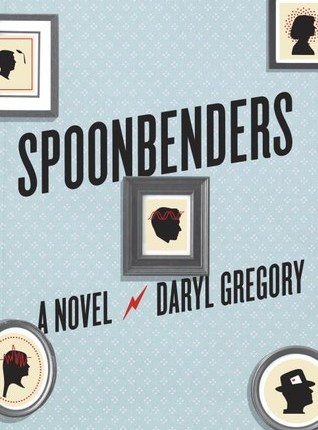
Spoonbenders by Daryl Gregory

Spoonbenders by Daryl Gregory

A con-man and a highly talented psychic fall in love and have children with extraordinary talents. But this doesn’t automatically give them an extraordinary life. They struggle to hold down jobs and support each other, while mourning the loss of one of their members and a career in showmanship.

One night, years before this story takes place, the Telemachus family was on a late night show, introducing themselves to the world. But a skeptic proved a portion of their act to be fake and the family’s bookings all fell through. One of the members of the family, Frankie, blames the skeptic for the mediocre life they are living now… and worse.

Photo by Cleyton Ewerton on Pexels.com

“Archibald was a necessary evil,” Grandpa Teddy said. “He was the voice of the skeptic. If your mother had shown him up, the audience would have loved us for it. We could have gone to the stratosphere with that act.” “He was evil,” Frankie said. … “He killed Grandma Mo…” pg 19, ebook.

Though the head of the family, Grandpa Teddy, doesn’t have any legitimate powers to speak of (except a talent for manipulating cards), his children have a veritable cornucopia of abilities. Frankie can move metal objects with his mind, when he’s not under stress. Irene can tell if someone is telling her a lie. And the youngest, Buddy, can see the future so clearly that he calls his perceptions “memories”.

And their children have different powers too.

“That they were psychic was another Telemachus Family Fact, in the same category as being half Greek and half Irish, Cubs fans and White Sox haters, and Catholic.” pg 27, ebook.

Photo by Mikhail Nilov on Pexels.com

The strength of this story is in the characters themselves. You really enjoy learning who these people are and seeing how they prevent themselves from being great. It’s also just a fun story about a large, semi-dysfunctional family. As someone from a large family myself, I felt right at home in this world (minus the extraordinary powers and most of the dysfunction).

One of my favorite characters, though he was a bit of a rogue, was Grandpa Teddy. He’s trying to keep his herd-of-cats family all pointed in the same direction while not having the advantage of extraordinary abilities beyond his own quick mind.

“The problem with getting old was that each day had to compete with the thousands of others gone by. How wonderful would a day have to be to win such a beauty contest? To even make it into the finals?” pg 196

I also liked Irene, the daughter who could tell if you were lying to her. I never considered how much the small untruths we tell each other grease the wheels of relationships and civil discourse.

Photo by Magda Ehlers on Pexels.com

This might be a good pick for a book club read. There are plenty of issues to discuss and powerful moments to dissect.

I may have enjoyed this book more if it had been primarily about the family’s abilities rather than real life drama. But I’m into superhero stories and epic fantasy. For readers who like to think about the impossible but not read a story where that sort of thing is the norm, this book may fit the bill.

Thanks for reading!

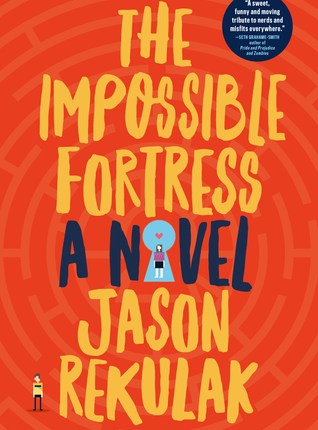
The Impossible Fortress by Jason Rekulak

The Impossible Fortress by Jason Rekulak

A cute coming-of-age novel about a boy, a computer, a Playboy magazine and first love.

Billy and his awkward friends are in love with Vanna White, the girl-next-door who flips the letters on Wheel of Fortune. When some pictures of Vanna appear in Playboy, they know they have to get that magazine, at any cost.

One problem, none of them are even close to eighteen years old.

This was the moment of truth- the moment I’d rehearsed with Alf and Clark again and again. They’d coached me to keep my pitch exactly the same- to speak the words like I used them all the time: “Just some Tic Tacs,” I said, “And a Playboy.” pg 29

Photo by Athena on Pexels.com

Part of this story is enjoying the humor and innocence of the boys in an era before the internet. The other part of this story, the one that occupied my book club, was reminiscing about technology and early computers.

We spent most of the time at book club talking about what our first computers were, who knew coding, and what were our favorite early games.

“If I was serious about Planet Will Software, I couldn’t work on a Commodore 64 much longer. Newer computers offered more memory and better graphics, and C64s would be obsolete in another year or two. I needed to upgrade to the latest technology, and the contest was my best chance to do it.” pg 43

Photo by Soumil Kumar on Pexels.com

That part of the evening seemed to entertain the older members of our book club more than me. It’s not that I didn’t have an early computer, I did, I was more interested in the coming-of-age part of this story and the heist-type scenarios the boys go through to get their dirty magazine.

I also enjoyed Billy’s struggles to understand Mary and the cute dynamic between them. I liked learning about his loyalty to his friends and his dreams for future computer programming greatness.

“I’m going to make video games,” I said. “I’m going to start my own company, and I’ll only hire cool people.” pg 81

Photo by Barik5ive on Pexels.com

If I ever start my own company, in whatever business sector that it may be (not computer programming), I’ll only hire cool people too.

Recommended for book clubs or if you just want a sweet, light read by the pool, The Impossible Fortress just may fit the bill.

Thanks for reading!