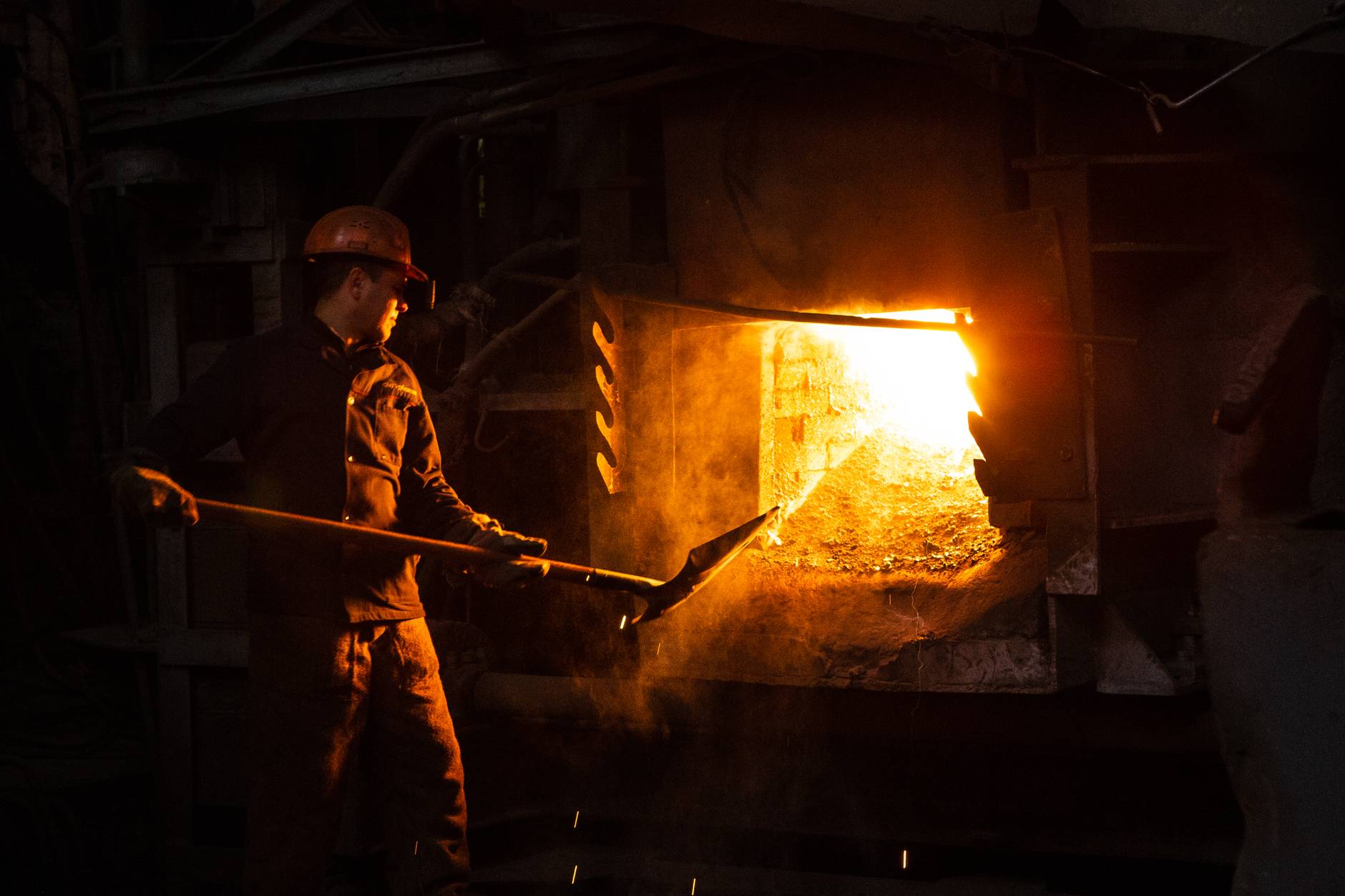
Eliese Goldbach pulls back the curtain to reveal the unseen struggles and contributions to society by steelworkers in Cleveland, Ohio, her hometown. Along the way, she delves into complex issues of mental health, politics, socioeconomic status, gender equality, and religion in her own life. It is, ultimately, a memoir about hope, but there was great suffering on Goldbach’s path to this realization.
When Goldbach was young, she viewed the stink of the steel mills as a type of pollution she needed to keep out of her body. But, when her plans to become a nun don’t materialize and she faces hurdles to completing the paperwork for her masters degree, Goldbach applies at the steel mill for the paycheck, accepting it as a step backwards in order to move forward into self sufficiency.

“In a Rust Belt town, that flame isn’t just a harbinger of weird smells and pollution. It isn’t an anachronism, and it doesn’t prove a lack of innovation. … The flame is very much a part of our history and our identity. It’s a steady reminder that some things can stand the test of time, even in a world where nothing is built to last.”
A large part of Goldbach’s failure to thrive is caused by her mental health struggles. It affects her ability to hold down a full time job, maintain her relationships, and makes her dread the future. Yes, she might be doing well now, she tells herself, but in another couple of weeks that might not be true any longer.
“Doctors would tell me that mixed-state bipolar disorder is one of the most dangerous forms of the disease. Depression brings suicidal thoughts, and mania adds impulsivity. When people with mixed-state bipolar disorder have the will for death, they are more likely to have the energy to follow through.”

Raised in a conservative and religious household, Goldbach is trained from an early age to see feminism as a dirty word. Through her own life experience, she discovers that some of her assumptions about feminism are untrue and begins to speak up for those who are unable or unwilling to speak for themselves.
“While there were other women who worked in the mill, we were definitely a minority. … There was a good deal of mansplaining, and there were offhanded comments that came straight out of the 1950s.”
Goldbach’s memoir shines in its examination and dissection of her personal beliefs and how those change through experience. It feeds into my own belief that only the person living a life has the true insight into its meaning and direction.
“I’m just disappointed in myself, I guess. I feel like I should have done more by now, and I’m worried that I’ll get stuck in the mill.”
Some readers may find Goldbach’s politics off-putting. But I think the difficult conversations she describes at the dinner table with her parents are going on at other dinner tables all across the country. An open dialogue and willingness to look at our differences can be painful, but that doesn’t mean we should never have those conversations.
Recommended for readers who enjoy memoirs and as a possible book club pick. Trigger warnings for mental health issues, especially those with bipolar disorder, and rape.
Thank you to NetGalley and the publisher for a free digital copy of this book. The brief quotations cited in this review may change or be omitted in the final print version.
- The Ballad of a Small Player: a Metaphysical Movie Review
- Otherwhere: A Field Guide to Nonphysical Reality for the Out-Of-Body Traveler by Kurt Leland
- Psychic Dreamwalking: Explorations at the Edge of Self by Michelle Belanger
- Archetypes on the Tree of Life: The Tarot as Pathwork by Madonna Compton
- The Goddess and the Shaman: The Art & Science of Magical Healing by J.A. Kent

 The Help Desk Book Blog