Through the interweaving stories of a scientist, soldier, and weapons expert, Alastair Reynolds explores classic science fiction themes in Revelation Space, a space opera and mystery.
“Despite being buried for nine hundred thousand years – at the very least – the chambers were almost intact, with the bones inside still assuming a rough anatomical relationship to one another. They were typical Amarantin skeletons.” pg 11, ebook

Nearly a million years previous, an entire species called Amarantin disappeared in a mysterious celestial-based disaster called, by those who study the geological record, “The Event”. Dan Sylveste, a scientist with unique machines for eyes, is trying to unearth the truth of what happened to them.
Khouri, a former soldier turned assassin for a semi-secret agency, goes on a routine assignment, only to have the experience turn into something entirely unexpected.
“Assassins, it turned out, had to be among the sanest, most analytic people on the planet. They had to know exactly when a kill would be legal – and when it would cross the sometimes blurred line into murder and send a company’s stocks crashing into the Mulch.” pg 45, ebook
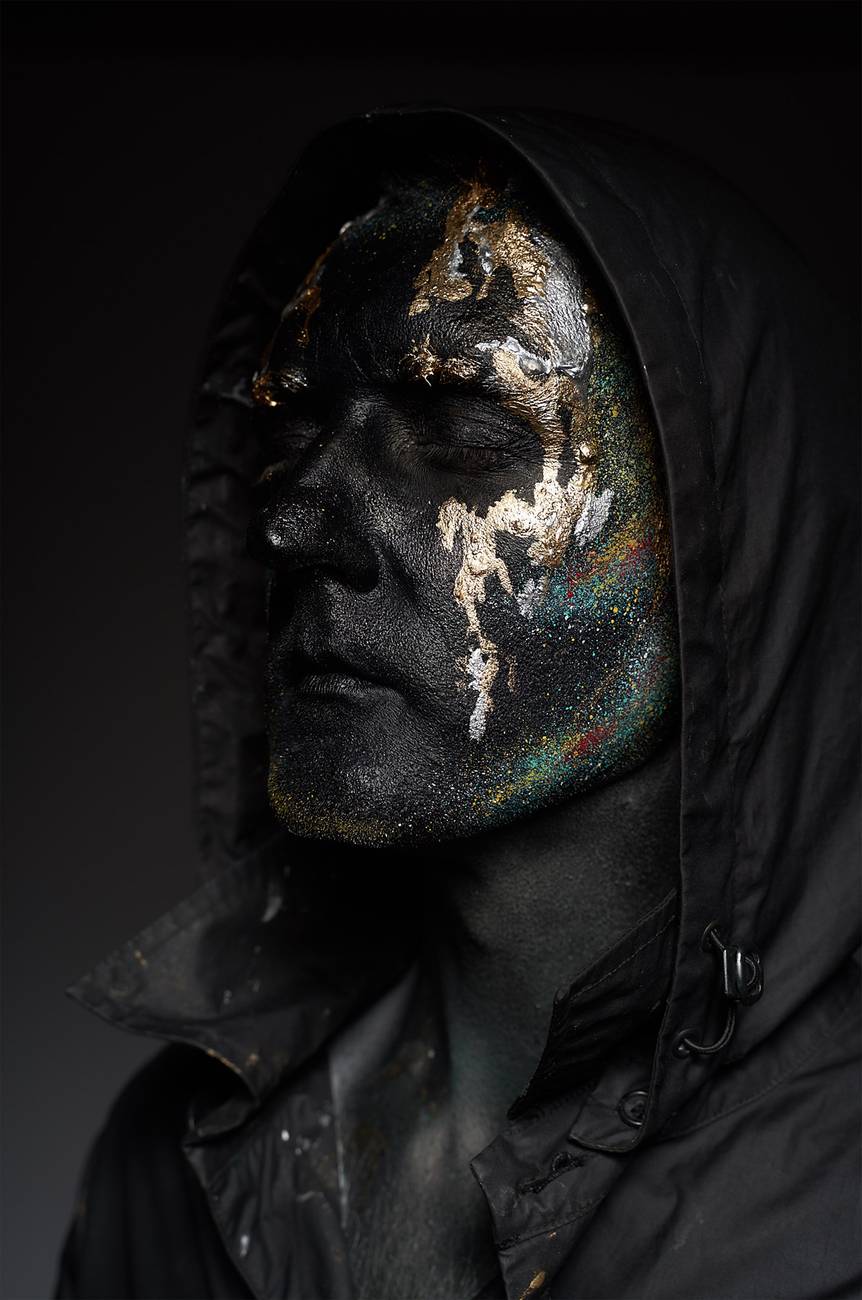
Meanwhile, on an enormous space ship capable of traveling across the universe at nearly the speed of light, Volyova has a serious problem. Her captain has a strange disease that is assimilating his ailing body into the ship itself and the man she hired to run the ship’s guns has gone insane. Could these two disasters be connected somehow?
“It was not something to which she was ever going to become totally accustomed, Volyova knew, but in recent weeks visiting the Captain had begun to take on definite tones of normality. As if visiting a cryogenically cooled corpse infected with a retarded but potentially all-consuming plague was merely one of life’s unpleasant but necessary elements…” pg 35, ebook
Throughout the story, Reynolds asks the reader to imagine a humanity that has split itself into factions. Some groups travel among the stars, assimilating rare machines into their bodies, losing touch with what it means to be human as they spend years in frozen animation while the rest of the universe ages as usual.
Other groups are just as isolated on far-flung planets and develop their own cultures, ways of government, and quickly-shifting alliances.
Also, through the story of the extinct Amarantin, Reynolds examines what it would mean if humanity discovered aliens were real, but mysteriously absent from huge swathes of what is otherwise inhabitable space. Are we really as alone in the universe as we appear to be? And why is that so.
“Something had reached into his mind and spoken to him. But the message that was imparted to him was so brutally alien that Sylveste could not begin to put in human terms. He had stepped into Revelation Space.” pg 100, ebook
The broad themes of Revelation Space are fun questions to ponder, but Reynolds’ storytelling suffers in some of his more technical moments and during a truncated love story. A couple times during the beginning of the book, I had difficulty picturing scenes because I would get so bogged down in the details. But that became easier as the story progressed.
The love story though, was one of the worst I’ve read in science fiction literature. It made me feel like the woman was just a plot device for Reynolds to be able to explain some of the more complex plot twists. That’s fine if that’s what she was meant to be, but it was rather off-putting. I do enjoy a good love story and felt like, if you were going to make it so awkward, maybe it didn’t belong in there.

Otherwise, I enjoyed this read and intend to start the next soon. Highly recommended for readers who enjoy science fiction and stories that make you want to go stand outside and stare at the stars for awhile.
- The Ballad of a Small Player: a Metaphysical Movie Review
- Otherwhere: A Field Guide to Nonphysical Reality for the Out-Of-Body Traveler by Kurt Leland
- Psychic Dreamwalking: Explorations at the Edge of Self by Michelle Belanger
- Archetypes on the Tree of Life: The Tarot as Pathwork by Madonna Compton
- The Goddess and the Shaman: The Art & Science of Magical Healing by J.A. Kent

 The Help Desk Book Blog