The 4-Hour Workweek by Timothy Ferriss

The 4-Hour Workweek by Timothy Ferriss

“I’ve spent the last three years traveling among those who live in worlds currently beyond your imagination. Rather than hating reality, I’ll show you how to bend it to your will. It’s easier than it sounds.”

Photo by Ronu00ea Ferreira on Pexels.com

Timothy Ferriss promises the stars in the sky in his new-classic business/self help book, The 4-Hour Workweek. Though he gives some good productivity tips, he fails to provide a true road map to freeing yourself from the 9-to-5 grind. Partially, this is because there is no real road map to doing this.

But he does detail how he found his way into a life of his dreams. Readers can take whatever lessons and information from that as they will.

After Ferriss relates a timeline of his life story, he begins by detailing his “DEAL” plan to a four hour work week which consists of “definition, elimination, automation and liberation”. Each step of this process, he says, helps guide the reader to a new world of free time. Though, he admits, traditional bosses may have serious problems with your new program and, perhaps, you should go more “DELA”. Yes, understatement.

“Resolve now to test the concepts as an exercise in lateral thinking. If you try it, you’ll see just how deep the rabbit hole goes, and you won’t ever go back.”

Photo by Anna Shvets on Pexels.com

He examines the concepts of “busy work” and suggests boiling your workload down to the most important tasks you complete. Then, just do those as fast as possible. Don’t allow yourself to be derailed by the internet or chatty coworkers. (Not a friendly method, but Ferriss seems to have his eyes on the prize rather than concerning himself with making friends.)

Out of everything he suggests in the first part of this book, I was most taken with the idea of only checking your email once a day or week. There is a definite time-suck there that maybe I have been blinding myself to.

After that, Ferriss enters more conceptual territory with an idea about creating a business for yourself that essentially runs itself or can be run by someone else, cheaply. For example, a website that sells something awesome. But, what exactly that something or muse is, that’s for you, the reader, to discover on your own.

It reminded me of Godin’s Purple Cow: Transform Your Business by Being Remarkable. You know an awesome product or “purple cow” when you see it, but how exactly to make one isn’t a clear thing. Interesting idea, but necessarily helpful for those looking for actionable items to improve their work life.

The most useful part of the book, in my opinion, is his encouragement to create a dream plan by “dreamlining”. Write down what you want to do. Create a timeline. Crunch the numbers. It may cost less than you thought and, with it on paper, it takes on a bit of reality already. If you don’t get started, how do you know what you might accomplish.

Photo by Negative Space on Pexels.com

“It’s lonely at the top. Ninety-nine percent of people in the world are convinced they are incapable of achieving great things, so they aim for the mediocre. The level of competition is thus fiercest for ‘realistic’ goals, paradoxically making them the most time-and energy-consuming. It is easier to raise $1,000,000 than it is $100,000.”

Ferriss’ tone in this book has been criticized by readers and I see what they mean. Some of his ideas are alienating. Sometimes he seems to say: I’ve done this-this-this and this, and it’s so easy that if you can’t figure it out too, especially with the book I’ve put in your hands, then you must be either complacent or dumb.

But I took this book to be written by someone who dared, a nod to Brené Brown, greatly. Ferriss believed his life could be something other than a slog and yours could too. He’s written down some tips to help you along the way that he discovered through real life trial and error. Read it or not. He’ll be over there, living the life of his dreams.

Photo by Alex Fu on Pexels.com

Recommended, with reservations, to folks interested in life-hacking their work/life balance. I think we can achieve whatever dreams we set our minds to while still being friendly.

Thanks for reading!

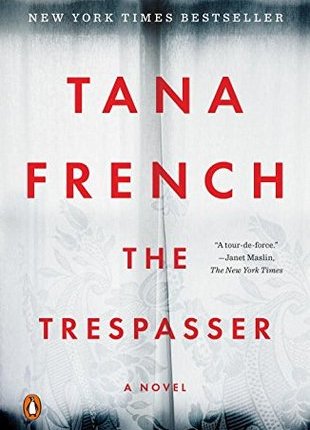
The Trespasser (Dublin Murder Squad #6) by Tana French

The Trespasser (Dublin Murder Squad #6) by Tana French

“The case comes in, or anyway it comes in to us, on a frozen dawn in the kind of closed-down January that makes you think the sun’s never going to drag itself back above the horizon.” pg 1, ebook.

Photo by Alexandr Podvalny on Pexels.com

And so begins the final book (so far) in Tana French’s masterful Dublin Murder Squad series. This entry follows Detectives Antoinette Conway and Steve Moran, the duo readers met in the last book, as they try to solve, what at first appears to be, a simple domestic disturbance. Little do they know, what they discover will challenge all of their assumptions about their roles in the Murder Squad and their own investigative skills.

“Before we check out the rest of the cottage, I squat down by the body and carefully, one-fingered, hook back her hair from her face. Steve moves in beside me. Every Murder D I’ve ever known does it: takes one long look at the victim’s face.” pg 24

The investigation, especially the interrogation scenes, are intense and what I’ve come to expect from this series. It’s a thrilling who-done-it with complex characters and relationships. I really enjoyed it.

Photo by Dmitry Demidov on Pexels.com

“The pressure level means Murder is balanced so finely that it only takes a few new heads to shift the whole feel of the squad: turn that big cat rogue and edgy, set that rifle warping towards its moment to blow up in your face.” pg 23, ebook

Conway, the only woman on the murder squad, feels as if she has been singled out and shut out of the camaraderie of the rest of the group. So, she feels like she has more to prove when the investigation becomes more complex than she expected.

Conway, the narrator this time around (they change in each book), isn’t my favorite character, but she’s someone I’d respect and give plenty of space so I didn’t come into her crosshairs.

“Unless I missed your promotion, we’re on the same squad, and this is my investigation. Which means you’re the cheeky little bollix who’s getting above himself, and you’re the one who needs to bear in mind who’s who here.” pg 138, ebook.

Photo by Martin Lopez on Pexels.com

Frankly, I’m sorry I’ve read the final book French has written for the murder squad. However, in a May 2019 interview, she didn’t dismiss the idea of writing another book for the series at some point in the future. So, readers can rejoice!

It’s just not written yet. Sigh.

Highly recommended for fans of thrillers and mysteries. Thanks for reading!

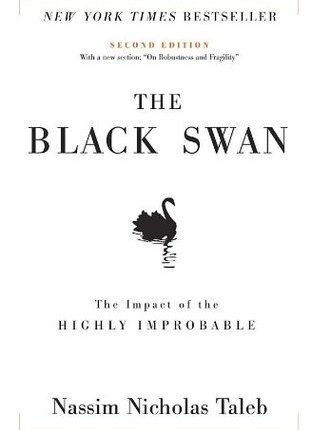
The Black Swan: The Impact of the Highly Improbable by Nassim Nicholas Taleb

The Black Swan: The Impact of the Highly Improbable by Nassim Nicholas Taleb

Nassim Nicholas Taleb discusses “black swans”, unexpected and life-changing events, and how life is far more uncertain than most believe it to be. He also examines, in-depth, how we fool ourselves into believing reality is otherwise by various means like confirmation bias (we look for evidence to support our existing beliefs) and narrative fallacies (the tendency to describe existence using linear stories when reality is far more complicated).

Mix in a heaping dose of storytelling and autobiographical information and you get The Black Swan.

Photo by Takeshi Arai on Pexels.com

“This combination of low predictability and large impact makes the Black Swan a great puzzle; but that is not yet the core concern of this book. Add to this phenomenon the fact that we tend to act as if it does not exist!” Prologue xxii

This is a dense read, full of philosophical references and terminology. Basically, beyond black swans having a larger impact on reality than we realize they do, this book can be simplified way down to “beware of because” and “know what you don’t know”.

“Beware of because” because (tee-hee) reality is far more random than most believe it to be. And we suck at predicting the future, for a variety of reasons, but partially because it is impossible to project future events from historical ones.

“Note here that I am not saying causes do not exist; do not use this argument to avoid trying to learn from history. All I am saying is that is it not so simple; be suspicious of the “because” and handle it with care — particularly in situations where you suspect silent evidence.” pgs 120-121

Photo by Karolina Grabowska on Pexels.com

“Silent evidence” is the information not readily apparent for whatever reason. Taleb gives an illustrative example of silent evidence from ancient history of a philosopher being presented an argument that a group of sailors survived a shipwreck because they prayed. The philosopher wonders how many of the sailors who drowned were also praying. The drowned sailors, you see, are the silent evidence.

Biologically, Taleb says, human beings are not set up to be deep thinkers and are fooled by a variety of logical fallacies. This is only a problem because, as time goes on, humanity has less running away to do from things trying to eat us and more dealing with the complexities of modern existence.

But by remembering “to know what we don’t know” and understanding some of the limitations built into our brains by memory and logical fallacies, we can be prepared to make better decisions than before. Or, at least, we’ll have a better grasp on how risky and unknown life is.

Photo by Marlene Leppu00e4nen on Pexels.com

Anyway, this book certainly gave me a lot to think about. The part that struck me the most is when Taleb applies his black swan idea to careers and how this uncertainty applies particularly to authors and artists. For every J.K. Rowling, there will be thousands of writers who never make that break through. I started wondering how many extraordinary books I will never get to read because of this phenomena.

The author’s tone throughout the book, slightly irreverent, didn’t annoy me as much as it seems to have bothered other readers. I enjoyed learning a new way to look at reality, but, as I mentioned before, this is a dense read and I wouldn’t consider it “fun” reading either.

It may appeal most to philosophers and anyone who wants to consider new ways to view reality.

Thanks for reading!

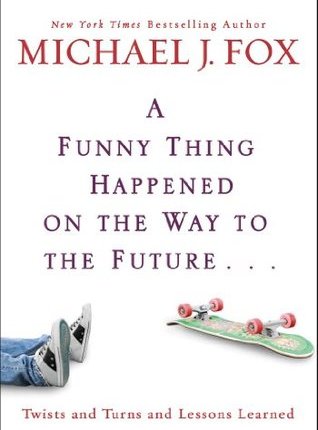
A Funny Thing Happened on the Way to the Future: Twists and Turns and Lessons Learned by Michael J. Fox

A Funny Thing Happened on the Way to the Future: Twists and Turns and Lessons Learned by Michael J. Fox

Michael J. Fox talks about his life, career and health. There’s nothing world-shattering in here, but if you enjoy watching Fox as an actor, you’ll probably like this book too.

A Funny Thing Happened on the Way to the Future reminded me strongly of Steve Job’s 2005 commencement address at Stanford. Both of these men chose not to pursue higher education. They both also found, through their own meandering ways, fulfilling, purposeful, and powerful lives that were rich in meaning for themselves and those who were fortunate enough to fall in with them.

Photo by Arturo EG on Pexels.com

Personally, I don’t think that the messages of “find your passion and live it”, “keep learning even if you’re not in a classroom”, and “fall but get back up” can be repeated enough. Life is filled with unexpected twists and turns — I guess the trick is to view these moments as opportunities instead of stumbling blocks. Fox’s book helps the reader do just that.

Though Fox isn’t a graduate, it would potentially make a good gift for a graduate. It might also be a good gift for anybody who is at a crossroads and needs a bit of a boost to proceed with not only courage but also hope.

Also, if they haven’t seen it yet, play Job’s Stanford address for them. It is available for free off of TED talks: https://www.ted.com/talks/steve_jobs_…

Thanks for reading!

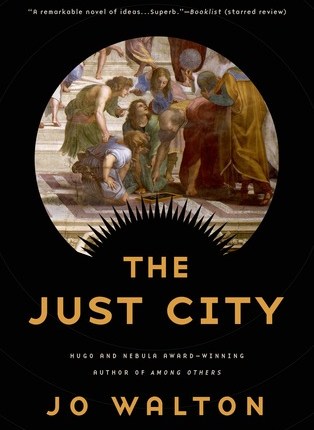
The Just City (Thessaly, #1) by Jo Walton

The Just City (Thessaly, #1) by Jo Walton

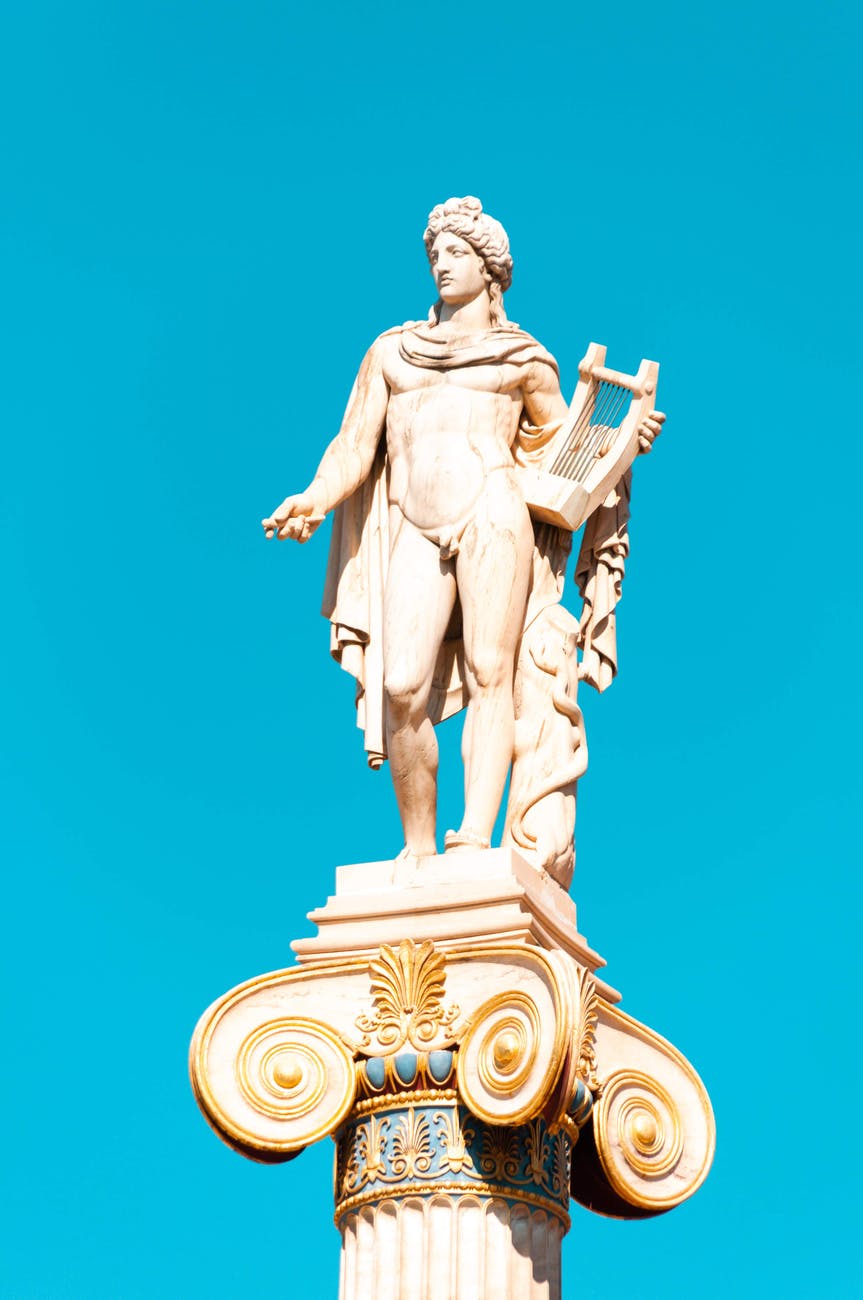
When the god Apollo seeks to understand the workings of the mortal mind and heart, he asks his sister, Athene to help him. She reveals a project in which she has gathered together philosophers from across time and space and put them in a settlement called, “The Just City”. In this city, set near a volcano that will one day explode and destroy all evidence of the project, a group of men, women and children will try to recreate the hypothetical state described in Plato’s “Republic”.

Apollo asks to join this group. And our story begins.

Photo by Hert Niks on Pexels.com

The city itself shone in the afternoon light. The pillars, the domes, the arches, all of it lay in the balance of light and shadow. Our souls know harmony and proportion before we are born, so although I had never seen anything like it, my soul resonated at once to the beauty of the city.” pgs 35-36

But what is perfect in theory turns out to be not-so-perfect in practice. Among the thornier problems, the city has shared marriages and children raised by the group, not families. This causes predictable jealousies and secret romances. There’s also something strange going on with the robotic workers Athene brought from a future time to help with the mundane tasks of civilization, like raking the roads and planting the vineyards.

“We are in a time before the fall of Troy. And we are on the doomed island of Kallisti, called by some Atlante.” Even I had heard of Atlantis.” pg 45

Photo by Travel Sourced on Pexels.com

Another major issue, caused because they were pulled from different points in history, are the different philosophers’ views on gender equality. Consent in the Renaissance doesn’t mean the same thing as consent in the Victorian Age.

“You love this city,” Pytheas said. That was what we had been debating that day. “I do,” I said, spreading out my arms as if I could hug the entire city. “I love it. But Sokrates has made me see that it’s only the visible manifestation and earthly approximation of what I really love, the city of the mind.” pg 131

Though I enjoyed this book, the pace was what spoiled it for me somewhat. It marches forward towards an inevitable conclusion far too slowly. The debate scenes are interesting, but simply too plodding.

Photo by Dominika Roseclay on Pexels.com

There’s also a rape, so please be aware if you have potential triggers.

Recommended tentatively for readers who love the classics or historical fiction and can stand a slower-paced read.

Thanks for reading!

Purple Cow: Transform Your Business by Being Remarkable by Seth Godin

Purple Cow: Transform Your Business by Being Remarkable by Seth Godin

The world has changed. There are far more choices, but there is less and less time to sort them out.” pg 13

Seth Godin, prolific author of business blogs and books, shares his insights about why a product must be remarkable to cut through the noise and get an audience’s attention. He opines that this remarkable “Purple Cow” quality is the only way a business can succeed in the modern world, as the old methods of mass marketing through expensive television ads is going the way of the dodo.

Photo by Jan Koetsier on Pexels.com

“Something remarkable is worth talking about. Worth noticing. Exceptional. New. Interesting. It’s a Purple Cow. Boring stuff is invisible. It’s a brown cow.” pg 3

The trouble with this remarkable stuff is that there is no clear method to create it. It is a “I’ll-know-it-when-I-see-it” type situation. For businesses looking to up their Purple Cow-factor, there are very few directions in this book, other than, it’s important to be a purple cow. I could see that unclear quality being frustrating for some readers.

“The old rule was this: Create safe, ordinary products and combine them with great marketing. The new rule is: Create remarkable products that the right people seek out.” pg 21

The “right people” being the influencers or the early adoptors of whatever type of product it is that you’re selling. Marketing to the niche, rather than mass marketing to the crowd, is, according to Godin, the best strategy for the new world of marketing.

Photo by Mike Chai on Pexels.com

Take Goodreads, for example. Publishers want to get their advance reader copies into the hands of those who talk to their friends about what they’re reading and are passionate about books, the readers who exhibit “otaku”. Godin defines “otaku”: “Otaku describes something that’s more than a hobby but a little less than an obsession.” pg 94

The obsessed, passionate readers talk about what they’re reading to the extent that they start an “ideavirus”, which Godin talks about in another book. In this way, Godin says, you build momentum for whatever remarkable product you’re selling. They can’t help but talk about it because of its fascinating qualities. As this movement builds, the books end up on readers’ favorite shelves, eventually becomes a Reader’s Choice pick, and then the book sells itself.

The products that aim for the largest audience are bland and have had their remarkable edges filed off. And, that’s bad, according to Godin.

“The system is pretty simple: Go for the edges. Challenge yourself and your team to describe what those edges are (not that you’d actually go there), and then test which edge is most likely to deliver the marketing and financial results you seek.” pg 101

Photo by Christina Morillo on Pexels.com

There are definitely dated portions of this book and, as I said, it is nebulous. To get meaning out of it, readers need to distill the underlying ideas and apply them to your unique business. But, I still learned things.

The reason I read Godin is he encourages readers to think differently. He gets my creative circuits firing. I like that.

Recommended for readers who may need a creative jump-start for whatever remarkable product they’re creating. This book isn’t a road map, but it could be a compass.

Thanks for reading!

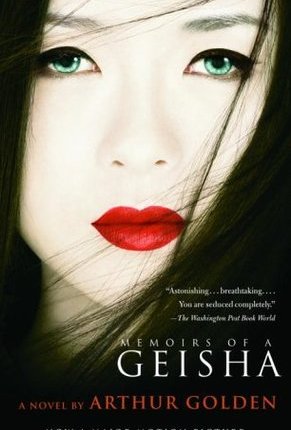
Memoirs of a Geisha by Arthur Golden

Memoirs of a Geisha by Arthur Golden

An engrossing historical fiction novel about a girl with extraordinary eyes named Chiyo and how she became a celebrated geisha named Sayuri. The path of her life was not always easy, but like water flowing over bumpy rocks, she braves the rapids and, eventually, reaches the ocean of her dreams.

“But the truth is the afternoon when I met Mr. Tanaka Ichiro really was the best and the worst of my life. He seemed so fascinating to me, even the fish smell on his hands was a kind of perfume. If I had never known him, I’m sure I would not have become a geisha.” pg 13, ebook

Photo by Anna Tarazevich on Pexels.com

It is a coming-of-age story but also a romance. Some have compared this book to the fairy tale of Cinderella. I see the comparison, but feel as if this historical fiction is better than Cinderella. Unlike the made-up fairy tale, the land and closed world of the geisha actually existed.

“After a block or two I worked up my courage and said to Mr. Bekku, “Won’t you please tell us where we’re going?” He didn’t look as if he would reply, but after a moment he said, “To your new home.” pg 41, ebook.

To be a geisha was to excel at the arts. It was to demonstrate excellence in dance, music and the art of conversation. It was a way of being, and dressing. As a geisha, Sayuri transports the men she is with to another world, the world of “Flowers and Willows”.

I did some research into the history of the geisha and what I found was fascinating. From what I read, the history portrayed in Memoirs of a Geisha was rather close to the truth, minus the made-up characters.

Photo by Ivan Siarbolin on Pexels.com

“Because, you see, when a geisha wakes up in the morning she is just like any other woman. … Only when she sits before her mirror to apply her makeup with care does she become a geisha. And I don’t mean that this is when she begins to look like one. This is when she begins to think like one too.” pg 67, ebook

The whole culture seems so exotic to me. This book is truly an escape into a different world. I, of course, adored the main character, Sayuri.

Years ago, I saw the film version of this book and remember enjoying it very much. Fortunately, I forgot most of it except for one critical moment towards the end. That, however, didn’t ruin my enjoyment of the book. It is better, much better.

There’s more character development, more battles with Hatsumomo, more to the conclusion. Sayuri’s life completes a circle in the written version of the story — I seem to remember that the story felt a bit stunted in the film. I think I’ll watch it again to see if I’m remembering it right.

“We lead our lives like water flowing down a hill, going more or less in one direction until we splash into something that forces us to find a new course. If I’d never met Mr. Tanaka, my life would have been a simple stream flowing from our tipsy house to the ocean.” pg 112, ebook

Photo by Dianne on Pexels.com

There’s also the development of the theme of water. The characters in the story attribute Sayuri’s startling blue eyes to an abundance of water in her soul. Throughout the book, she’s alluding to water — how it flows, bends and can wear down rocks. You really begin to view her life through this lens of watery inevitability.

“Here you are… a beautiful girl with nothing on earth to be ashamed of,” he said. “And yet you’re afraid to look at me. Someone has been cruel to you.. or perhaps life has been cruel.” “I don’t know, sir,” I said, though of course I knew perfectly well. pg 119, ebook.

Highly recommended for fans of historical fiction. Memoirs of a Geisha is a surprising treat, like a sudden rainbow glinting off the water into your eyes. Blink once, and it’s gone.

Thanks for reading!

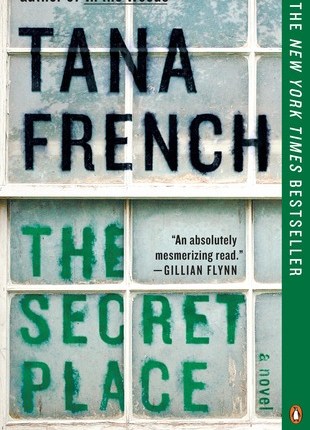
The Secret Place (Dublin Murder Squad #5) by Tana French

The Secret Place (Dublin Murder Squad #5) by Tana French

Tana French writes another suspenseful mystery about a school full of girls, a murder and, of course, the Dublin Murder Squad.

“Detective Moran, there’s someone to see you,” pen pointing at the sofa. “Miss Holly Mackey.” pg 15, ebook.

Photo by cottonbro on Pexels.com

We’re reintroduced to Stephen Moran and Holly Mackey, whom readers of the series will remember from Faithful Place. I highly suggest reading that book before this. The context is part of what makes The Secret Place so powerful.

Like in her previous books, French builds the suspense through in-depth characters and internal monologues. They carry an intensity that I’ve come to expect from her novels. Reading her stories straight through honestly gives me a bit of a headache. They’re so complex and she brings in small details that give you these “aha” moments.

Despite those potential headaches, I love it.

I said, “You came here because there’s something you want me to know. I’m not going to play guessing games I can’t win. If you’re not sure you want to tell me, then go away and have a think till you are. If you’re sure now, then spit it out.” Holly approved of that. Almost smiled again; nodded instead. pg 18, ebook

Photo by tugay aydu0131n on Pexels.com

She’s also a master at building relationships, not just between the investigating detectives, but between the readers and the story. There’s a trust there — that she’s not just leading you down this path to distract you. There’s something important you’re supposed to realize.

In The Secret Place, readers are asked to contemplate the unknowable reality of young adult friendships. We wade right in to passionate, explosive moments that aren’t that big of a deal, if you’re not the right age. The feeling, no the knowing, that magic is real is a large part of this story. Also, that friendships define you somehow and are more real than your grades or your family or your name even.

Friends delineate the boundaries of your world at that age. And, together, you can literally make magic happen, if they’re the right kind of friends and if you do the right mystical things together like, for example, sneaking outside of a locked, private school to sit in a wooded glade and gaze at the stars.

Photo by Francesco Ungaro on Pexels.com

“Girls need a safety valve, Detective Conway. Do you recall, a week or so after the incident” — small snort of laughter from Conway: incident —”a group of students claimed to have seen Christopher Harper’s ghost? pg 59

As much as I loved this book, I understand readers who didn’t. It is self indulgent in the sense that you get to know almost everything about everyone and when you’re dealing with a dozen main characters, that’s a lot.

I got the feeling, when Moran was on his eighth interview, that there had been a lot of talk about editing that section down, but it wasn’t. As I said, this story hinges on the characters, why they feel the way they feel and why they acted the way they did. If you don’t get to know those minutiae, then the story isn’t as intense.

But, admittedly, it does slow the pace waaaaay down.

There’s also the “living in a teenager wasteland” feeling of the story. Who cares about who’s dating who and who’s wearing what. To get through some of it, I put myself into the mindset of the detectives. It was important to understand because murder was on the line. Someone killed someone else and was walking around like nothing happened, while his victim was forever buried in the ground. There’s your motivation.

Photo by Du01b0u01a1ng Nhu00e2n on Pexels.com

I think I could listen to a lot of gum-chewing nonsense to solve something that important.

My favorite character? Detective Stephen Moran. He has so much to lose and so much to prove. All he wants is to do a good job on this case. And that seems so impossible at times. I was cheering for him all the way.

“For the first time, she smiled. Little crunch of a grin, the same one I remembered. It had had something pathetic in it, back then, it had caught at me every time. It did again.” pg 17, ebook.

Recommended for readers who have enjoyed French’s work in the past. This murder-mystery may not appeal to everybody, but it did to me.

Thanks for reading!

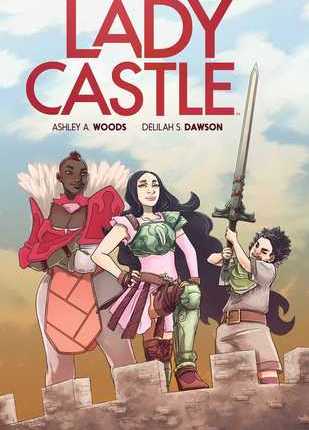
Ladycastle by Delilah S. Dawson

Ladycastle by Delilah S. Dawson

Aeve, a princess of Mancastle, is locked in a tower by her father, King Mancastle, for her refusal to chose a husband. Aeve’s younger sister, Gwyneff, is free to roam the castle, until she turns twelve and is subjected to the same fate as Aeve.

But Gwyneff doesn’t understand her sister’s choice and blames her for their father’s time-consuming efforts to find a new husband for Aeve and his absence.

“Aeve ruins everything. If she’d married, father wouldn’t go out hunting new princes. He’d be here. All the men would.”

Photo by Jeffrey Czum on Pexels.com

When King Mancastle and his men venture out to find a more suitable groom, and meet a foe they cannot overcome. One of the men returns to report to the women left behind — a curse has been laid on the castle and monsters will “be drawn as to a beacon”.

“For not only was King Mancastle cursed, but so was his domain. This castle shall be a beacon to terrifying monsters until the wizard’s curse is lifted.”

The blacksmith’s wife, Merinor, takes up the Lady of the Lake’s sword and becomes king. She and the women begin preparations to defend themselves from the approaching monsters. And thus our tale begins…

The artwork in Ladycastle is beautifully drawn with bright colors. I enjoyed the premise of the story. But Ladycastle doesn’t quite fulfill its promise in this volume.

Photo by Felix Mittermeier on Pexels.com

In the beginning of each section, the ladies’ inner monologue reads like a Disney or classic Broadway song, purposefully so. It’s distracting and derivative. I get that this work was attempting to point out the inherent bias of the other works, but I feel it takes away from the originality of this one.

The dark ages were brutal on women. I get it. Each lady in Ladycastle has a backstory of abuse or neglect from the man who ran her life, except for Gwyneff who hadn’t yet attained an age to be given away by her father for political purposes.

I liked how this comic flips that gender-issue on its head, the women rule the roost now. But the delivery of the lesson is heavy-handed, especially in the first two sections of the book.

Photo by Engin Akyurt on Pexels.com

As other readers have noted, there is a stab at diversity in this book, but no inclusion of LGBTQ characters. I can’t see any reason for this over-sight.

Recommended for readers who enjoy graphic novels, but with the reservations listed above. I felt like this topic was handled more deftly in the graphic novel for children, Princeless, Vol. 1: Save Yourself.

Thanks for reading!