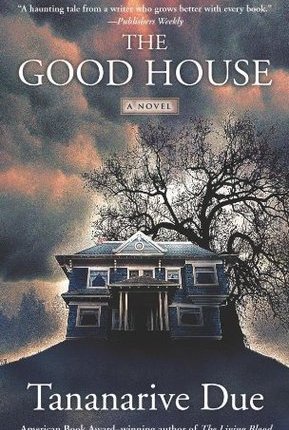
The Good House by Tananarive Due

The Good House by Tananarive Due

The Good House is a horror story spanning generations of the Toussaint family and their home. The family has a history of healing and mysterious vodun practices, or maybe they’re just extremely lucky. Take, for example, a mud slide that destroyed every home in their part of town, except theirs.

“The mud’s recent wrath had left their two-story house untouched, but sprays of buckshot fired at the house during cowardly moments, usually at night, had pocked and splintered the old door. The mere sight of the damaged door had always made her angry, and Marie Toussaint no longer trusted herself when she was angry.” pg 10, ebook.

Photo by Maria Orlova on Pexels.com

Sacajawea, the town where the Toussaints live, is small. Everyone knows each other and have long memories.

“Aside from the handful of vacationers who frequented the town’s two popular B&Bs, most people in Sacajawea had lived here for generations, earning hourly wages in the mills in Longview or taking down trees in the woods. And even if Sacajawea had been a more sometimey place, the rules would have been different for Angela, or anyone else who was kin to Marie Toussaint.” pgs 25-26, ebook.

Why is the Toussaint home called “the Good House”?

“…this house was built in 1907 by the town pharmacist, Elijah Goode. He chose this place because he said the land felt ‘blessed beyond all description,’ or in any case that’s what he wrote to his brother in Boston.” pg 30

After a tragic Fourth of July party, Angela Toussaint, the granddaughter of Marie Toussaint, thinks her family home may be mislabeled.

Photo by Tamas Marton on Pexels.com

What I enjoyed most about The Good House is the author Tananarive Due wrote an epic horror story around a family with characters I cared about. This wasn’t just a thrill-a-minute short story. Getting to know the residents of Sacajawea and the Toussaint family was a treat. Then, when things started to get scary, I was completely hooked.

This is a horror story for readers who enjoy a slow reveal and an extremely satisfying conclusion. Highly recommended.

Thanks for reading!

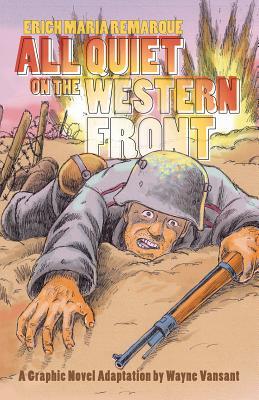
All Quiet on the Western Front by Wayne Vansant (adapter), Erich Maria Remarque

All Quiet on the Western Front  by Wayne Vansant (adapter), Erich Maria Remarque

This is a graphic novel remake of the classic All Quiet on the Western Front and it packs as much punch as the original.

Paul Bäumer and his classmates are encouraged to join the German army in WWI by an enthusiastic professor. What they find is not the heroic battlefields of the classical texts they’ve studied, but one nightmare after another.

“We plunge again into the horror, powerless, madly savage, and raging; we will kill, for they are still our mortal enemies, their rifles and bombs are aimed against us, and if we don’t destroy them they will destroy us.” pg 68

Photo by Kirsten Bu00fchne on Pexels.com

As his friends slowly die and he takes an uncomfortable leave home, Paul comes to realize that there will be no end to this war for him.

“He fell in October 1918, on a day that was so quiet and still on the whole front, that the army report confined itself to the single sentence: All quiet on the western front.” pg 170

This book is an interpretation of war that was banned and burned in Erich Maria Remarque’s home country of Germany. To go to war, it seems that the world has to sanitize it and completely demonize the other side, otherwise, we would never do it.

All Quiet on the Western Front refuses to look away from the humanity on both sides of the conflict. It is tough to read, and kicks you in the feels. But, in my mind, that’s what makes it so great.

Photo by Jan Tancar on Pexels.com

Though it is fictional, it is the story of a generation of young men who were shipped off to war and never came home again. And, if by some miracle they did, they’re forever haunted by the sound of a train car because it reminded them of the sound of falling bombs. When they picked up a book that they used to love, it didn’t ignite their souls in the same way, because they’d seen the worst that life can offer. War kills more than the ones who end up dead on the battlefield.

This graphic novel version of All Quiet on the Western Front should appeal to reluctant readers. Though it is about a very serious and triggering topic, the artwork is done tastefully. I read the original All Quiet on the Western Front as a seventh grader, age 13. I think this book would be appropriate for children of that age and up.

I received a free advance reader copy of this book from the publisher. This quotations I cited in this review may vary in the final printed version.

Thanks for reading.

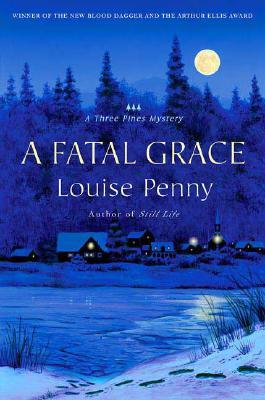
A Fatal Grace (Chief Inspector Armand Gamache, #2) by Louise Penny

A Fatal Grace (Chief Inspector Armand Gamache, #2) by Louise Penny

Chief Inspector Armand Gamache solves more murders while surrounded by the sparkling personalities that compose the small town of Three Pines in Canada. 

Nobody likes the victim of the murder, which makes the job harder for Gamache. As a reader, I was cheering for Gamache to solve the crime, but not because of the unlikeable CC de Poiters. She was as different a character from the victim of the first book, Jane, as you could possibly be.

I wonder if Louise Penny’s editors said, ‘Give us another cozy murder, but different.’ Well, she delivered.

Photo by eberhard grossgasteiger on Pexels.com

“Anything CC didn’t like didn’t exist. That included her husband and daughter. It included any unpleasantness, any criticism, any harsh words not her own, any emotions. CC lived, Saul knew, in her own world, where she was perfect, where she could hide her feelings and hide her failings. He wondered how long before that world would explode.” pg 11, ebook

Meanwhile, a storm is brewing at Gamache’s headquarters because of fall out from the mysterious Arnot case (which the reader first read about in the last book and finally gets to learn about in this one).

“Only fools underestimated (Gamache), but Brault knew the service was full of fools. Fools with power, fools with guns. The Arnot case had proved that beyond a doubt. And had almost destroyed the large, thoughtful man in front of him.” pg 57, ebook

We are also treated to more background on some of my favorite characters from the last book, Clara and Myrna, plus poetry from the irascible Ruth.

Well, all children are sad
but some get over it.
Count your blessings. Better than that,
buy a hat. Buy a coat or pet.
Take up dancing to forget.
 pg 39, ebook.

Photo by Zen Chung on Pexels.com

I like that Penny is developing these characters. They’re not just stuck in a time or place, unmoving and stiff. For example, Clara and Peter, her husband, are still fighting, but about different subjects now than from the last book. How very realistic for a married couple.

“When my death us do part
Then shall forgiven and forgiving meet again,
Or will it be, as always was, too late?”
 pg 61, ebook.

And it’s simply a treat to follow Gamache around and listen to his inner voice. He’s sensitive and kind, smart and intuitive. He also likes good food and drink. It makes him so relatable. He’s one of those characters that I’d like to meet for a drink sometime, if he were real. Or I’d want him in my book club.

“Gamache’s job was to collect the evidence, but also to collect the emotions. And the only way he knew to do that was to get the know the people. To watch and listen. To pay attention. And the best way to do that was in a deceptively casual manner in a deceptively casual setting. Like the bistro.” pg 142, ebook.

Photo by Atahan Demir on Pexels.com

The only part of this book that I found a bit off-key was a moment between Gamache and one of the town’s oldest residents, Em. They talk about moments from their past when something inexplicable caused them to behave in a certain way. That conversation comes back to haunt Gamache later in the book, and it almost has an air of magical realism to it.

There’s nothing wrong with magical realism, but I felt like Three Pines and its residents had enough every day magic without resorting to the truly far out there. I’d be curious as to what other readers thought of that moment — I won’t say any more because I don’t want to spoil it. You’ll know what I’m talking about when you get there.

Highly recommended for readers with a hankering for cozy mysteries. Thanks for reading!

The Speed Reading Book by Tony Buzan

The Speed Reading Book by Tony Buzan

I did not speed read Tony Buzan’s The Speed Reading Book because I found it to be rather a slog. There is useful information in here about the physical capabilities of your eyes and brain, methods for training your eyes how to move, the benefits of improving your vocabulary, how to recognize patterns in the way paragraphs are structured, and the basics of logic.

However, it’s interspersed with information that I felt was better presented in Use Your Head.

“Quite apart from important improvements in the technique of learning how to read fast which are set forth in this book, what I wish to emphasize in my system is that understanding and remembering factual material is not nearly as important as knowing how to relate new material to what you already know. This is the all-important ‘integrative factor’, or if you will, learning how to learn.” pgs 12-13

Photo by fotografierende on Pexels.com

He re-hashes the proper way to make a mind-map and the importance of previewing all reading material, even mystery novels, which I felt was silly. I can’t speak for the whole world, but I read mysteries to be entertained, not create a template into which I fit important details as I go along.

“The purpose of the preview is to develop a structure into which the mind can more easily fit the smaller details of that structure. … Previewing should be applied whatever kind of material you are going to read, which it be letters, reports, novels or articles.” pg 115

Though he did backpedal on his “preview everything” stance somewhat in a chapter about reading poetry: “When reading literature and poetry, bring to bear all your knowledge and judgment, and if you feel that it is the kind of writing you wish to treasure forever, forget about speed reading through it and reserve it for those occasions when time is not so pressing.” pgs 167-168

Thank you, I will.

Photo by Mark Cruzat on Pexels.com

Perhaps part of my problem with this book is that it revealed to me just how slowly I read and assimilate non-fiction, because Buzan offers the reader information about the absolute limitlessness of human capability.

“Theoretically, the human visual system can photograph an entire page of print in one-twentieth of a second, and thus a standard length book in between six and twenty-five seconds, and the entire Encyclopaedia Britannica in less than an hour. Advanced skinning and scanning skills take you on the first step of that incredible and inevitable journey.” pg 70

Let’s say I have much room for improvement.

The book also showed its age somewhat during a chapter on the importance of organizing how you take in information from newspapers: “Newspapers are so much a part of our everyday life that we seldom stop to think that they are a very recent development.” pg 148

But are they still? I’m not so sure.

Photo by Masha Raymers on Pexels.com

The book ends on a high note and, of course, I plan to continue practicing and improving my skills: “Your continuing success in all fields of speed reading depends on your personal decision to continue the course you have begun, and on the capacity of your brain to read, assimilate, comprehend, recall, communicate and create, abilities which we know approach the infinite. Your success is therefore guaranteed.” pg 177

But if you’re only going to read one book by Tony Buzan, I recommend Use Your Head.

The Perfect Horse: the Daring U.S. Mission to Rescue the Priceless Stallions Kidnapped by the Nazis by Elizabeth Letts

The Perfect Horse: the Daring U.S. Mission to Rescue the Priceless Stallions Kidnapped by the Nazis by Elizabeth Letts

Author Elizabeth Letts‘ non-fiction book is about Operation Cowboy, the American protection of the Spanish Riding School and the plight of the Lipizzaner horses during World War II.

As priceless as any of the masterpieces that hung in Vienna’s museum, from their snow-white coats to their large aristocratic heads and deep brown eyes, the horses were unlike any others in the world.” prologue xvii

There was a precedent for saving irreplaceable works of art during the war, but Colonel Hank Reed‘s effort to save horses was something different. Reed, the most decorated American cavalry officer during WWII, recognized that there was something special about the horses at the Nazi stud farm at Hostau.

Photo by Helena Lopes on Pexels.com

Gustave Rau, the Nazi’s master of horse, was attempting to apply eugenics to his horse breeding program to create “the best warhorse”. He focused on gathering Lipizzaners from all over Europe.

Rau, in his next official report to Berlin, would declare, “There are no high-legged Lipizzaner, there are no flat-ribbed Lipizzaner, there are no bad-tempered Lipizzaner…” Clearly, he was impressed with what he had witnessed in Vienna. pg 87

But it wasn’t just about the breeding program, the Germans needed horses to feed the engines of war.

“The Germans were churning through horses at an astonishing rate — the army demanded six thousand fresh ones per month to replace those killed or lost to disease.” pg 37

I didn’t realize horses had such a large role in WWII. I assumed machines had taken over most of the vital functions horses used to perform like transportation and moving men into battle. I was wrong.

The Perfect Horse doesn’t cover the technical aspects of WWII or talk about the American defense of Hostau. It focuses on the horses though Letts does provide some context and information about the backgrounds of the men involved on both sides of the conflict.

Photo by Dids on Pexels.com

“Politics, prejudice, avarice, and intolerance had riven a brutal divide between the countries of these men; the grace of these horses had already started to knit them back together. The former enemies parted as friends.” pg 149

She follows the horses from their eventual relocation from the war front to the United States and what happened next.

The Perfect Horse is a difficult book to read in that it contains a lot of information and not as much “story,” but for readers interested in history, it may be a good fit.

Thanks for reading!

Here’s the History Guy episode I wrote about Operation Cowboy: