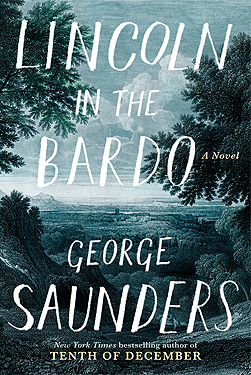
Lincoln in the Bardo by George Saunders

Lincoln in the Bardo by George Saunders

Lincoln in the Bardo may be the strangest book I’ve ever read. It intersperses non-fiction excerpts from historical documents and memoirs and mixes it with fictional quotations to form the narrative. At first, I thought, “I don’t like this at all.” But strangely, it grew on me and I ended up reading the whole book in one sitting.

And I couldn’t stop thinking about what the book was saying.

In the fictional portion, Willie Lincoln, the young son of President Abraham Lincoln, dies and ends up in a world between this one and the next. And in this realm, other tortured souls are spending eternity tied to their hang-ups or traumas from their previous lives. A few of the more normal of this crowd wants to help Willie move on before something bad happens to him.
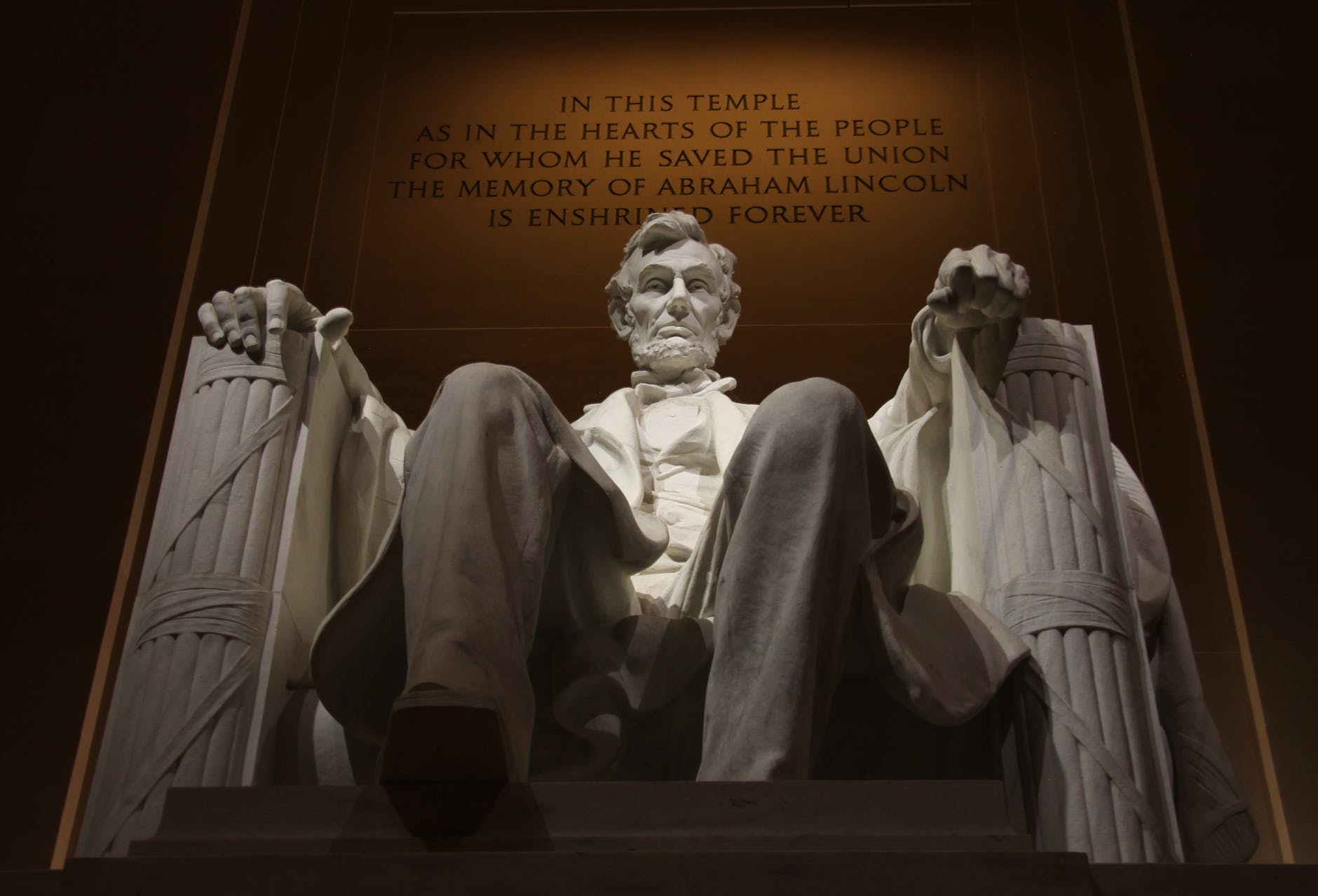
Photo by Pixabay on Pexels.com

“Imagine our surprise, then, when, passing by an hour or so later, we found the lad still on the roof, looking expectantly about, as if waiting for a carriage to arrive and whisk him away.” pg 48, ebook.

The non-fiction part is about Abraham Lincoln’s struggle to mourn his son while conducting the Civil War. It contains criticisms of Lincoln from his contemporaries that I have never read prior to this book, which is shocking to me, living in “The Land of Lincoln” state and all that. You’d think with all of the books that have been written about Lincoln that I would have at least been exposed to it. So, that part was fascinating too.

But back to the fictional part… Lincoln in the Bardo is an examination of love and mortality. Everyone dies. Yet we live and love like we will live forever. What do we take with us beyond death? What awaits? A hell of our own creation or an eternal heaven?
Photo by Mike on Pexels.com

I can see why some readers can’t stand this book. As I said, it is strange and can be, at times, vulgar and shocking. But at the same time, it is so unique and thought provoking. I can see why it was awarded The 2017 Man Booker Prize and why its rating on Goodreads is barely above three stars.

Only recommended for readers who enjoy weird books with completely novel narrative methods.

I’ll be thinking about this one for a long time. Thanks for reading!

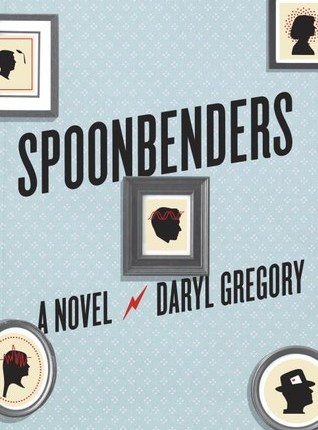
Spoonbenders by Daryl Gregory

Spoonbenders by Daryl Gregory

A con-man and a highly talented psychic fall in love and have children with extraordinary talents. But this doesn’t automatically give them an extraordinary life. They struggle to hold down jobs and support each other, while mourning the loss of one of their members and a career in showmanship.

One night, years before this story takes place, the Telemachus family was on a late night show, introducing themselves to the world. But a skeptic proved a portion of their act to be fake and the family’s bookings all fell through. One of the members of the family, Frankie, blames the skeptic for the mediocre life they are living now… and worse.

Photo by Cleyton Ewerton on Pexels.com

“Archibald was a necessary evil,” Grandpa Teddy said. “He was the voice of the skeptic. If your mother had shown him up, the audience would have loved us for it. We could have gone to the stratosphere with that act.” “He was evil,” Frankie said. … “He killed Grandma Mo…” pg 19, ebook.

Though the head of the family, Grandpa Teddy, doesn’t have any legitimate powers to speak of (except a talent for manipulating cards), his children have a veritable cornucopia of abilities. Frankie can move metal objects with his mind, when he’s not under stress. Irene can tell if someone is telling her a lie. And the youngest, Buddy, can see the future so clearly that he calls his perceptions “memories”.

And their children have different powers too.

“That they were psychic was another Telemachus Family Fact, in the same category as being half Greek and half Irish, Cubs fans and White Sox haters, and Catholic.” pg 27, ebook.

Photo by Mikhail Nilov on Pexels.com

The strength of this story is in the characters themselves. You really enjoy learning who these people are and seeing how they prevent themselves from being great. It’s also just a fun story about a large, semi-dysfunctional family. As someone from a large family myself, I felt right at home in this world (minus the extraordinary powers and most of the dysfunction).

One of my favorite characters, though he was a bit of a rogue, was Grandpa Teddy. He’s trying to keep his herd-of-cats family all pointed in the same direction while not having the advantage of extraordinary abilities beyond his own quick mind.

“The problem with getting old was that each day had to compete with the thousands of others gone by. How wonderful would a day have to be to win such a beauty contest? To even make it into the finals?” pg 196

I also liked Irene, the daughter who could tell if you were lying to her. I never considered how much the small untruths we tell each other grease the wheels of relationships and civil discourse.

Photo by Magda Ehlers on Pexels.com

This might be a good pick for a book club read. There are plenty of issues to discuss and powerful moments to dissect.

I may have enjoyed this book more if it had been primarily about the family’s abilities rather than real life drama. But I’m into superhero stories and epic fantasy. For readers who like to think about the impossible but not read a story where that sort of thing is the norm, this book may fit the bill.

Thanks for reading!

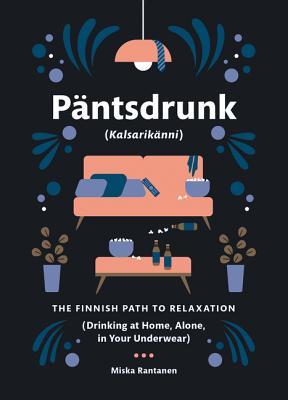
Päntsdrunk (Kalsarikänni): The Finnish Path to Relaxation (Drinking at Home, Alone, in Your Underwear) by Miska Rantanen

Päntsdrunk (Kalsarikänni): The Finnish Path to Relaxation (Drinking at Home, Alone, in Your Underwear) by Miska Rantanen

Päntsdrunk, a satirical self help read, seemed fairly straight-forward to me. To keep your cool, occasionally you should take a page out of the Finnish playbook and put on your most comfy underwear, grab your favorite alcoholic beverage and chill out. But then Miska Rantanen had to write something to fill up the rest of the pages. There was quite a lot of filler material.

Päntsdrunk doesn’t demand over-the-top arrangements. Affordability and democracy are its hallmarks. It’s quick acting and suitable for all who have reached the age of majority.” pg 16

Photo by Mitchell Henderson on Pexels.com

Rantanen talks about how Finland developed this coping mechanism from a couple of different factors: freezing weather, long distances between cities and towns, and very little sunlight near the winter solstice.

“The Finnish term kalsarikanni is a simple compound word: kalsari (underwear) + kanni (state of inebriation). This pithy idiom crystallizes the essential: at its simplest, pantsdrunk means imbibing alcohol in one’s underwear at home without any intention of going out. The term’s ingenuity lies in everything it doesn’t imply.” pg 21

But pantsdrunk practitioners don’t have to stay in or solitary. You can drink as a couple, with friends, with a couple of friends. As the night wears on, you can go from pantsdrunk to plus pants at the club or bar, if the mood lends itself that way. The trick is to go with the flow of the evening and enter a state of total relaxation.

“As a philosophy, pantsdrunk is not in conflict with lagom and hygge. Au contraire. They all spring from the same Nordic origins and share the same ultimate goals: optimal peace of mind, joie de vivre, comfort, equilibrium, and recuperation as embodied in a snug coziness.” pg 22

Pantsdrunk is not about getting blasted as fast as possible. It’s a slow slide into mellow.

Photo by Mitchell Henderson on Pexels.com

“At its most minimal, pantsdrunk is a device for balancing life and work. It can, however, be expanded into a lifestyle and worldview. The beauty of pantsdrunk lies in its possibilities.” pg 27

I’m not sure about some of the statistics Rantanen cites in his book, but he claims Finland is one of the stablest, safest, most educated countries in the world. And he credits the practice of pantsdrunk with part of this fantastic result.

Heidi, you may say, what could your problem be with pantsdrunk? Anyone who has dealt with an alcoholic can easily point out the potential roadblocks to happiness with this. Also, there’s addiction issues to consider. None of which can be dealt with if you’re indulging in this behavior by yourself and aren’t aware there’s a problem.

Rantanen does say that if pantsdrunk becomes a conscious choice every day to deal with stresses, that a reshuffling of your life may be in order. He also suggests counting bottles or cans to keep tabs on how much you’re consuming. Or gauging how well you’ve managed to balance drunk and relaxed by your hangover the next day.

Photo by Chris F on Pexels.com

I’m not entirely convinced this is possible. Rantanen also talks about how pantsdrunk has gotten a bad rap with some films depicting people drinking in their underwear alone as sad and pathetic rather than empowered and relaxed.

One of the most uplifting performances (of pantsdrunk) can be seen during the credits of Bridget Jones Diary (Maguire 2001), when Bridget Jones (Renee Zellweger) belts out the quintessential pajama playback solo while sloshed on red wine. pg 76.

But wasn’t that one of her lowest points?

Recommended for brave readers over 21 who mostly have their lives together, but need to allow themselves to chill out now and then.

For other satirical self-help reads, please see the following reviews:

Get Your Sh*t Together by Sarah Knight

Check out Sarah Knight’s latest self help: You Do You

How to Be Dull by Basil Morley, Esq.

And thanks for reading!

Bloody Rose (The Band, #2) by Nicholas Eames

Bloody Rose (The Band, #2) by Nicholas Eames

Readers get the opportunity to return to the adventure-filled world of bands and monsters, Grandual, in Bloody Rose. Nicholas Eames second book in The Band series, the sequel to The Kings of the Wyld takes place years after the first book. It follows the exploits of a band called Fable, a bard named Tam and Bloody Rose, the daughter of Golden Gabe, one of the members of a band called Saga, who readers got to know and love in Kings of the Wyld.

The world is on the brink of annihilation, again.

“Hey, did you hear the news? There’s another Horde, apparently. North of Cragmoor, in the Brumal Wastes. Fifty thousand monsters hell-bent on invading Grandual.” pg 5

Photo by Lisa Fotios on Pexels.com

Tam wants to see the world, but her father is a retired mercenary. He doesn’t want Tam to have the life he led, risking life and limb to battle monsters. He also doesn’t want to lose her, like he lost her mother.

“To Tam, there was nothing worse than the prospect of never leaving home, of being cooped up in Ardburg until her dreams froze and her Wyld Heart withered in its cage.” pg 20

Bloody Rose, Gabriel’s daughter, has never quite left her father’s shadow, even though she’s a formidable fighter and bandleader in her own right.

“She’s got something to prove — whether it’s to herself, or her father, or the world in general, I don’t know. I can’t have been easy growing up the daughter of Golden Gabe. The man’s got boots even a giant could wriggle its toes in, but that doesn’t stop Rose from trying to fill them.” pg 63

The other members of Rose’s band include Brune (a shaman), Cura (an inkmage) and Freecloud (a mighty druin fighter). They have their own burdens to bear and shadows to face down. A large part of this story is getting to know them through the band’s adventures.

“And yet here they all were: at the cold edge of the world — each of them vying to be worthy of one another, to protect one another, to prove themselves a part of something to which they already, irrevocably belonged.” pg 265

Photo by eberhard grossgasteiger on Pexels.com

Like the first book, the world has become more civilized and bands fight in contrived battles against captive-bred monsters in arenas to the cheers from bloody-thirsty crowds. It is more show than substance.

“She began to question every song she’d ever heard about heroic mercenaries and vile monsters doing battle on the arena floor. If those so-called battles were anything like the one-sided slaughter she watched from the comfort of the Lair’s armory, then the work of a bard was even more difficult than she’d been led to believe.” pg 103

I enjoyed Bloody Rose, but I missed the characters from the first book. Eames writes an ripping tale, but my favorite parts of this book included cameos (and one rather large story arc) of people from the last one.

That being said, there is still the snappy dialogue, epic fights and breath-stealing finale that characterized Eames’ debut novel. Highly recommended for fantasy readers and I look forward to his next one.

Thanks for reading!

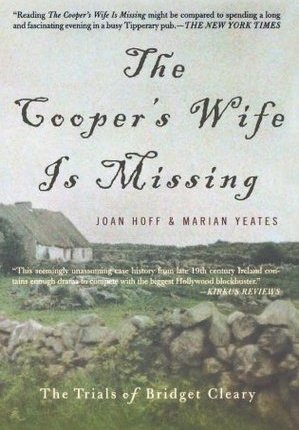
The Cooper’s Wife Is Missing: The Trials of Bridget Cleary by Joan Hoff, Marian Yeates

The Cooper’s Wife Is Missing: The Trials of Bridget Cleary by Joan Hoff, Marian Yeates

“Are you a witch, are you a fairy, are you the wife of Michael Cleary?”

In March 1895, after walking the fabled “fairy fort” of Kylnagranagh Hill in Tipperary County Ireland, Michael Cleary’s wife, Bridget Boland Cleary, returned home ill with a fever and headache. Michael Cleary thought she was exhibiting signs of fairy abduction. And he was determined to get her back.

What happened next highlighted the clash of paganism and Catholicism, and the ushering out of old superstitions to make way for the modern era. After days of abuse, he eventually burned Bridget until she died because he believed she had been replaced by a fairy.

Photo by Steven Hylands on Pexels.com

“… they continued to feed her herbs and to shake, slap, and swing her while she ‘screamed horrible’ and they shouted: ‘Away with you. Come back, Bridget Boland, in the name of God.'” pg 191

The Cooper’s Wife is Missing gives nearly complete context of Ireland in this era and the political and social pressures during the time period.

The crime was shocking in its brutality but also the stated motive. The press had a field day. It was 1895, the world was on the brink was technological, social and political change. And yet, they wrote, these rural Irish peasants still believed in fairies or practiced witchcraft. (Depending on which publication you chose to read.)

And it wasn’t just perpetrated by Michael Cleary. Bridget’s own family and neighbors participated in the “fairy trial” that led to her death. Nine people were found guilty at varying levels of culpability for the crime.

“As the police led him away, he shouted, ‘I am innocent.’ Cleary maintained it was not his wife he burned but a fairy.” pg 361

Photo by Gantas Vaiu010diulu0117nas on Pexels.com

The Cooper’s Wife is Missing jumps back and forth, giving the reader the history of Ireland, fairy lore and what historians believe happened to Bridget Cleary. That was my only complaint with this read, some of the story repeats itself, especially during the testimony at the trials.

But, overall, highly recommended for fans of true crime and history. This book has both of those in spades.

Thanks for reading!

Here’s the History Guy episode I wrote about Bridget Cleary:

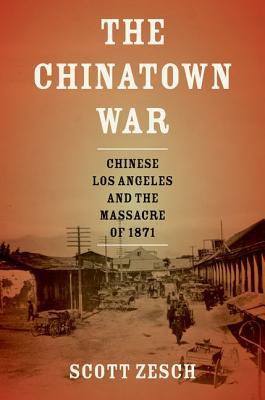
The Chinatown War: Chinese Los Angeles and the Massacre of 1871 by Scott Zesch

The Chinatown War: Chinese Los Angeles and the Massacre of 1871 by Scott Zesch

The Chinatown War is an outstanding examination of a little remembered event in Los Angeles history. One terrible night in 1871, racial tension boiled over in what was later labeled “the Chinese Massacre” and what the people of Los Angeles at the time called “Black Tuesday” or “the night of horrors”.

Scholars can’t even agree on how many people were murdered that night in October 1871. Scott Zesch, the author of The Chinatown War, believes it was around 18.

“Most Angelenos do not even know what happened that night, for the city’s fathers decided to put the incident behind them shortly after it occurred, and the victims were not people of consequence. They were ordinary immigrants whose American dream ended in a nightmare.” prologue

Photo by Roberto Nickson on Pexels.com

Public opinion was driven by resentment and distrust of Chinese immigrants. While often portrayed as a working class complaint over jobs, the hatred towards the Chinese was a thinly veiled racism against a people who were hated largely because their ways and culture were different.

“Contrary to popular belief, the earliest Chinese immigrants to America did not come to build the transcontinental railroad in the 1860s. Instead, it was the California Gold Rush of 1849 that brought the first large wave of Chinese to the West Coast.” pg 6

I learned so much from this book.

For example, Chinese immigrants in Los Angeles were often members of social groups called huiguan – commonly called “companies” in the newspapers of the time, although that translation is not exactly correct. Huiguan were social groups formed to help Chinese immigrants in their new lives in America. Members would sign up for the huiguan based on the location they immigrated from in China.

Also, though it is now one of the most populous cities in the U.S., in 1871 Los Angeles only had a population of around 6,000 people. Unfortunately, this massacre is one of the events that brought Los Angeles to the attention of the rest of the world.

“One of the city’s early historians, Charles Dwight Willard, characterized Los Angeles as ‘undoubtedly the toughest town of the entire nation’ during the 1850s and 1860s. He claimed that it had a larger percentage of miscreants than any other American city and, for its size, also had the highest number of fights, murders, and robberies.” pg 23

Photo by Pixabay on Pexels.com

Policing this rough and tumble western town wasn’t easy. This was compounded by the fact that the police department was too small.

Los Angeles’s early police department was too small, and was staffed by men too inexperienced or indifferent to their responsibilities, to be very effective in keeping order.” pg 53

The riot itself is difficult to read about, even now that nearly 150 years have passed since that night. Innocent people were dragged from their homes, brutalized and murdered.

“One eyewitness reported that the ‘stark, staring corpses hung ghastly in the moonlight,’ while ‘others, mutilated, torn and crushed, lay in our streets.'” pg 150

Not all of the citizens of Los Angeles participated in the massacre. Some tried to shame the mob into stopping or hid the terrified Chinese in their own homes to protect them.

“Baldwin quickly realized that the crowd’s sentiment was very much against him. As he said later, ‘I might as well have spoken to a cyclone.'” pg 145

Photo by Megan Markham on Pexels.com

A man named William H. Gray concealed several people in his home. In the years following the massacre, he received anonymous gifts in thanks for his actions that night.

Zesch examines the whole incident from the beginning to the trials following and how it affected (or didn’t) Los Angeles afterwards. His research and scholarship really is astonishing. He gives context and history not only of the city but also of the Chinese immigrant community at that time.

Highly recommended for anyone who wants to learn about an event in Los Angeles history that should never be forgotten.

Thanks for reading!

Here’s the History Guy episode I wrote about this event: