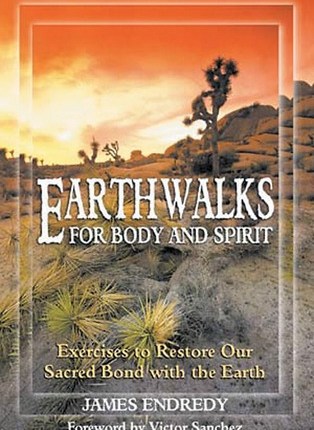
Earthwalks for Body and Spirit is a handbook of sorts for a shamanistic experience of nature. James Endredy, through various exercises for both the solo and group walker, crafts a system through which the reader can get in touch with nature and, he believes, heal the world through this relationship.
I’ve always enjoyed the outdoors for its healing aspect. I’m more of a sun bather than an avid walker but I think that the general principle is the same. If you’re in a funk, go outside for awhile. It clears the clouds from your mind so to speak.
Actually, this is one of the first books I’ve ever read that goes into actual shaman practices. It’s worth the read just for that, really.
In life, there are fundamental skills a gal must master: Walk in heels. Poach an egg. Pen a thank you note. And, most absolutely, without a doubt, create a cat eye. pg 172
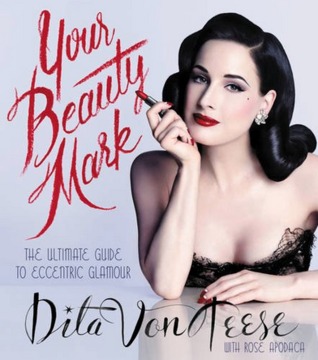
Your Beauty Mark by Dita Von Teese is the most inclusive guide to beauty I’ve ever had the chance to peruse. From make-up to perfume to grooming, she leaves no stone unturned in her quest for glamour.
And she’s not afraid to share some secrets. If you read this book, you’ll have the rare privilege of viewing Ms. Von Teese sans her glamour. (Well, and clothes, as she includes some burlesque photos.) She tells about one Halloween when she dressed up as “the girl next door” and no one recognized her because her appearance has literally become her identity.
She also has separate entries by many of her cutting-edge fashion and beauty friends, sharing their lives, struggles and unique brands of beauty. In a world that sometimes tries to push everyone into cookie cutter molds of both appearance and behavior, it is a breath of fresh air. The history of beauty is sprinkled throughout and we learn about the origins of lipstick, heels and more.
This was a book I had to enjoy slowly, otherwise it had moments where I felt overwhelmed by the level of dedication Ms. Von Teese brings to her art, which is, beauty. She eats a certain way, walks a certain way, arranges her hair just so…
I enjoy dressing up, occasionally, as much as the next person, but I don’t think I’ll ever give up the level of comfort I’ve come to enjoy in my footwear. Or dedicate as much time to adorning my body as Ms. Von Teese does. But that being said, it’s fun to dream.
Everyone, male and female, will probably find something to enjoy in this book. They say beauty is in the eye of the beholder and Ms. Von Teese makes herself so easy to love.
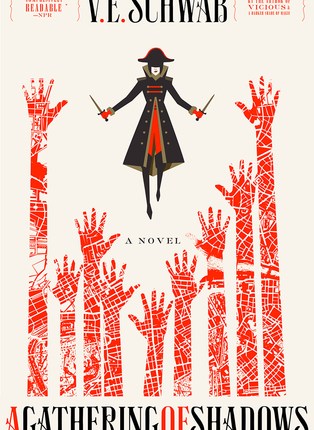
The characters from A Darker Shade of Magic are back and up to their usual tricks. Rhy worries about Kell, Kell worries about Rhy and Lila, Lila worries about where she’s going to get her next knife. We also get to meet someone new, a dashing privateer named Alucard Emery.
Walking away had been easy. Not looking back was harder. pg 30, ebook.
The second entry in the series is usually when you get to know the characters better. What are their motivations, loves, hates? We get a bit of that in A Gathering of Shadows but, mainly, the author uses this book to introduce what has become the young adult trope of “dangerous contest” to get the characters together. Think Hunger Games or Maze Runner or the Tri-Wizard Cup but without as much excitement.
Kell is suffering after what he went through in the first book. “Once he would have hesitated — once he had hesitated — but not this time. With a flick of his hand, metal spikes slid from the sheath at his wrist and into his palm. They rose into the air and shot forward, burying themselves in the specter’s throat, his heart, his head. But there were still more shadows. Always more.” pg 43, ebook.
Rhy is suffering too: “Who drinks this?” Kell coughed. “People who want to get drunk,” said Rhy, taking a long, pained sip.” pg 58, ebook.
The pace of the story is quite slow. What goes on in Red London isn’t nearly as interesting as what goes on in other places (no spoilers). But there were so few chapters about the other Londons.
“Saints,” cursed Rhy, “do all the Londons get this cold?” “As cold,” said Kell as he followed the prince away from the bright beating heart of the city, and down a series of narrower roads. “And colder still.”
I am still enthralled with the idea of different worlds and only a few characters having the ability to walk between those worlds. I like how magic functions here. I like how Schwab gives everybody a back story. But, as in the first book, I feel like I’m probably not the target audience for this tale.
Hanging the Sheriff takes another look at the life of Henry Plummer. Conventional history labels Plummer as the leader of a notorious outlaw gang in the territory that would eventually become Montana. This book suggests that Plummer’s life story was written by the vigilantes who killed him and they had every reason to make him seem worse than perhaps he actually was.
It was kind of funny — the authors assumed everyone reading their book would know exactly who Plummer was. I had no clue: The image of Plummer as the one man responsible for all crime committed in the mining districts east of the Rockies is so firmly ingrained it is nearly impossible for even the most impartial of readers to drop old suspicions and view him with an open mind.” pg 7
Like I said, blank slate here. And the story they revealed was fascinating.
Plummer was born in Maine and migrated West not just for the Gold Rush but also because of his lung disease. He was a successful business owner and prospector. He was a notorious gunslinger, able to fire five bullets in three seconds. He got in trouble with the law, but was elected marshall and sheriff in two different towns. He killed at least half a dozen people.
“Plummer jumped up. ‘I’m tired of this,’ he said, drawing his pistol and firing at the ceiling. A second shot struck Cleveland, who fell to his knees, pleading, ‘You won’t shoot me when I’m down?’ ‘No,’ Plummer said, ‘Get up.’ pg 25
In his defense, the American frontier was wild and untamed with very few courts or lawmen. Everyone had to police themselves: “As Granville Stuart explained, ‘There was no safety for life or property only as far as each individual could, with his trusty rifle, protect his own.'” pg 26
I would have enjoyed this book more if it had been arranged in a linear fashion (it wasn’t) and if they had included some of the other viewpoints about Plummer. They go on and on about Plummer’s bad reputation but give little explanation, for those who haven’t heard of it, exactly what that reputation was.
“She said that she loved Mr. Plummer,” Thompson wrote, “that she knew that he loved her, that she had the upmost faith in him, that the terrible stories of him were told by men not worthy of belief; that she could never be happy unless she married him.” pg 41 What stories!
This book made me wonder about all of the “history” of the Wild West. Who were the heroes and who were the villains? Things weren’t black and white… and, as the authors pointed out, history was written by the men who survived. Was that the truth of what really happened? I guess we’ll never know.
Thanks for reading!
Here’s the History Guy episode I wrote about Henry Plummer:
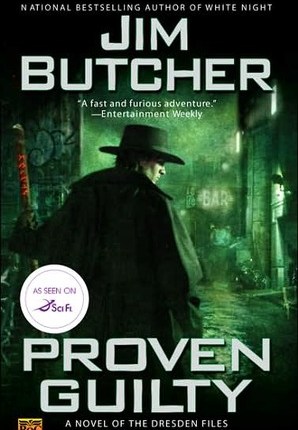
The wizard Harry Dresden continues to anger the White Council, the Red Court of Vampires, the winter court of the Fey and pretty much everyone else in the universe. He and Bob have a new (dangerous) project in his work space. He’s worried about his half-brother, Thomas, who has been acting kind of weird and may or may not be feeding off of people again. He and Murphy are starting to talk about their interesting relationship and there’s a fallen angel in the concrete of his house. Could things get much worse?
Yeah, it could. When Michael’s daughter begins to have problems, Harry has to deal with those too.
First, he has to witness an execution of an evil magic user by the council. It makes him sick to his stomach because the boy was never trained and didn’t know that what he was doing was wrong. It reminds Harry of his own questionable past and how close he came to the same fate.
“But it doesn’t change the fact that we’ve just murdered a boy who probably never knew enough to understand what was happening to him.” pg 15
The White Council is so stretched by the war with the vampires, they’ve giving less time to social niceties than perhaps they able to in the past. They’ve also been able to train fewer wizards. And there’s a new threat running around Chicago that Harry has been tasked to discover.
“As the senior Warden in the region, it falls to you to investigate and find those responsible. In my opinion, it is vital that you do so immediately. To my knowledge, no one else is aware of the situation.” pg 29
I really enjoyed this entry in the series until the end of the story arc with Michael’s daughter. That part felt off to me and crossed a line that I didn’t know I had for these books.
In my mind, The Dresden Files are sort of the “junk food” of my to-be-read pile. The hero of the stories is not perfect and admittedly so. He’s kind of a dog when it comes to women and relationships. He tries to make the right decisions but it sometimes back fires in his face. But I usually agree with what he tries to do and understand his motivations behind it.
But the way that he treats Michael’s daughter… I didn’t agree with that. There’s a kind way to go about things and a cruel way, and I felt like he unnecessarily chose the cruel way. It’s not what I look for in my “junk food” reads. Plus, the whole scene gave me the creeps and made me feel like I didn’t know the character after all.
And perhaps that was the point. Sometimes Harry does the wrong thing. Sometimes he thinks the wrong thing. But at the end of the day, in this book at least, he didn’t make a different type of unforgivable mistake.
That being said, if he lived in my world, I wouldn’t let him be around my kid, end of story. And if this book hadn’t included the icky part with Michael’s daughter, it would have been a five-star read for me.
Here are more reviews I’ve written for this series:
Animosity: Evolution imagines a world in which animals have become sentient and all of the chaos that followed. It’s a fascinating science fiction graphic novel in which leaders among the animals have to come to grips with an additional multi-billion mouths to feed, homes to find, and society to organize.
Compounding the complexity, the animals are now just like people with individual personalities. Some are brave, others corrupt, others run vice dens with black market milk or other forbidden specialties. There’s problems with population control and predators continue to desire prey.
A laconic wolf named Wintermute is leading the charge for the former city of San Francisco. None of the decisions she is required to make on a daily basis are simple and she’s almost universally hated, except by a few who know her well.
Meanwhile, out in the ocean, the dolphins have organized into their own blood-thirsty society. Beyond the city limits on the land, there are animals (and people) who don’t want to join a new world order in San Francisco.
I really enjoyed Animosity: Volume 1. It is a multi-layered story in a world that has a lot of potential. The characters, both animal and human, are fascinating. The relationships that they are attempting to develop are brand new and without precedent. There’s shifting power structures and social services have been completely up-ended.
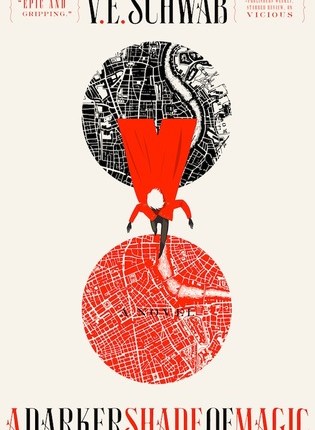
A Darker Shade of Magic is a young adult fantasy novel about a rare-type of powerful magician who can travel between worlds and who also has a penchant for smuggling items between these worlds. It also concerns a young woman from our world who may or may not have a secret relating to magic, who wants to be a pirate and find a life of adventure, far from the dreary and almost magic-free realm of the real world. Their worlds collide when Kell, the magician, secrets a particularly dangerous item from one of the worlds to another.
“So when Kell passed through the palace wall and into the anteroom, he took a moment to steady himself — it took its toll, moving between worlds— and then shrugged out of his red, high-collared coat and turned it inside out from right to left so that it became a simple black jacket.” pg 1
I forgot to mention, he also sports a fabulous jacket with multiple “sides” and pockets, the extent of which he hasn’t even been able to discover. Wish I had one.
The worlds Kell moves between are different in almost every way, except there is a city called London in each of them.
“And so Kell — inspired by the lost city known to all as Black London — had given each remaining capital a color. Grey for the magic-less city. Red, for the healthy empire. White, for the starving world.” pg 15
Magic is something that can be dangerous in this universe, not just pretty sparkles. Because one of the worlds succumbed to magic and it ate their souls, the doors between the worlds have been severed. Only Kell, and magicians like him, can travel from place to place.
But the thing about magic,” added Kell, “is that it preys on the strong-minded and the weak-willed, and one of the worlds couldn’t stop itself. The people fed on the magic and the magic fed on them until it ate their bodies and their minds and then their souls.” “Black London,” whispered the Prince Regent. pg 23
It’s actually a fascinating premise for a series. My quibble with this book, which I sometimes have with young adult fare, is that the characters never really came alive for me. They felt like a series of cliches.
“And Lila left feeling empty, hungry, and hollow in a new and terrifying way. Or maybe it was the same kind of hunger she’d always felt, and now the missing thing had a name: magic. She wasn’t sure.” pg 160
But even so, I think I’m going to pick up the next book to see how things go for them. Recommended for young adults. Other readers (ahem, older) may, like me, be left wanting more substance.
Full title: Scandals of Classic Hollywood: Sex, Deviance, and Drama from the Golden Age of American Cinema
Scandals of Classic Hollywood is about movie star scandals, obviously, but also shows the development of Hollywood and how public and private forces place tremendous pressure on the stars of film. I think it’s extraordinary than anyone in the business can be normal at all considering what they go through.
The scandals discussed in this book are more than just smut. They’re history lessons…” introduction
The most fascinating piece of this book is the role of fixers and reputation creators. It makes you wonder what’s real and what’s simply fairy tale in celebrity magazines now. In what other profession do we act like we know a person simply because they were doing their job?
“During this period, stars weren’t born; they were made. Scouts would bring in ‘raw’ star material, culled from the vaudeville circuit, the theater, or the soda fountain counter. The potential star would be given a name, a sanitized (and sometimes dramatized) backstory, a makeover, and a contract.” introduction
The other side of Hollywood that this book gives you an inside look at is the creation of film ratings and the history of censorship.
“To save their monopolies, then, they had to figure out a way to appease the calls for censorship, but to do so without actually appointing a government censor. Thus the studios came together and created an organization — the Motion Picture Producers and Distributors of America — and elected to censor themselves.” pgs 22-23
Each chapter focused on a different person or couple and it seemed like most of the chapters ended in tragedy. Judy Garland, Lombard and Gable, and Fatty Arbuckle are a few who come to mind, but there are a dozen others.
“Whenever a Hollywood star dies young, it’s a tragedy. Whenever a Hollywood star dies young while serving her country, leaving behind her much-beloved husband, with whom she had been very publicly and blissfully happy, the tragedy amplifies into something else entirely.” pg 132
Before TMZ, fans got their gossip through magazines or newspaper columnists, perhaps not with the immediacy that exists now, but there was still tremendous pressure to behave or appear to behave a certain way. The pressure totally messed up some stars.
Like Judy Garland: “Today she remains one of Hollywood’s most enduring stars and the most compelling reminder of what our affection for the idols on the screen, and the machinery that feeds it, does to both body and mind. Her life suggested hope and despair in equal measures, begging you to love her and damning you for doing so.” pg 178
I also loved learning about the eccentricities and bizarre behaviors a few of the stars were known to display. I mean, I always knew Marlon Brando was kind of weird, but this book took it to a whole new level for me…
“He loved to play congas and marimbas, and specialized in playing the recorder with his nose; he owned a pet raccoon; and he was known to make an entire meal out of peanut butter. (When asked why he didn’t fall for Desire costar Jessica Tandy, his answer: ‘She doesn’t like peanut butter.’)” pg 223
Recommended for fans of classic film or those who want to learn more about Hollywood and its stars. Scandals of Classic Hollywood entertains while it educates.
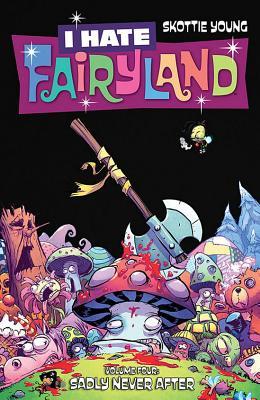
Sometime in July, when I wasn’t paying attention, Skottie Young announced this installment of the I Hate Fairyland series would be the final one. Imagine my surprise when I got to the last page of what was obviously the end of one of my favorite comic series. It was bittersweet.
Young brings the series to a close with Gertie trying one more time to get home. The last book ended on a cliffhanger with a surprise twist. He addresses that directly in the first pages of this installment.
“Yeah, that’s why I’m completely unimpressed. Feels like a cheap stunt to end a story with a ‘clever’ cliffhanger, if you ask me.”
Characters from the previous books all make an appearance, plus a few new ones. All-in-all, I enjoyed it.
The genius of this series is the idea that fairyland is one, built for children, and two, should have an expiration date. Gertrude, a foul-mouthed homicidal maniac in the form of a perpetually small child, is what would happen if someone was forced to endure endless disappointments in a futile effort to go home again. And was given a pointy-edged sword with little to no consequences for her actions.
All quests have ends though they may not be in the form the person going on the quest expected. I was pleased to see that Young didn’t drag out this series beyond its own expiration date. Because he could have. Honestly, the beautiful world he created could have gone on and on if he had chosen (or had the time) to do so. But he embraced one of the lessons in the story and ended it in a timely and, I felt, dignified manner.




















 The Help Desk Book Blog