This is a good resource for kids who are looking to start their own online presence on a variety of platforms.
From podcasts to video blogs, Birley gives basic to expert tips and safety suggestions.
As a parent, I was particularly interested in his Super Skill Section 8 (begins on page 50) in which he talks about online etiquette and how to appropriately handle unruly website visitors.
(Getting on my soapbox) I think that there aren’t enough books that teach kids how to behave online.
With episodes of cyber bullying and trolling on the increase, as a professional educator, I am always on the lookout for books that give effective coping mechanisms for dealing with the issues that arise.
How to Be a Blogger and Vlogger in 10 Easy Lessons is a great place to start and we need more books just like it. (Getting off soapbox)
My only complaint is that this doesn’t include “Parent Tips” or any sections about how the adults in the kids’ lives can support the effort.
Birley doesn’t leave parents entirely out of the loop: “Speak to a trusted adult about any comments on your blog that make you feel uncomfortable or upset.” pg 53. But, I wish that there had been more.
The recommendation on the cover of this book is for ages 12+ but my 9-year-old devoured this text. So, I’d give this to any child who is interested in digital media, no matter their age.
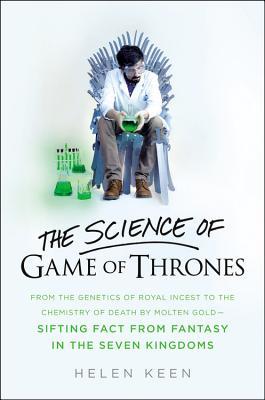
Readers beware: there are major spoilers contained within the pages of The Science of Game of Thrones. Do not read it (or this review) unless you’ve read all of the books that are currently out or have watched all of the seasons of the HBO show!
That being said: if you are a fan of the Game of Thrones, in any format, you simply must read this book.
From dragons to the effectiveness of female body armor, poisoning to the real possibilities of our world ending in ice or fire, Keen takes us on a scientific examination of all things related to George R.R. Martin’s epic series and what a trip it is.
My favorite part was a discussion about how dragons would breathe fire in real life and how that relates to the explosive capabilities of cows: “A cow can produce between 250 and 500 litres of highly flammable methane a day… In 2013 it was reported that a build-up of methane from a particularly afflicted dairy herd, coupled with an accidental spark of static electricity, ‘nearly blew the roof off [the] barn’ in Rasdorf, Germany… After a lot of genetic tinkering, a Danearys Targaryen in our world will be able to ride valiantly into battle to claim what’s hers on the back of a genetically modified fire-breathing heifer.” loc 235, ebook.
The potential positive effects of inbreeding: “… there’s evidence that, over time, inbreeding can actually purge a population of the effects of harmful recessive gene variants. These ‘bad’ genes are way more likely to show their effects, so, ultimately, the lines of the carriers are more likely to die off. Thus while the results of successive generations inbreeding is generally bad for the particular individual, it’s often good for the population as a whole.” loc 328, ebook.
So, the Lannisters can continue paying their debts as long as they’re not carrying harmful recessive gene variants. Good to know.
The Hodor question: “For a long time we were wondering what happened to Wyllis to cause his ‘hodoring’ behaviour. Perhaps he suffered a stroke or a tumour, or even a blow to the head. … Extensive damage to Broca’s area is also sometimes caused by malnutrition, but that seems unlikely in Wyllis’s case, given his enormous girth. Whatever the story, one thing is clear: Wyllis is clearly exhibiting a severe type of ‘expressive aphasia’. He can understand what other people are saying and respond, but he struggles to produce more than a single word.” loc 882-895, ebook. Hodor, hodor… hodor! Hodor.
Prior to a wonderful examination of the actual existence of dire wolves, Keen has this to say about the Starks and their pets: “The Stark children.. find a litter of orphaned dire wolf puppies and are desperate to keep them- like all children everywhere when confronted with the cute, mewling faces of slavering ferocious death beasts in their juvenile form. Their father Ned gives them a lecture worthy of any parent in Pets R Us along the lines of ‘Ok then but you’ll have to walk them yourselves even if it’s raining’.” loc 1160, ebook. Ha!
And, finally, I enjoyed learning about crows. Apparently, they’re actually extremely smart and have very good memories: “Previous research has shown that crows not only remember a threatening face, they share that knowledge within their community, so that the individual is remembered and scolded by the crows, even after a gap of several years. Young crows, it seems, are even taught to recognise and scold the ‘villain’ by their parents.” loc 1357, ebook. Yikes. Don’t bully crows, friends.
I felt like this memoir was all over the place- from remote viewing to Johrei, prophetic dreams to explanations of brain functions.
Dr. John Turner has an incredibly open mind when it comes to integrating traditional Western and holistic medicinal techniques. That was refreshing, but, because he was covering so much material, I felt like he didn’t spend enough time going into detail about the different modalities.
I wanted more depth and less breadth.
There were some interesting bits in here though.
Dr. Turner experienced, first hand, a case of spontaneous healing. His patient had a large brain tumor and, through the intercession of some monks and some radiation therapy, her tumor completely disappeared: “Here was a case of emotional disarray that when corrected, allowed healing to take place. Was it the patient’s realization or belief in karmic cause of her disease that allowed her brain to join with radiation to expel the foreign invader?… Were surgery and radiation necessary at all? I paced back and forth in my office, pondering the matter.” pg 60
Dr. Turner practiced daimoku (intense chanting of a certain set of words, like a prayer) for two hours a day for a year.
Here is what he had to say of the experience: “I believe that chanting sets up resonant circuits in the brain that activate usually quiescent neural pathways. I came to know this feeling of attonement quite well, and after the promised 12 months I discarded the incense sticks, the gong, and the chanting. I could recreate the feeling through meditation… However, I saw no practical way in which to use this complex and time-consuming process for the benefit of my patients.” pg 89-90
Dr. Turner practicing Johrei (a light healing technique) in his surgery: “After placing the last suture, I gave him 20 minutes of intraoperative Johrei, letting Okada’s light flow through a spiritual cord to me, and then to the patient. This was a first for Hawaii and perhaps for any medical center (and surely for any neurosurgical operating room) outside of Japan. (My patient’s) recovery was spectacular…” pg 134
The technique seems strange to me, but if it works, I say use it!
One of the first accounts I have read of remote viewing being used for medical diagnosis and treatment: “…it occurred to me that I should run the cause of this patient’s pain as a remote viewing target and see what Ed Dames could do to arrive at the answer. Not only would this be a confirmation of the power of remote viewing as a method of medical diagnosis, I would also have a chance to witness an expert at work. The results, as you will see, were everything I had hoped for; the patient fared well, much better than if I had tried to wait for the condition to become obvious on examination.” pg 194
If you are looking for more books about neurosurgeons who are considering non-traditional therapies in their practice, try Into the Magic Shop: A Neurosurgeon’s Quest to Discover the Mysteries of the Brain and the Secrets of the Heart by James Doty or Proof of Heaven: A Neurosurgeon’s Journey into the Afterlife by Eben Alexander.
Templar: a graphic novel about the dissolution of that famous order and the struggle for the legendary treasure that they left behind. A couple of weeks ago, I read the first book in this series and I enjoyed it more than this complete volume. It was the ending that diminished my enjoyment of it the most, which I won’t get into because I don’t want to ruin it for anyone, but that was really my issue. Mechner ties up the major plot points, but I didn’t like how he did it- at all.
Like the other book, this contains adventure, daring rescues, and amusing “heist movie” type moments. We’ve also got a strong female lead in Madame De Chalancon (love interest) who is actually very hard core for a 12th century woman. She’s sneaking out at night and running around with the guys, stealing horses, manipulating the powerful men around her, kissing people- I mean, that kind of stuff could have gotten her burned as a heretic or witch back then. So, that was good and the other characterizations are solid. The illustrations aren’t gorgeous (compared to Monstress #1 or Saga, Volume 1) but those are considered adult graphic novels while this one is marketed for the teen set.
Which reminds me, there’s a whole scene that takes place in a Turkish steam bath that some parents may find objectionable. I’d let my kid read it, but she’s a girl and has the parts that are revealed through the steam and also, I’m a librarian, and I don’t censor stuff. But yeah, there’s some (very tasteful) nude females, torture scenes, hand to hand combat, men being burned at the stake, arrows through limbs… I honestly think that this may have been better as a mature book than a watered down PG13, but it is what it is.
Still, it is a fun story and semi-educational in that some of the people featured in this book were actual historical figures. Mechner includes his sources in the back and also some recommended reading. I think I’m going to look into Foucault’s Pendulum, which I’ve never read, but Mechner gives high praise.
Some more graphic novels that teens may enjoy are The Guild (ties in to the show of the same name) or the surprisingly fun, Nimona.








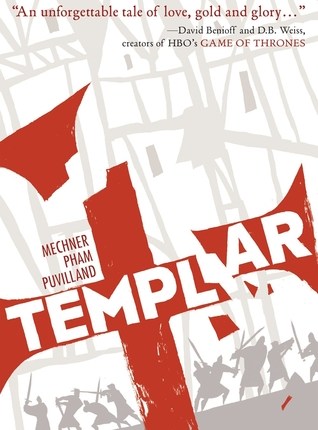
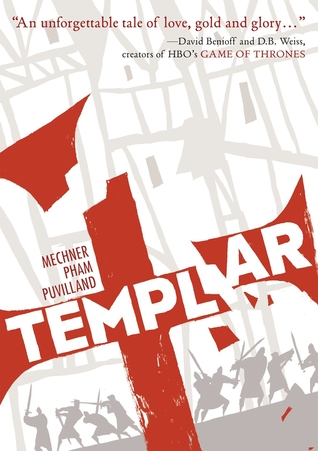 Templar: a graphic novel about the dissolution of that famous order and the struggle for the legendary treasure that they left behind. A couple of weeks ago, I read the first book in this series and I enjoyed it more than this complete volume. It was the ending that diminished my enjoyment of it the most, which I won’t get into because I don’t want to ruin it for anyone, but that was really my issue. Mechner ties up the major plot points, but I didn’t like how he did it- at all.
 The Help Desk Book Blog