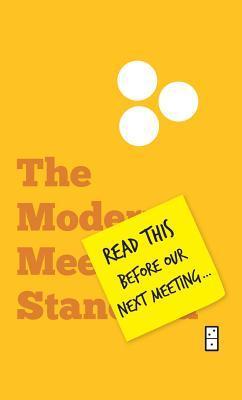
Read This Before Our Next Meeting by Al Pittampalli

Read This Before Our Next Meeting by Al Pittampalli
readthis

Endless meetings have you down? Pittampalli has a solution to your woes. He claims that modern meetings should only be held to solve specific problems and the only people who should be required to attend are those who could take direct action to solve that problem.

I think that the idea is a solid one.

It does take some internal mindset changes by the folks who call meetings. The first step, like with any problem, is to admit that you even have a problem.

“Over time, we’ve become nonchalant about bad meetings. If an operating room were as sloppily run as our meetings, patients would die.” pg 7.

Overly dramatic, perhaps, but true. And also keep in mind: “Change is never met with open arms. Great decisions involve risk and risk scares people; it’s natural for great ideas to get attacked or, worse, ignored. I can think of no single great innovation that has ever happened without the presence of opposition.” pg 15

So, there may be an uphill battle over this, but, Pattampalli thinks, it is worth it.

The end goal: “Meetings need to be less like the endless commercial breaks during a football game and more like pit stops in the Daytona 500.” pg 20.

So, they’re necessary, but they should run quickly because: “Meetings are too expensive and disruptive to justify using them for the most common types of communication, such as making announcements, clarifying issues, or even gathering intelligence. Like war, meetings are a last resort.” pg 23

Photo by Christina Morillo on Pexels.com

This strict definition of a meeting means that there is going to be some major preparatory work since communication isn’t going to be a part of the show. The person calling the meeting has to distribute information about the issue so that those who are attending can contribute.

“Every meeting should require pre-meeting work. Any information for getting attendees up to speed should be given out beforehand. If the attendee doesn’t have time to read and prepare, she doesn’t have time to attend.” pg 37.

But, this preparation pays off when, after the meeting, the business should have created a concrete ‘action plan’ that includes: “What actions are we committing to? Who is responsible for each action? When will those actions be completed?” pg 39. Thus addressing the problem that the meeting was called to solve and serving its function.

Most of the meetings that I’ve attended in my life have been rambling, unfocused affairs that were called to fill the monthly meeting quota that was arbitrarily chosen by management- a touch-base, if you will.

Pittampalli is adamant that this is a waste of time. I never really saw it that way because I didn’t have any expectations that meetings were supposed to accomplish anything at all. We’d meet, then get on about our business. This book has shown me that I should expect more.

Recommended for anybody who wants to learn more about the benefits of “modern meetings”. This short book has everything that you need to start changing the world, one meeting at a time.

Thanks for reading!

Every Breath You Take: How to Breathe Your Way to a Mindful Life by Rose Elliot

Every Breath You Take: How to Breathe Your Way to a Mindful Life by Rose Elliot
everybreath

Every Breath You Take is one of the finest mindfulness manuals that I’ve ever had the pleasure to pick up.

Practice by practice, Elliot takes the reader from the simple and concrete observation of the breath to the complex and abstract juggling of mind stuff. Along the way, she provides stories and anecdotes of those who have walked these paths before us and shows that, no matter where you are in your life, you can become more aware and grounded in the present moment and how beneficial that can be for you.

She began her journey like most of us- convinced that mindfulness was too difficult: “I struggled with the practice. I found it dreary, dull and boring- all that ‘notice-what-you’re-doing-while-you-clean-your-teeth’- I just couldn’t get to grips with it at all. … when I was on the point of giving up altogether, I met a monk… and he quietly suggested that it is helpful to link mindfulness practice to breathing. This really helped.” loc 16.

Elliot is so relatable that she made me feel like, if she could do this, I could do it too.

A reminder that mindfulness isn’t just a ‘Buddhist’ thing: “…it is to the Buddha that we owe mindfulness, but that does not mean you have to ‘be a Buddhist’ (whatever that may mean), or indeed of any religion at all to practise it. The breath is universal, as is spirit, so we can all benefit.” loc 46. If we can breathe, we can watch the breath. We just need to remember to do it.

Photo by Pixabay on Pexels.com

I loved Elliot’s gentle humor which was evident throughout: “You can use the irritations of daily life as reminders to take a mindfulness breath- and this way you’ll certainly get plenty of practice! For instance, such reminders might be: Being held up in traffic or a red light when you are driving. Waiting for the kettle to boil or for a bus or a train that’s late- waiting for almost anything. Lining up at the bank or at the grocery store checkout, or anywhere, for that matter. When someone is being really irritating, how great to know you have your own inner source of peace so they can’t bother you.” loc 237.

It is as if life is chock full of opportunities to take mindful breaths 🙂

My favorite part of the book was the many teachings about attachment. “When we can accept things as they are now, but recognize that they will change, and accept that too, we will know peace.” loc 793. I feel more peaceful already!

The Epilogue where Elliot talks about grieving for her husband and using these breathing exercises to make it through is especially touching. This is not just someone who talks the talk- she’s out there walking the walk. Highly recommended for anybody at any level of ability who wants to learn more about mindfulness.

Some further reading: How to Relax, The Wisdom of the Breath: Three Guided Meditations for Calming the Mind and Cultivating Insight, or Being Peace.

Thank you to NetGalley and Watkins Publishing for a free digital copy of this book!  And, thank you for reading.

Hand Drawn Jokes for Smart Attractive People by Matthew Diffee

Hand Drawn Jokes for Smart Attractive People by Matthew Diffee
handdrawnjokes

Sadly, the best part of this book is its inspired title: Hand Drawn Jokes for Smart Attractive People.

The rest is either clever, but not funny, or offensive depending on the page.

It’s a shame really- the artwork itself is great and it’s clear that Diffee is a talented cartoonist. I just didn’t connect with much of the work.

Out of all of it, my favorite cartoon was on page 188- Moses: The Teen Years where a young adult version of Moses is depicted staring into a mirror, carefully parting his long hair with a comb. The worst was the entirety of Chapter Eight: For Smart Attractive Indians and Eskimos and really soured this whole book for me.

Pick up at your own risk, I can’t really recommend it. Some graphic novels that I DO recommend: Penguins with People Problems or Shakespeare’s Guide to Parenting.

Thanks for reading!

The Call of Spiritual Emergency: From Personal Crisis To Personal Transformation by Emma Bragdon

The Call of Spiritual Emergency: From Personal Crisis To Personal Transformation by Emma Bragdon

Though a bit dated (written in 1990), Emma Bragdon presents information about “spiritual emergencies,” what they are and how to help your loved ones or yourself through it.

Photo by Pixabay on Pexels.com

To begin, what is a “spiritual emergency”? : “Spiritual emergence is a natural process of human development in which an individual goes beyond normal personal feelings and desires-ego- into the transpersonal, increasing relatedness to Higher Power, or God. … When spiritual emergence is punctuated by profound emotions, visions, psychosomatic illness, and compelling desires to behave in unusual ways, including suicidal thoughts, the spiritual emergence becomes a crisis, a spiritual emergency.” pg 1.

This process can be absolutely terrifying if the person has no idea what is going on and is surrounded by professionals who are also clueless.

I think that the main problem with integrating such experiences is that modern society neither supports or recognizes them as valid: “People in our culture are afraid of speaking openly about spiritual experiences, because psychic phenomena… have been considered symptomatic of psychosis. Most psychiatrists, psychologists, and even clergy have believed that most spiritual experiences are indicative of either retarded development or emotional disease.” pg 12.

The clergy part of that passage is particularly interesting to me. These are the so-called experts on the spiritual realm, yet, when something breaks through into reality, they’ve got nothing.

Photo by cottonbro on Pexels.com

And humanity is the poorer for it.

Bragdon then relates numerous instances of men and women from all over the world who have gone through this process and reminds us: “In all the major religions of the world can be found examples of people … who have been through intense and sometimes physically and emotionally debilitating periods of spiritual experiences and ultimately attained transpersonal levels of consciousness.” pgs 81.

It makes one wonder, if Jesus, Mohammed, Moses, or pick-your-prophet had been born in the modern era, would his/her vision just been medicated into oblivion?

Bragdon points out that the problem is in the attitudes of the religious and medical establishments- the places that should be the most educated and accepting of these sorts of troubles: “The administrators of (religious) institutions are inconsistent in their view of spiritual experience as part of spiritual growth. The conventional religious establishment is similar to the conventional medical establishment, which is so ambivalent about the reality of spiritual experiences that it doubts their validity altogether.” pg 101.

When did we completely separate the health of the body from that of the soul? After all, one won’t work without the other.

Photo by Retha Ferguson on Pexels.com

Then, she goes on to talk about all of the different ways that these sorts of experiences emerge from drug use, sex, stress, and just life.

It is so pervasive that it seems that it must be a part of the human experience, but it is hard to study and come to grips with in scientific terms because the phenomena can’t be forced or replicated.

Despite these difficulties to categorize and treat it, Bragdon suggests that being present for the person going through it is enough: “What these people do want is acknowledgement, recognition that they aren’t crazy, and the companionship of others who know what they have experienced is real.” pg 113

So, even though this book was written 26 years ago, I don’t think that we’ve really made that much progress in that time- at least not in the arena of holistic medicine or transpersonal psychology.

Some further reading: Polishing the Mirror: How to Live from Your Spiritual Heart, Dreambody: The Body’s Role In Revealing the Self, or The Power of Myth.

Thanks for reading!

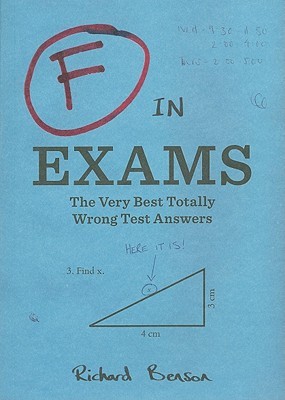
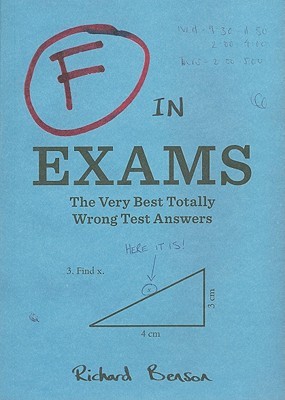
F in Exams: The Very Best Totally Wrong Test Answers by Richard Benson

F in Exams: The Very Best Totally Wrong Test Answers by Richard Benson
finexams

Necessity is the mother of invention. When these students didn’t know the answers, they pulled out all the stops to come up with something- sometimes with hilarious results.

At other times though, I despaired for the future…

I think that F in Exams would be enjoyed the most by current or former educators.

I read some of these aloud to my husband who used to be a college professor and he laughed so hard that he had tears in his eyes. Then, it led to a conversation about not knowing the answers on tests and making stuff up to fill in the blanks.

He admitted that he had done so once in a marketing class and the prof had given him points for his creativity.

Honestly, I don’t think I’ve ever attempted joking my way into a better grade. This book makes me wish that I had, just once.

His favorite: Question: “What was Sir Francis Drake known for? Answer: Sir Francis Drake circumsized the world with a 100 foot clipper.”

My favorite: Question: “Clair was well prepared for her interview. Explain how Claire may have prepared herself for the interview. Answer: Had a bath and put on her lucky pants.” There’s a lot to be said for a pair of lucky pants.

F in Exams would make excellent reading material for a doctor’s office or any other place where you need to spend a few moments relaxing (ahem, powder room?), in which case, you should buy your own copy. Otherwise, I’d recommend borrowing this short little book from your local library as I’m sure that I’m not going to feel the need to pick it up again.

Thanks for reading!

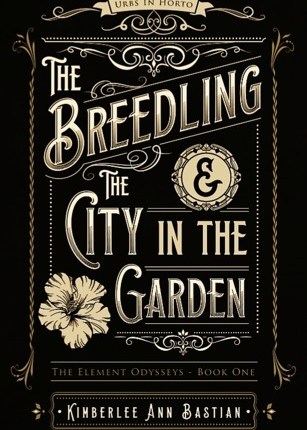
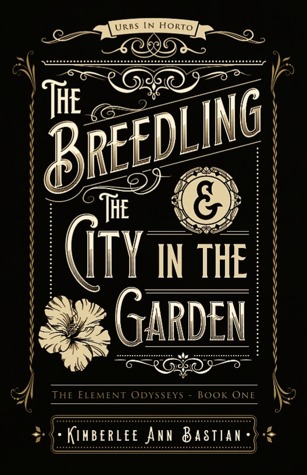
The Breedling and the City in the Garden by Kimberlee Bastian

The Breedling and the City in the Garden by Kimberlee Bastian

thebreedlingBartholomew is a Breedling- an immortal spirit that guides the souls of the mortal dead to their eternal homes. He is tasked by his masters, the Fates, to find the Creators of the world, who have gone missing. Bartholomew finds the ones he’s seeking, but then refuses to reveal their location and as punishment, he is sealed in a prison until he changes his mind or the end of time, whichever comes first. But, magically, Bartholomew escapes and finds himself in 19th century Chicago in the company of two boys who are named Charlie and Jimmy. Bartholomew must find a certain mortal to bind his spirit to this world or he will end up back in his timeless prison. He also must complete his original quest- to find the Eden Wanderer. But, he must accomplish all of this without the mortals knowing who he really is or what he is really seeking. Will he succeed?
I have some serious reservations about this book. First of all, the plot isn’t nearly as straight forward as my description. The mythology of Bastian’s world is very complex and I felt like I wasn’t given enough background before I was thrown into the thick of it. Multiple characters are mentioned, but never make an appearance and, there was so much implied but not stated, that at times I felt as if I was reading the second book in the series instead of the first. Fantasy is a tricky genre because there’s a fine line between mysteriousness and utter confusion and, unfortunately, I spent much of my time in The Breedling and the City in the Garden trying to understand how everyone was connected.

On the other hand, there is much to enjoy in this debut novel beyond the complex/confusing world building. The young man, Charlie, has a big heart and spends much of his time trying to keep his cousin, Jimmy, safe from the gangs that rove the streets. He was my favorite character: “Are you prepared for the meeting tomorrow?”he asked, referring to the gang dispute Charlie had been asked to mediate, which was a nicer way of saying he was forced. “As ready as I can be, I suppose,” said Charlie. “It’s not as though they gave me a say in the matter.” loc 159, ebook.

Bastian paints a pretty picture of Chicago: “For miles, rooftops stretched in every direction. Smokestacks stood proudly as a testament to the modern age of industry. The calls of trains answered each other from east to west. To the north, the distant shrills of tugboats and barges floating along the river thundered through the air. The dark sky above blanketed every inch as far as the eye could see, the city lights hiding the stars.” loc 476, ebook

There is certainly a feeling of danger throughout the story- both for the success of the Breedling’s quest but also for the souls of the mortals who travel with him:“If Charlie were to uncover his secret, it would lift the veil of ignorance that blinded him to the truth about the supernatural elements in Eden (Earth). And for enlightened mortals, it never ended well. Their souls earmarked in the afterlife by the Mistress of Heaven or the Master of Hell.” loc 1321, ebook. “The Mistress of Heaven” is a tantalizing name for a character but Bastian never really gives the backstory for her- I wish she had.

I also liked the personal responsibility theme that cropped up again and again in this story: “…a man who runs has no life at all. He merely survives on the fringes and finds only regret. You leave here, now, like this, I swear to you there will be nowhere far enough for you to run. You will become miserable and reckless and in the end you’ll die alone, a world away, wishing you could take this moment back.” loc 3069. I’m a big believer in taking responsibility for one’s life rather than blaming it on fate or destiny. It seems like Bastian is too.

Recommended for readers who can tolerate a lot of unknown elements in the story and for people who enjoy urban fantasy. I think that Bastian shows a lot of promise and this series is only going to improve as she reveals more of the complex world she has created. Other fantasy debut recommendations: The Interminables, Funeral Games, or Chasing Embers.

Thank you to NetGalley and Wise Ink Creative Publishing for a free digital copy of this book. And, thank you for reading!

Robota by Doug Chiang

Robota by Doug Chiang

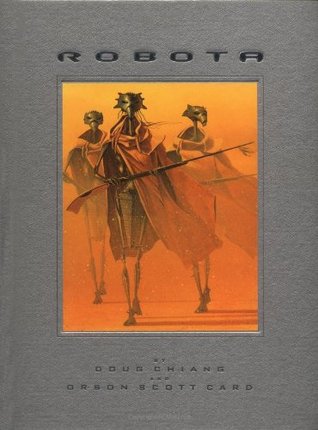
robotaRobota, like The Sleeper and the Spindle, is a story with extraordinary artwork accompanying the narrative. The prologue introduces the reader to a world that has been conquered by robots from the stars. Humankind had developed tools and machines, but nothing that equaled the alien invaders. Subdued and forced into hiding, humans fight a losing battle against an unstoppable robotic force. In the first chapter, a man awakens in an alien ship- he can’t remember his name or his past. He is encouraged out of the ship and deeper into the forest by a talking monkey named Rend. Together, they go to recover not only his memory but also his forgotten past, which may be more extraordinary than he ever imagined.

The story by Orson Scott Card is good but the artwork by Doug Chiang is astonishing. This book was originally published in 2003, but the edition I read is a 2016 re-print with a new foreword and additional concept art wasn’t released the first time around. Doug Chiang worked at LucasFilm on Star Wars: Episodes 1 & 2 and, more recently, The Force Awakens. You can really see those efforts in his art- the robot army from Episode 1 is all over this book.

My one (kind of silly) beef with Robota is the title. The story says that the robots took over Earth and renamed it “Robota” but what sort of robots would do that? I think they’d be far more likely to call it 1010010011111 or something in binary code. But, maybe I’m just biased against robots.

There was also an interesting side plot about magical jewels that gave animals on Earth the ability to talk and reason: “Once it changes an animal, it breeds true- all its offspring have speech as well. It brought a golden age to the world. It made the robots jealous, and the king of the robots, Font Prime, sent out Kaantur-Set and his hunters to destroy all the jewels. They think when the jewels are gone, we’ll all become dumb beasts again.” pg 45, ebook. The over-arching plot is nature vs machine, but Robota also asks the question: what makes life worth living?

Or what really makes a machine live?: “When there’s a living mind telling the machine what to do, it’s not a robot,” said Juomes. “Where there’s life, then the machine remains a tool.” “So a fungus with a stick is better than Font Prime,” asked Elyseo. “Probably not better at mathematics,” said Caps. No one was amused.” pg 68

Recommended for ages 14+: Robota is a feast for the eyes and may be a science fiction/fantasy that appeals to more reluctant readers. Some further reading: The Sleeper and the Spindle, Peter & Max, or Descender, Volume 1: Tin Stars (for 16+ for some disturbing images).

Thank you to NetGalley and Dover Publications for a free digital copy of this book! And, thank you for reading.

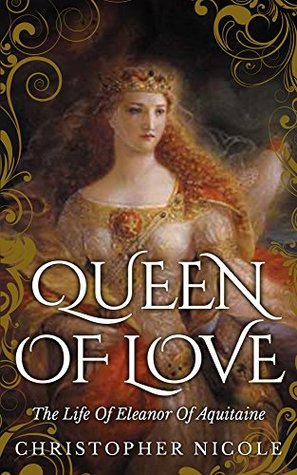
Queen of Love: The Life of Eleanor of Aquitaine by Christopher Nicole

Queen of Love: The Life of Eleanor of Aquitaine by Christopher Nicole
queenoflove

Eleanor of Aquitaine blows my mind.

So, this lovely lady lived in the 1100’s, when women were property, but somehow, she managed to become one of the most powerful people of her time.

Granted, she was born into a privileged position, was one of the largest landholders in France, and, by all accounts, was absolutely gorgeous. I’m sure that helped.

But, imagine the social and political acumen she had to possess to make it all work.

This historical fiction is written as a first-person memoir of the time period after her marriage to the King of France was annulled and she was forced into marriage with Henry, the soon to be, King of England and the narrative continues until her death.

I understand that the first person point-of-view doesn’t work for everyone, but I loved it. Then again, there are few historical fictions that I don’t enjoy, so take my review with a grain of salt.

Historical fiction is literary candy for me. When I need to escape reality, I jump into the past, usually with royalty because, let’s face it, the life of a peasant was probably nothing to write home about.

The manner in which Henry acquired the most eligible woman in Europe for his bride was rather questionable. In essence, he kidnapped her, raped her, and then insisted on the match.

She forgave him because, frankly, she could have made worse matches and wasn’t really in a position to bargain.

Photo by Pixabay on Pexels.com

Here are her thoughts about the man: “… the aspect of Henry which most strikes one is his energy. It was such as almost to make one believe the tales of a devilish ancestor. From the moment my new husband rose in the morning until the moment he collapsed exhausted in bed at night, he never rested either his body or his brain for a moment.” loc 81, ebook.

Henry was known for his energy and fiery temper. I didn’t mark the passage, but Eleanor relates how, when the King became angry, he would throw himself to the floor and eat the rushes.

For modern folks who may not know what rushes are- these are essentially plants that were used to keep the floor clean, sort of like throw away rugs. Remember, floors were pretty disgusting back then as transportation was done mainly by horse and certain things were tracked in on people’s boots.

The King of England would get so mad that he ate poop-covered rushes! In the modern age, that would so not fly. I can just see the covers of the tabloid mags.

Photo by OVAN on Pexels.com

I completely forgot that it was Eleanor’s husband who had the infamous disagreement with Thomas Becket. “The quarrel thus commenced dragged on for some time. It was fairly well known, and i do not propose to go into details about it- during this period I had a fair number of problems of my own, and while I felt sorry for Thomas, placed in such a dilemma as having to choose between King and Church, I am bound to admit that he made life unnecessarily difficult for himself.” loc 880, ebook.

That seemed to be Eleanor’s way- go with the flow of what happens, but don’t forget what happened and strike back when you’re in a place of power.

In this passage, Eleanor is fretting over turning 40, which, had she only known it, wasn’t even halfway through her life: “I should point out that in the summer of 1162 I reached my fortieth birthday. This is a most depressing milestone, for anyone, but more I think for a woman than a man, and most of all for a woman once accounted the most beautiful of her time. At forty there could be no disguising the fact that I was growing old, and that even my beauty was fading. In addition, forty brings with it the approach of the dreaded end of fertility, and what has a woman got left?” pg 915.

She had ten kids, how many more does a woman need? And, although much of her power was based in her beauty and fertility, she was still a formidable spirit. I mean, the lady was locked up by her husband for over a decade and yet, she manages to come back from it! Talk about aging gracefully…

Photo by Pixabay on Pexels.com

Here, Eleanor is holding her own after being defeated in battle with the King of England, her husband. (She went to war against him for her sons- how hardcore is that!): “I would say that it is fairly well established that you have recently been in arms against your king.” “I acted as Duchess of Aquitaine,” I pointed out. “As we are now in Aquitaine, you are an invader, and I am a prisoner-of-war.” “I am the ruler of Aquitaine,” he argued. “In my name,” I riposted. “I have now withdrawn that privilege from you.” “Madame, your effrontery is startling.” “I am Eleanor of Aquitaine.” loc 1988. Boom.

If you like historical fiction about strong women, The Queen of Love may be something that you really enjoy. Some other suggestions: Margaret the First, Isabella: Braveheart of France, The Dream Lover: A Novel of George Sand, or Pope Joan.

Thank you to NetGalley and Endeavour Press for a free digital copy of this book! And, thank you for reading.

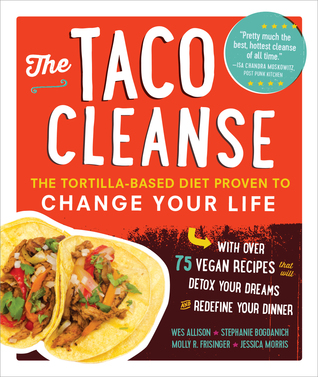
The Taco Cleanse: The Tortilla-Based Diet Proven to Change Your Life by Wes Allison

The Taco Cleanse: The Tortilla-Based Diet Proven to Change Your Life by Wes Allison
tacocleanse

Deciding what to eat for dinner was becoming a drag, but luckily for me, the library has an enormous foodie section. I dug through the cookbook collection and discovered this gem- The Taco Cleanse.

Part satire, part traditional recipes, The Taco Cleanse makes you laugh while you prepare delicious, vegan eats.

From the copyright page: “This book contains the opinions and ideas of its authors, plus large quantities of total BS. Although the recipes are intended to be accurate and tasty, all other content is solely intended to be hilarious.” And it is.

This book isn’t just about the food: “Now, we want to be clear that supplementing- that is, drinking beverages that traditionally accompany tacos- is acceptable as long as you are getting all of your tacos in. Margaritas should be added on an as-needed basis for the top levels of the cleanse, but at Fuego (the highest cleanse level) you should be adding them at least a couple of times a week, working up to every day.” pg 4.

To your health. 🙂

My favorite part was the author’s insistence on Taco Journaling: “One of the most powerful things you can do in your taco journey is taco journaling. Writing down your thoughts during your Taco Cleanse now will be like having a time machine for your future. Future You can go back and see how you’ve changed over time, where you had taco successes and taco failures. … Every time you open your journal, you will feel peace in your heart.” pg 26.

Photo by Chitokan on Pexels.com

They really nailed the self help tone that is prevalent in most “dietary” cookbooks. It is really very clever and worth the read, even if you’re not planning on trying the recipes.

Speaking of which, I personally plan on trying Minimalist Nacho Cheese pg 128, Infinite Fish Tacos pg 145, Smoked Brisket and Jalapeno Mac and Cheese Tacos pg 149, and the Frito Pie Tacos pg 152. Decadent.

Recommended for people who are experiencing a dinner idea slump or anybody looking for an excuse to drink a margarita (or two).

Thanks for reading and happy taco eating!