Second read-through August 2021: I have a few thoughts to add on my second read-through of Gardens of the Moon. Unlike my first foray into Malazan, I came out of this reading with a better appreciation of the female characters of the story.
Instead of being focused on what the characters were not, I looked at what the characters were. Powerful leaders, most of them, who imposed their will on the world around them through violence. It is an unexpected role for women, but still feels somewhat one dimensional. I wish some of the characters were more fleshed out, but I have the feeling that this development will happen before the end of the series.
Also, this go-round, I had a better grasp on the complexities of Gardens of the Moon and was prepared to be dropped into the middle of the action. Steven Erikson doesn’t hold the reader’s hand. He pushes her through the door into another world. Some readers hate/love this strategy. I fall mainly on the side of hate, but if it’s a good story, I’ll put up with it.
My favorite part is still the new tarot card deck that Erikson created.
Unlike last time, I’m going to keep pushing forward with this series. On to the next book!

Review from first read-through June 2016: Gardens of the Moon is an extraordinarily complex fantasy. The over-arching story: the Malazan Empire (a militaristic conglomeration of nations) is invading everywhere and trashing cities as it goes. The Empress of Malazan, her High Fist Dujek (like a top general), Adjunct Lorn (a magic-hating fixer), Whiskeyjack and the Bridgeburners (like the A-team for Malazan, they go in and cause chaos before the main army arrives), Tattersail (a Malazan mage), Ganoes Paran (a soldier), and more are on the side of the Empire.
There’s about a dozen other main characters that I won’t list here for brevity’s sake.
One of the many heroes of this tale is Paran. The story begins with Paran as a child, gazing down from the walls of his city, towards destruction being wreaked by Malazan mages. He dreams of being a warrior and tells this dream to the aged soldier with him.
Their conversation: “Every decision you make can change the world. The best life is the one the gods don’t notice. You want to live free, boy, live quietly.” “I want to be a soldier. A hero.” “You’ll grow out of it.” pg 5
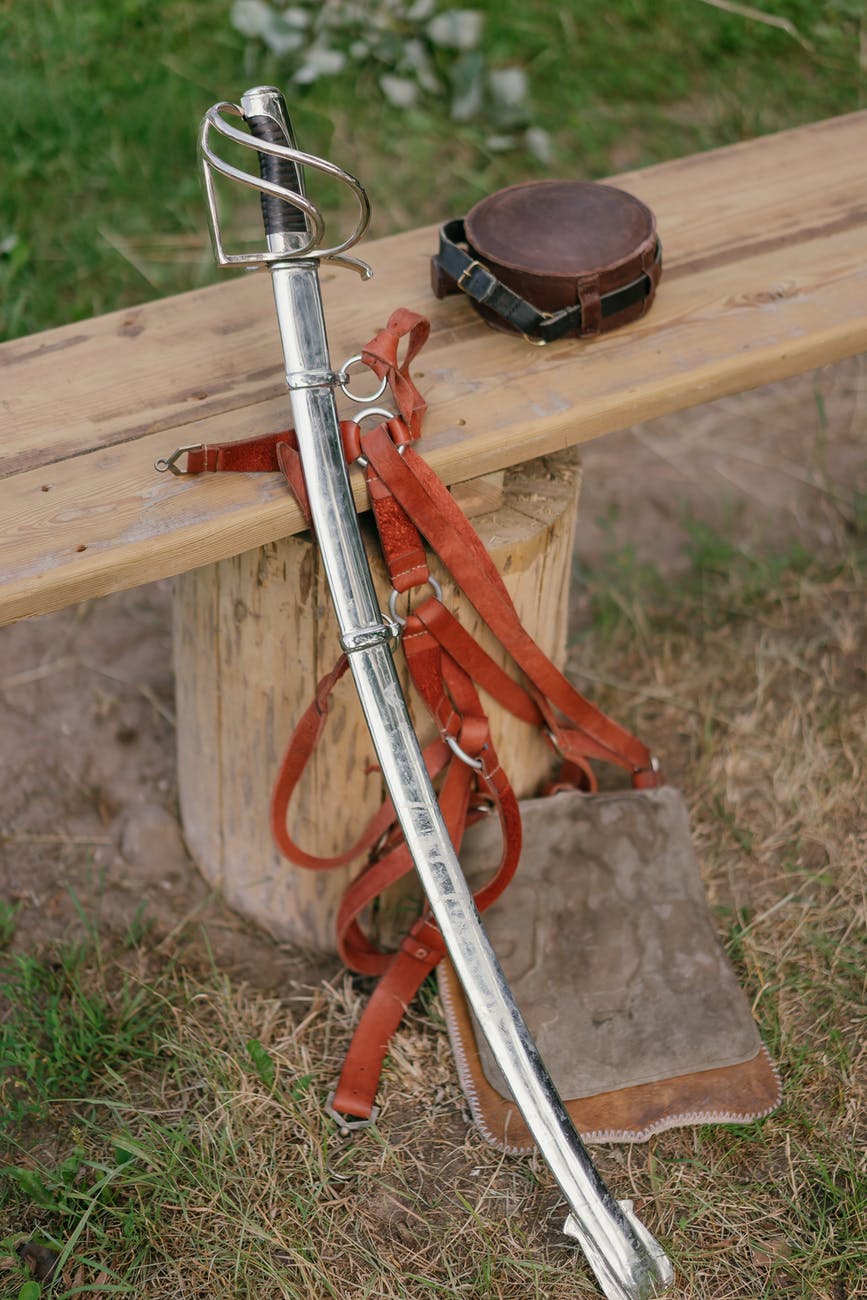
And so the story begins. Paran gets his desire, of course, but so much more than he bargained for… kind of like the reader who picks up this book.
At first, I thought that the story was going to go like The Game of Thrones. We were going to have a bunch of different characters all fighting for the same thing. I was so wrong. The only similarities between the two tales are that 1. they’re fantasies, 2. they have a bunch of characters, and 3. there is a power struggle, but otherwise, they’re very different.
Gardens of the Moon contains direct interventions between gods and humanity as well as magical creatures from the past and other realms of existence.
As for the magic system, the magically-inclined in this story take their power from different dimensions called “warrens“. There are half a dozen different ones, with further warrens hinted at as the story progresses.
Taken as a whole- it is a many layered cake of fantasy awesomeness. I was overwhelmed by it all at times.
Perhaps because of the sheer scope of the story, the characterizations suffered. The author could only build so much detail into each person.
For example, Erikson tried to make Paran more than just a simple hero, but it didn’t always work: “When he thought of himself, of that young noble-born man with the overblown faith in honesty and integrity, the vision that came to him now was of something cold, hard, and dark. It hid in the deepest shadows of his mind, and it watched. No contemplation, no judgment, just icy, clinical observation.” pg 110
I was unimpressed with the role of the females in this story. With as many characters that we had, I thought we’d have at least one or two amazing, strong, female heroes. I know that fantasies are not known for their gender equality but in a world with magic, gods, and other surprising things, I would count a strong female character as one of the greatest miracles of all.
Erikson’s world building was so complete that he even created a new set of Tarot cards, just for his world. It’s one of my favorite parts of the story.
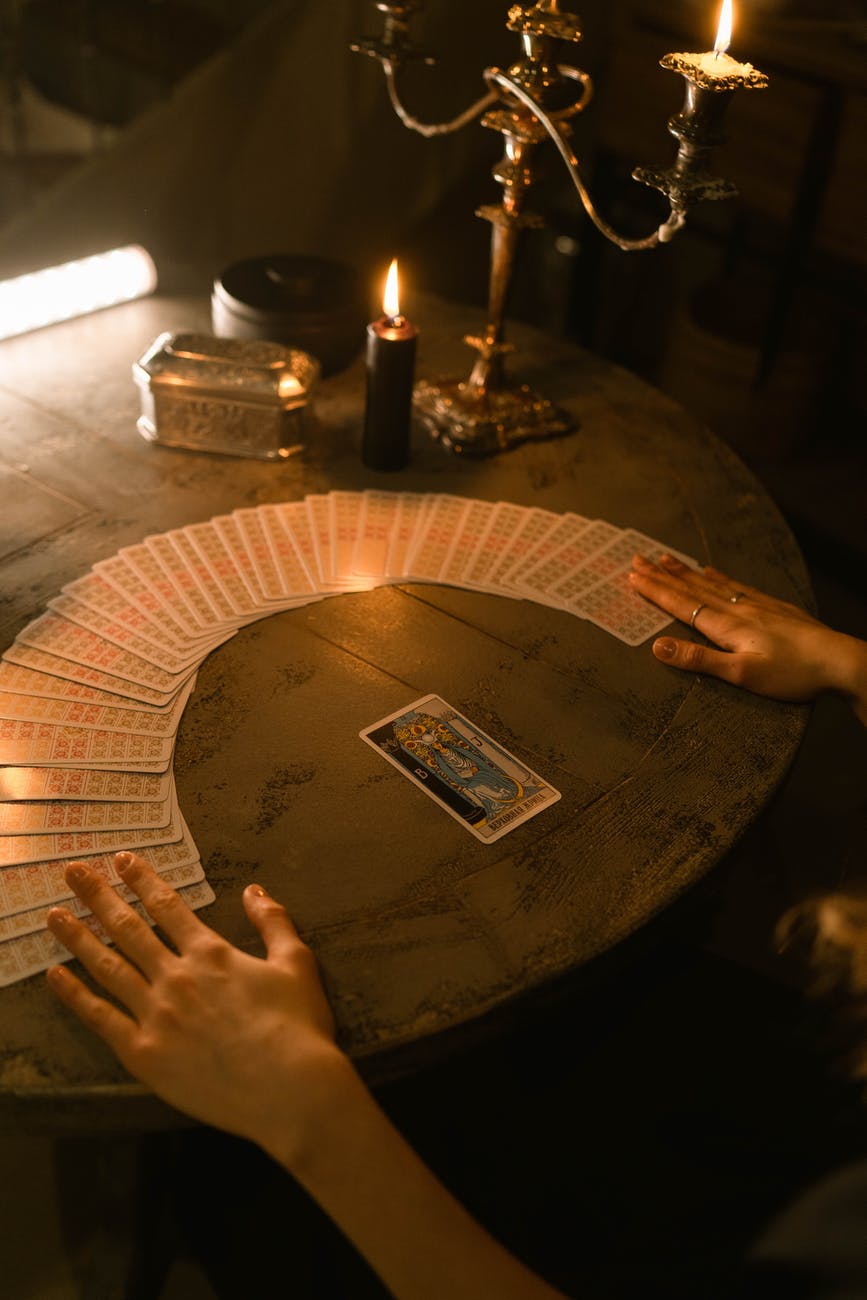
Here’s a passage that I really liked: “Those whom the gods choose, ’tis said, they first separate from other mortals- by treachery, by stripping from you your spirit’s lifeblood. The gods will take all your loved ones, one by one, to their death. And, as you harden, as you become what they seek, the gods smile and nod. Each company you shun brings you closer to them. ‘Tis the shaping of a tool, son, the prod and pull, and the final succour they offer you is to end your loneliness- the very isolation they helped you create.” Never get noticed, boy. pg 510 Bleak, but beautiful.
Or this part, the explanation of the story’s title, which is so brief, if you blink, you’ll miss it: (On the moon) The Lord of the Deep waters living there is named Grallin. He tends vast, beautiful underwater gardens. Grallin will come down to us, one day, to our world. And he’ll gather his chosen and take them to his world. And we’ll live in those gardens, warmed by the deep fires, and our children will swim like dolphins, and we’ll be happy since there won’t be anymore wars, and no empires, and no swords and shields.” pg 531-532
That’s the dream of all of the characters in this story- to live in peace. But, because of the Malazan Empire, they can’t.
Recommended for true fans of fantasy. There’s so much to sink your teeth into that, unless you really love the genre, you’ll probably just put it aside for simpler fare.
Thanks for reading!
- The Ballad of a Small Player: a Metaphysical Movie Review
- Otherwhere: A Field Guide to Nonphysical Reality for the Out-Of-Body Traveler by Kurt Leland
- Psychic Dreamwalking: Explorations at the Edge of Self by Michelle Belanger
- Archetypes on the Tree of Life: The Tarot as Pathwork by Madonna Compton
- The Goddess and the Shaman: The Art & Science of Magical Healing by J.A. Kent

 The Help Desk Book Blog
One thought on “Gardens of the Moon by Steven Erikson”